
If spending 15 hours aboard Qantas’ flagship nonstop flight from London to Australia sounds daunting, consider that less than a century ago, crossing this vast distance by air required nearly two weeks of travel.
Long-haul commercial aviation has undergone a dramatic transformation. The arduous, multi-leg expeditions of the early 20th century have given way to seamless, direct connections. Qantas’ trailblazing nonstop service from London to Perth, first introduced with the Boeing 787 Dreamliner, has redefined what’s possible in international travel, shrinking the world for both business and leisure passengers.
Reflecting on the route’s storied eight-decade legacy, the journey from the UK to Australia serves as a testament to the relentless innovation and ambition of the aviation industry.
The Original Odyssey: Early Flights and the Birth of the Kangaroo Route
On 13 April 1935, the inaugural group of intrepid—and affluent—travellers boarded Imperial Airways’ Handley Page 42W Heracles, bound for Paris as the first step of a truly epic adventure. The journey wound its way through numerous cities—Italy, Crete, Egypt, Iraq, UAE, Pakistan, India, and Myanmar—before reaching Singapore. From there, Qantas took the helm for the final legs to Brisbane. This monumental trip spanned 12 days and included as many as 31 stops across continents.
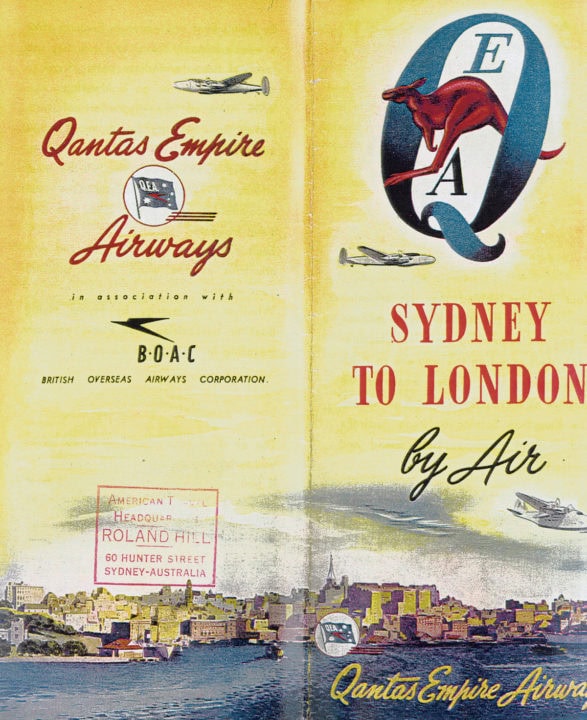
1938/1939 Qantas advertising campaign
Qantas operated the Singapore to Brisbane segment using the De Havilland D.H.86—a four-engine, wood-and-fabric biplane. Passengers endured three more days of travel, with over ten stops and no dedicated cabin crew. Hospitality was basic, with the co-pilot distributing sandwiches to up to 10 guests.
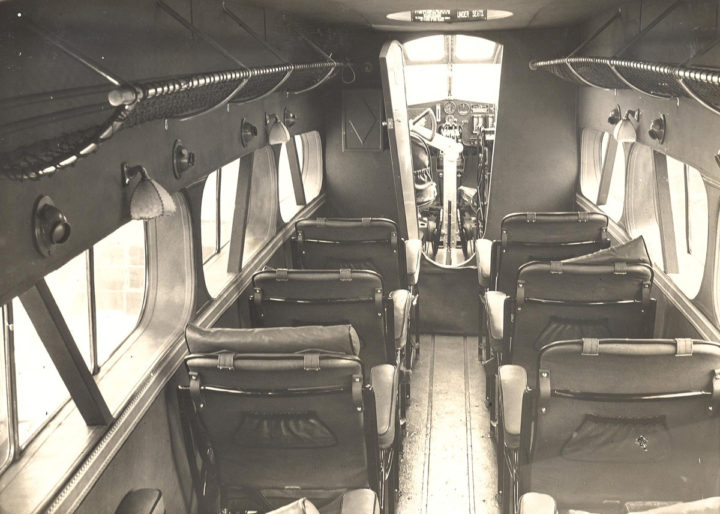
Interior view of a De Havilland D.H.86 cabin
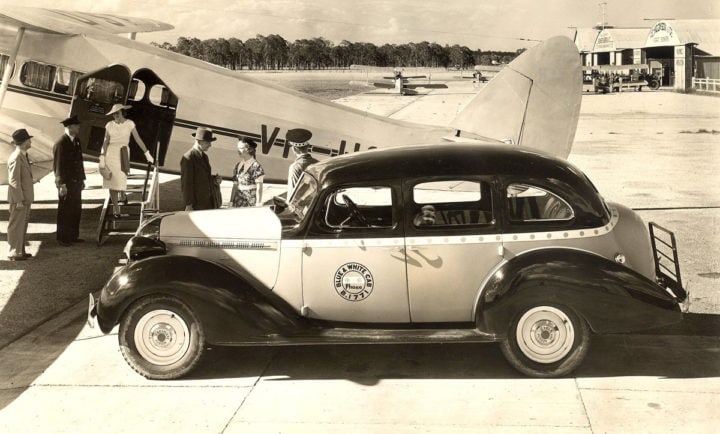
D.H.86 at Brisbane, 1935
Due to intense demand for individual sectors, through bookings on the very first London–Brisbane service were unavailable; only on the second week’s flight did two passengers complete the entire journey.
Imperial Airways and Qantas Empire Airways opened the 12,754-mile (20,526 km) London–Brisbane route with a one-way fare of £195 (over £9,500 in today's value), a compelling alternative to the six-week sea voyage that had previously been the only option for travelers to Australia.
The Flying Boat Era: Ten Days of Airborne Adventure
By 1938, advancements in aviation technology allowed the journey to be trimmed to approximately 10 days. The new iteration of the route began in Southampton and concluded in Darwin, with passengers traveling aboard the then cutting-edge Short C Class flying boat, which accommodated 15 guests in relative luxury.
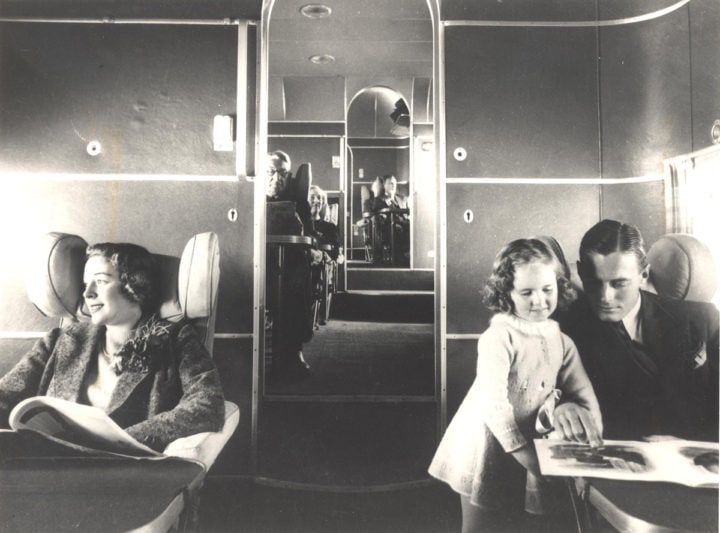
Spacious flying boat cabins on Qantas, 1938
Media coverage in both Britain and Australia showcased the flying boats’ comfort and generous space, fueling aspirations of glamour and adventure. Some promotional images even depicted passengers enjoying recreational activities onboard.
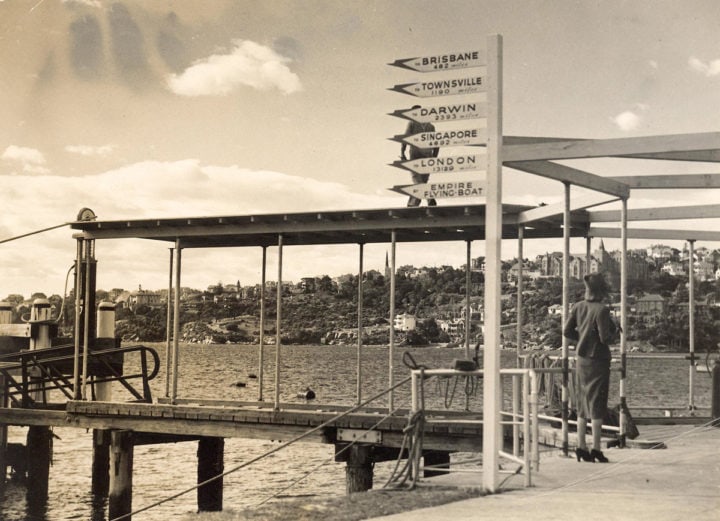
Rose Bay flying boat terminal, 1939
Despite amenities like a smoking lounge and a promenade deck, the reality at 10,000 feet was often bumpy. Pilots navigated tropical storms without the benefit of modern weather radar, and turbulence was a common companion.
Nonetheless, the onboard experience was elevated by attentive flight attendants serving gourmet meals and premium beverages, a precursor to today’s inflight hospitality.
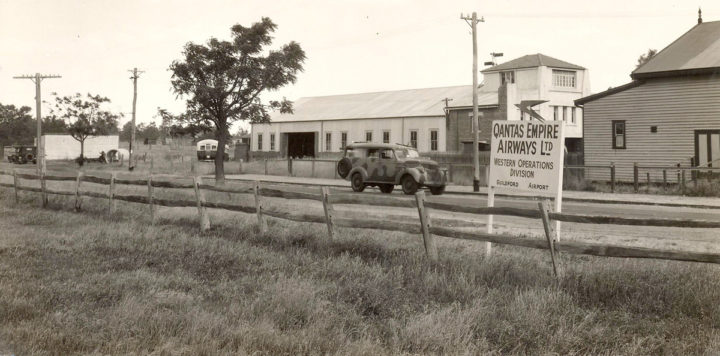
Guilford Airport Perth, a Qantas hub for UK flights in 1944
Cutting Travel Time: Four-Day Connections and the Rise of the Kangaroo Route
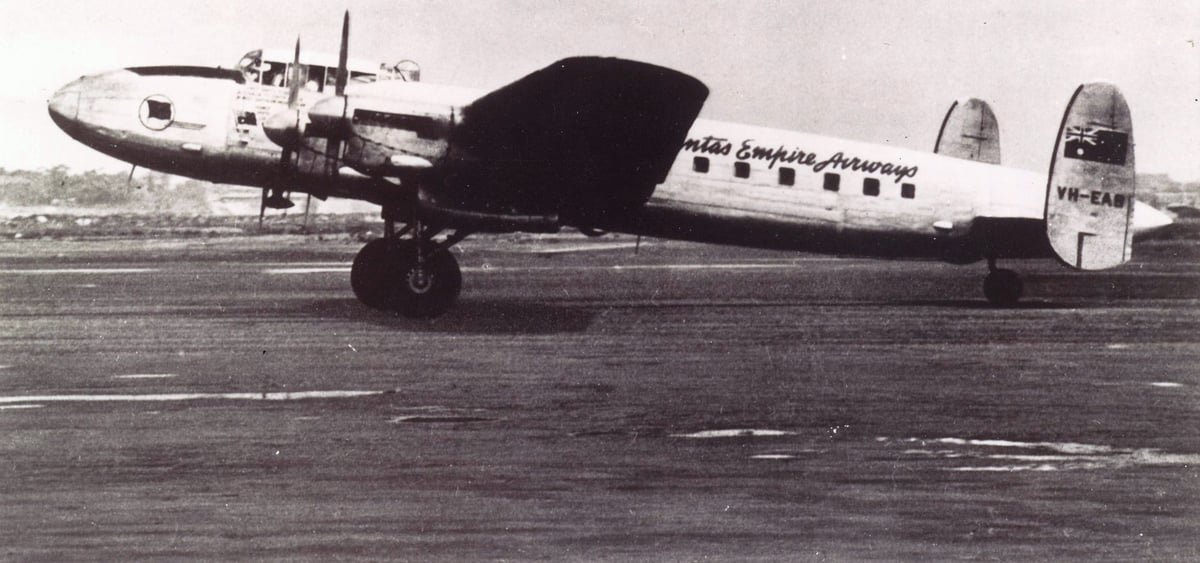
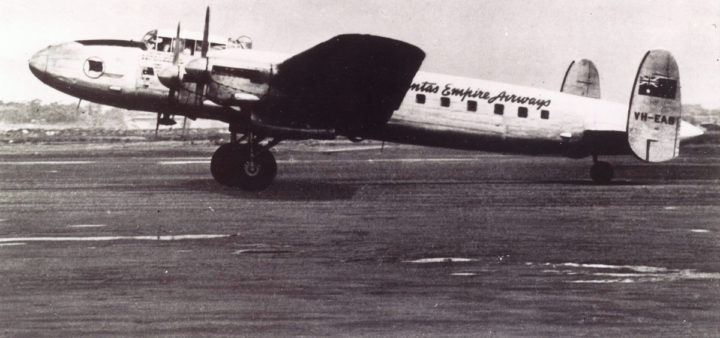
In May 1945, BOAC—the result of a merger between Imperial Airways and British Airways—introduced flights from Hurn Airport in southern England to Sydney, utilizing the Avro 691 Lancastrian. This Canadian-British aircraft, adapted from the wartime Avro Lancaster bomber, slashed the journey to around four days—an extraordinary leap forward for its time.
Qantas Avro Lancastrian
On 1 December 1947, Qantas inaugurated the Kangaroo Route with a Lockheed Constellation departing Sydney for London. The service carried 29 passengers and 11 crew, with stops in Darwin, Singapore, Calcutta, Karachi, Cairo, and Tripoli, and overnight breaks in Singapore and Cairo. A return fare was £585 (over £16,000 in today’s money), equating to over two years’ average earnings at the time.
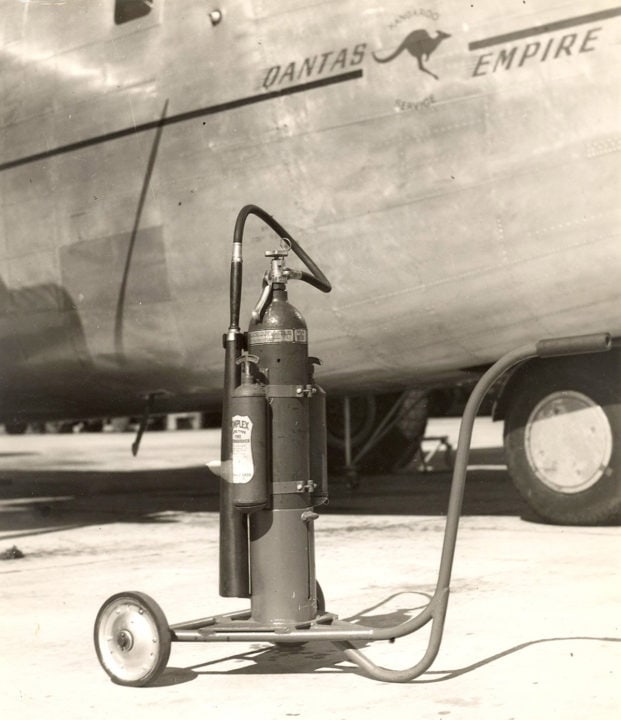
The iconic Flying Kangaroo emblem first appeared on Liberator aircraft in 1944
The introduction of the faster, long-range Super Constellation further compressed travel time, reducing the four-day journey to just over 54 hours—a remarkable achievement for mid-century aviation.
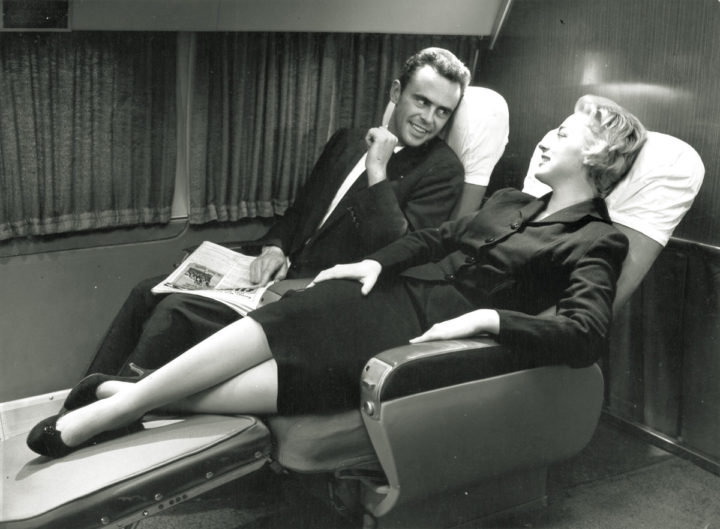
Lockheed sleeper seat experience, early 1950s
The Jet Revolution: Speed, Comfort, and the Jumbo Era
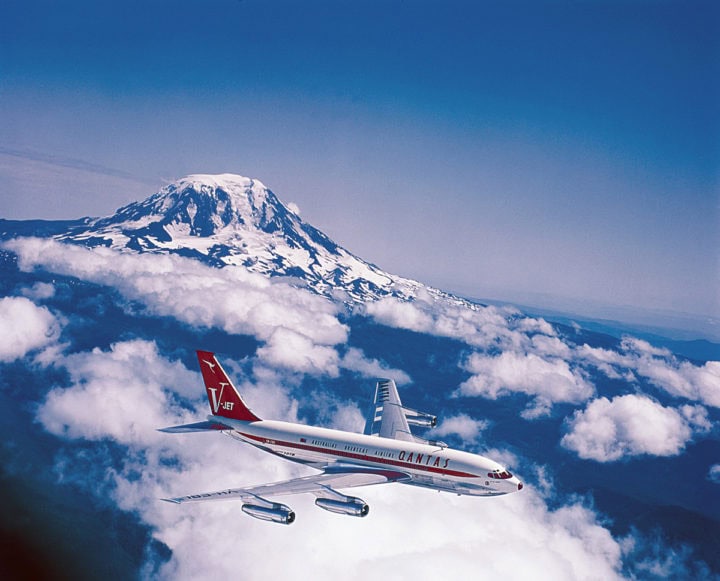
The jet age dawned in 1959, forever altering long-haul travel. BOAC led with Comets, Boeing 707s, and VC-10s, while Qantas acquired Boeing 707s for its fleet. By April 1960, passengers could reach London from Sydney in just over 34 hours, with eight stopovers en route.
Qantas introduces jet service to Australia, 1959
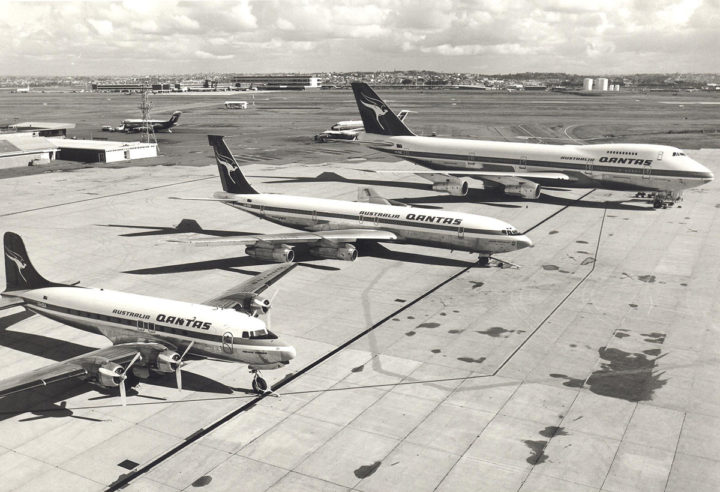
With the advent of powerful turbofan engines in the early 1960s, aircraft gained greater range, allowing airlines to eliminate stops like Darwin. By 1969, Qantas was operating 11 weekly Kangaroo Route flights between Sydney and London, each taking 29–32 hours with five or six layovers; BOAC offered a similar frequency with slightly more stops.
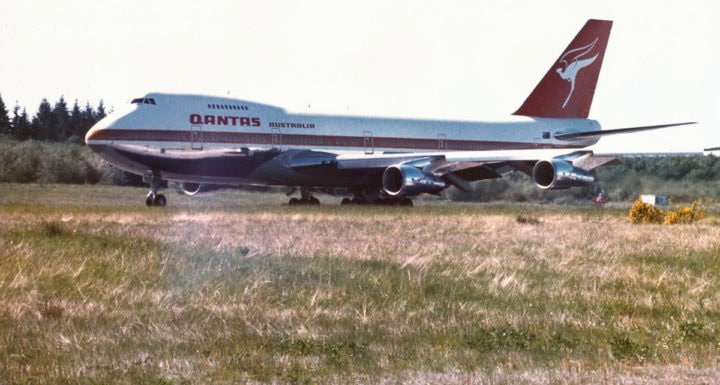
Qantas launches the Boeing 747-200, 1971
The ability to cruise at higher altitudes made flights smoother—a fact airlines promoted with playful advertising, such as images of children stacking matchsticks to demonstrate stability.
Qantas Boeing 747-200, 1971
The introduction of the Boeing 747 in 1971 was a watershed moment, reducing the journey to just two stops, typically Singapore and Bahrain. In 1989, the 747-400’s advanced engines enabled Qantas to break a world record, flying nonstop from London Heathrow to Sydney in just over 20 hours—a milestone in commercial aviation history.
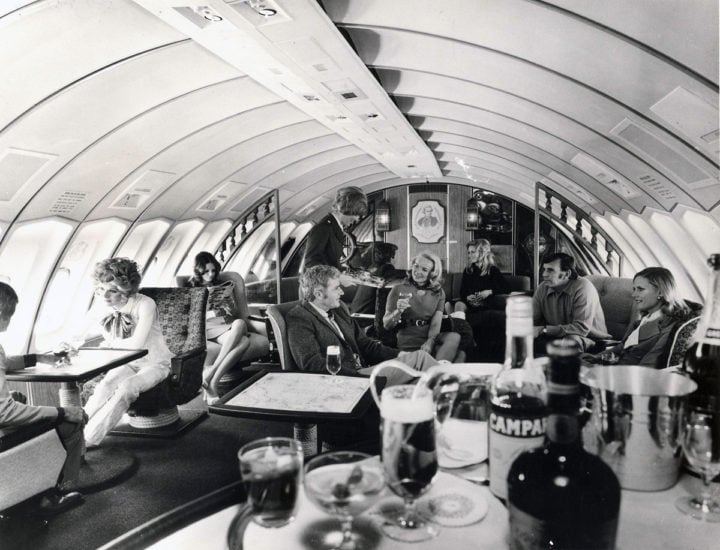
First Class upper deck lounge on the Boeing 747
Nonstop Excellence: 15-Hour Direct Flights in the Modern Era
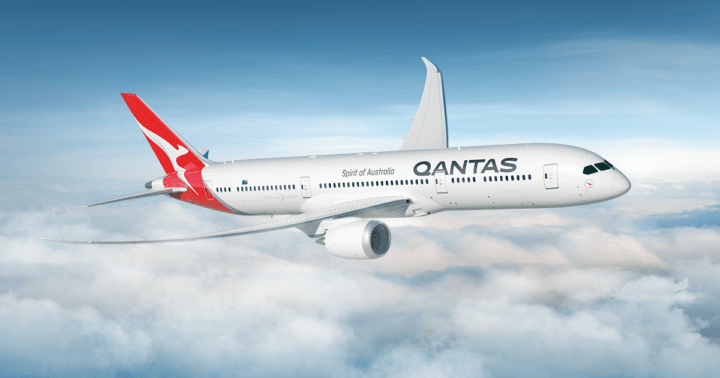
Following decades of one-stop journeys, nonstop flights between the UK and Australia have become reality thanks to the latest generation of long-range aircraft. Qantas’ Boeing 787 Dreamliner, engineered for exceptional comfort on ultra-long-haul routes, now connects London and Perth in a single, uninterrupted 15-hour flight.
Qantas Boeing 787 Dreamliner
While aircraft such as the Boeing 777-200LR have demonstrated the physical range for such routes, it is only with the fuel efficiency and reliability of new models like the Dreamliner that direct services have become commercially sustainable for airlines.
Over the past century, the journey has transformed from an exclusive, 12-day odyssey for the privileged few to a 15-hour experience accessible to a much broader segment of travelers. The evolution of the UK–Australia route stands as a shining example of how aviation continues to break boundaries and connect the world in ways once thought impossible.