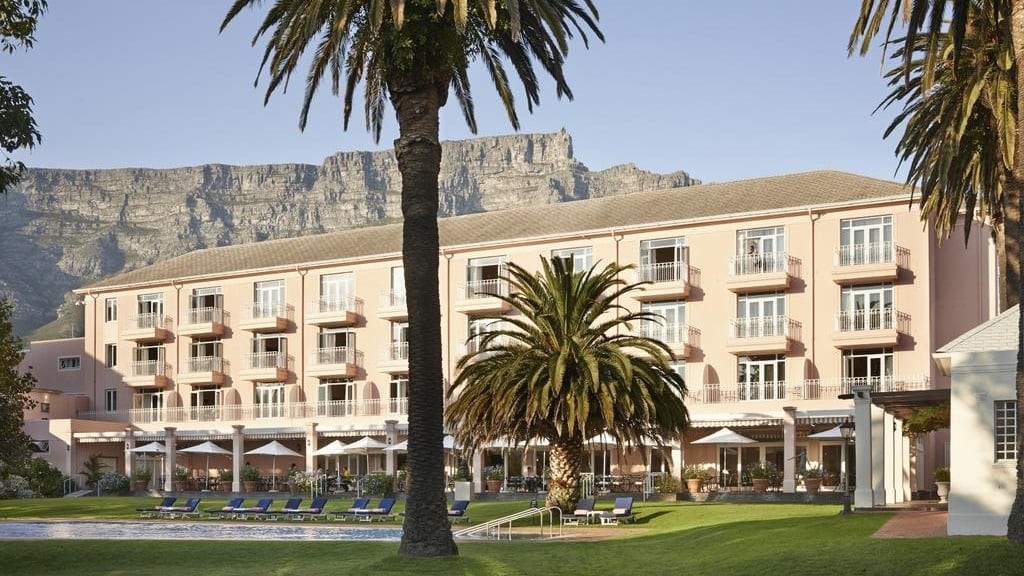

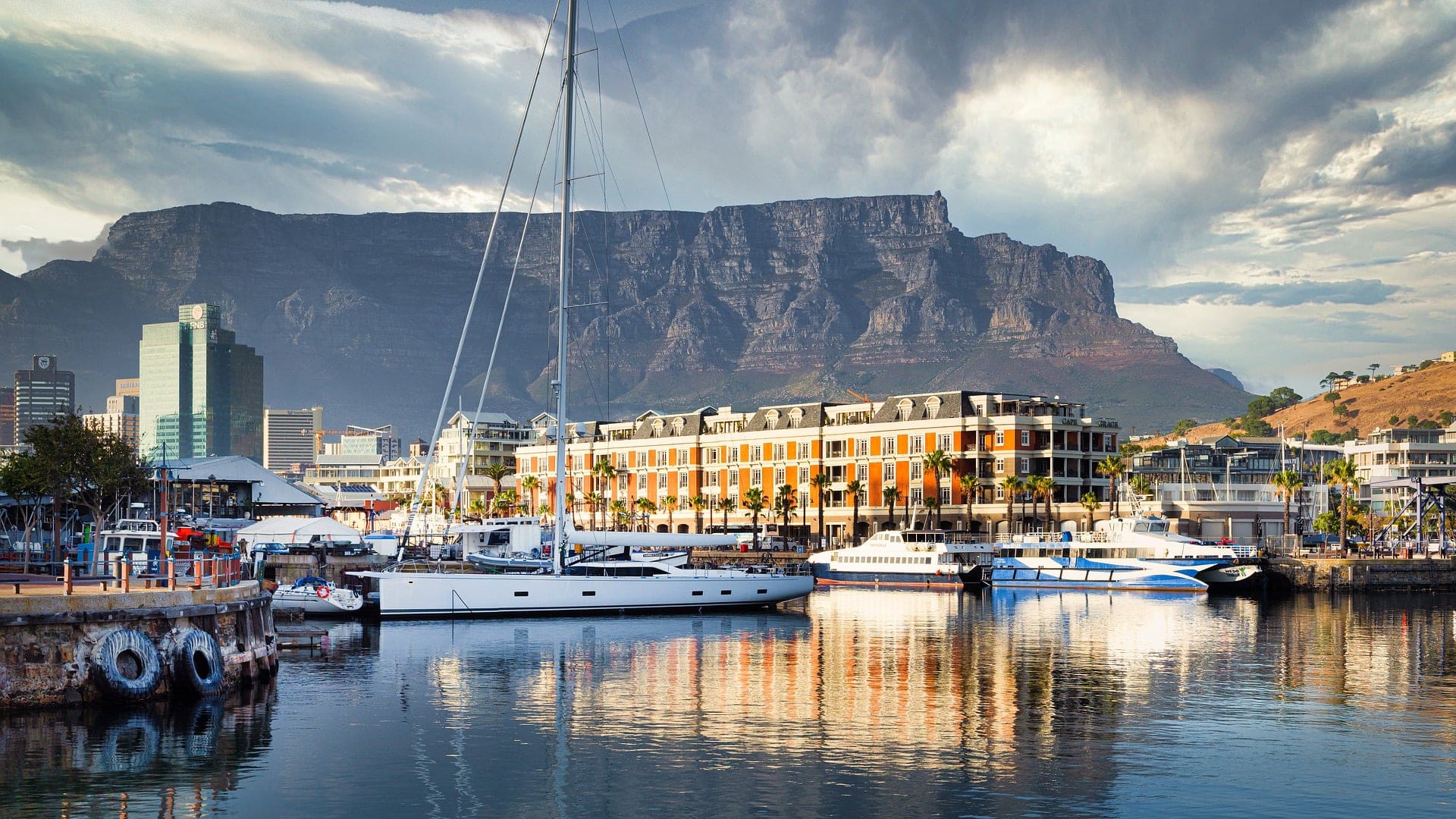
Table Mountain rises majestically above Cape Town, its iconic silhouette a constant companion to residents and travellers alike. Flanked by the dramatic ridges of Devil’s Peak to the east and Lion’s Head with Signal Hill to the west, it forms a breathtaking amphitheatre cradling the City Bowl and the historic Table Bay harbour. The mountain’s signature is its expansive, nearly three-kilometre-long plateau — instantly recognisable and celebrated worldwide.
Arriving by sea grants you an unparalleled perspective, with the legendary flat-topped Hoerikwaggo — or Tafelberg in Afrikaans — dominating the horizon. The highest point, Maclear’s Beacon, marks the eastern edge of the summit at 1,086 metres (3,560 feet) above sea level, standing as a testament to early surveyors and explorers. This historic stone cairn, placed in 1865, is nearly 20 metres higher than the iconic cableway station at the western rim.
The central cliffs are cleaved by Platteklip Gorge, offering the most direct and storied ascent — the same path taken by António de Saldanha in 1503. Today, the modern, rotating Table Mountain Aerial Cableway whisks visitors to the top in minutes, operating from sunrise until dusk, subject to weather. Upon arrival, a 45-minute circular trail leads you to panoramic viewing decks, each offering a different vantage point over Cape Town’s cityscape and coastline.
Table Mountain often wears its famous ‘tablecloth’ — a dramatic cloud formation created as southeasterly winds force moist air up the slopes, condensing at the summit. According to local legend, this is the result of an epic smoking duel between the Devil and the pirate Van Hunks, forever immortalised in Capetonian folklore.
Adventurous travellers will find a network of challenging hiking trails, meticulously maintained by passionate locals. While the mountain rewards those who summit on foot, the routes are demanding and best tackled with a knowledgeable guide. Many opt to hike up and descend via cable car, balancing exertion with relaxation.
For thrill-seekers, Abseil Africa offers the chance to step off the edge at over 1,000 metres above sea level, descending one of the world’s highest commercial abseiling sites. The descent delivers heart-stopping views over Camps Bay and the Atlantic, with a short trail returning you to the upper cableway station.
Whether you ascend by trail or cableway, the summit delivers sweeping, cinematic views of Cape Town below. Pause for a craft coffee or a gourmet snack at the stylish Table Mountain Café, and don’t miss the resident rock hyrax — locally known as dassies — as they bask on sun-warmed boulders amidst the clouds.


The City Primary Landmarks
Situated at Africa’s southwestern edge, where the warm Indian Ocean meets the cool Atlantic, Cape Town — affectionately dubbed the ‘Mother City’ — blends historic architecture, contemporary energy, and pristine coastline. The 17th-century Castle of Good Hope, the City Bowl’s modern skyline, fashionable eateries, organic markets, the lush 350-year-old Company’s Garden, and golden beaches all reflect the city’s cosmopolitan character and easy-going spirit.
Cape Town’s global appeal is matched by its deep African roots, visible in its vibrant communities and eclectic heritage. The V&A Waterfront, with its bustling Silo District, anchors the harbour, while Camps Bay, Hout Bay, and Bloubergstrand entice beach lovers and surfers with their scenic shores.
Among the city’s most photogenic districts is Bo-Kaap, renowned for its vividly painted houses and cobblestone lanes. This historic Muslim enclave is home to the legendary Atlas Trading spice shop — a fixture since 1946 — and the Bo-Kaap Museum, offering immersive insights into Cape Malay culture.
At the far southwestern tip lies the Cape of Good Hope Nature Reserve, carpeted in rare fynbos and dotted with secluded bays, rolling hills, and dramatic cliffs. As part of Table Mountain National Park, a UNESCO World Heritage Site, it spans over 7,750 hectares (19,150 acres), supporting endemic wildlife including antelope, baboons, Cape Mountain Zebra, and more than 250 bird species. The climb to the original lighthouse yields unrivalled ocean views and iconic photo opportunities.
Boulders Beach, near Simon’s Town, is world-famous for its African penguin colony, established in 1983. While these charismatic birds face ongoing conservation challenges, Boulders remains a sanctuary where visitors can observe them up close in a protected setting.
Just a 45-minute ferry from Cape Town, Robben Island stands as a powerful symbol of resilience and hope. Once the site of Nelson Mandela’s 18-year incarceration, the island is now a UNESCO World Heritage Site, drawing thousands eager to understand South Africa’s journey to democracy. Guided tours encompass the former leprosy graveyard, Mandela’s cell, the lime quarry, and key historical sites, offering a profound perspective on the nation’s history.
Kirstenbosch National Botanical Garden, nestled against Table Mountain’s eastern slopes, is acclaimed as Africa’s most magnificent botanical garden. Its sweeping lawns, dramatic mountain vistas, and curated displays of indigenous flora — including rare cycads and spectacular proteas — delight plant enthusiasts and casual visitors alike. With over 7,000 species cultivated, Kirstenbosch is a haven for biodiversity lovers.
Each year, Southern Right Whales migrate to the Cape’s sheltered bays to calve, while dolphins and sunfish are frequently seen on ocean excursions. Seals charm visitors at the V&A Waterfront and quaint Kalk Bay Harbour, adding to the city’s vibrant marine life.
To embrace local life, stroll or cycle the Sea Point Promenade, a lively coastal pathway. Bicycle rentals near the Sea Point Pools allow for a scenic ride ending at the V&A Waterfront, perfect for taking in the city’s energetic atmosphere.


Art and Culture in The City
Cape Town is a thriving hub for art lovers, brimming with boutique galleries, contemporary museums, and intimate performance venues. The Iziko South African National Gallery, set within the historic Company’s Garden, the celebrated Theatre on the Bay in Camps Bay, Artscape, and Baxter Theatre Centre all contribute to the city’s dynamic creative landscape. In the revitalised Woodstock district, leading galleries like Goodman Gallery, Stevenson, and Blank Projects represent a diverse array of contemporary artists. Essential stops for cultural immersion include the District Six Museum, the South African Jewish Museum, and the Iziko South African Museum.
The Zeitz Museum of Contemporary Art Africa (MOCAA), located in the V&A Waterfront’s Silo District, has redefined the African art world. As Africa’s largest contemporary art institution, Zeitz MOCAA curates and preserves works from the continent and its diaspora. Established through a visionary public-private partnership, the museum houses an outstanding permanent collection on long-term loan from philanthropist Jochen Zeitz.
The collection features globally recognised artists such as Chris Ofili, Kudzanai Chiurai, Kehinde Wiley, Marlene Dumas, Wangechi Mutu, and Julie Mehretu. Housed in a dramatically repurposed 57-metre-tall grain silo dating to 1921, the museum’s architecture is a feat of innovation — with soaring cathedral-like spaces carved from concrete cylinders, providing over 100 galleries for immersive exhibitions.
For those seeking a multisensory arts experience, the Norval Foundation in Steenberg has become a leading centre for 20th- and 21st-century South African and international art. Surrounded by indigenous gardens and sculptural installations, the foundation features a sculpture garden, open-air amphitheatre, curated exhibitions, a research library, the acclaimed Skotnes Restaurant, and a thoughtfully curated museum shop — all designed to inspire and engage visitors.


Cape Town’s Culinary Scene
Cape Town’s dining scene is a vibrant fusion of global influences and local heritage, blending Cape Malay spices, traditional African flavours, and exceptional produce from nearby farms. The city’s celebrated chefs champion sustainable sourcing and foster close relationships with artisanal suppliers, resulting in a gastronomic landscape that attracts discerning food lovers from around the world.
Among the city’s most lauded establishments is The Test Kitchen Fledglings, carrying on the legacy of Luke Dale-Roberts and consistently ranked among South Africa’s finest. Other notable addresses include The Pot Luck Club, Foxcroft, La Colombe, Salsify, Beau Constantia, and The Greenhouse, all recognised for their innovation and excellence.
Bree Street in the City Bowl has cemented its reputation as Cape Town’s culinary epicentre, lined with stylish cocktail bars and inventive restaurants such as Chef’s Warehouse and Grub & Vine. Kloof Street also draws a lively crowd, home to perennial favourites like Jansen’s, Black Sheep, Kloof Street House, and La Paradiso, each offering a unique twist on contemporary dining.
Capetonians’ passion for wellness and sustainability is reflected in the city’s flourishing organic markets. The Old Biscuit Mill transforms every Saturday morning into a lively gathering of food artisans, oyster shuckers, and craft brewers. Similarly, the Oranjezicht City Farm Market at Granger Bay is a weekend institution, celebrating Cape Town’s farm-to-table culture with communal tables overlooking the Atlantic and a bounty of local delicacies. The innovative Maker’s Landing at the Cruise Terminal further enhances the city’s culinary reputation.
Coffee culture is an essential part of Cape Town’s identity. The award-winning Truth Coffee Roasting — famed for its steampunk aesthetic — is regularly rated among the world’s best. Other local favourites include Tribe Coffee, Deluxe Coffeeworks, and Bootlegger Coffee Company, each serving expertly crafted brews in atmospheric settings.
No visit is complete without a journey to the Cape Winelands. Whether arriving by helicopter or chauffeured vintage car, the estates of Stellenbosch, Babylonstoren, and Boschendal offer world-class wines, exceptional cuisine, and sophisticated hospitality in picturesque surroundings.


Historic Hotels, Architectural Marvels, Coast-Hugging Villas
Positioned at the confluence of Atlantic and African influences, Cape Town is renowned for its sophisticated accommodation — from storied five-star hotels to striking contemporary builds and exclusive private villas. Each property showcases exceptional service and captivating views, with an increasing number of travellers opting for private, coast-hugging retreats for added privacy and luxury.
Discover our curated guide to Cape Town’s finest luxury hotels.
Getting Around Cape Town
Navigating the city is effortless, thanks to the ever-present Table Mountain and the sweeping coastline. Self-drive is ideal for exploring the greater Cape Peninsula, while Uber and reputable metered taxis make city travel seamless. Most luxury hotels offer chauffeur-driven transfers for guests, ensuring stress-free, secure journeys throughout the Mother City. For a memorable arrival, consider a helicopter transfer, classic car experience, or private yacht charter. Note that public transportation options remain limited for visitors.
How to Arrive
Cape Town International Airport continues to be one of Africa’s best-connected gateways, welcoming global airlines and offering seamless links to major domestic and regional destinations. The city is an exceptional standalone destination and also serves as a gateway to South Africa’s renowned safari lodges, scenic road trips, and iconic attractions like Victoria Falls.
Businessclass scans hundreds of travel platforms to bring you the top premium flight offers. Businessclass compares leading hotel suppliers to secure the best rates at the city’s most prestigious properties.
Book your next premium flight to Cape Town with Businessclass for an exclusive travel experience: