
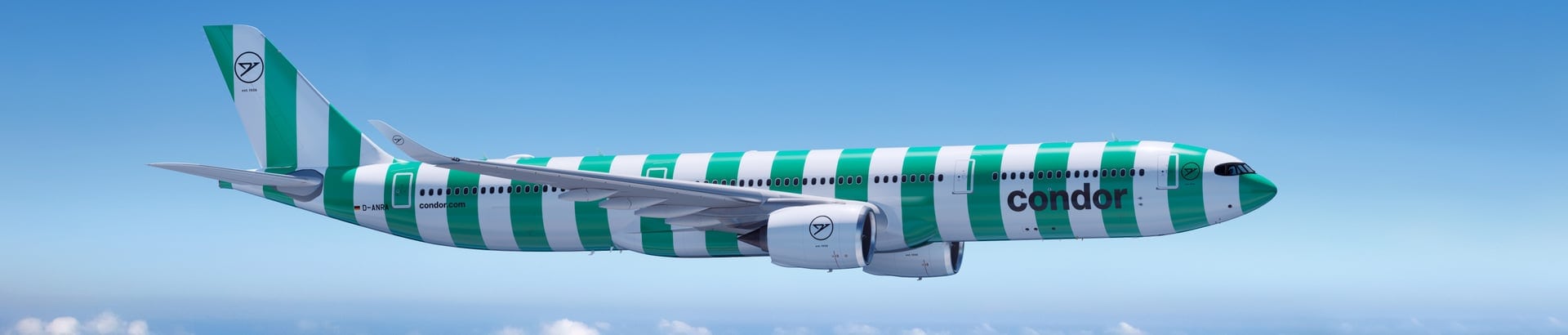
Condor Airlines is a German leisure airline founded in 1955. The airline has long connected Germany with holiday destinations in the Mediterranean, Caribbean, Africa, Asia, and North America, but its newer Airbus A330neo fleet has made Condor’s business class more relevant for premium travelers on transatlantic routes.
Condor Airlines business-class cabin on the Airbus A330neo includes lie-flat seats and four larger Prime Seats in the front row. These features move the product closer to a modern international business-class cabin than the older leisure-airline model.
This review looks at Condor’s business class across the full journey, from the booking and check-in processes to the airport experience, cabin layout, cuisine, in-flight service, entertainment, amenities, and sustainability efforts. It also explains how the experience changes by aircraft and route, because the Airbus A330neo product differs sharply from Condor’s shorter-haul business class.
Booking and Check-In Process
Booking
Travelers can book Condor business class directly through the airline’s website or through specialized premium travel agencies like BusinessClass.com. On the airline’s website, travelers can pay either in cash or use their miles from partner loyalty programs. Condor does not operate its own frequent-flyer program, so award availability depends on partner access, route, and travel date. For travelers using miles, searching for award tickets early gives more room to work around seasonal demand and route variation.
Alaska Airlines’ Mileage Plan offers many US-based travelers a simple way to book with Condor. Alaska Airlines and Condor have an extensive partnership that connects Condor flights with more than 115 destinations in the US, Canada, Mexico, and Costa Rica. This helps travelers build one itinerary from cities that Condor does not serve directly, and pay for it with miles.
JetBlue’s TrueBlue program also allows members to earn and redeem points on qualifying Condor-operated flights in economy, premium economy, and business class.
One detail deserves attention when the itinerary starts outside Condor’s own network. A short domestic flight may be in economy instead of business class, even when the Condor transatlantic flight is business class.
Check-In
Condor online check-in opens 24 hours before departure. The exact closing time varies by airport. The Condor app allows passengers to check in, store a boarding pass, and receive flight updates.
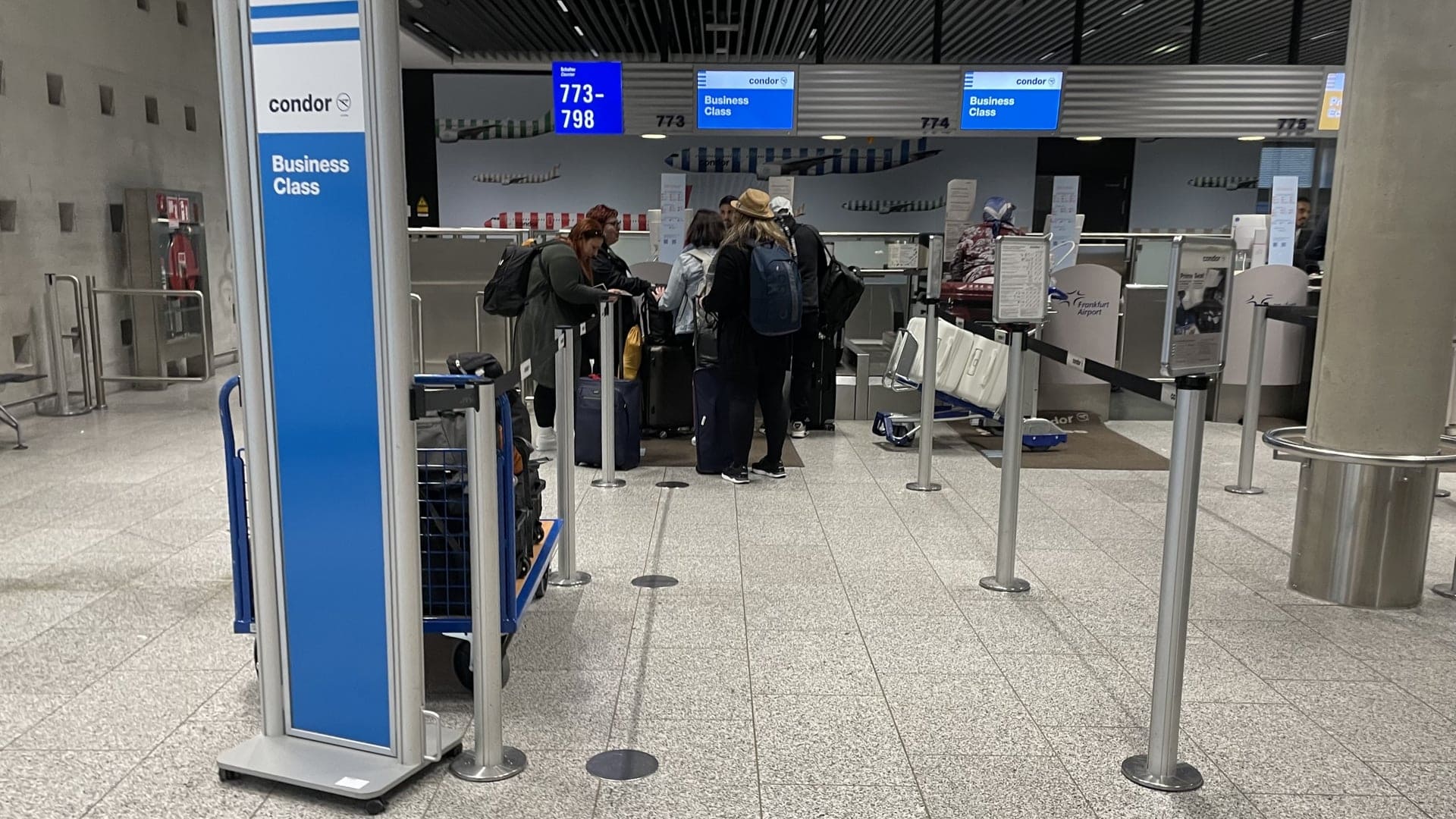
Condor priority services include check-in at the premium economy or business-class counter, priority security at certain airports, priority boarding, and priority baggage handling.
Baggage Allowance
Condor’s business-class tickets include more checked baggage than economy ones, but the exact allowance depends on the fare, route, and operating airline. On many business-class itineraries, passengers can check one or two bags weighing up to 70 pounds (32 kg) each.
Business-class travelers also receive priority baggage handling where available. This helps most at large airports, such as Frankfurt Airport (FRA), where departures can involve busier check-in areas and longer processing times.
For itineraries involving partner airlines, baggage rules can differ between segments.
Airport Experience
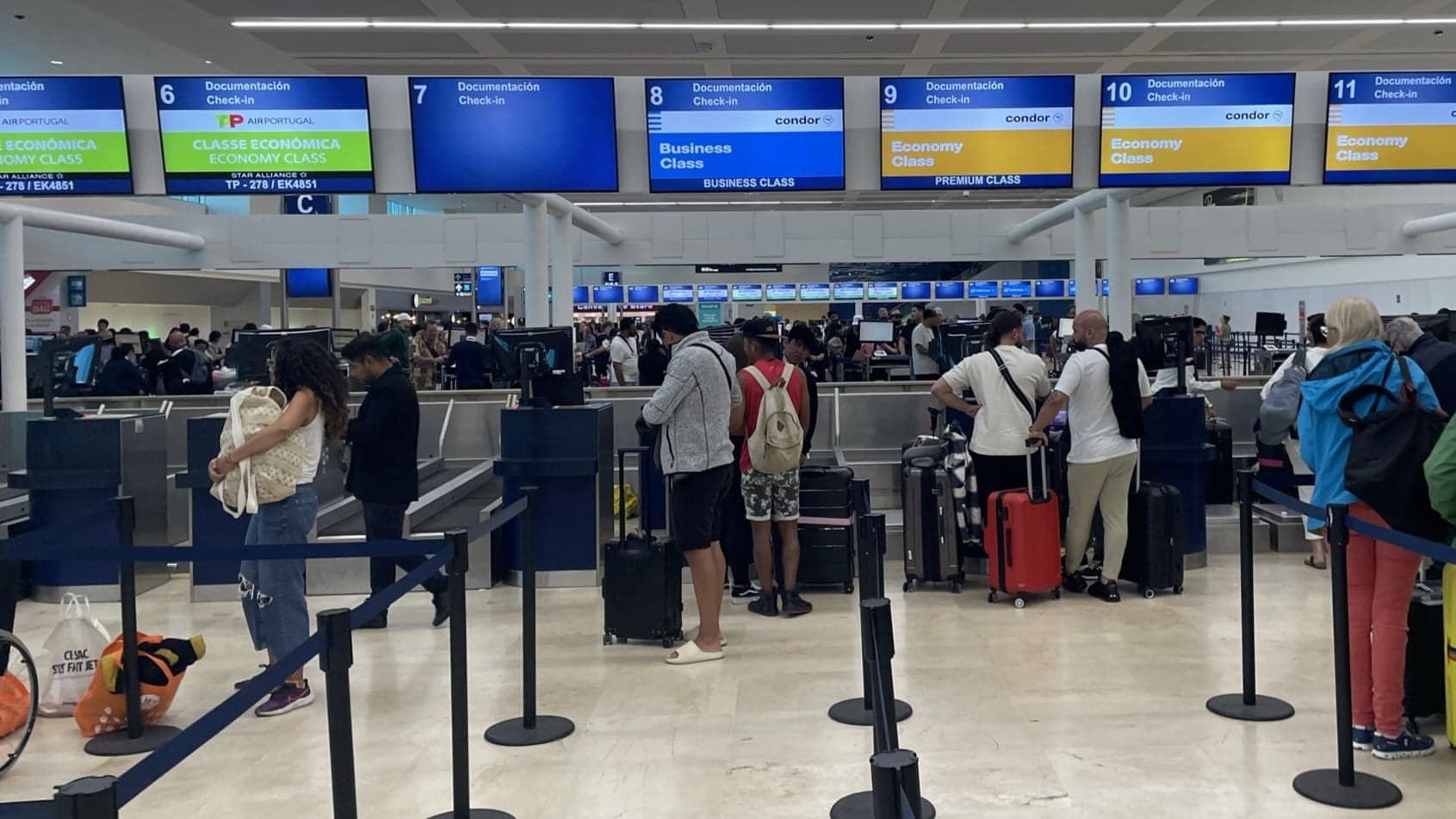
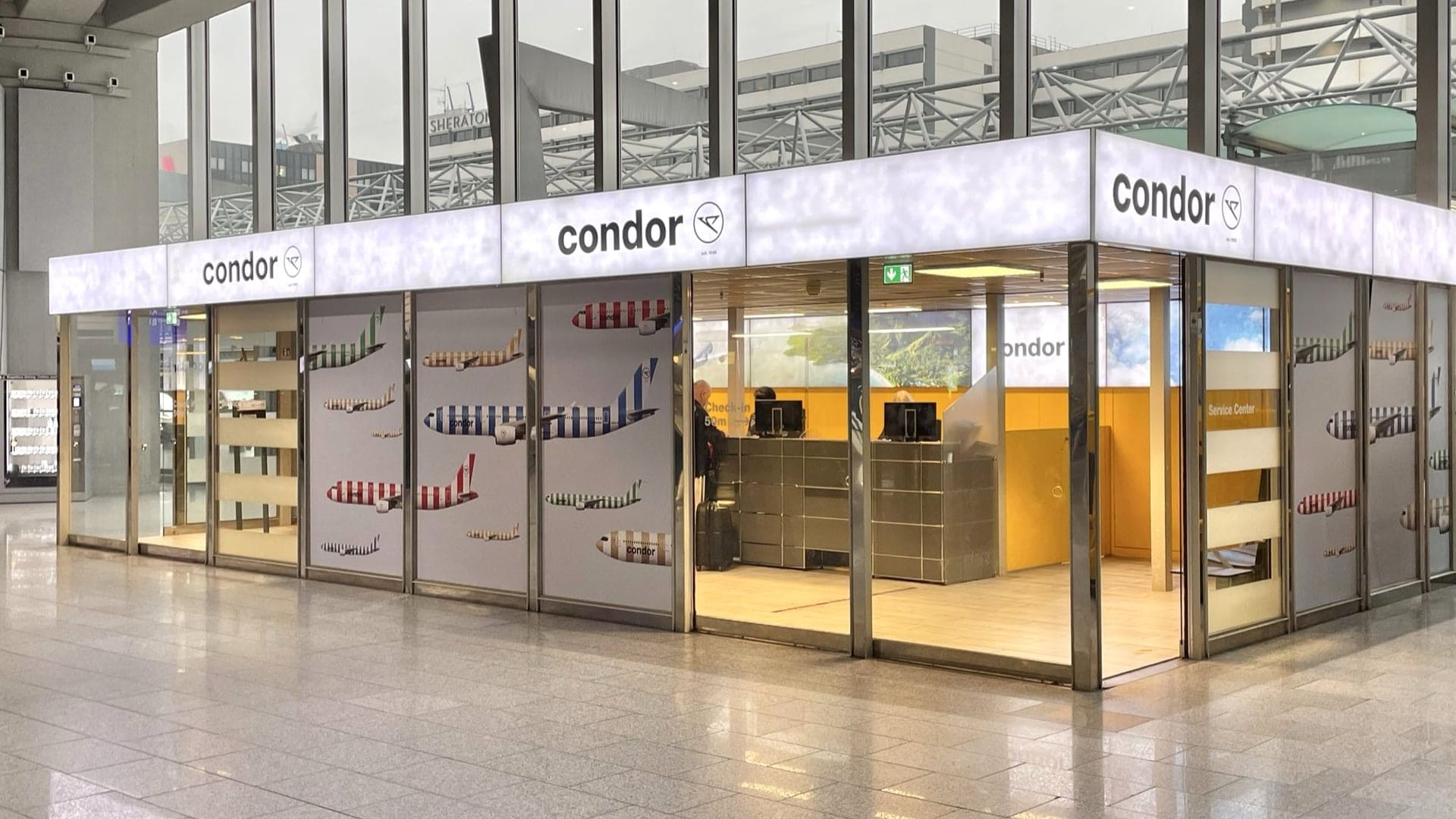
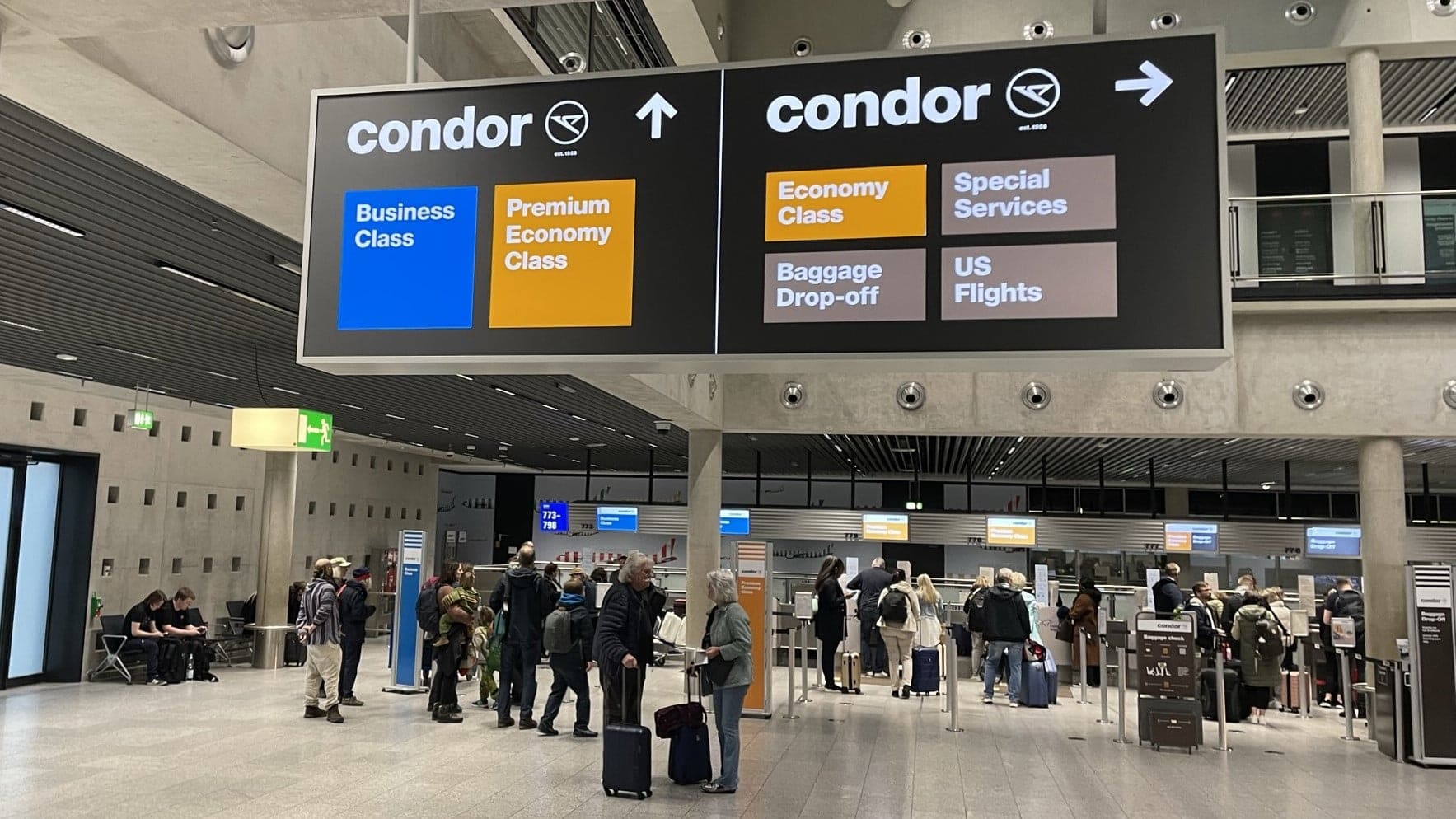
Pre-Boarding
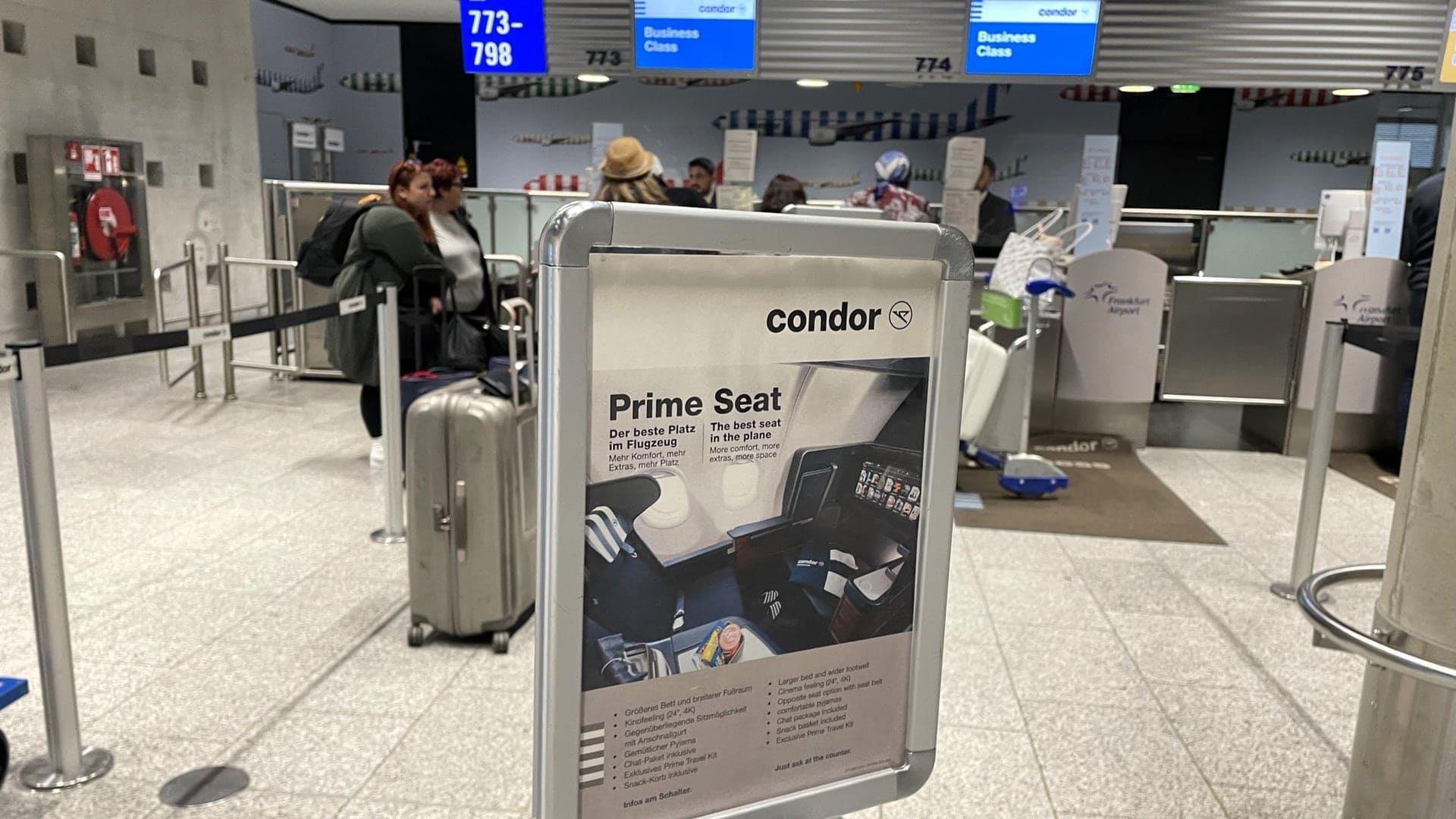
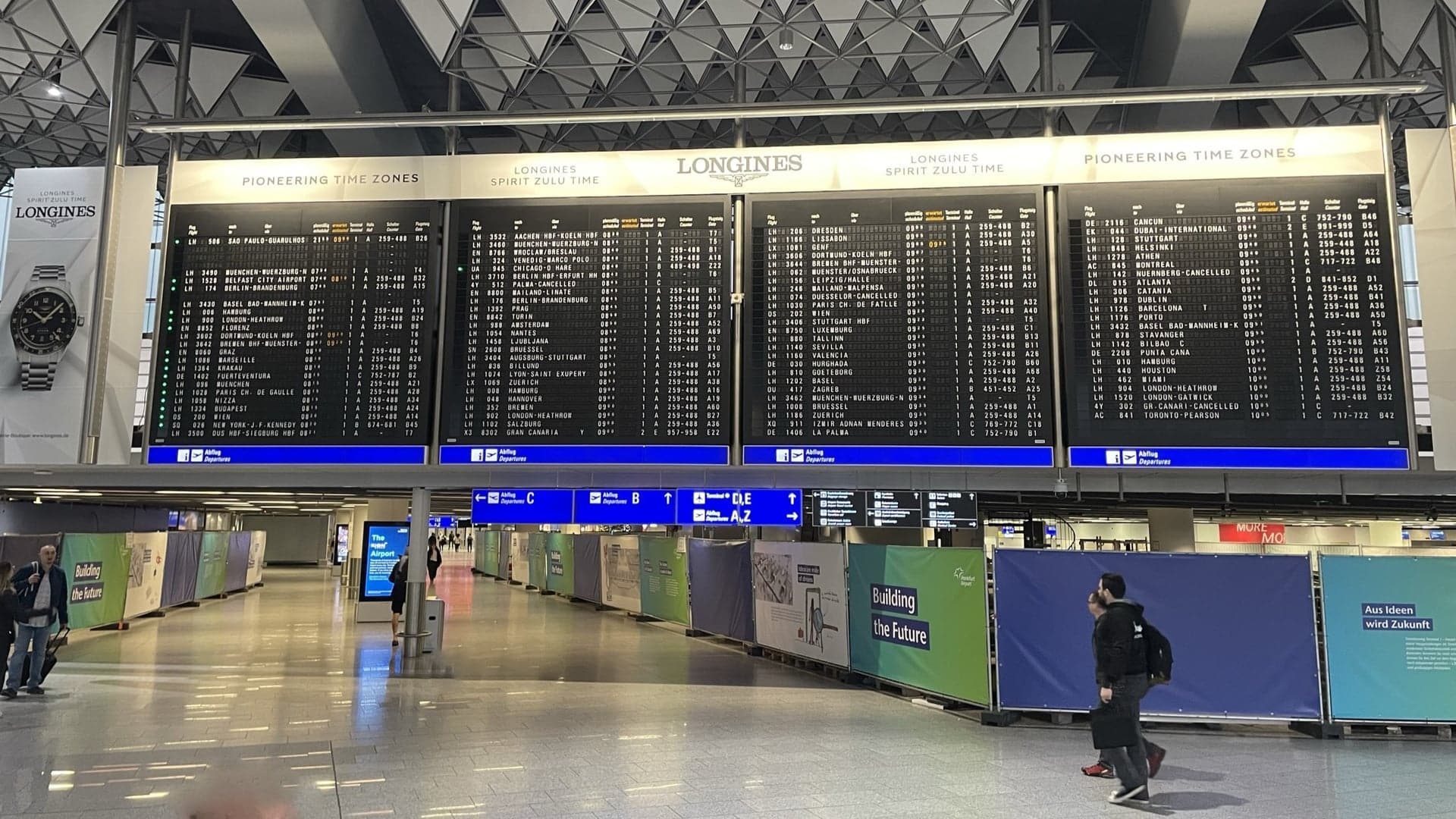
Frankfurt Airport (FRA) gives the clearest view of the Condor business-class ground experience because it serves as Condor’s primary hub for longer routes. Condor currently uses Terminal 1, with check-in in Hall C, Zone 19. The airline also offers evening-before check-in at Frankfurt Airport (FRA) from 6 pm to 10 pm, so passengers on early departures can handle checked baggage before the day of travel.
Frankfurt Airport (FRA) is large, but for business-class travelers, priority services make the airport sequence easier to manage before a long flight.
At Frankfurt Airport (FRA), the Condor business-class airport process can include:
- Priority check-in
- Priority baggage handling
- Lounge access
- Fast-track security where available
- Priority boarding
Fast-track security depends on the airport, terminal, and operating conditions.
Condor plans to move to Terminal 3 at the start of the 2027 summer schedule, so the Frankfurt ground experience will change once that move takes place.
Lounge Access at Frankfurt Airport (FRA)
Condor does not operate its own business-class lounge at Frankfurt Airport (FRA). Eligible travelers use partner lounges in Terminal 1. Which lounge is more convenient for business-class passengers depends on the departure gate and whether the flight leaves from a Schengen or non-Schengen area.
The main options include Lufthansa Business Lounge locations in Departure Halls A, B, and C, as well as the Luxx Lounge between areas B and C on the gallery level outside the transit area. The Lufthansa Business Lounge in Hall C can be a good option for some Condor departures, although access depends on the assigned gate area.
Lounge Access at Other Airports
Outside Frankfurt Airport (FRA), Condor’s business-class lounge access depends on partner lounges and local airport agreements. The assigned lounges change by route and departure area. In some cities, Condor uses Plaza Premium Lounges; in others, travelers can access local contract lounges or airline partner lounges.
At Los Angeles International Airport (LAX), for example, Condor flights use the Tom Bradley International Terminal for many international departures, and eligible travelers can use the Air France Lounge there.
Cabin and Seats
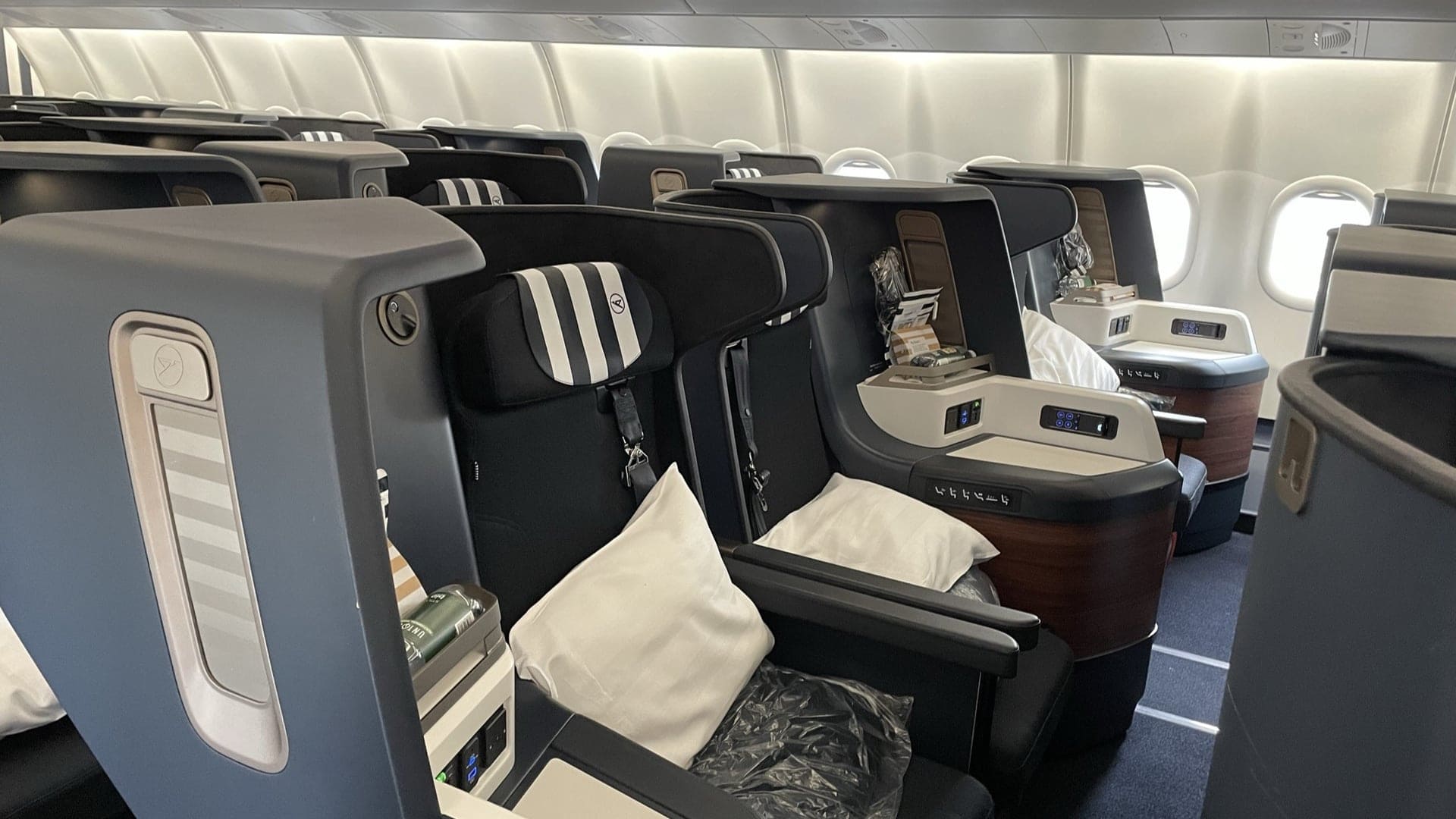
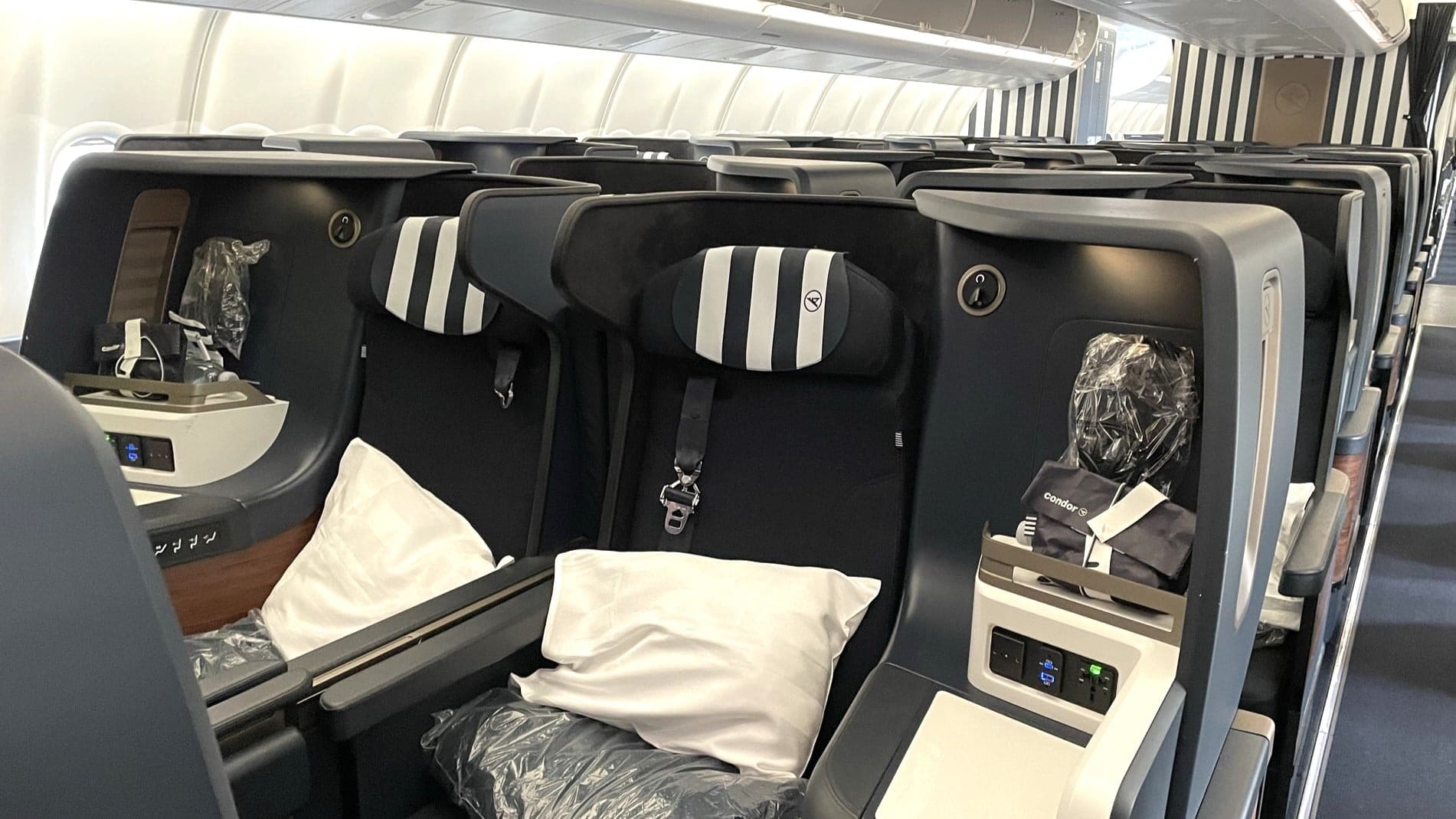
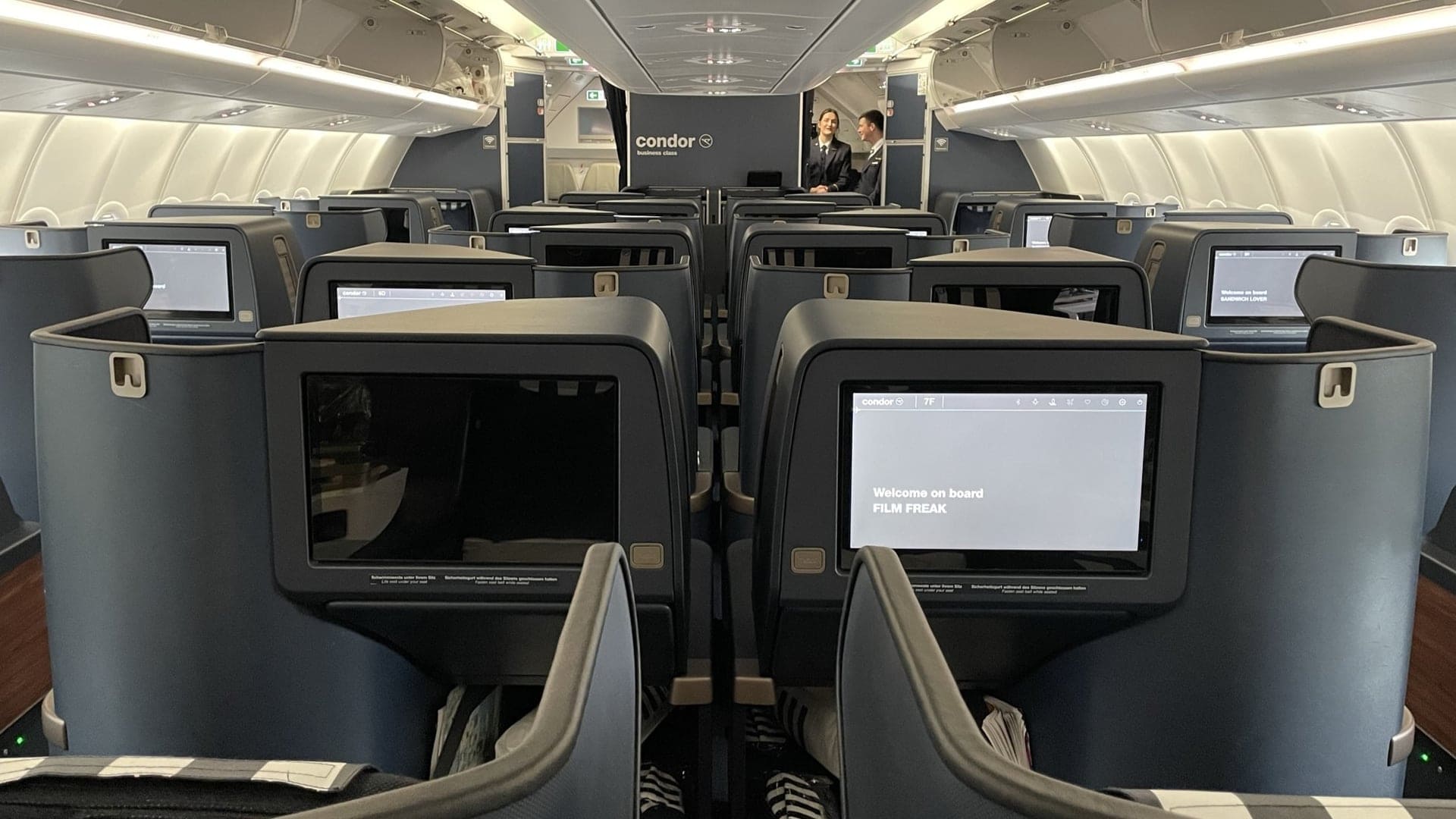
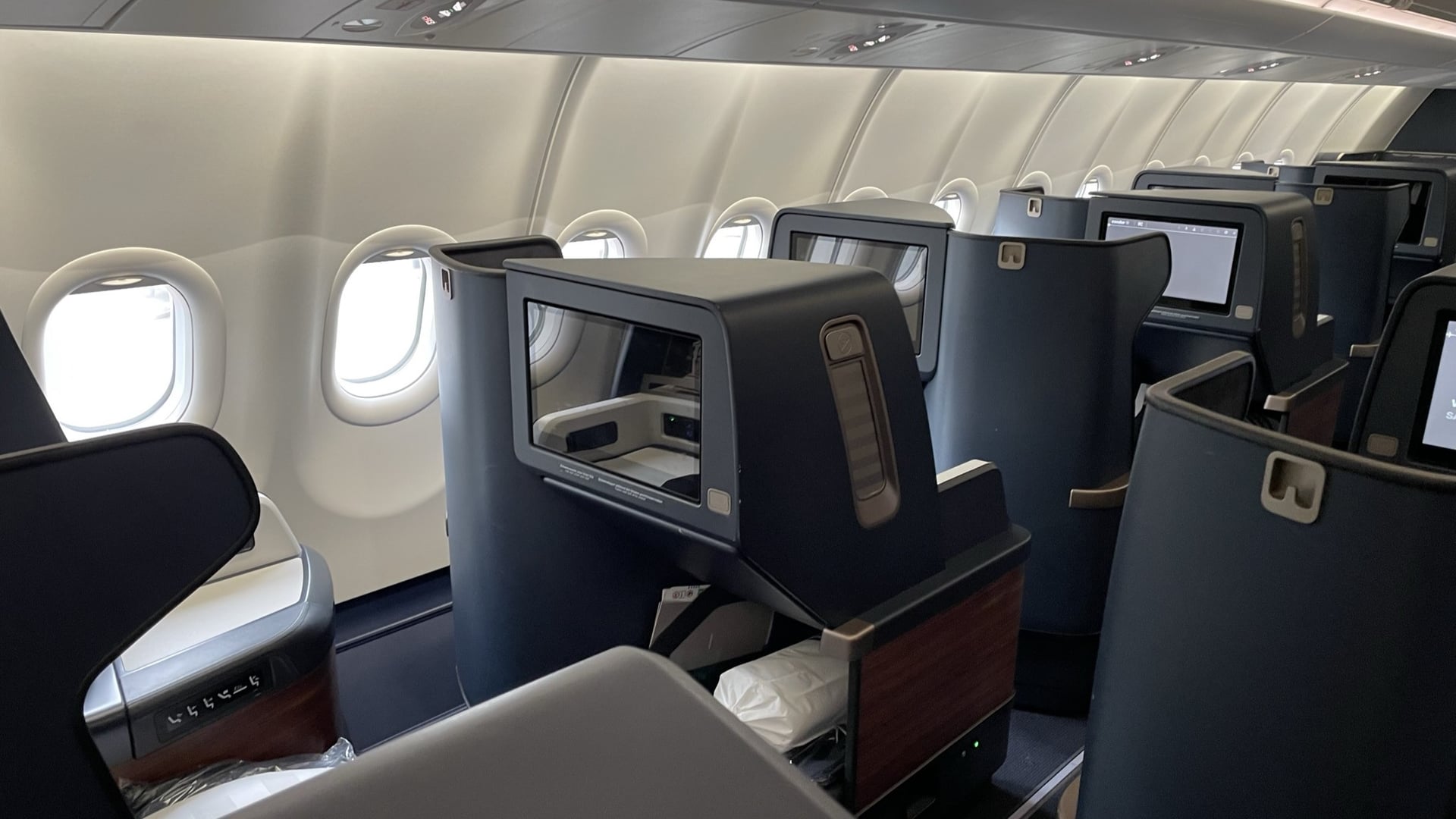
Airbus A330neo Business-Class Cabin
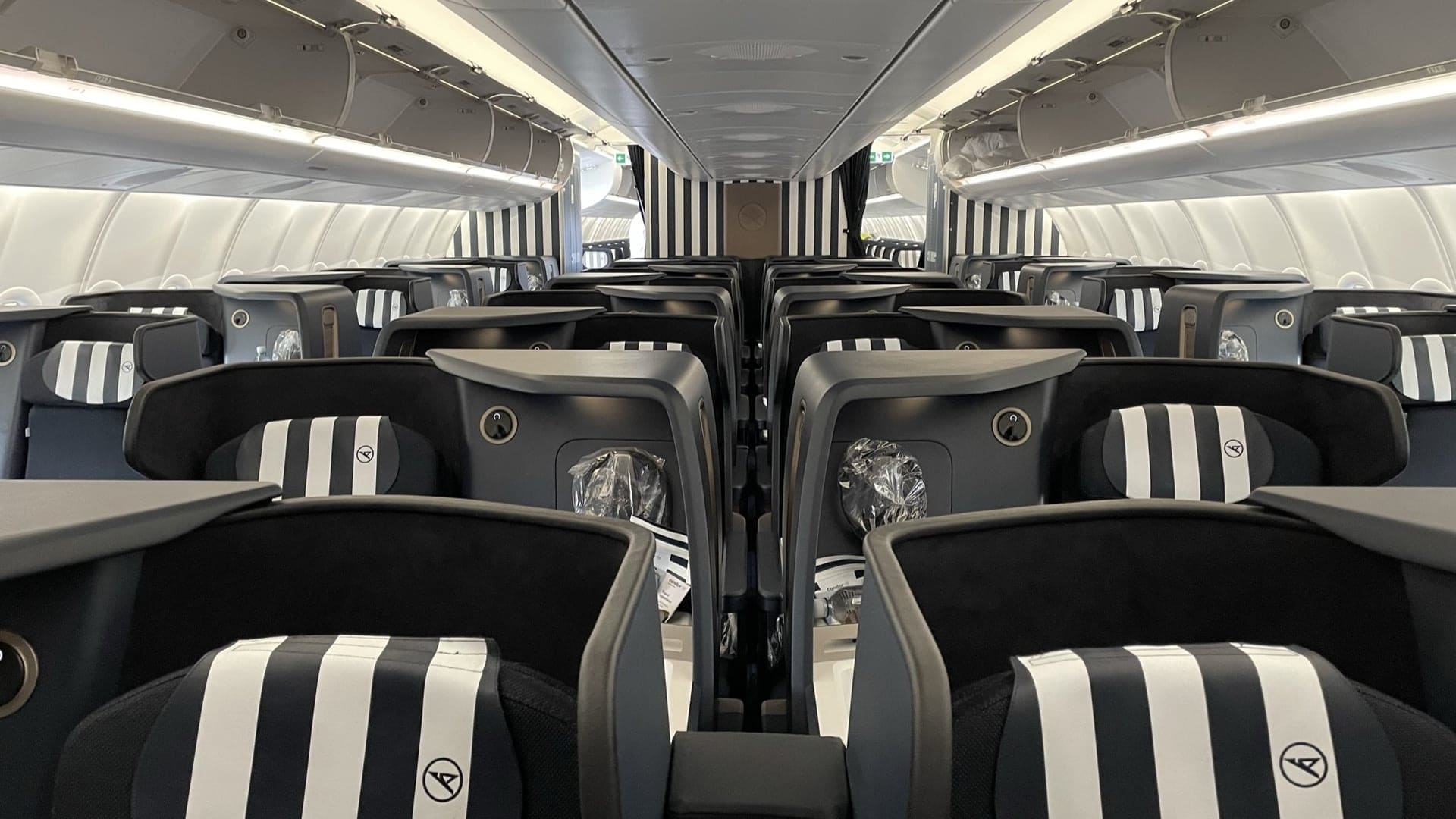
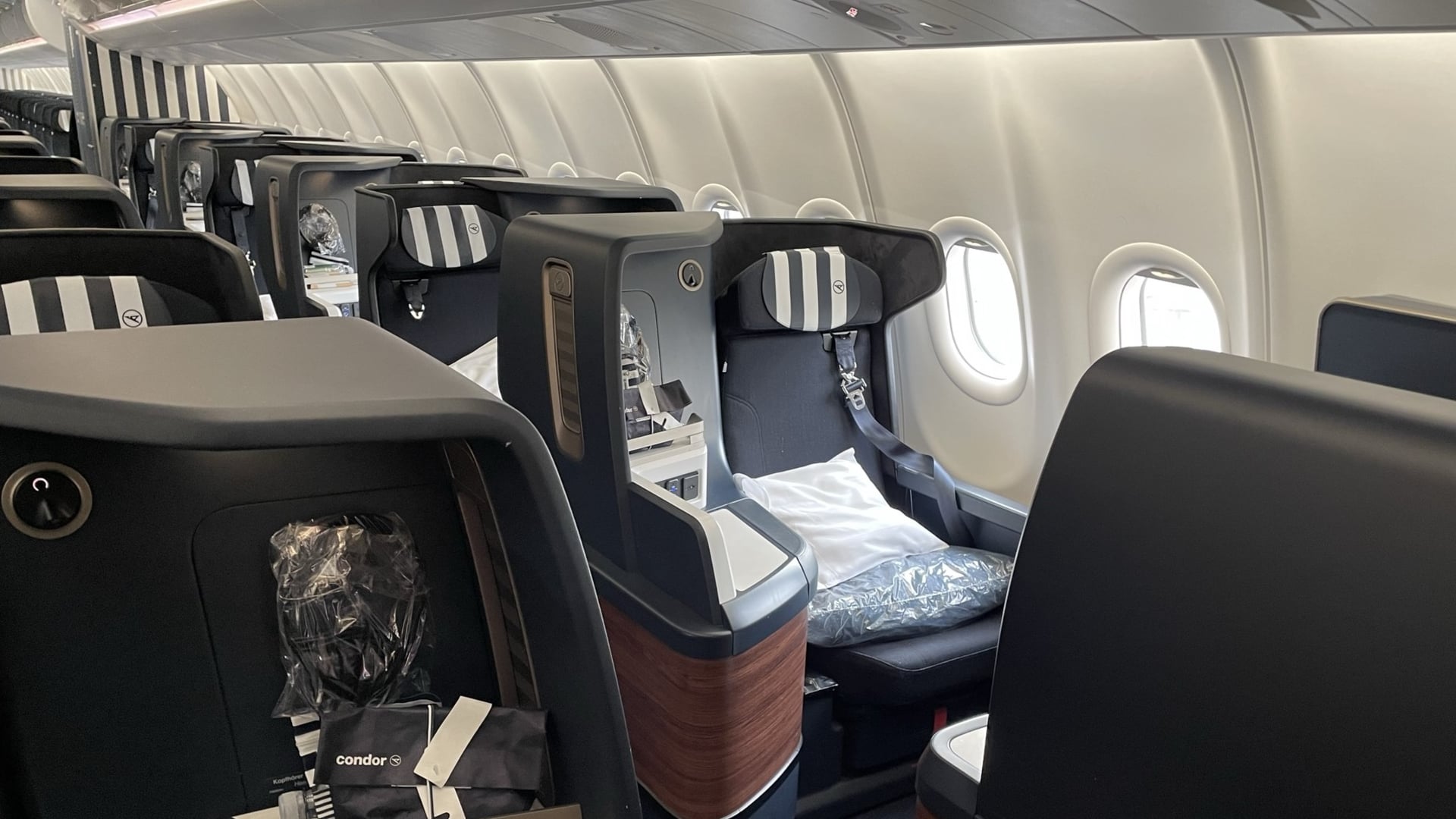
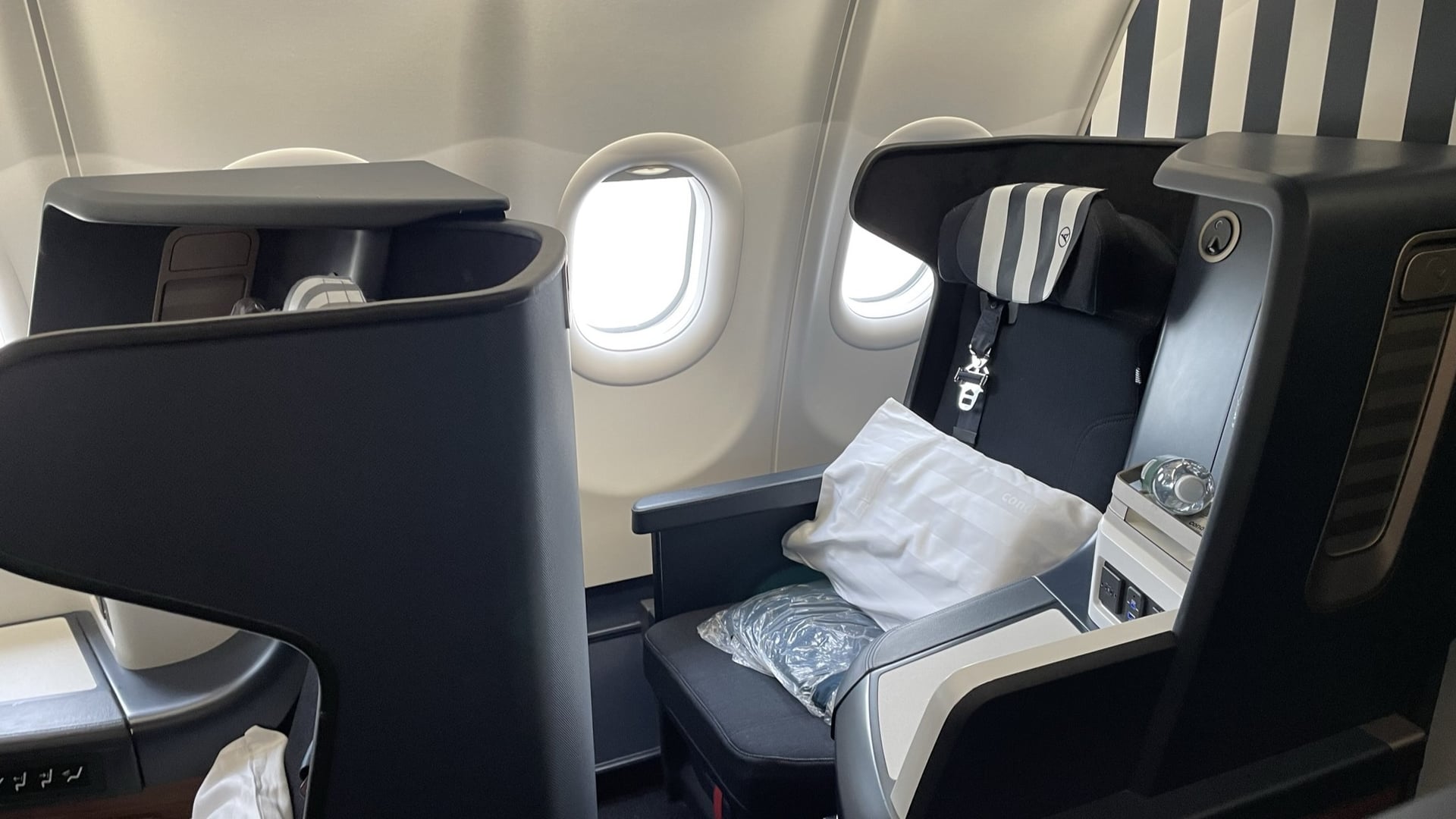
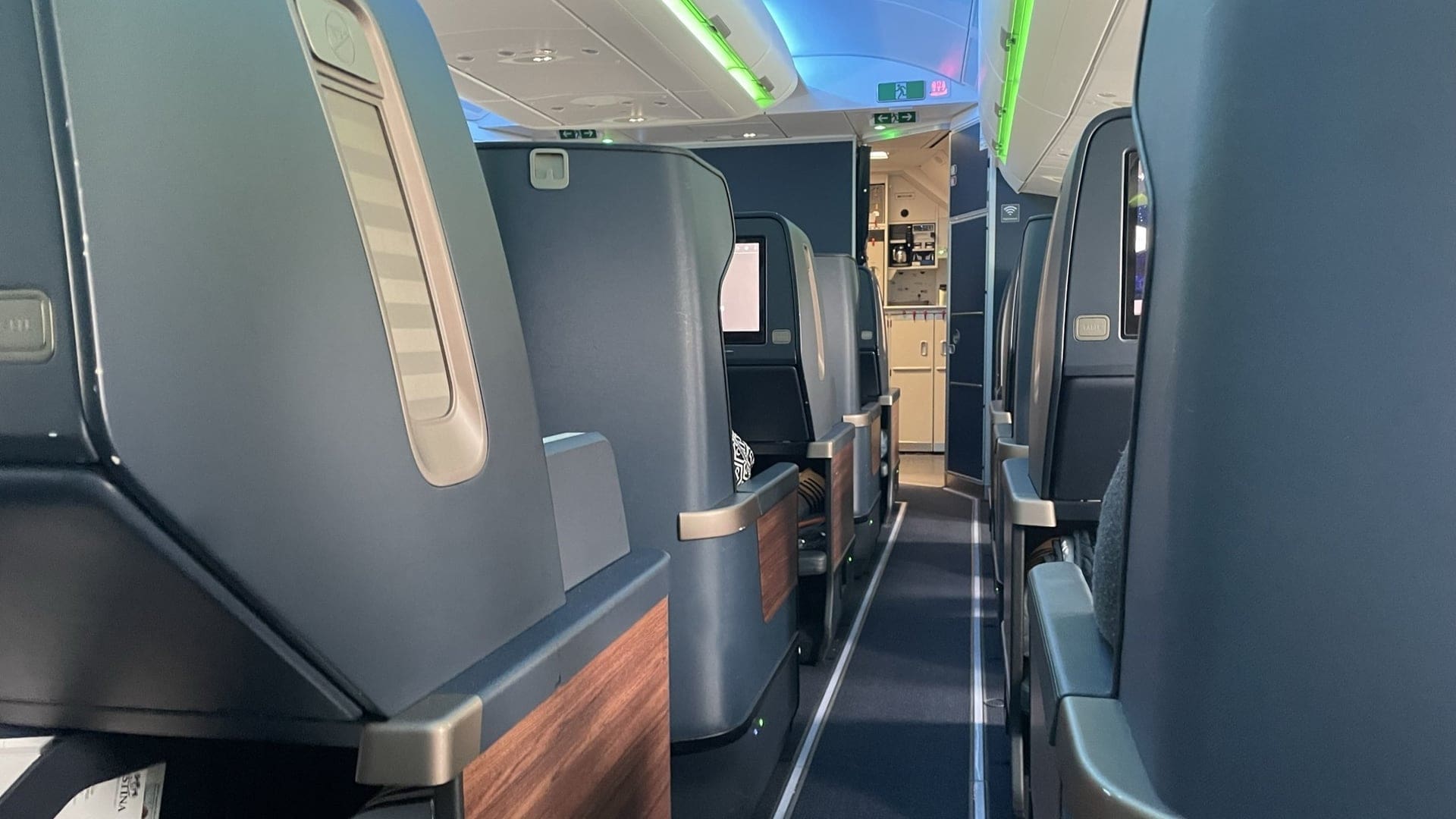
Condor’s business-class cabin is available on Airbus A330neo aircraft, which operate long routes. The business-class cabin features:
- 30 business-class seats across eight rows
- 26 standard business-class seats
- Four Prime Seats in the front row
- A staggered 1-2-1 configuration
- Direct aisle access at every seat
The 1-2-1 layout gives the cabin its biggest structural advantage. Every passenger can reach the aisle without stepping over another passenger.
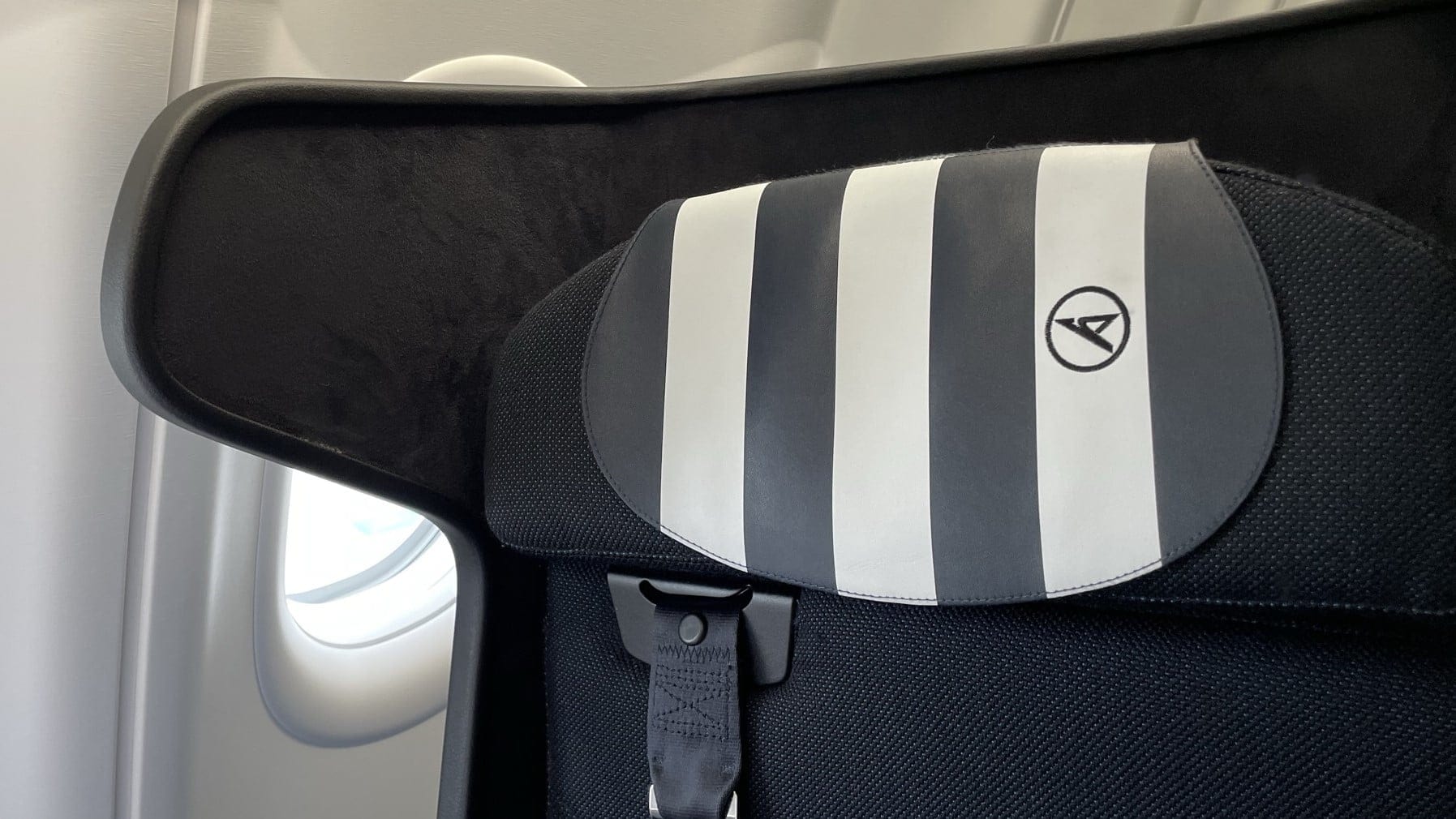
Visually, the cabin looks calmer than Condor’s striped aircraft livery suggests. Navy upholstery, dark seat shells, curtains, and subtle branded details create a calm onboard environment. The cabin still feels clearly connected to Condor, but the design does not crowd the space.
Condor Business-Class Seats
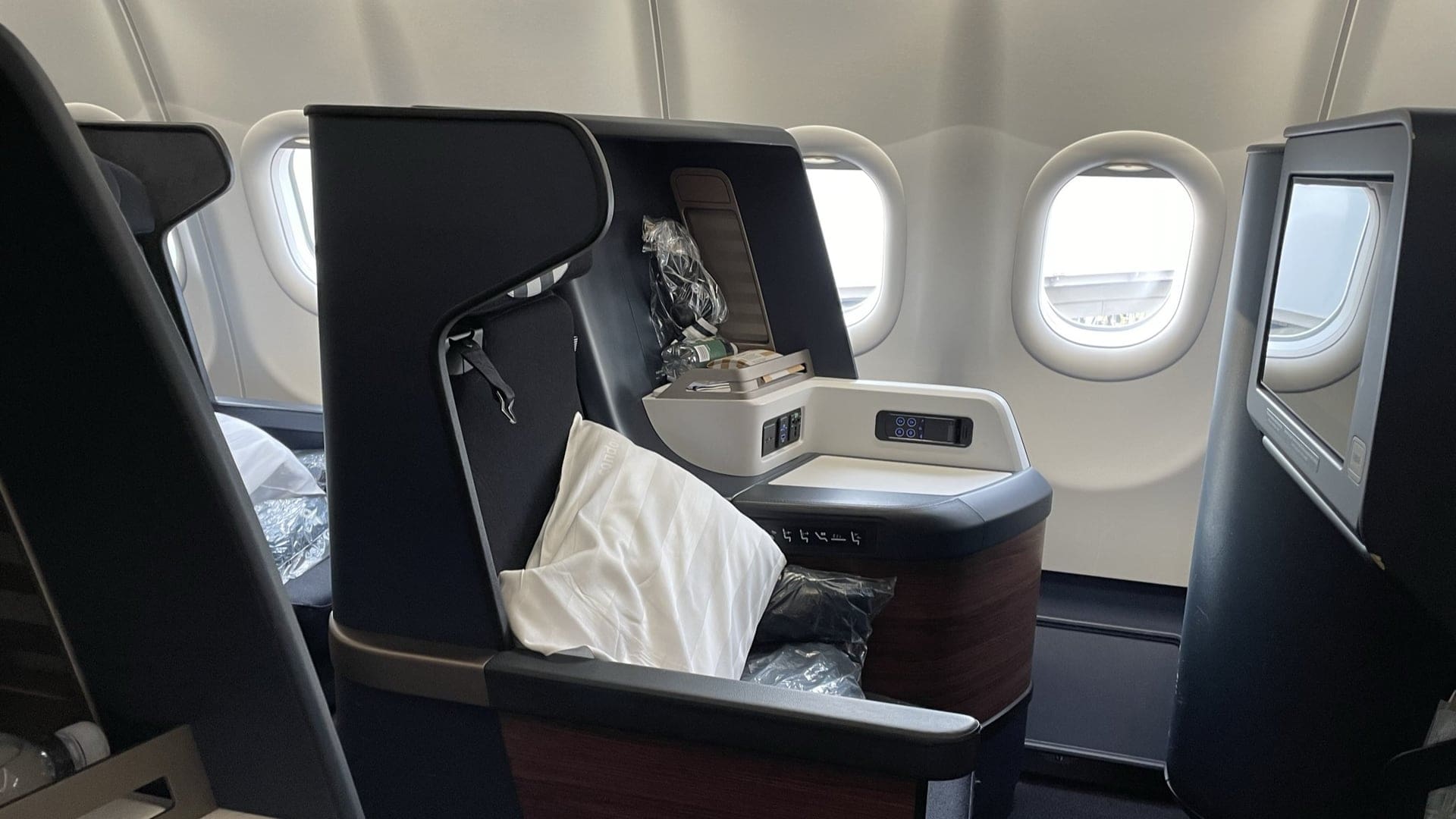
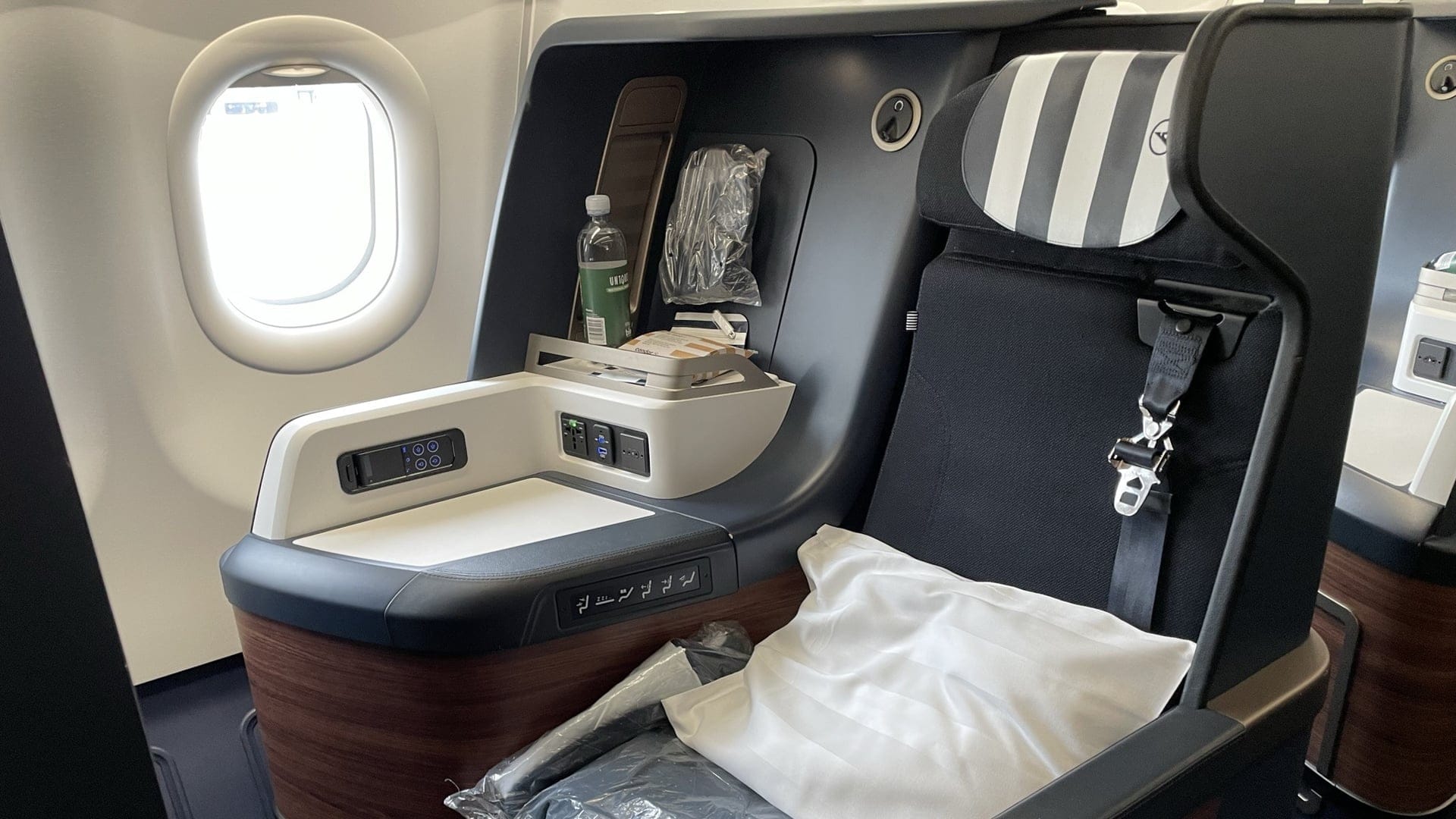
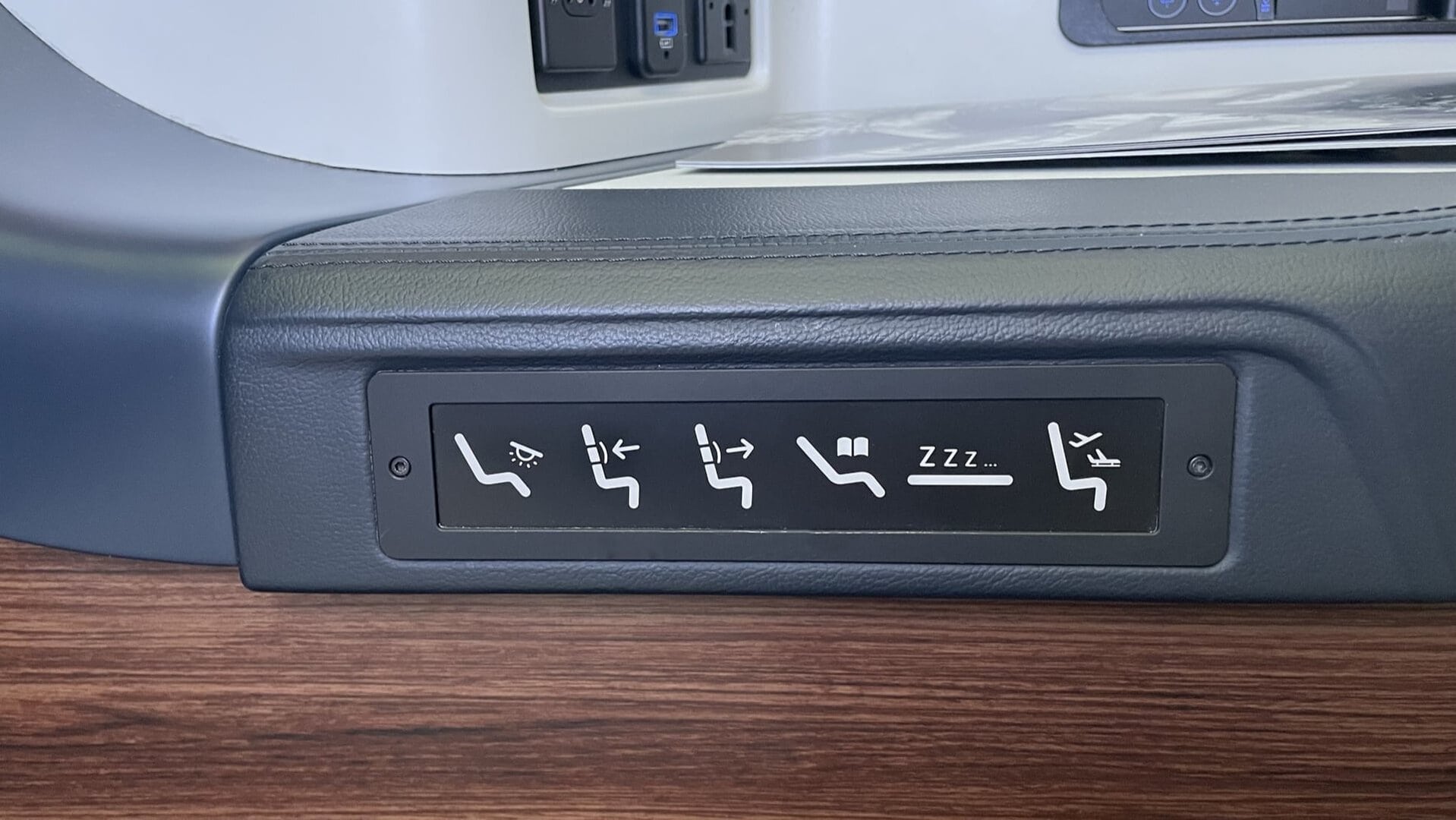
The Condor business-class seat uses a customized version of the Safran Skylounge Core seat. Each seat converts into a fully lie-flat bed measuring about 78 inches (1.99 m), and includes:
- A 17.3-inch 4K entertainment screen
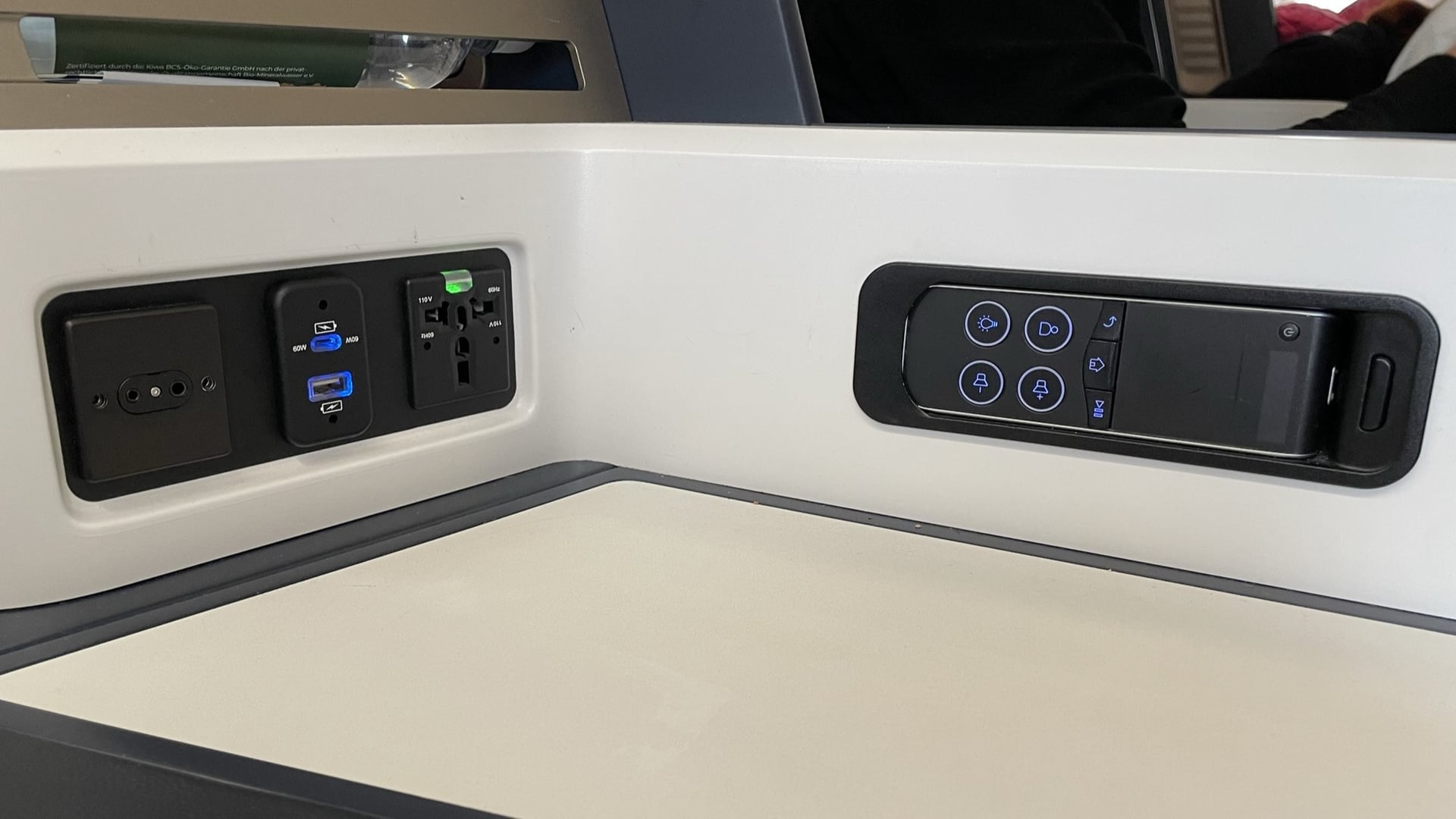
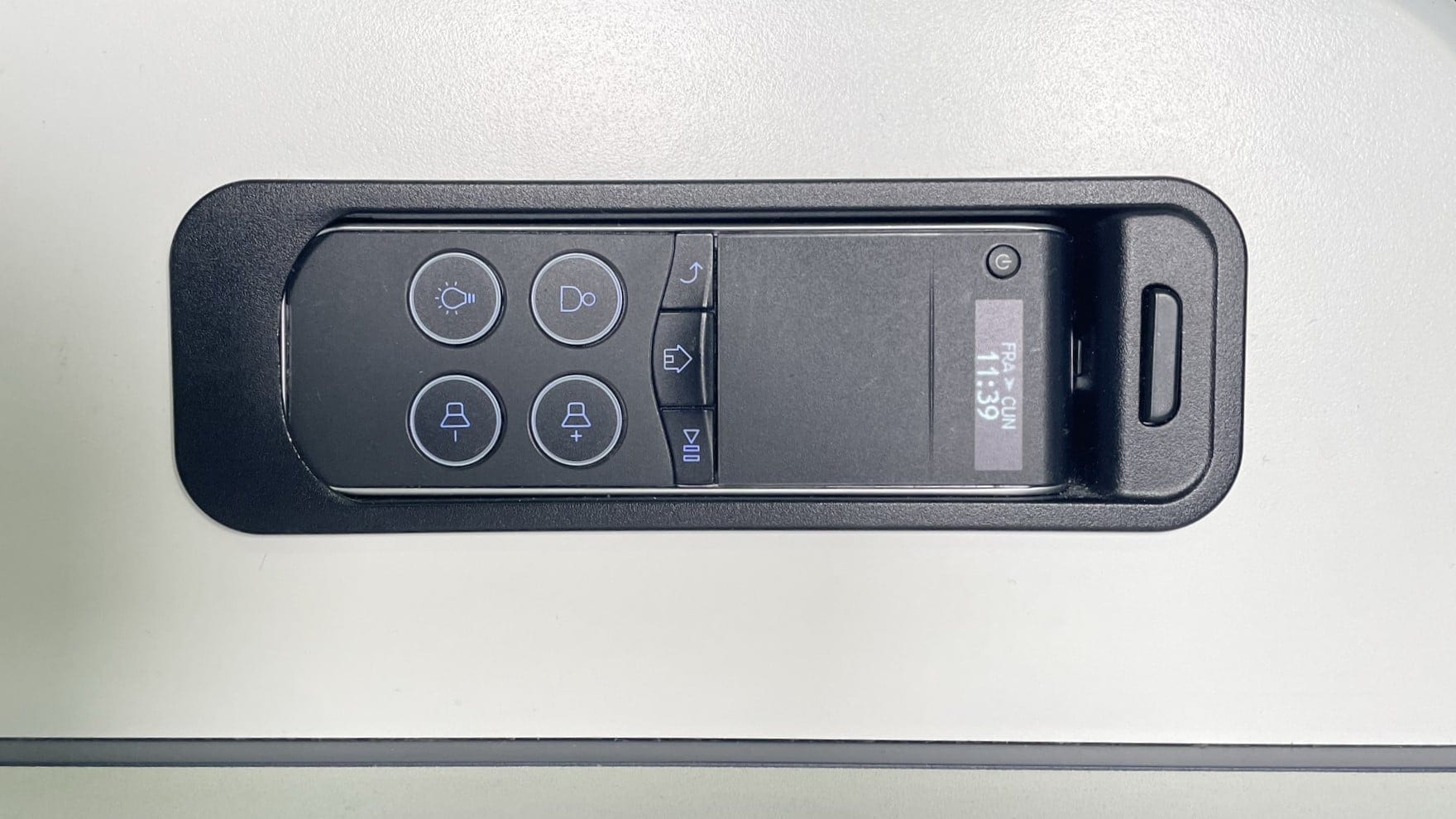
- Seat controls
- USB-A and USB-C ports
- A universal power outlet
- Bedding for longer flights
- A mattress pad
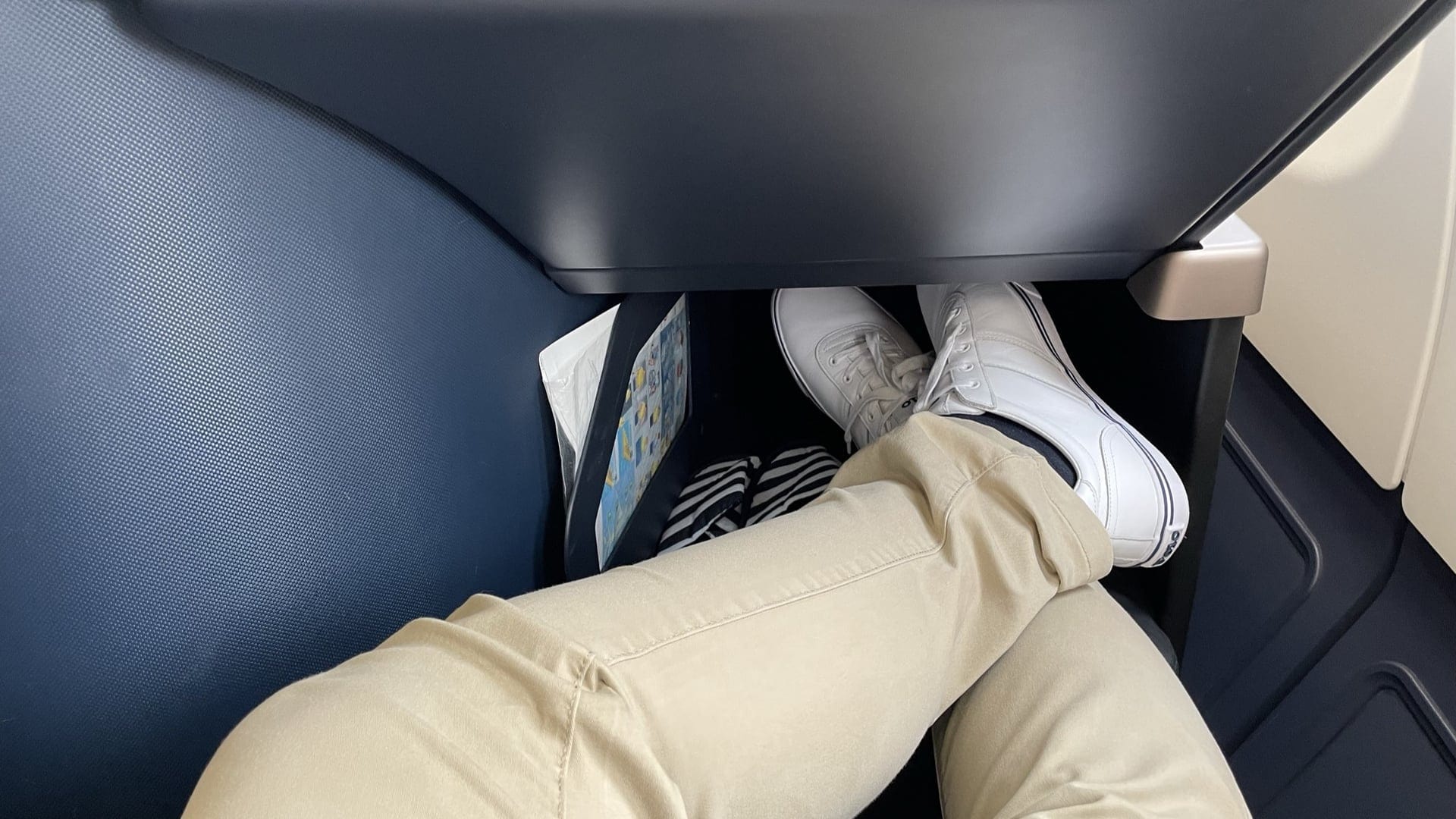
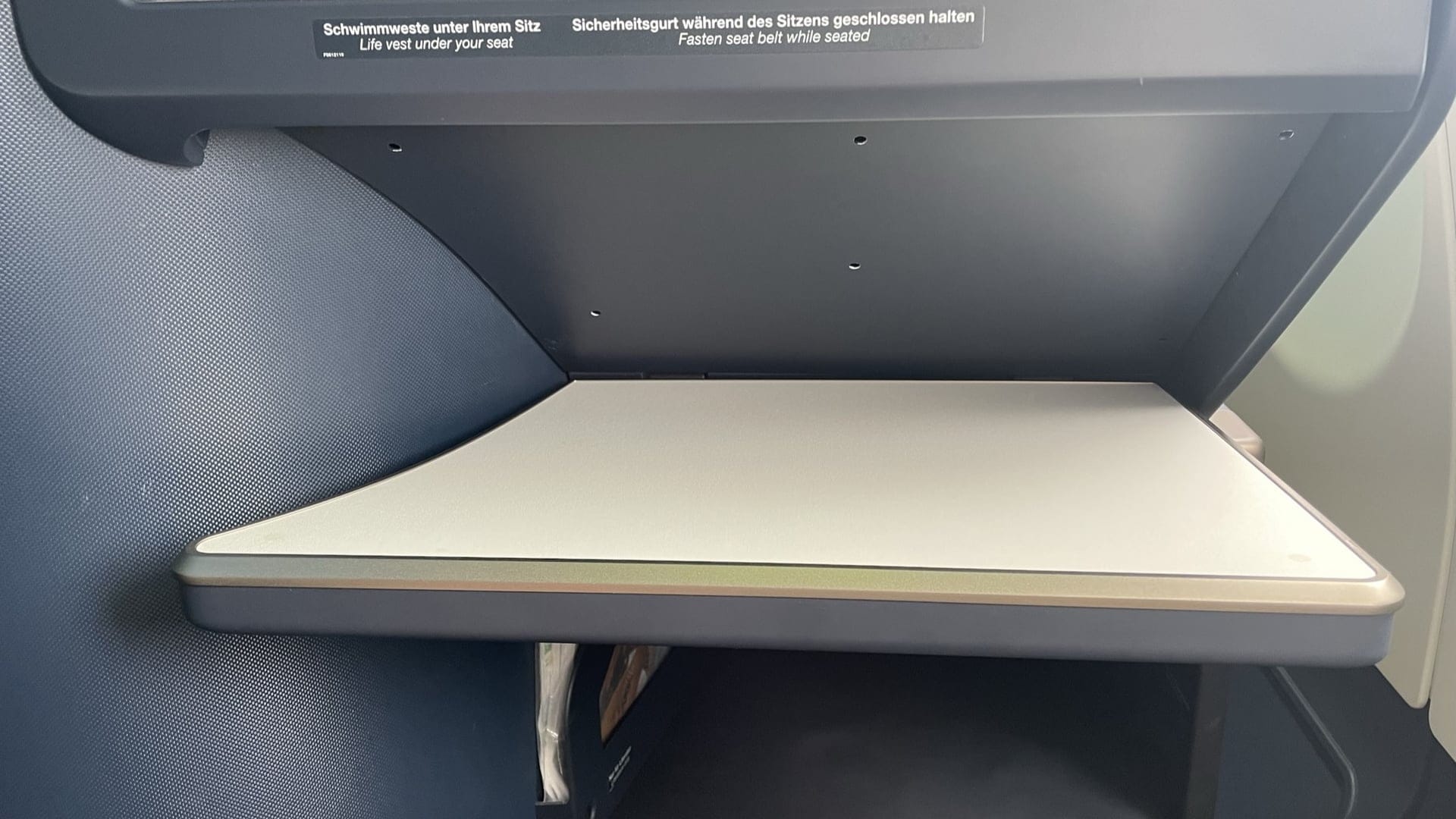
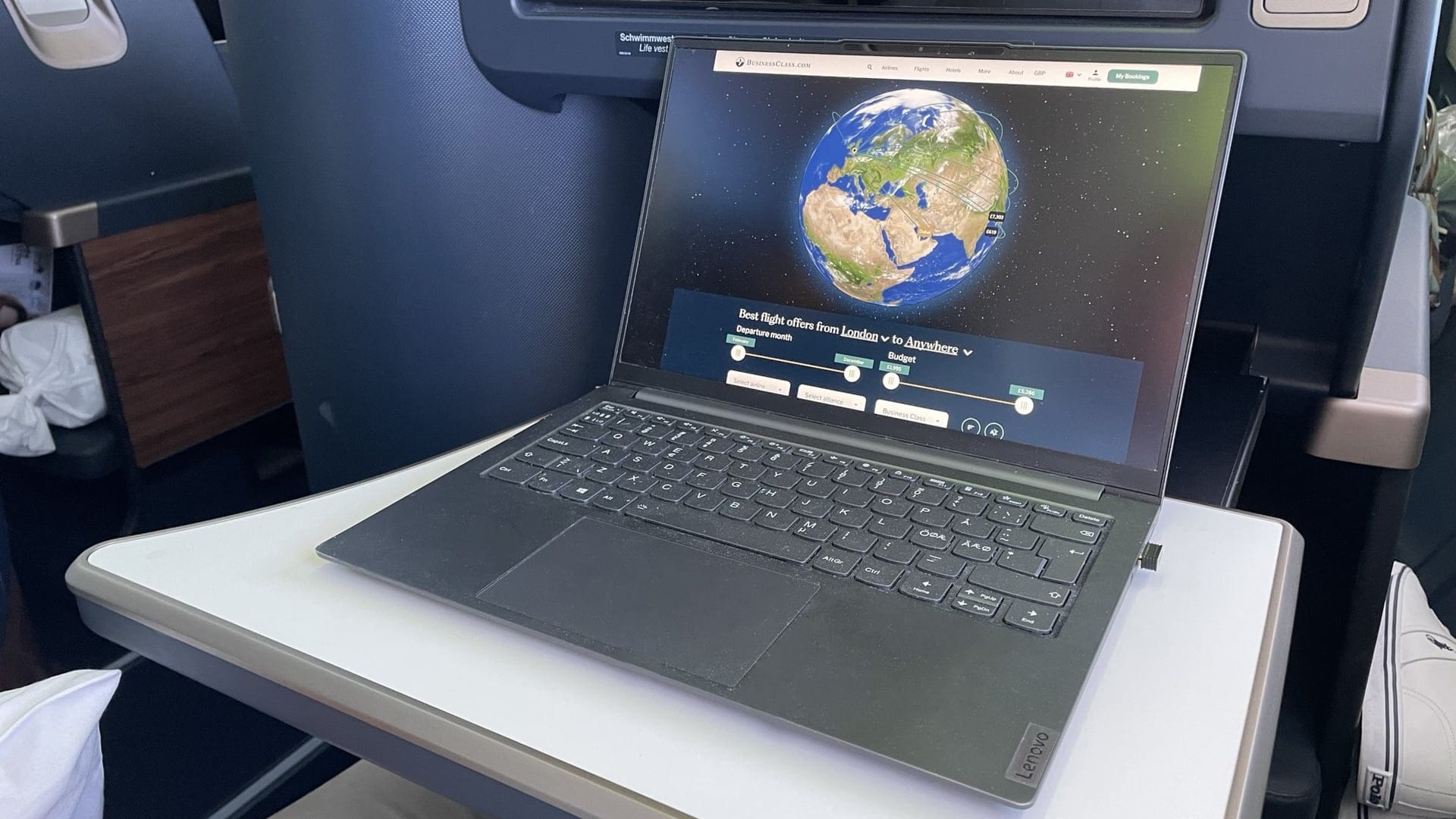
The staggered design also brings some trade-offs. Standard seats do not feel especially wide in bed mode, and the footwell feels more confined than in the front-row Prime Seats. The tray table gives enough space for dining or working, but storage around the seat is more modest than in some newer suite-style products.
Condor Prime Seats
Condor’s four Prime Seats are positioned in the front row of the Airbus A330neo business-class cabin. They use the same general seat platform as the standard seats, but the front-row position gives them noticeably more space.
Travelers booking Prime Seats can expect:
- A larger footwell
- A more open ottoman area
- More space around the lower body in bed mode
- A 24-inch 4K entertainment screen
- Pajamas
- A snack basket
- An included FlyConnect Surf package
The larger sleeping area creates the main difference. Standard seats place the feet into a narrow enclosed footwell when the seat reclines. Prime Seats use a larger, more open ottoman area, which gives the lower body more room in bed mode.
Condor prices Prime Seats as a paid upgrade from business class, and the cost varies by route and availability. On a daytime flight, the upgrade might not be totally worth it unless the larger screen and more open seat area are appealing to travelers. On a night departure, the wider sleeping position makes the upgrade more useful.
Best Seats In Condor’s Business Class
The staggered layout in Condor’s business-class cabin changes travelers’ experience depending on the row and seat position they choose.
- Best for solo travelers: even-numbered window seats. These window seats are closer to the window, with the side table between the passenger and the aisle. That creates more separation from cabin movement and gives the seat a more private feel.
- Best for couples: odd-numbered center seats. These center seats are closer together, which makes conversation easier and creates a more connected setup.
- Most spacious option: front-row Prime Seats. These seats provide the largest footwell and the most open sleeping area in the cabin.
- Less private options: odd-numbered window seats and even-numbered center seats. These seats are closer to the aisle, so they feel more exposed during boarding, meal service, and mid-flight movement.
Cuisine
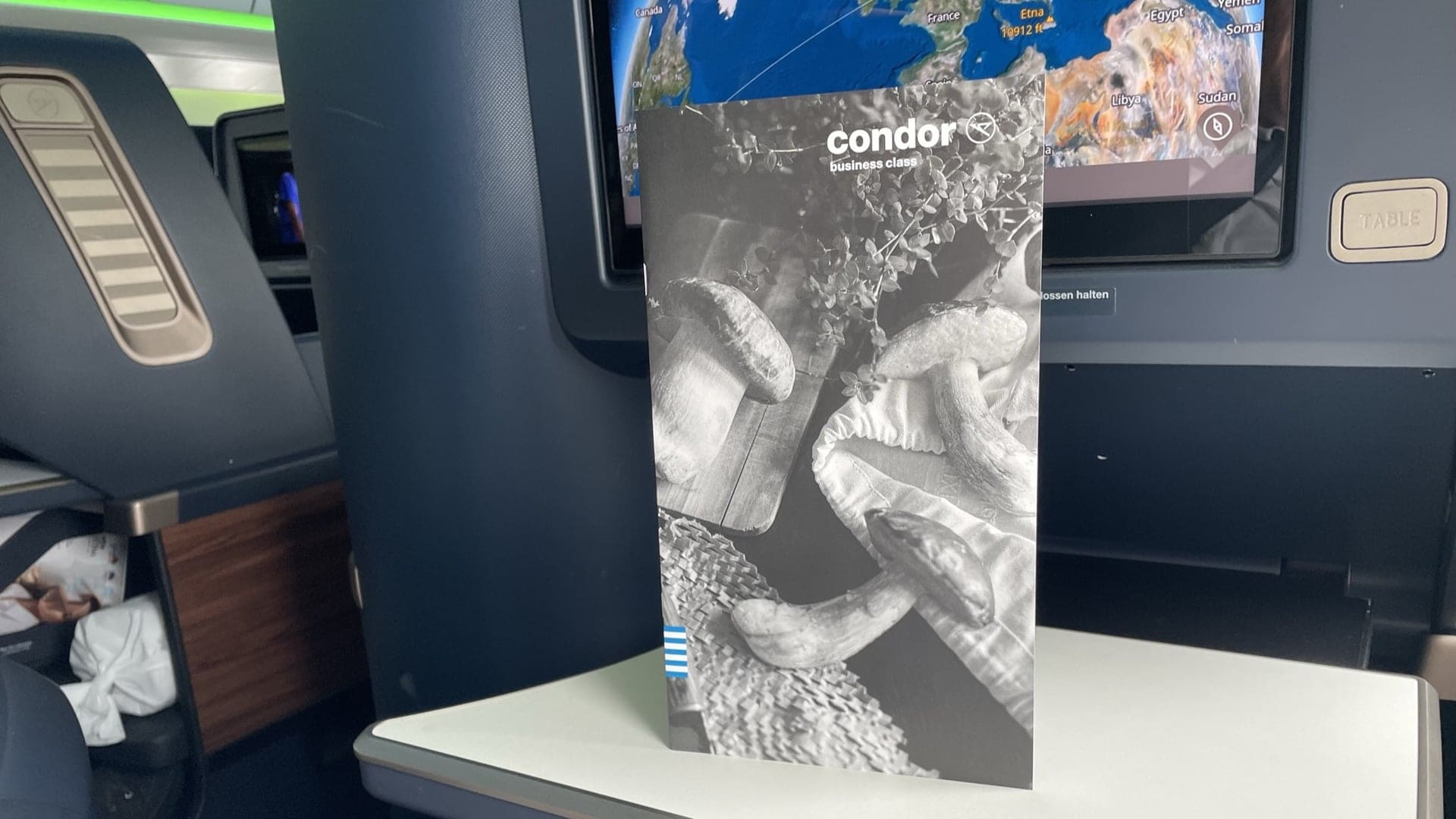
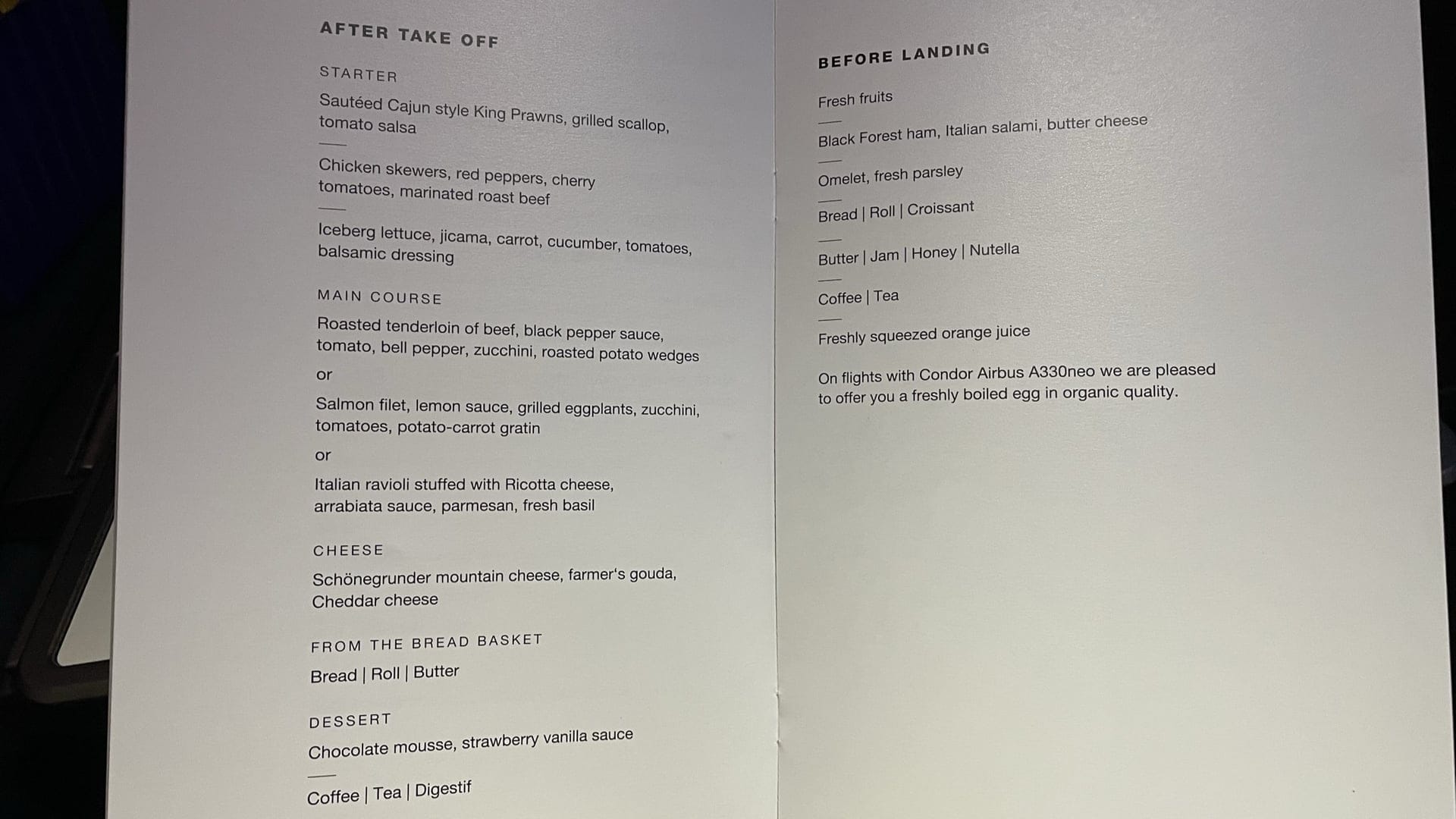
Condor’s business-class dining service uses the airline’s Classic Gourmet Menu, part of its Taste the World concept. The service includes a main meal after departure, snacks during the flight, and a second meal before arrival.
The exact dishes vary by flight length, time of day, departure point, and seasonal menu. Menus can also change at short notice, depending on ingredient availability.
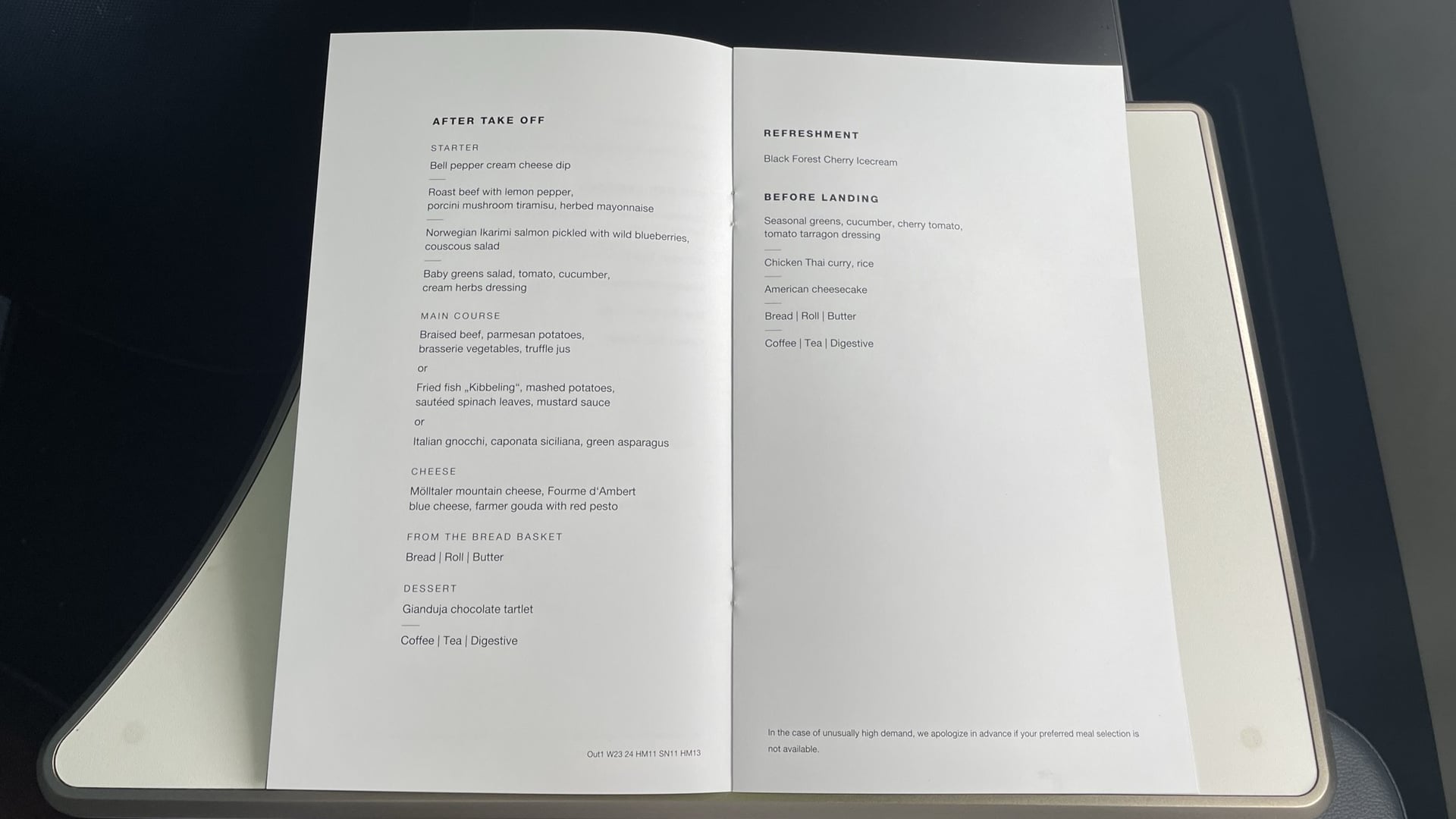
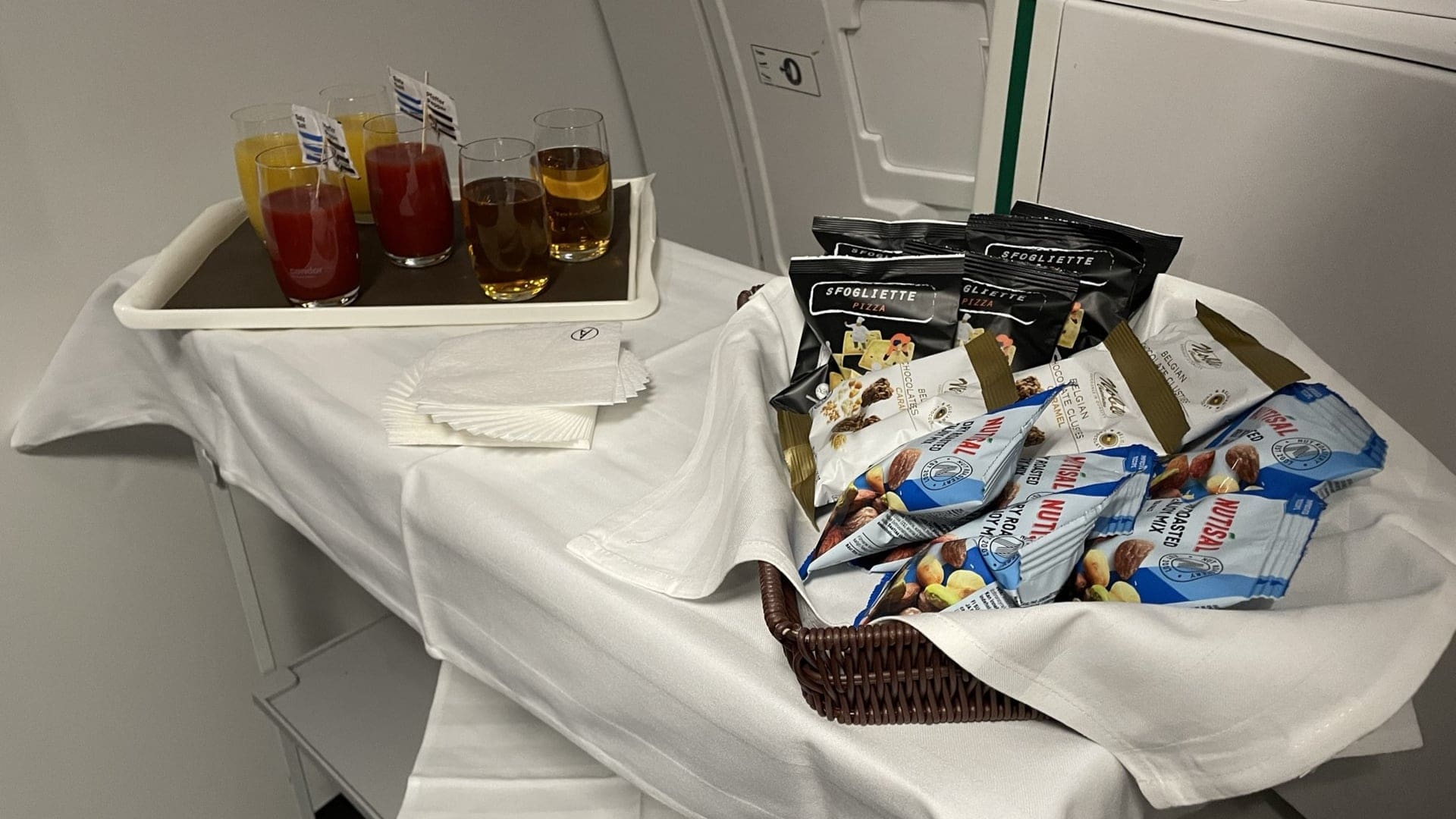
Main Meal Service
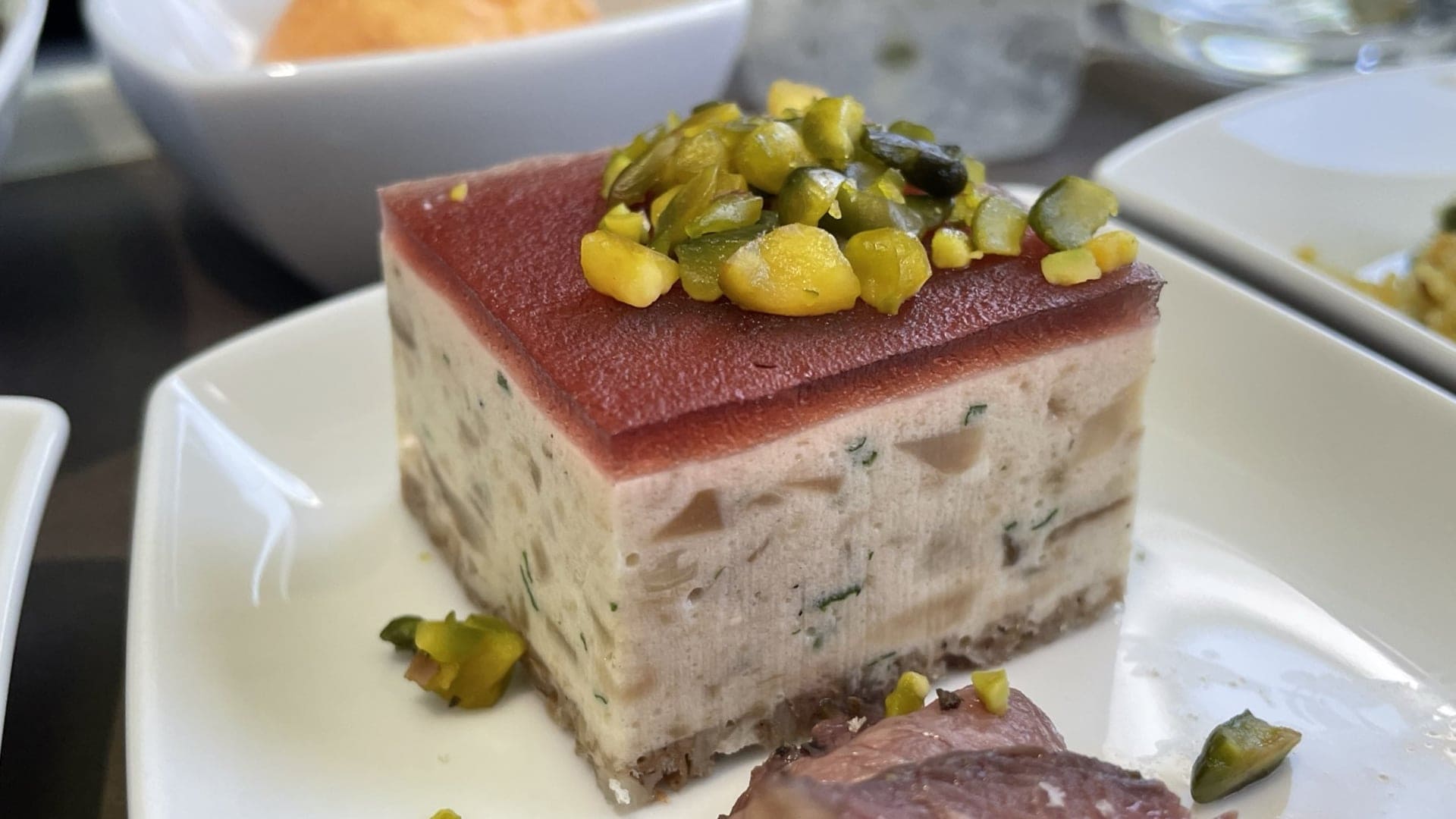
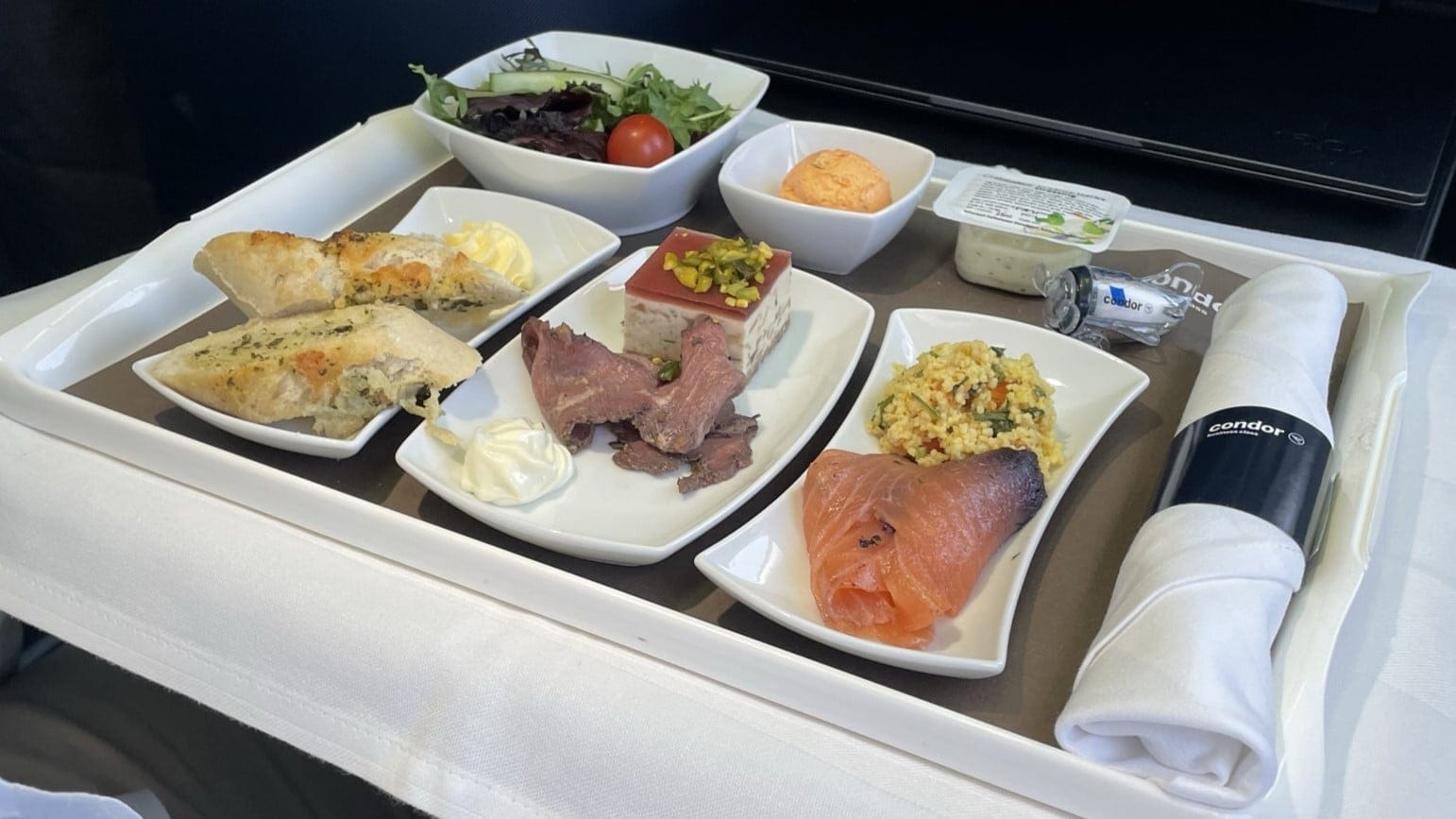
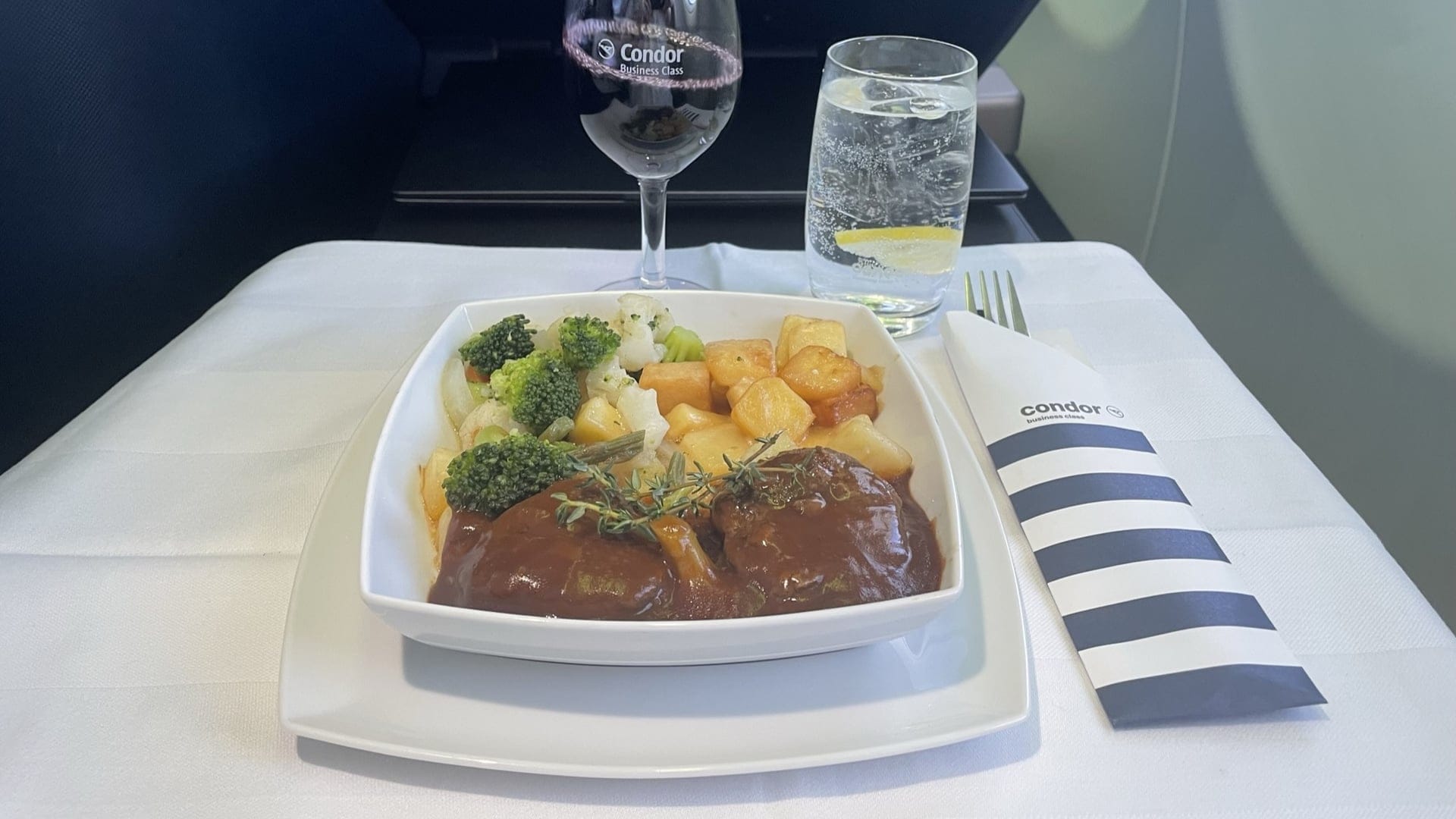
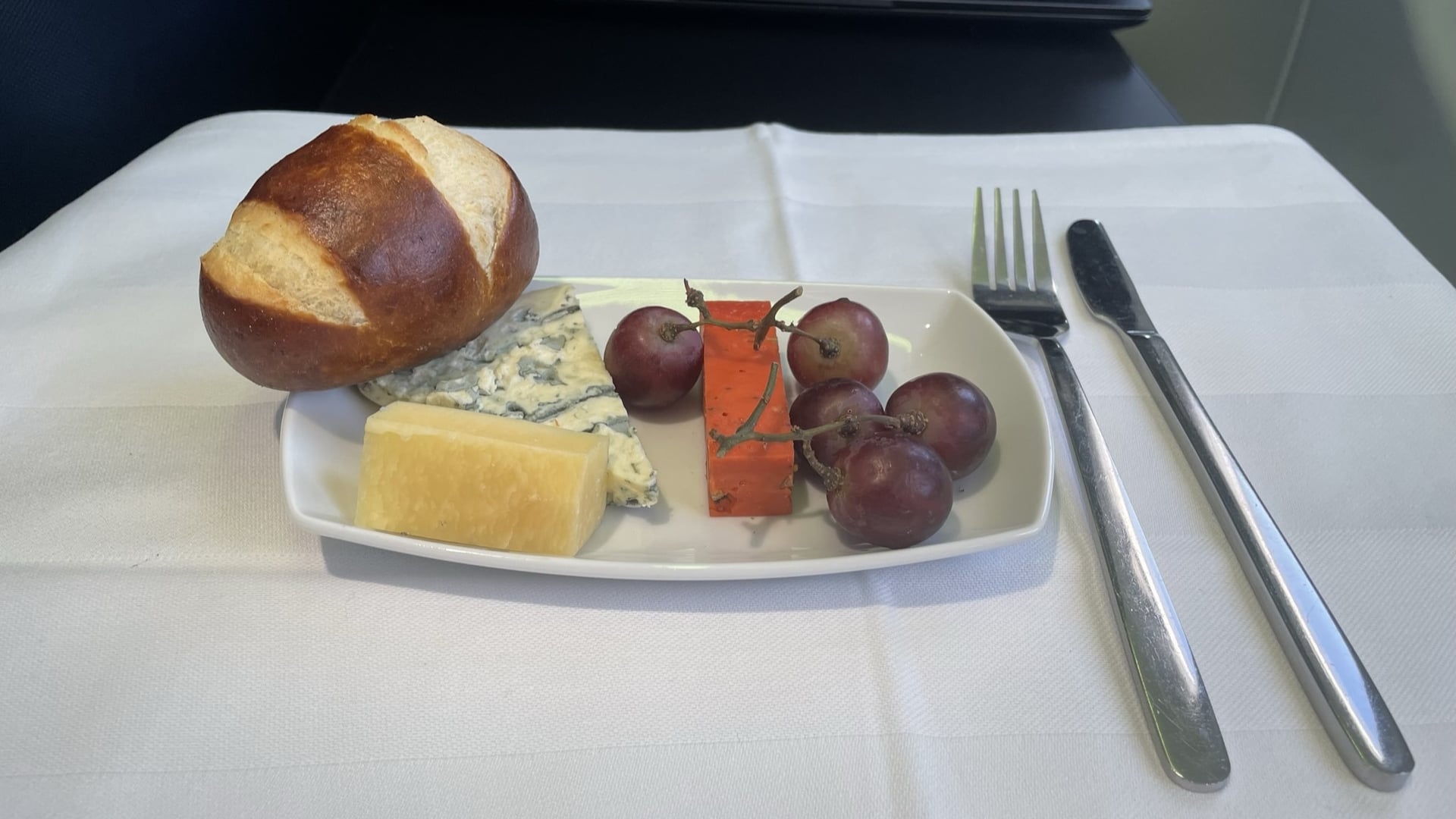
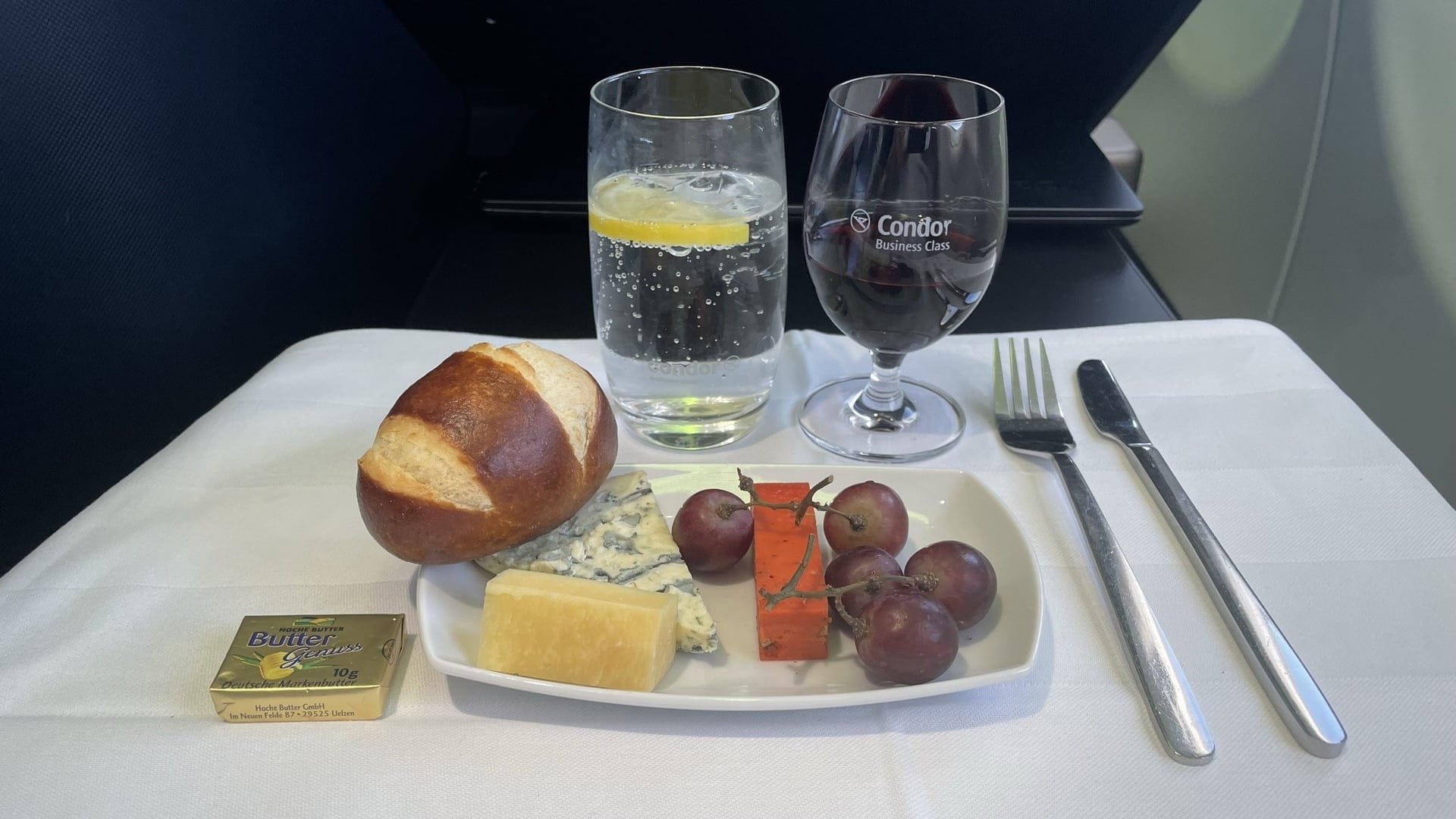
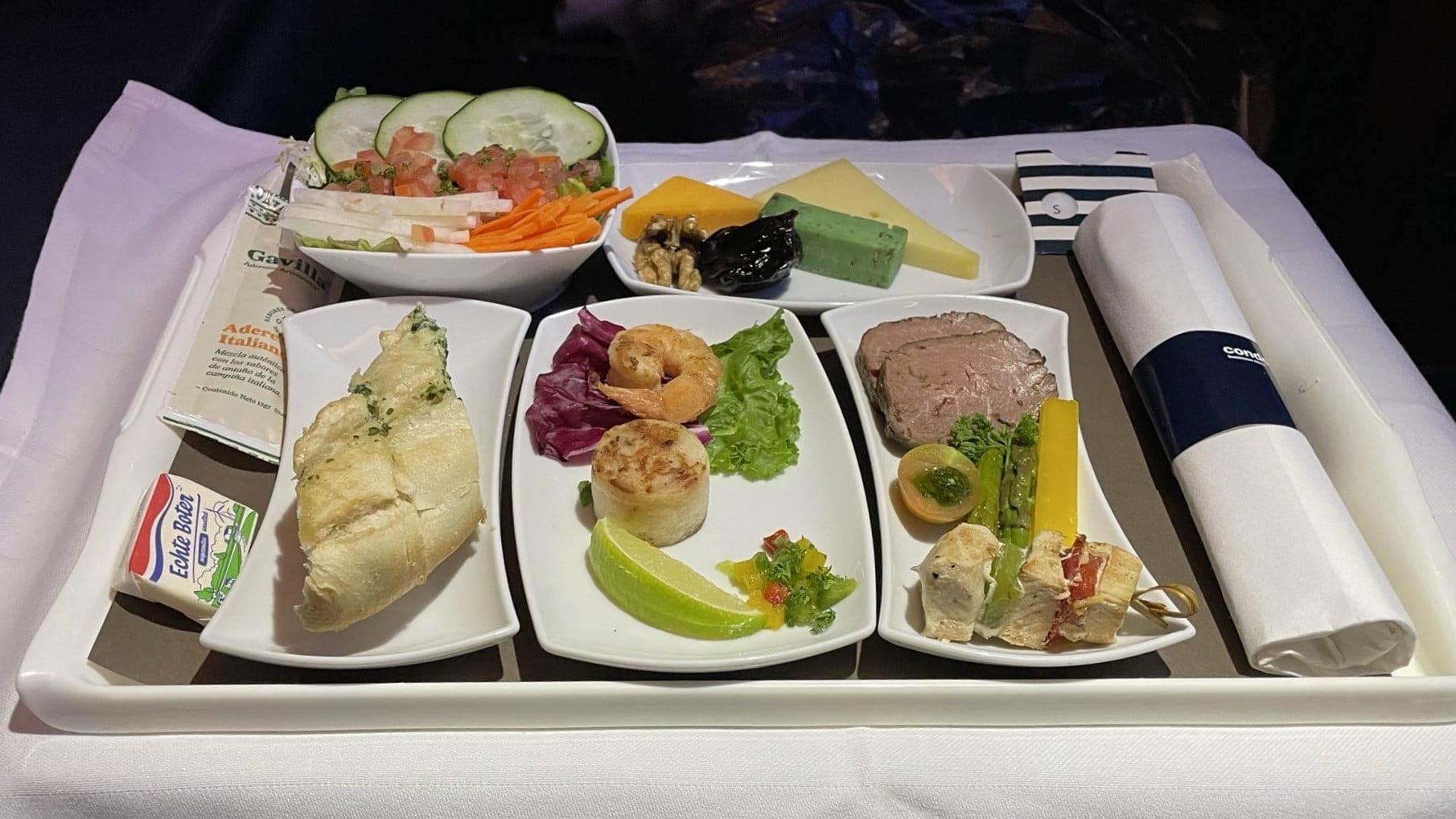
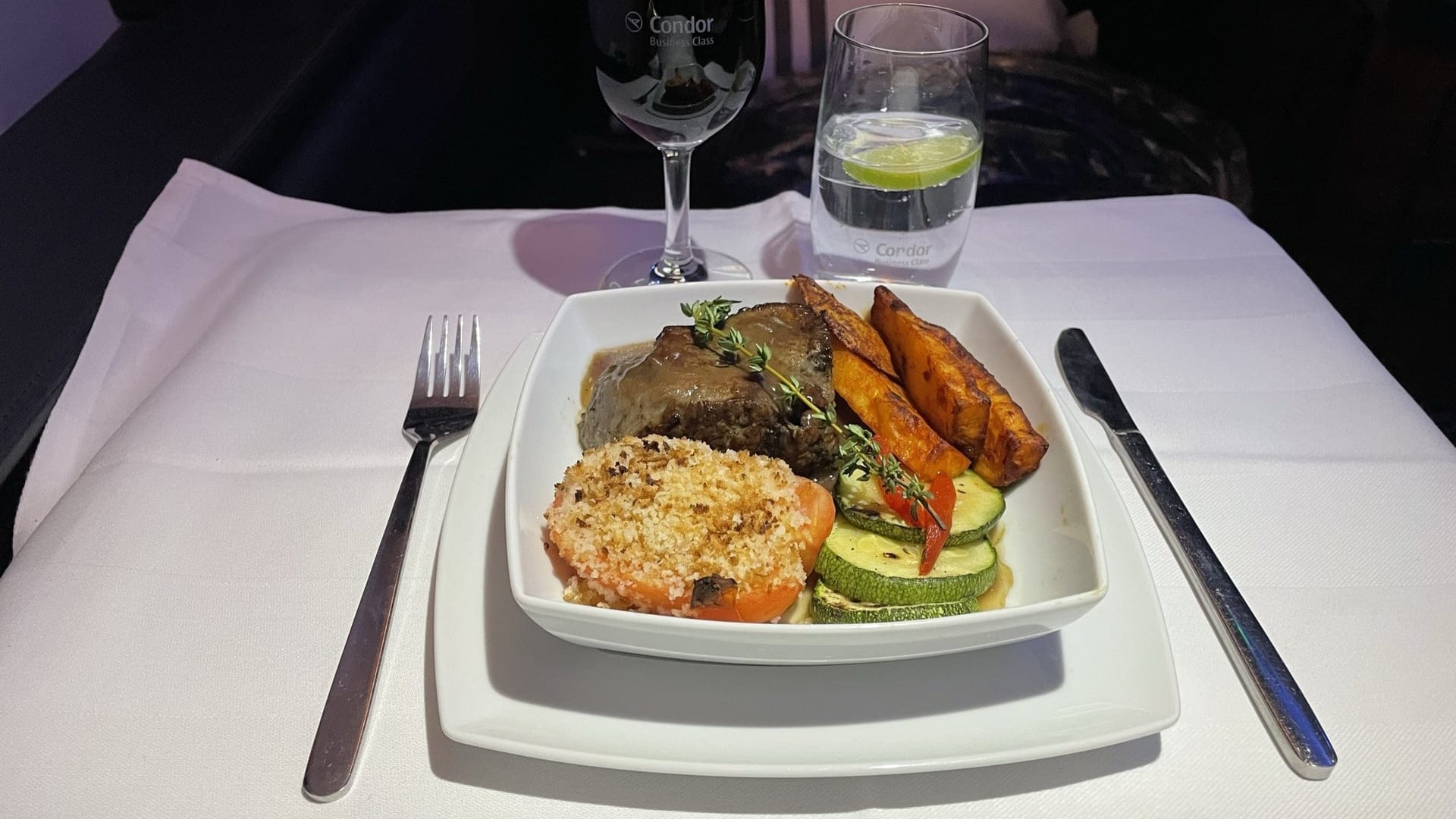
The main meal service forms the most substantial part of the dining experience. The business-class Classic Gourmet Menu follows a multi-course structure, with starters, salad, a choice of main course, a cheese course, bread, dessert, and coffee or tea.
Although menus change by route and season, here are some of the dishes served previously:
- Starters: marinated roast beef with lentil and quinoa salad, hot-smoked salmon fillet with sweet potato-pumpkin delice, and baby leaf lettuce salad with beetroot and almonds
- Main courses: beef roulade with potato dumplings and red cabbage, prawns with green asparagus and cassarecce, or tortelloni with ricotta, Savoy cabbage, and mushroom-cream sauce
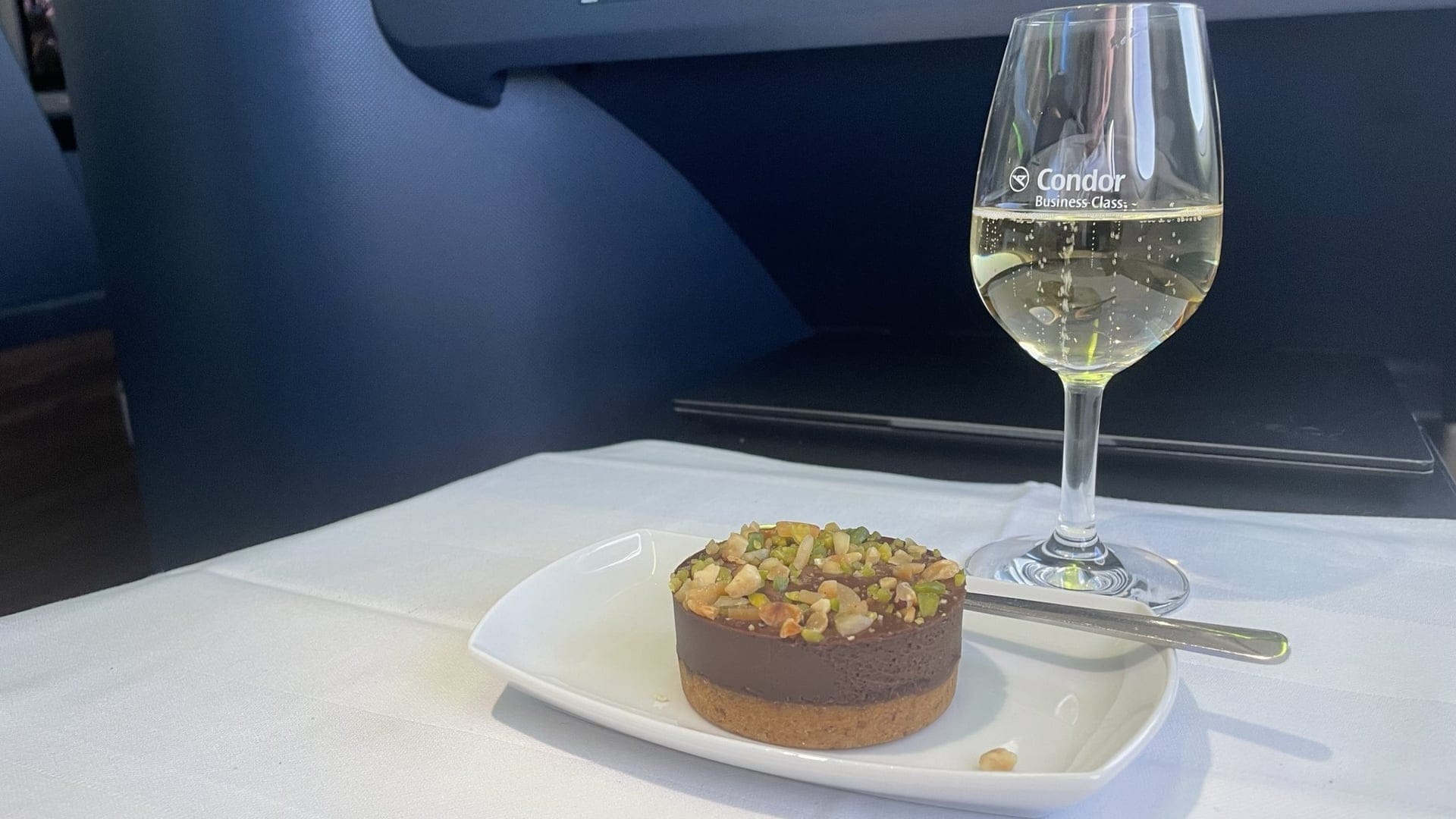
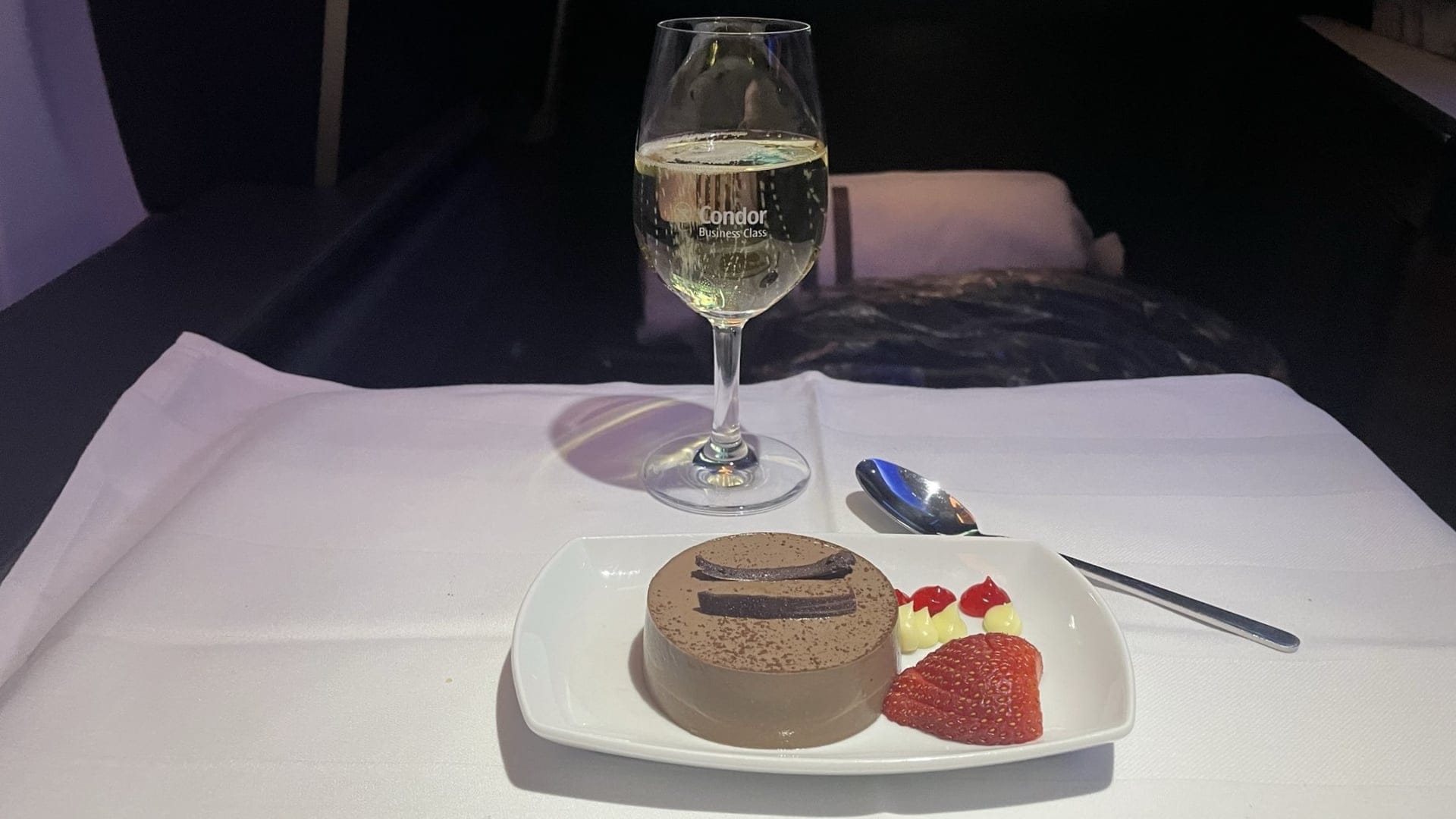
- Cheese and dessert: a cheese plate with sesame-honey chutney, followed by a cranberry chocolate tartlet
- Bread service: bread, rolls, and butter from the bread basket
Passengers can also ask for starters, salad, cheese, and dessert together in one course when they prefer a lighter or quicker meal. This option is convenient for passengers who want more time to rest after departure.
Presentation and Tableware
Condor serves meals on white linens, with Schönwald tableware and Zwiesel glassware, both established German brands.
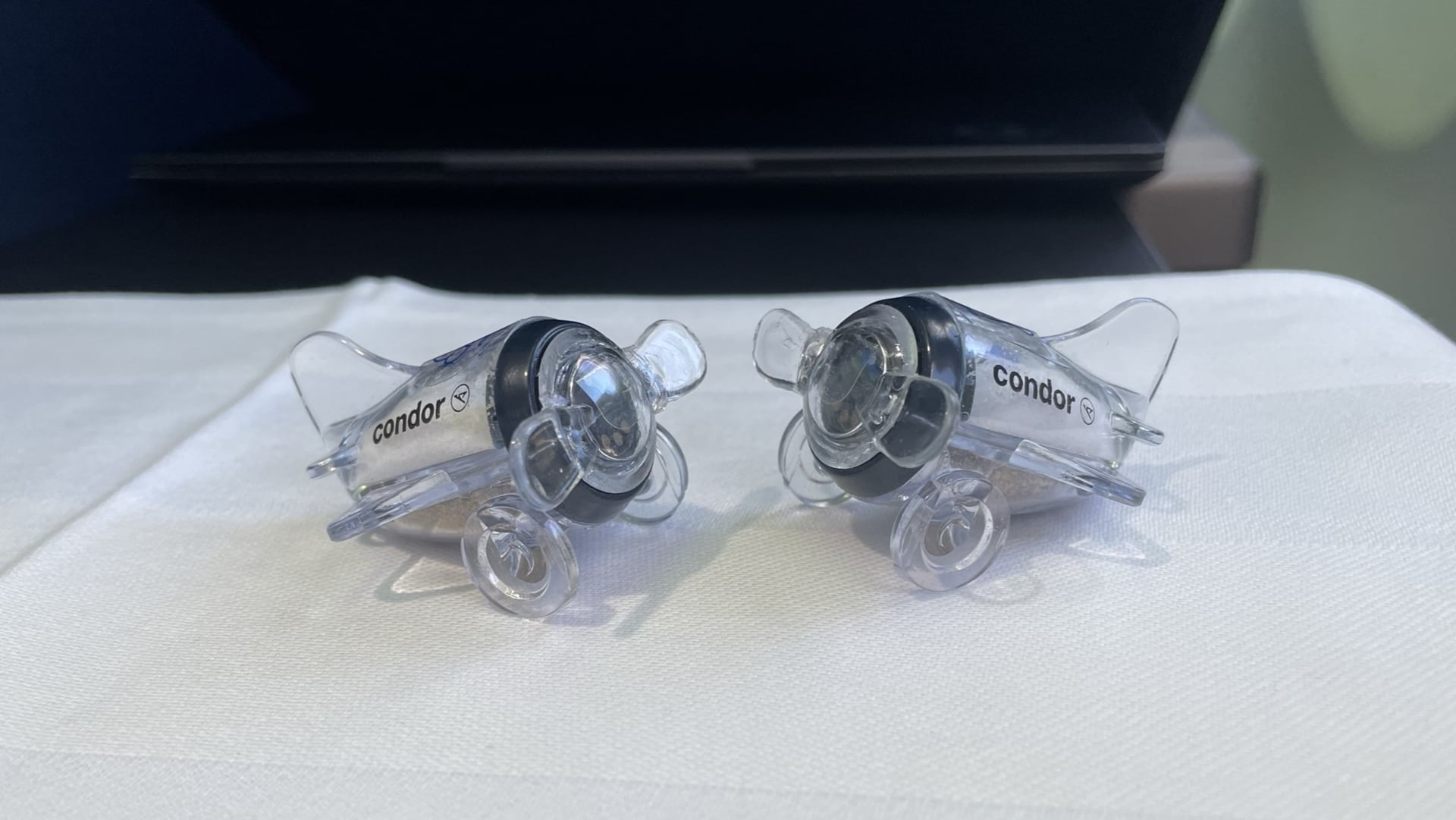
One distinctive Condor detail is the small aircraft-shaped salt and pepper shaker. It adds a clear brand touch to the meal service and often becomes a keepsake.
Snacks Between Meals
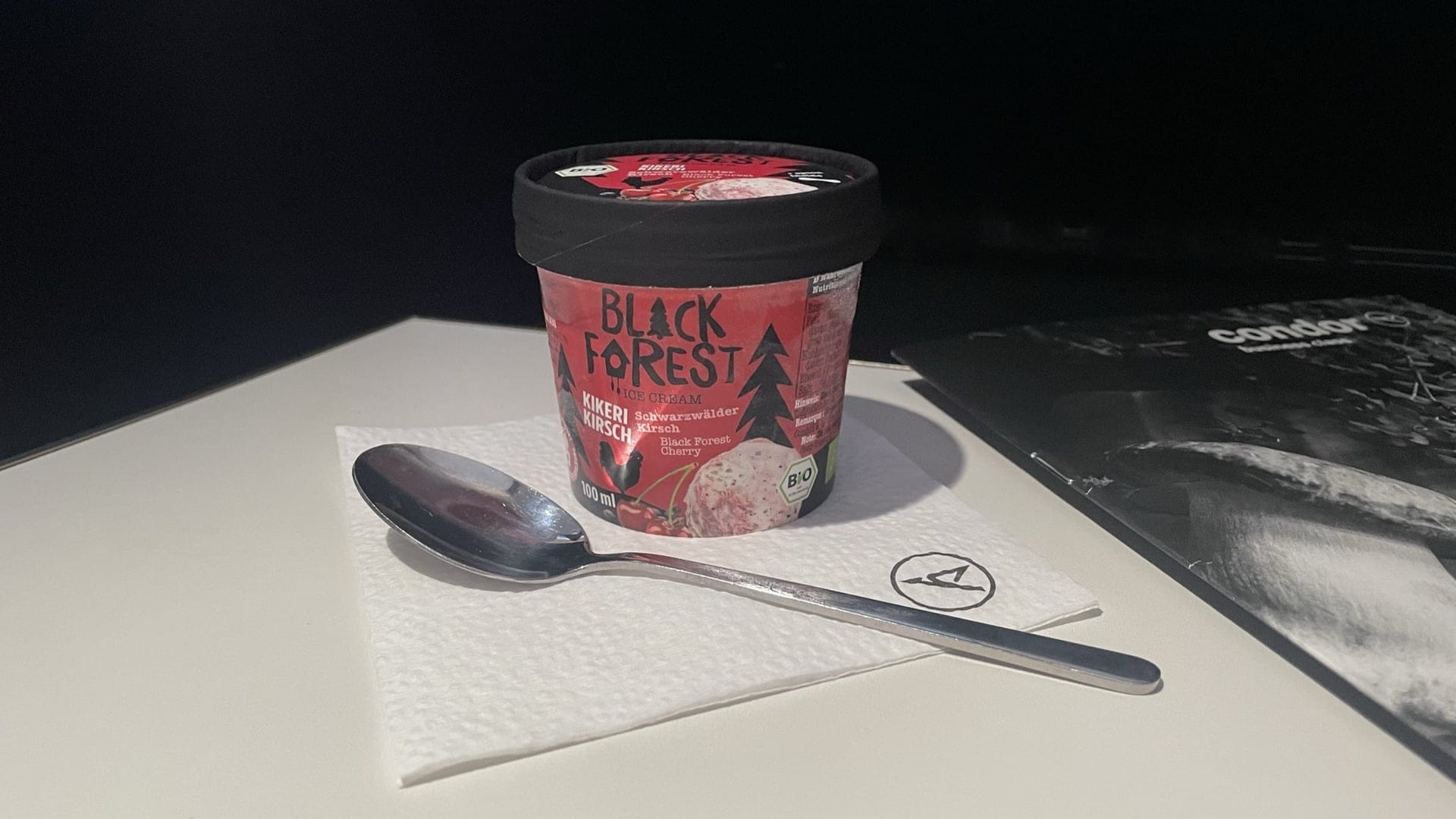
Condor offers snacks between the main meal and the pre-arrival service. On some daytime flights, ice cream is offered as a mid-flight refreshment. One seasonal menu, for example, includes Black Forest cherry ice cream between the main service and the second meal.
Pre-Arrival Meal
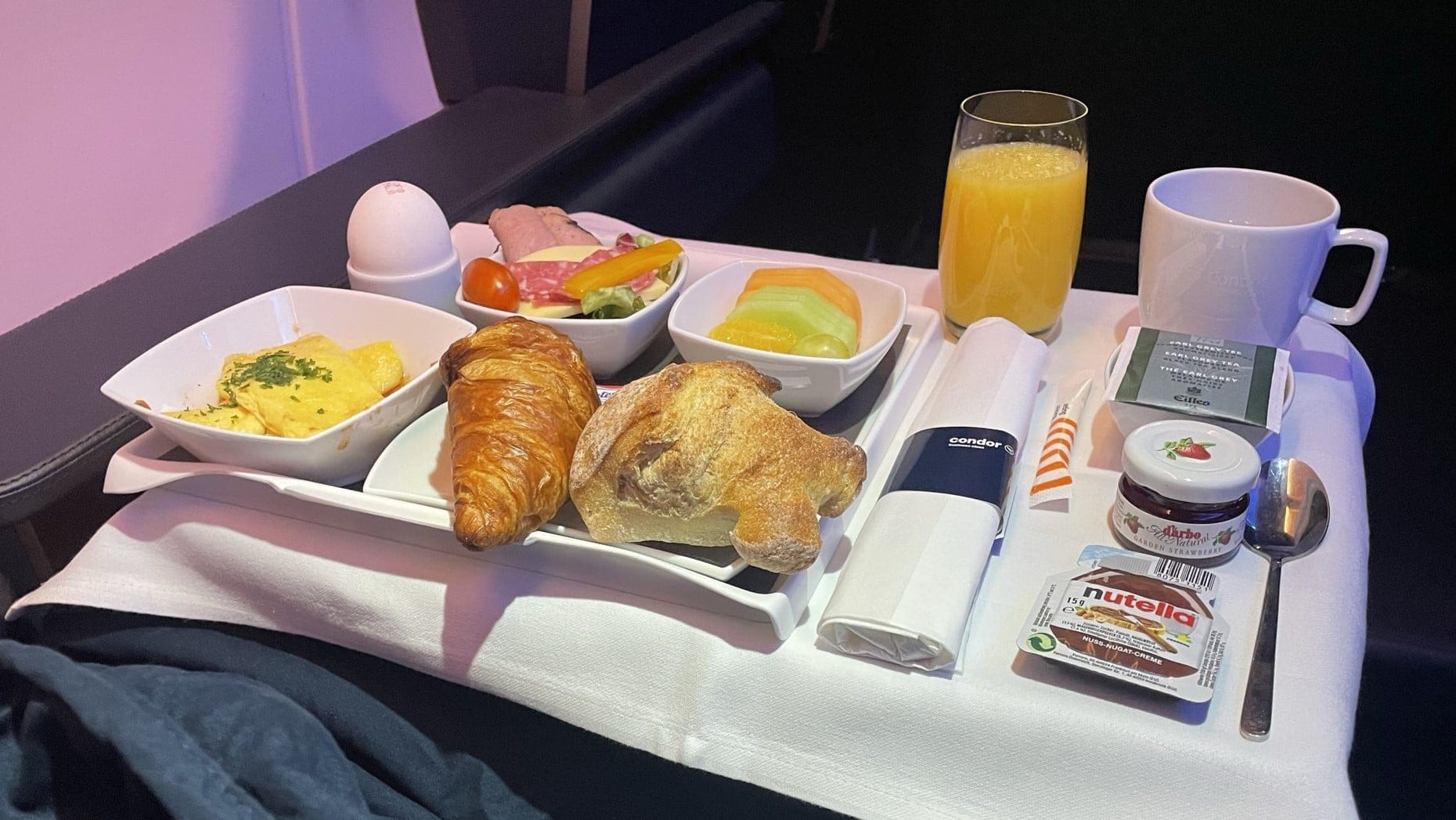
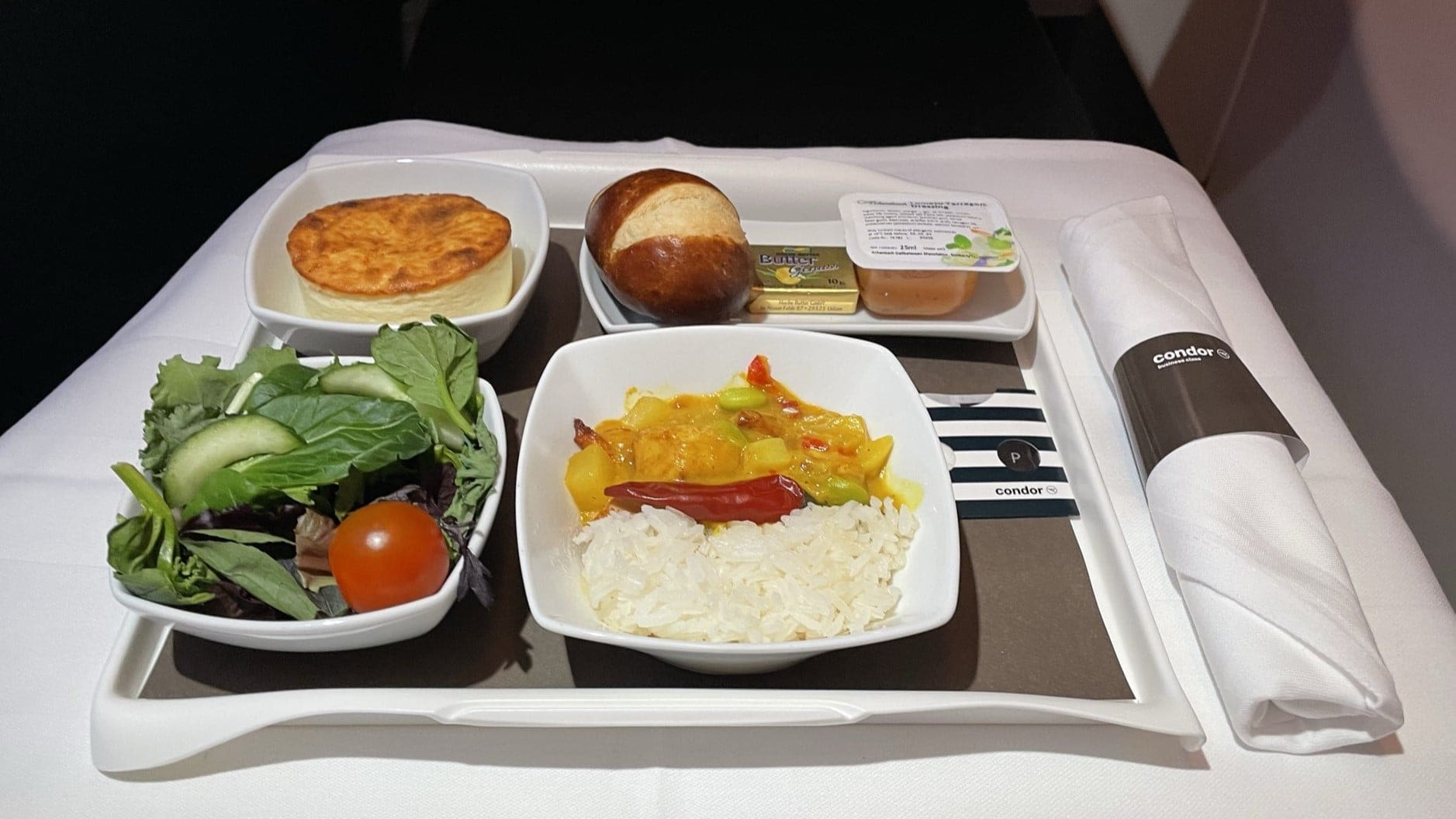
The second meal comes before landing. On daytime flights, it can be a lighter meal or dinner. On night flights, the airline serves breakfast before arrival.
Here is an example of what a daytime menu may look like:
- Starter: market salad with almonds, beetroot, and Pommery-mustard dressing
- Main course: chicken fillet in pretzel crust with creamed sauerkraut
- Dessert: whole milk chocolate mousse with sour cherry jelly
- Bread service: bread, rolls, and butter
- Drinks: coffee, tea, or digestif
Breakfast usually follows a different structure, with fresh fruit, cold items, egg dishes, bread, rolls, and pastries.
Special Meals and Pre-Ordering
Passengers with dietary requirements should request special meals before departure. Vegan, vegetarian, and lactose-free Gourmet Menus are available free of charge when ordered up to 24 hours before departure.
For passengers who would like a specific meal from the main menu, it is a good idea to pre-order it, as the onboard selection of dishes has limits. The standard service includes three main-course options, but meal loading depends on expected demand, and a preferred choice may no longer be available later in the service.
Beverages
Pre-Departure Drinks
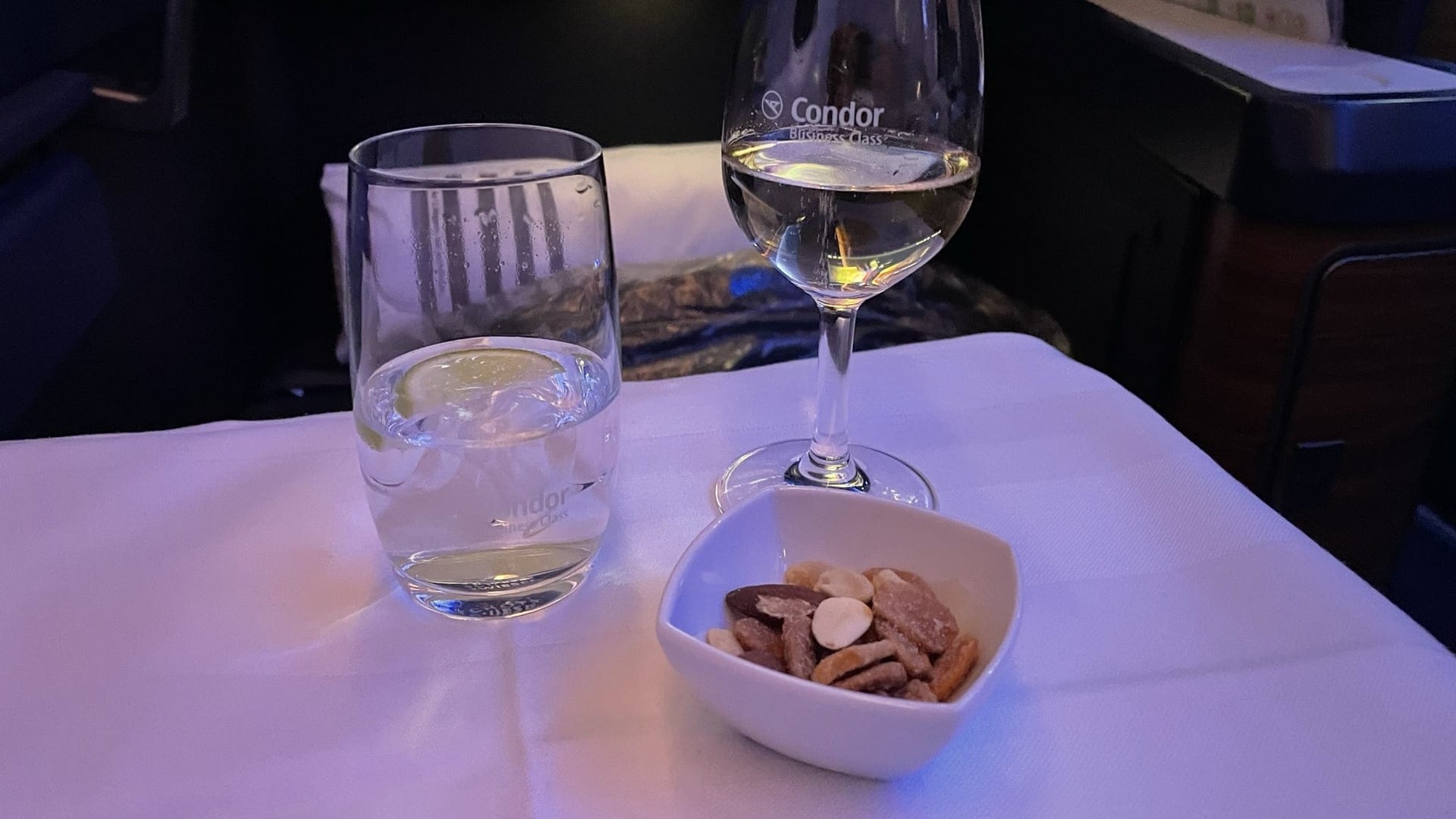
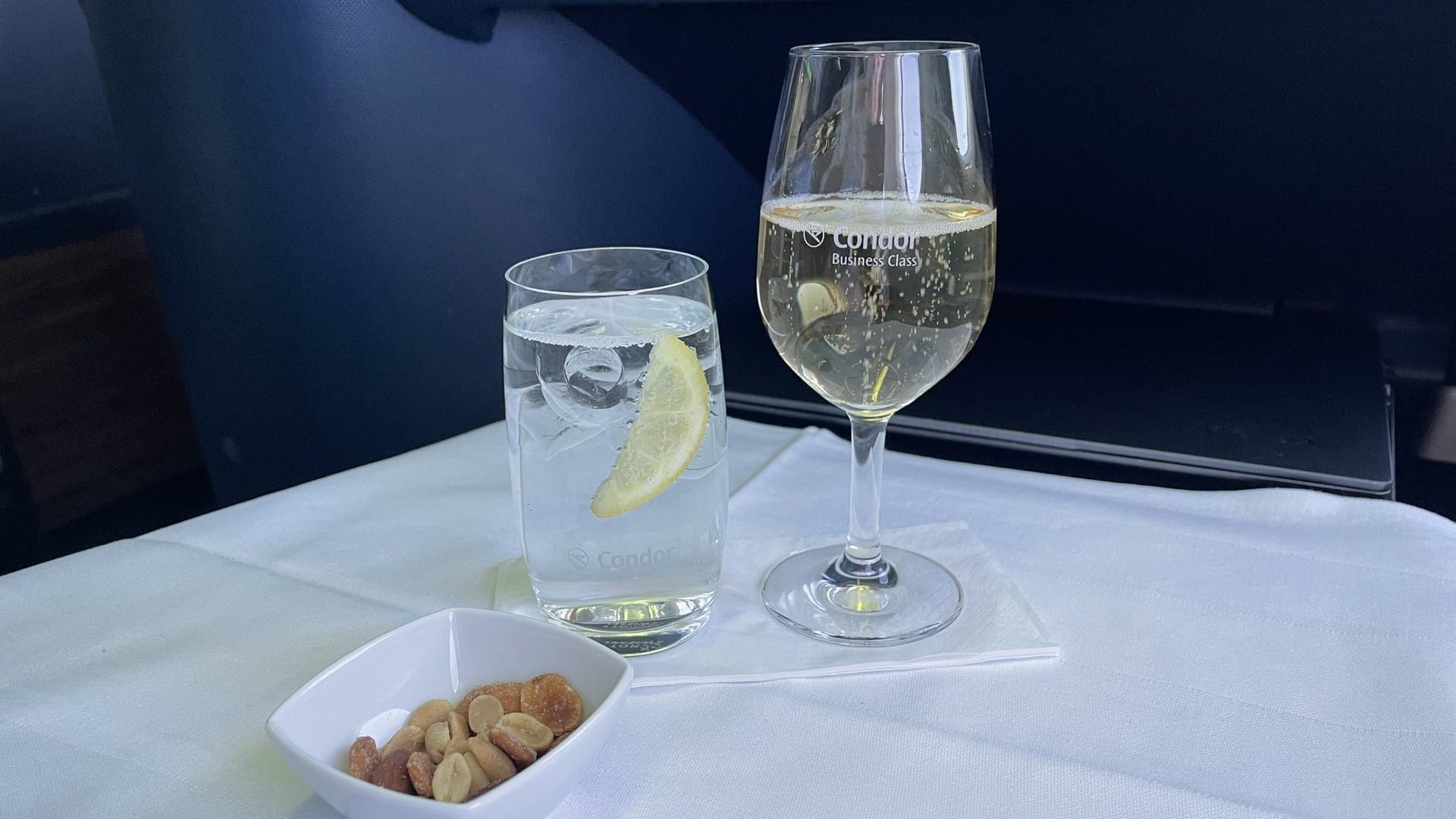
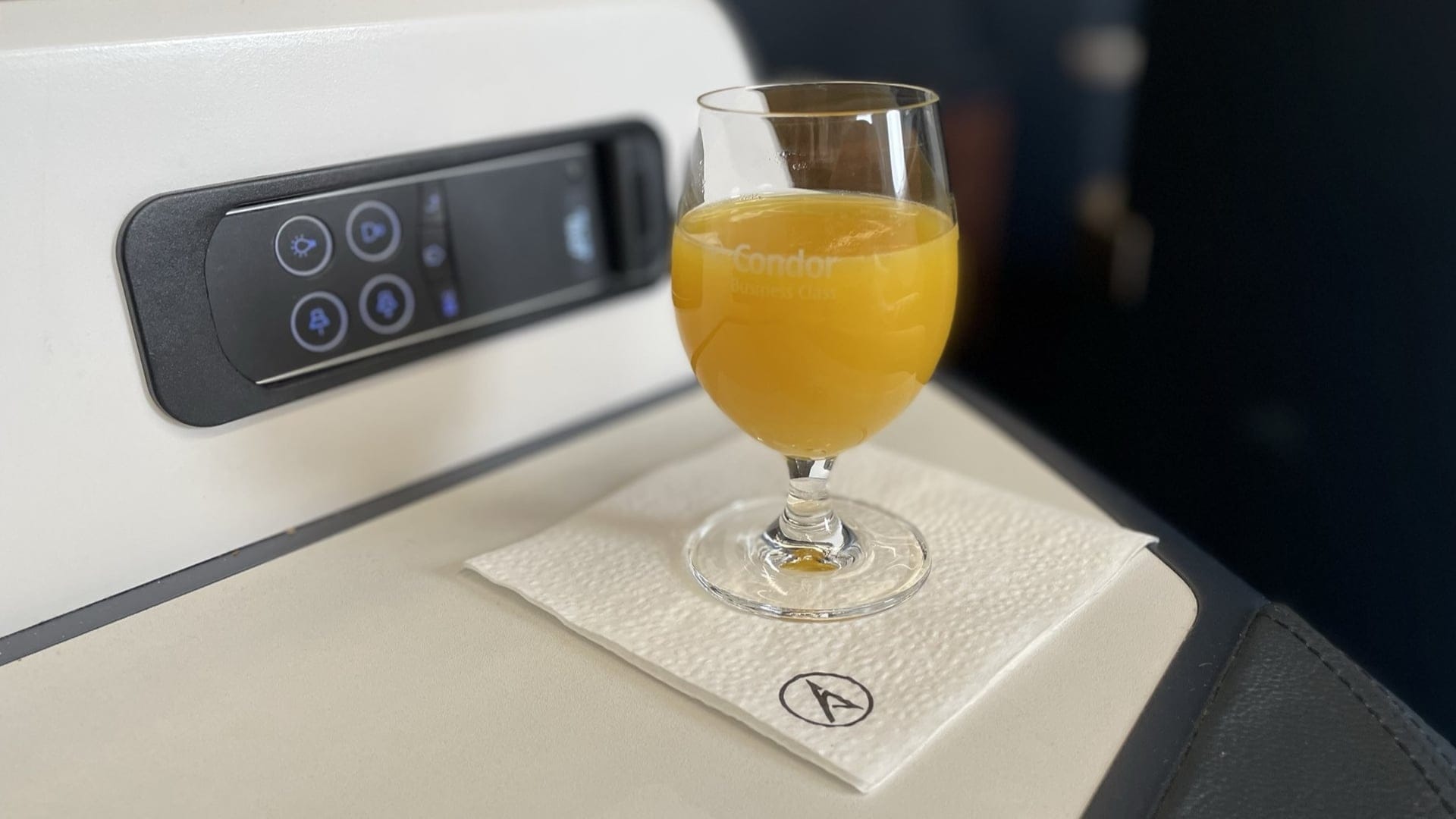
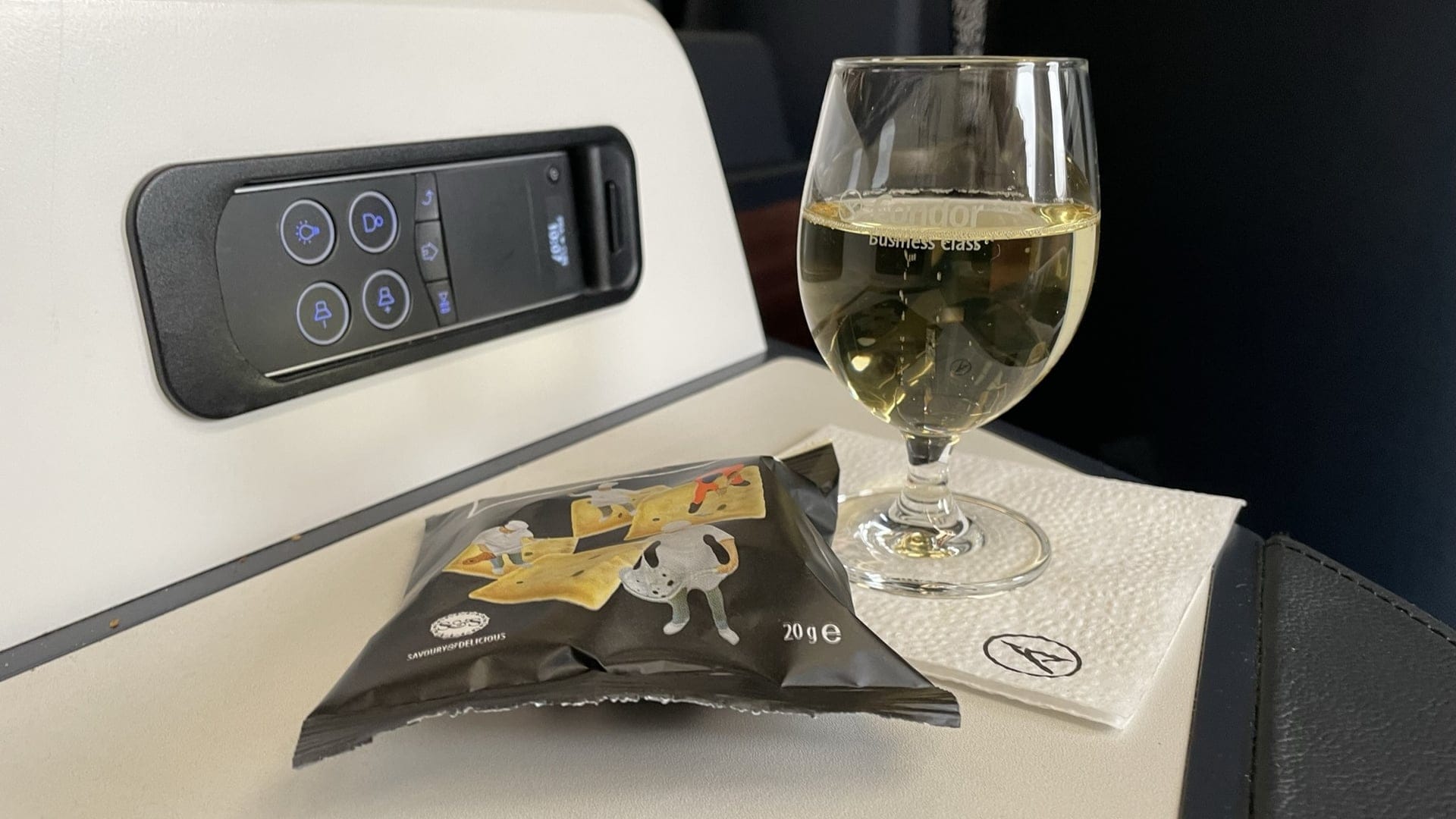
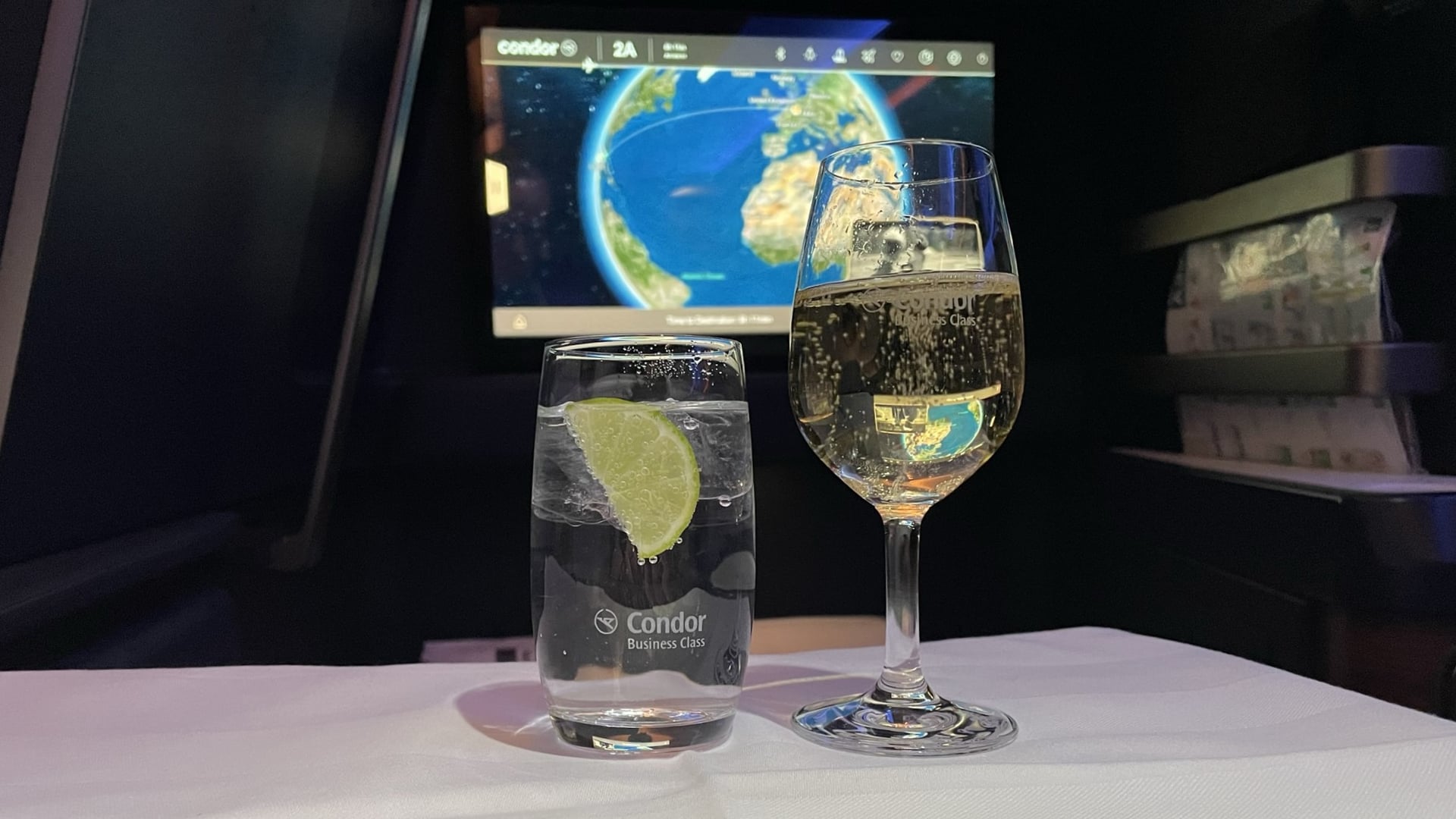
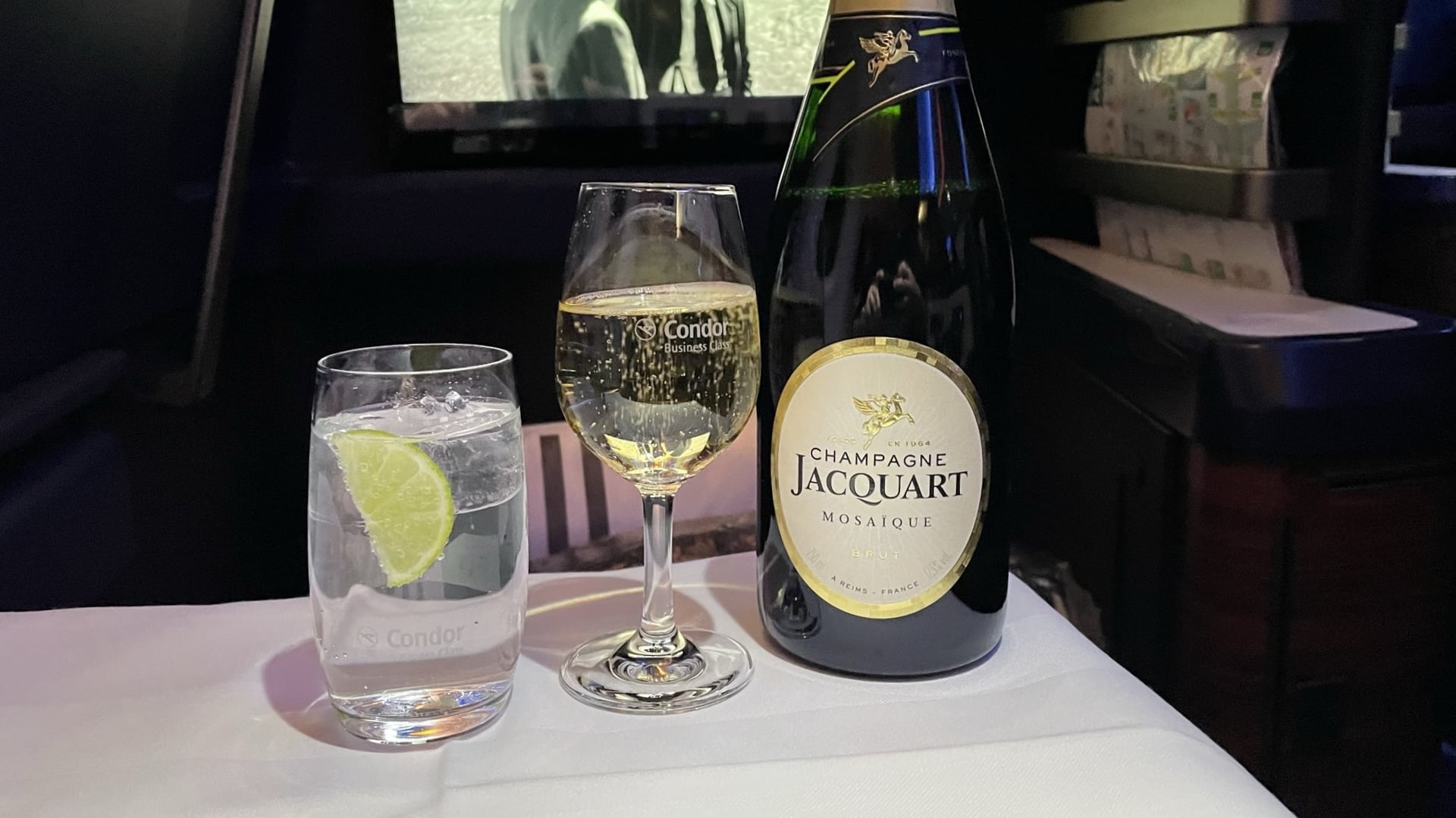
Condor business-class travelers usually receive a simple pre-departure drink, such as juice, water, or sparkling wine, depending on the flight and catering station. There is also usually a bottle of water provided at each seat.
Main Beverage Options
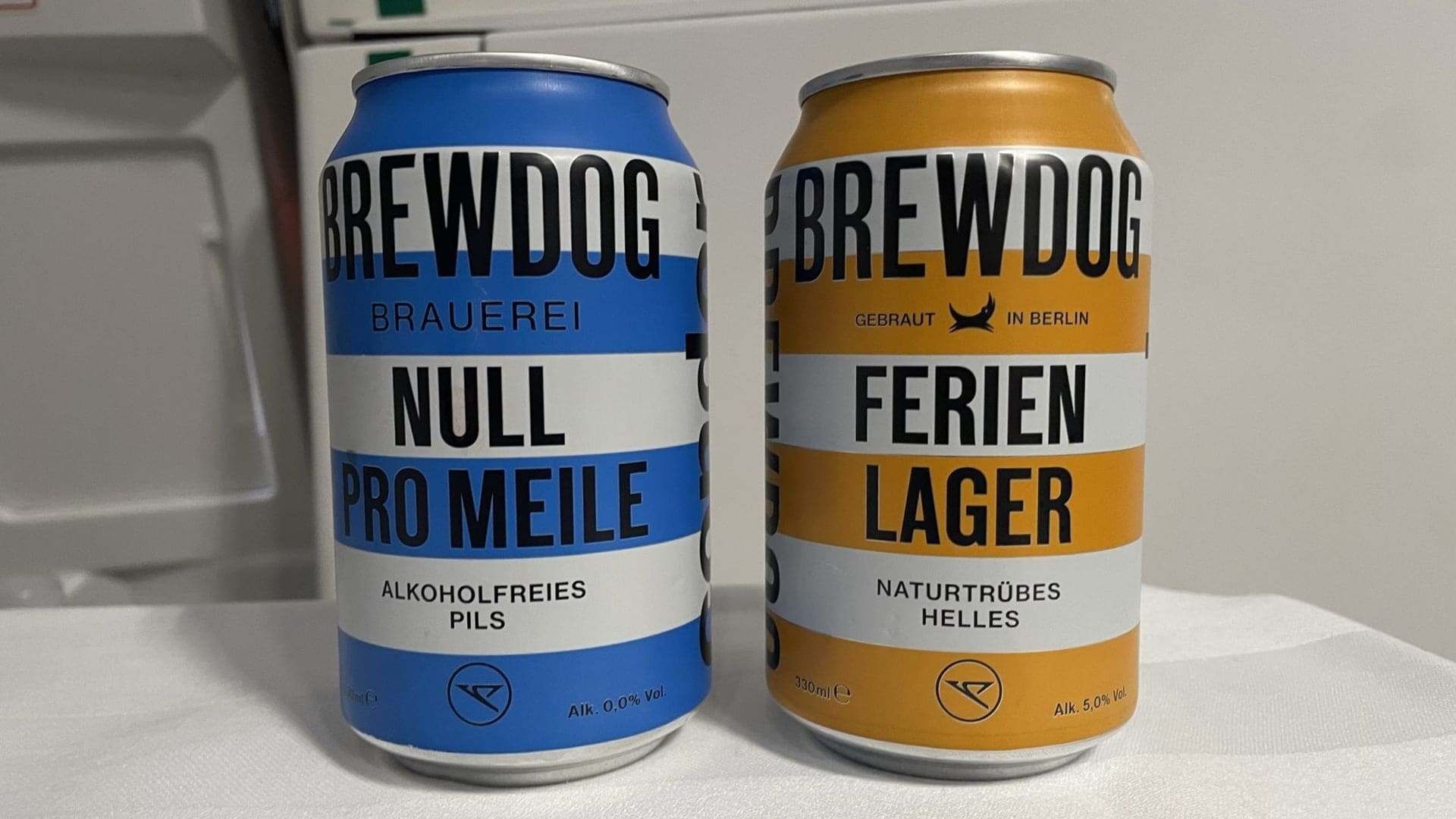
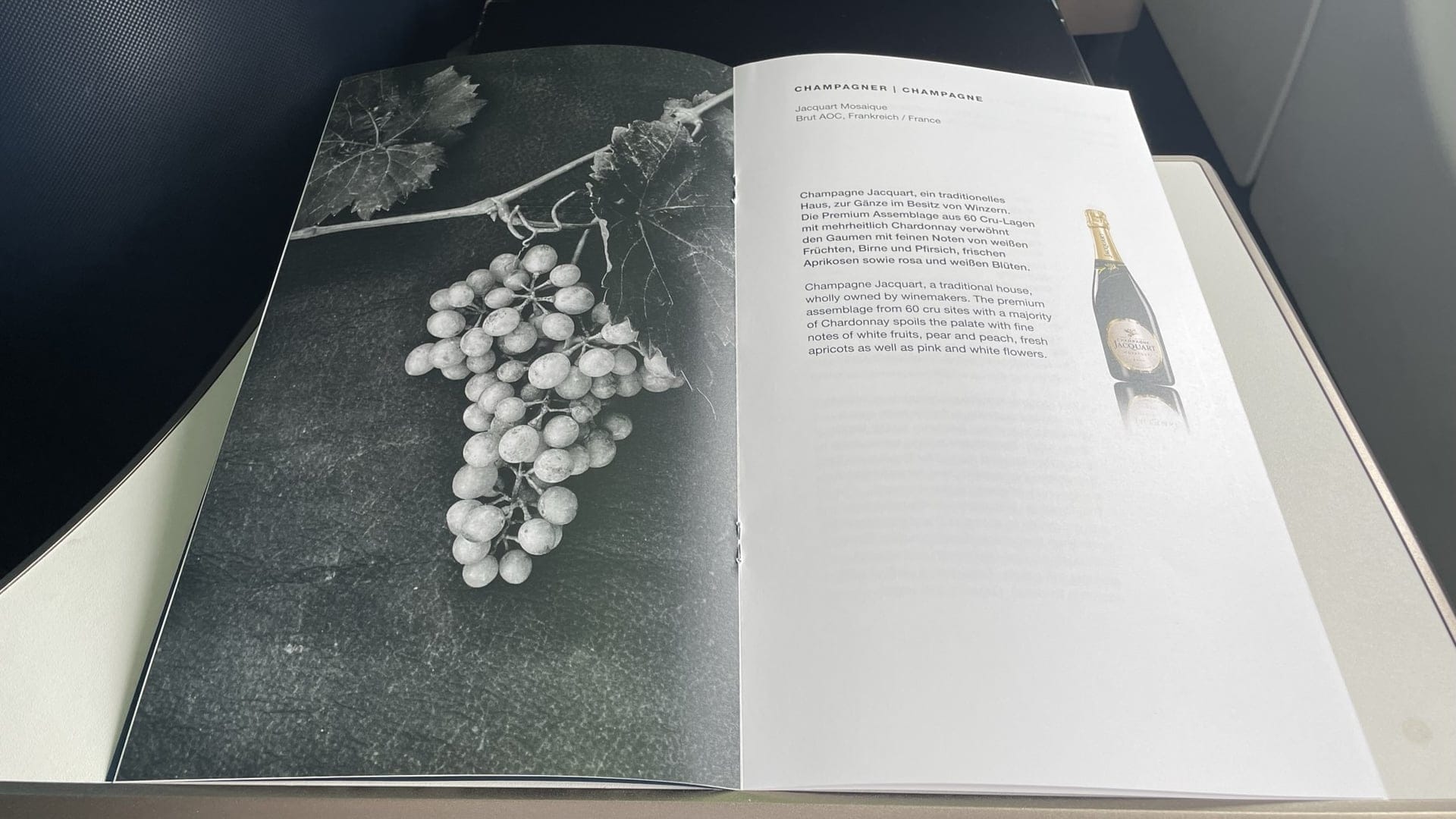
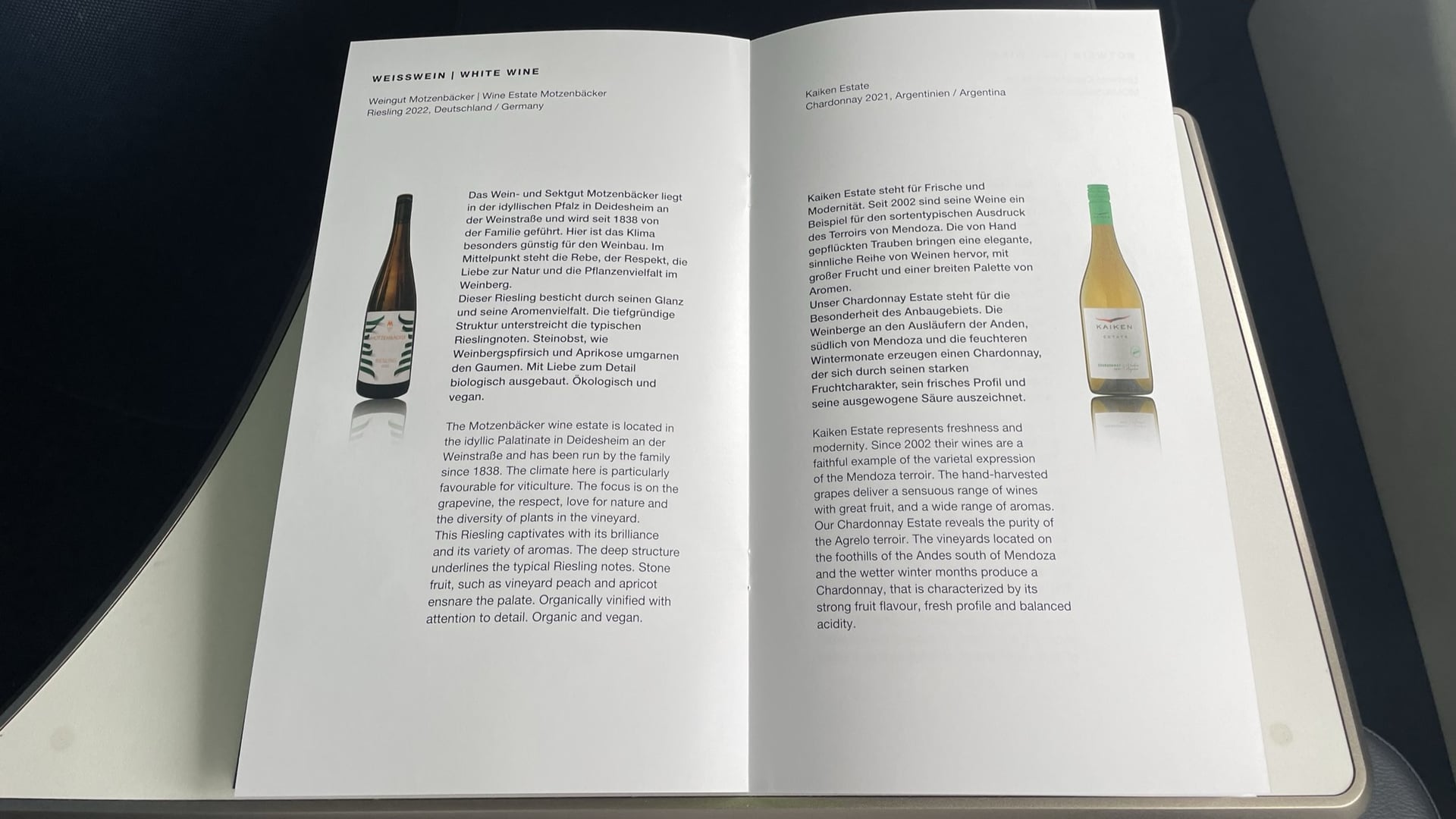
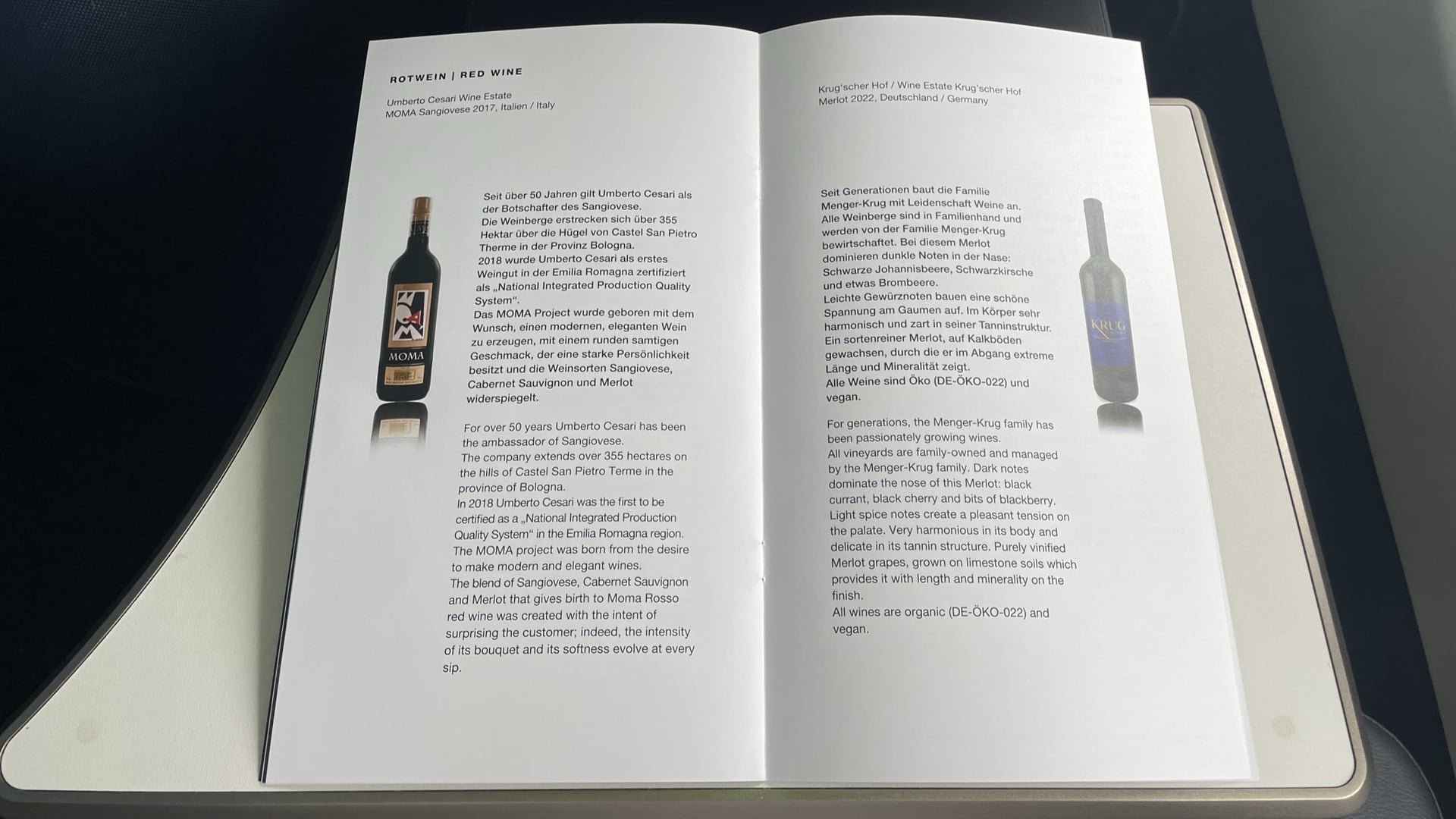
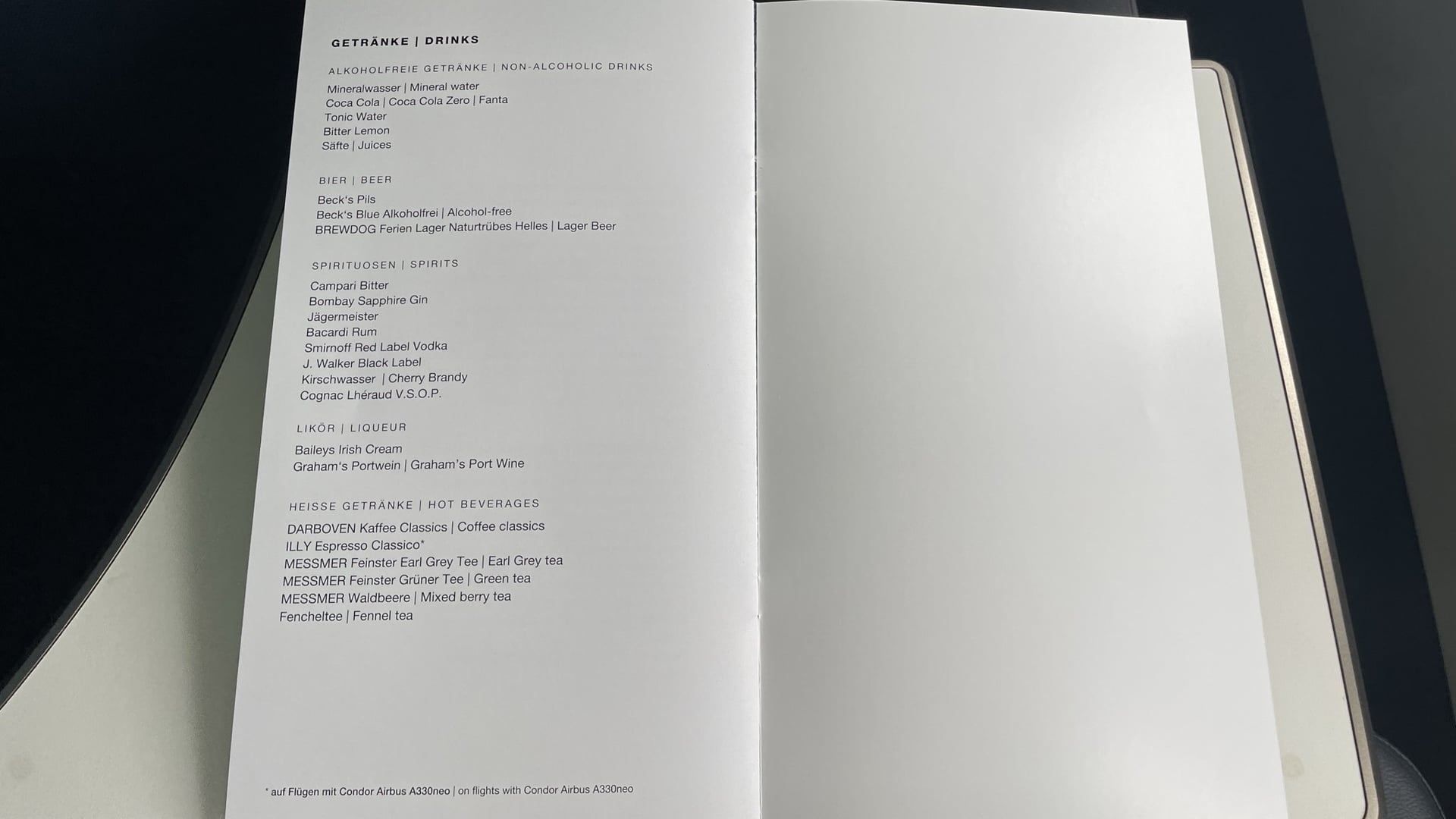
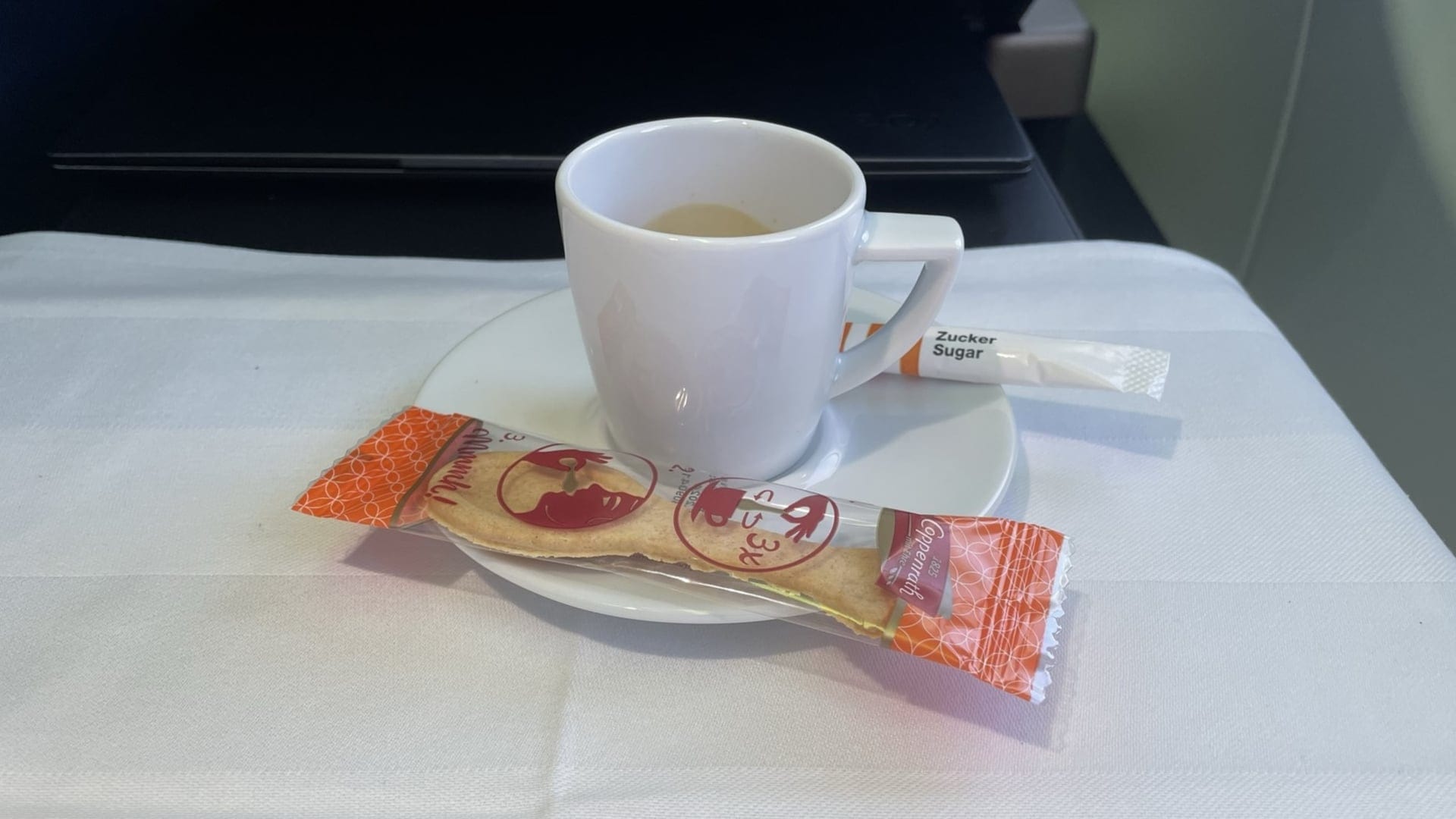
After departure, travelers can enjoy various alcoholic and non-alcoholic drinks. The beverage list usually includes sparkling wine, white wine, red wine, beer, spirits, soft drinks, juices, water, coffee, and tea.
Red wine, white wine, and sparkling wine pair well with the usual meat, fish, and vegetarian main courses, while beer and spirits add more variety to the drinks list. Wine and beer labels can change by route, season, and menu cycle.
Service
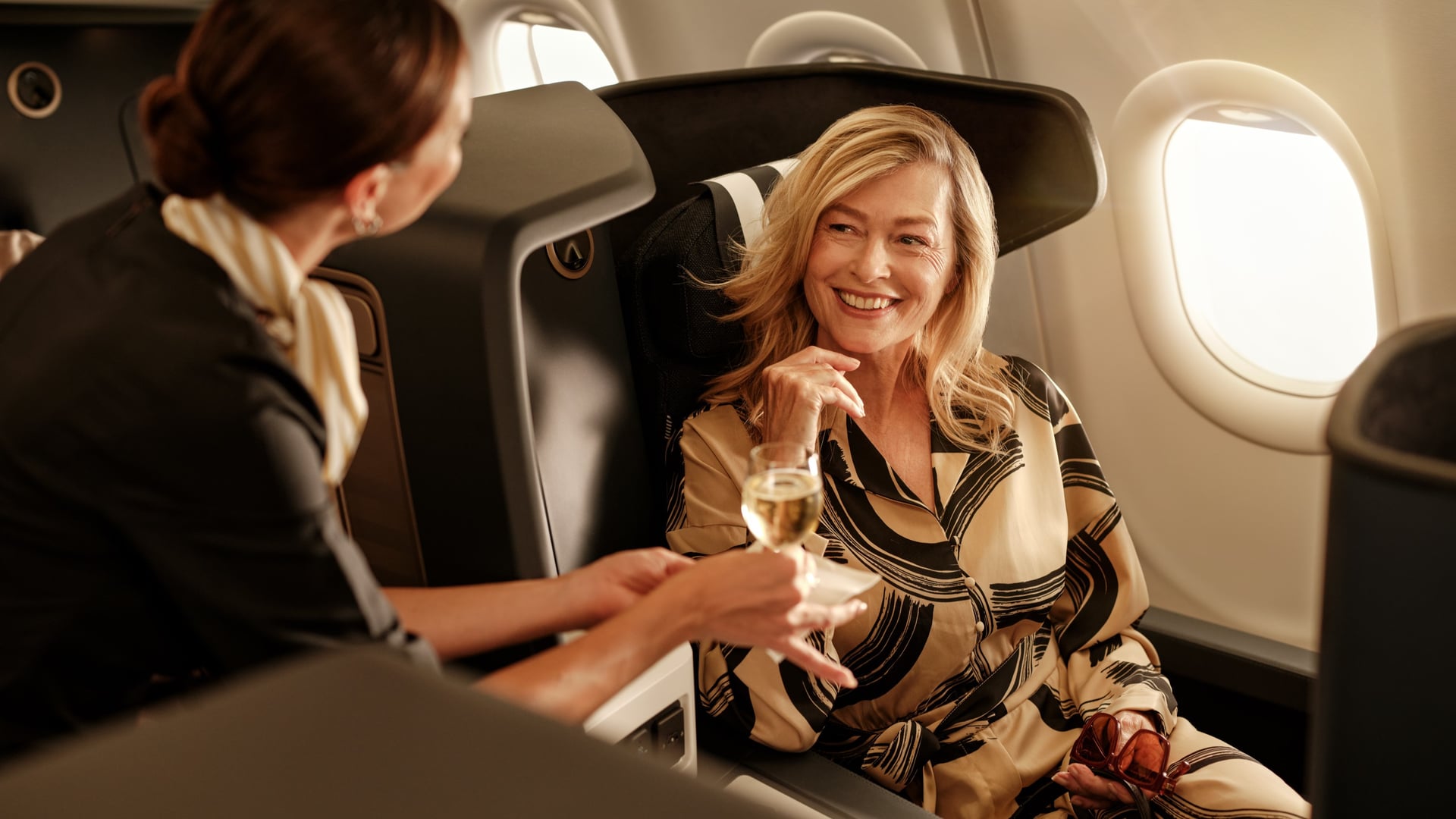
Condor’s business-class service follows the rhythm of a longer flight: pre-departure drinks, main dining, mid-flight checks, and a second service before arrival. The style feels direct and organized, which fits Condor’s leisure-focused model.
Timing shapes the service more than formality. On daytime flights, the first meal can move at a more relaxed pace because passengers are less likely to sleep immediately after takeoff. On night flights, a shorter sequence gives passengers more time to rest before the pre-arrival service.
German and English serve as the main onboard languages, with additional languages depending on the crew and route.
The most useful service details are simple: timely drink refills, clear communication, help with requests, and a smooth transition from dining to rest and arrival preparation.

Entertainment
In-Flight Entertainment
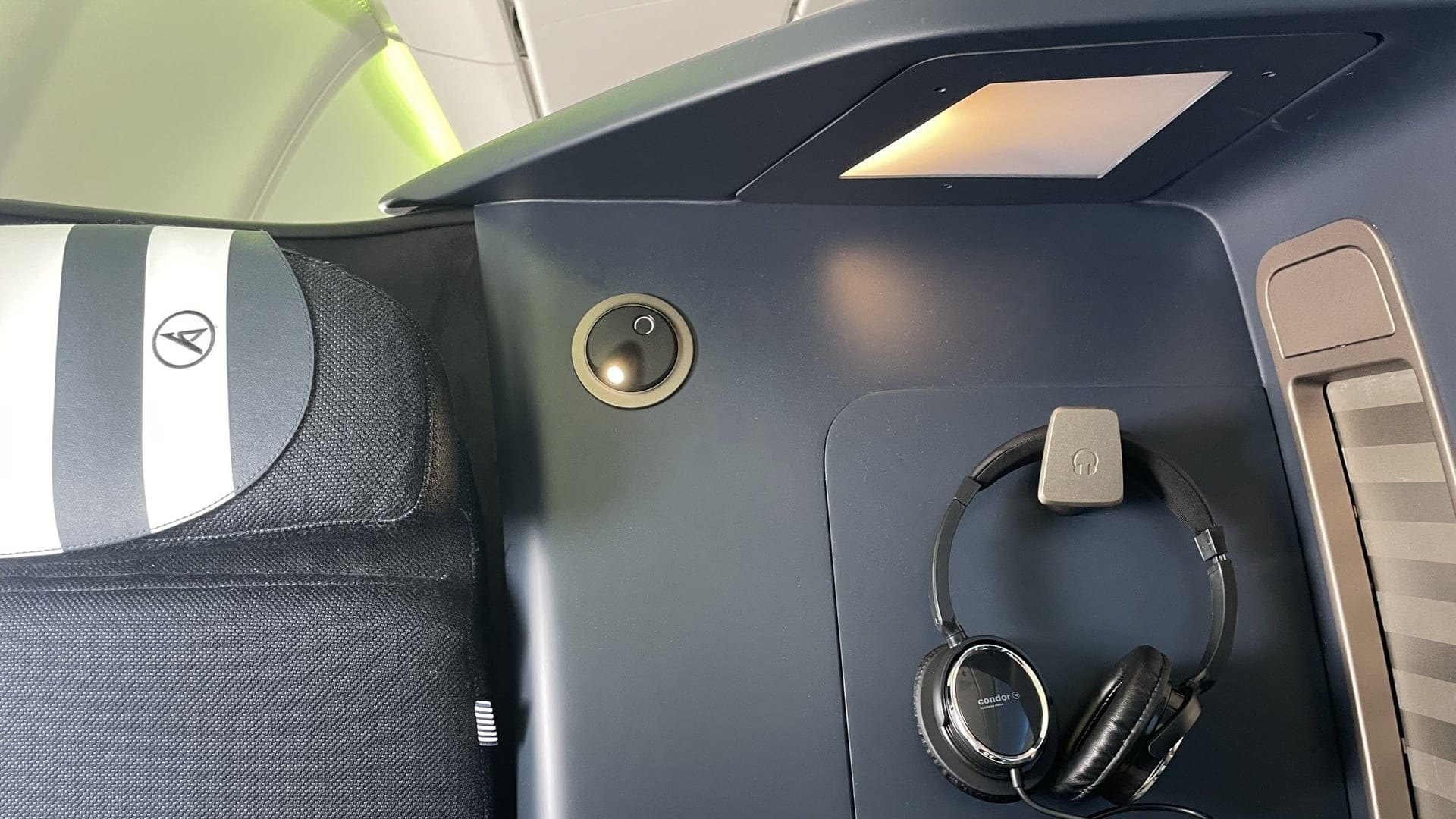
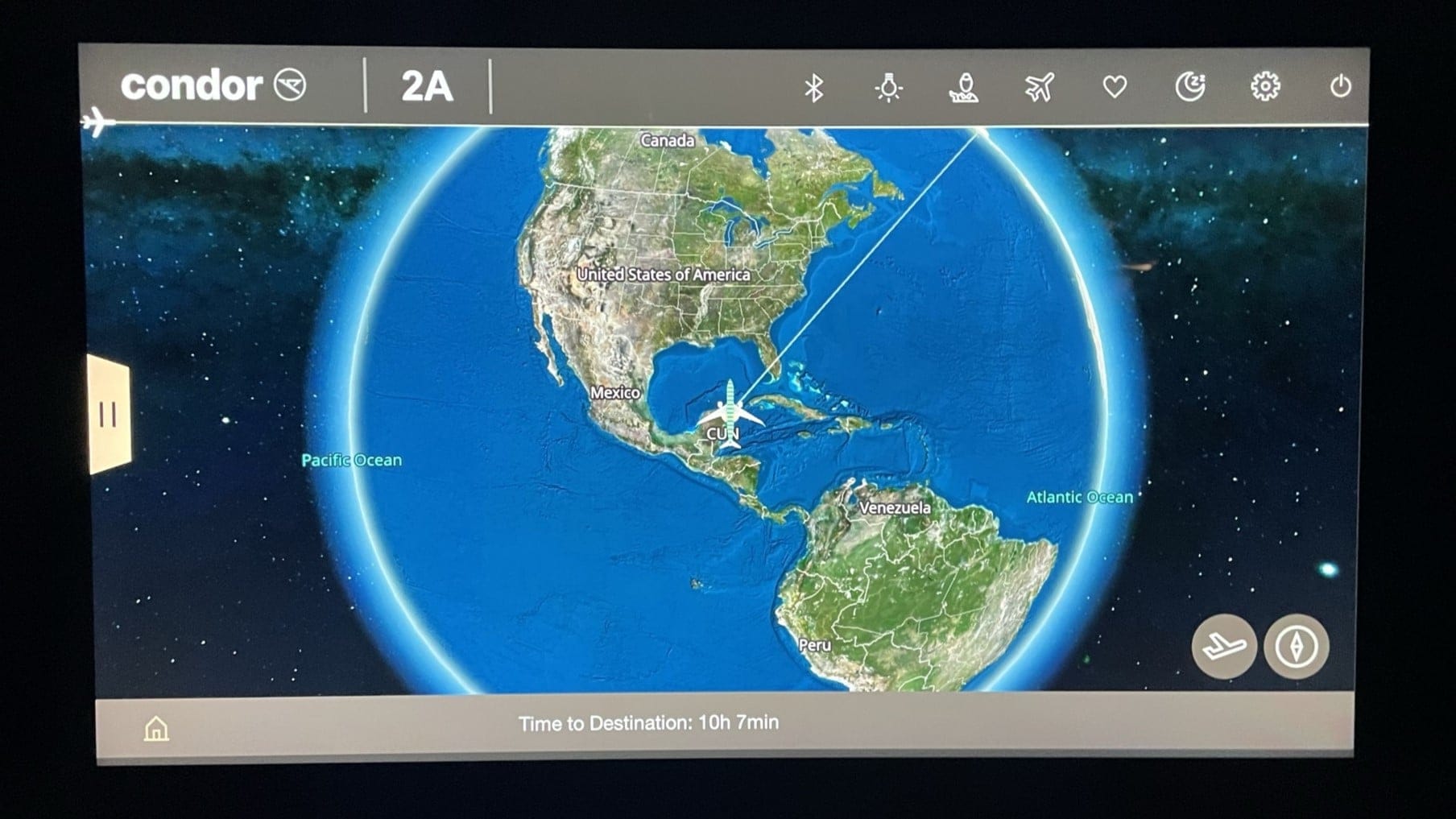
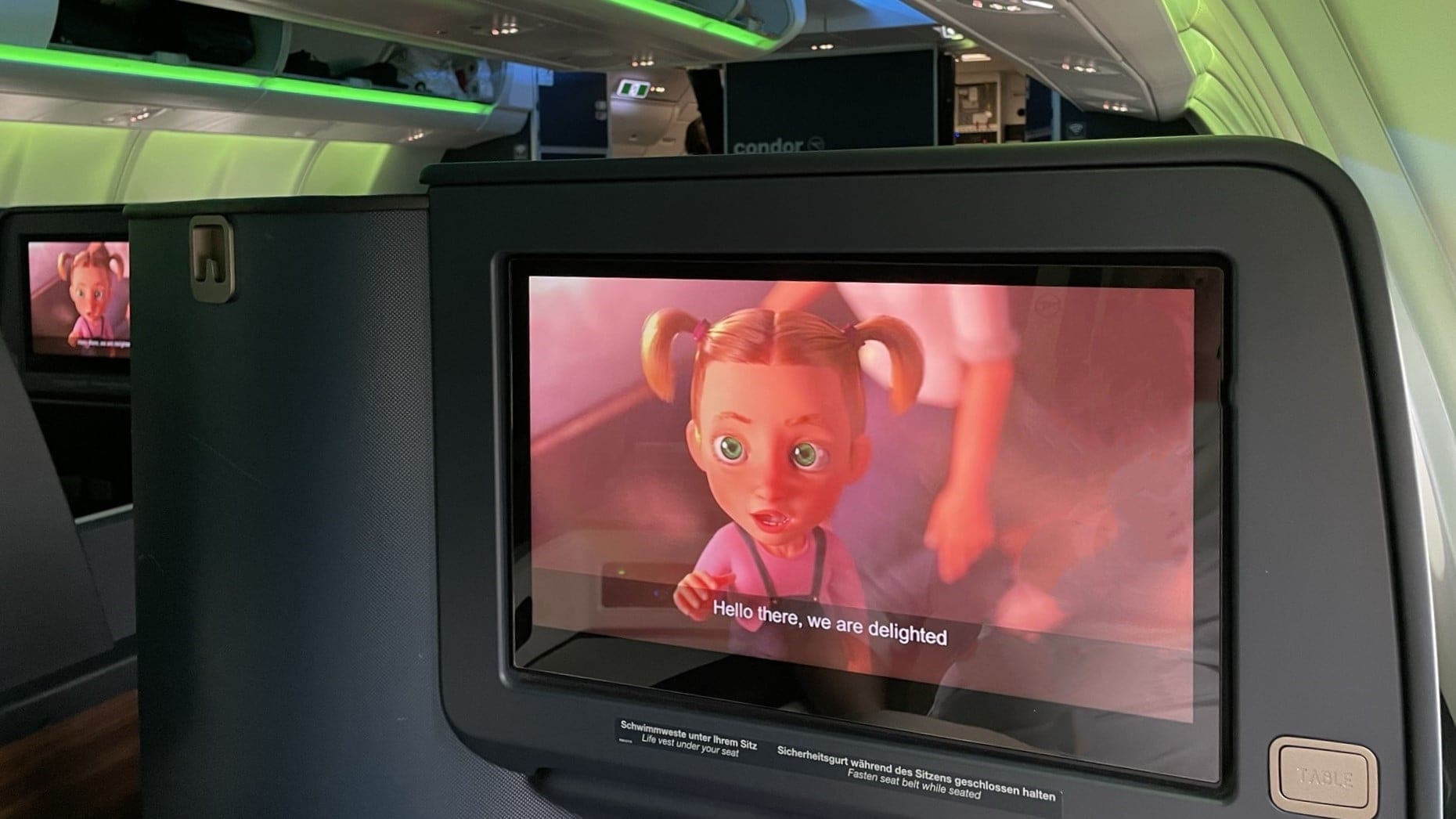
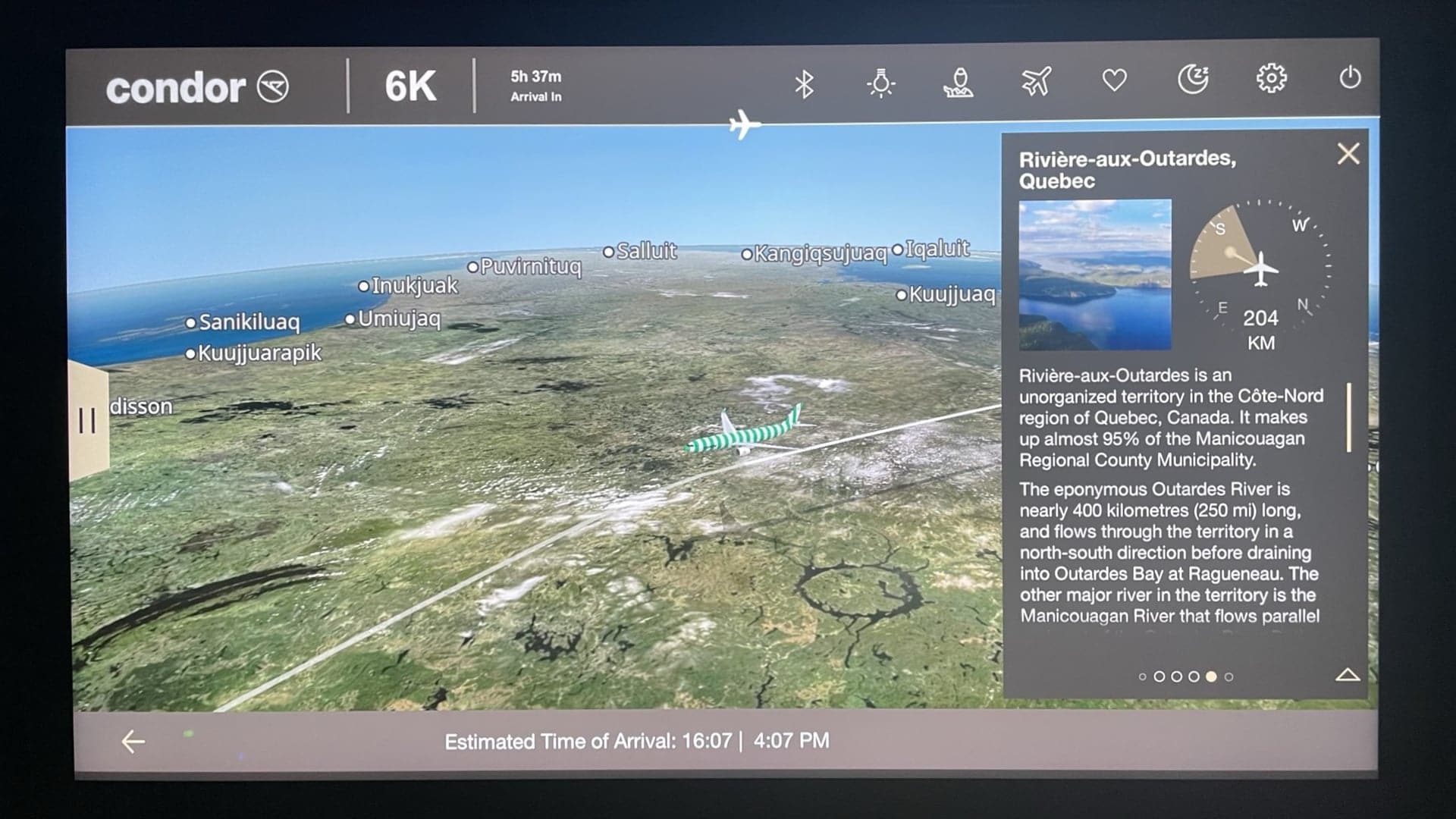
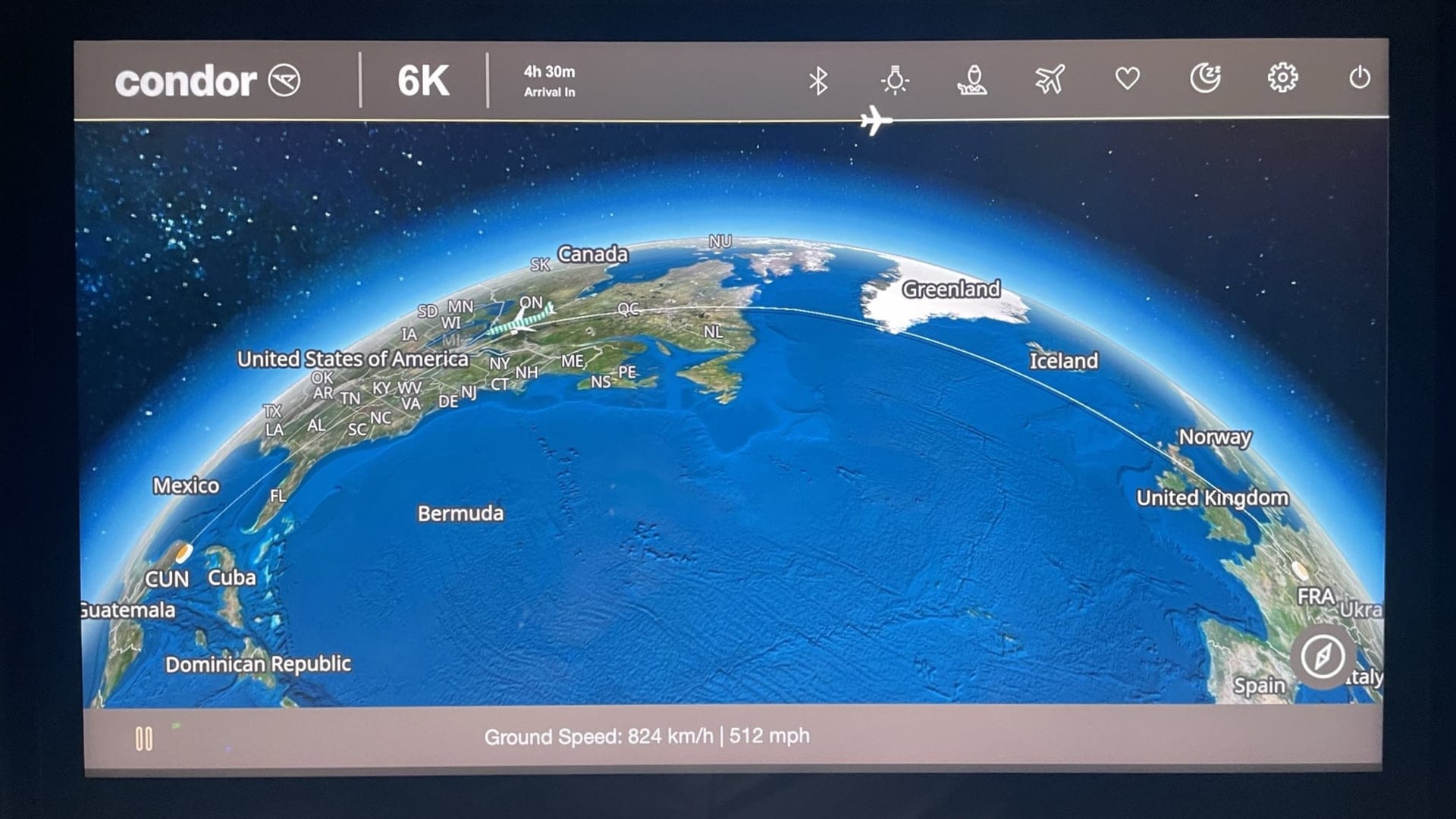
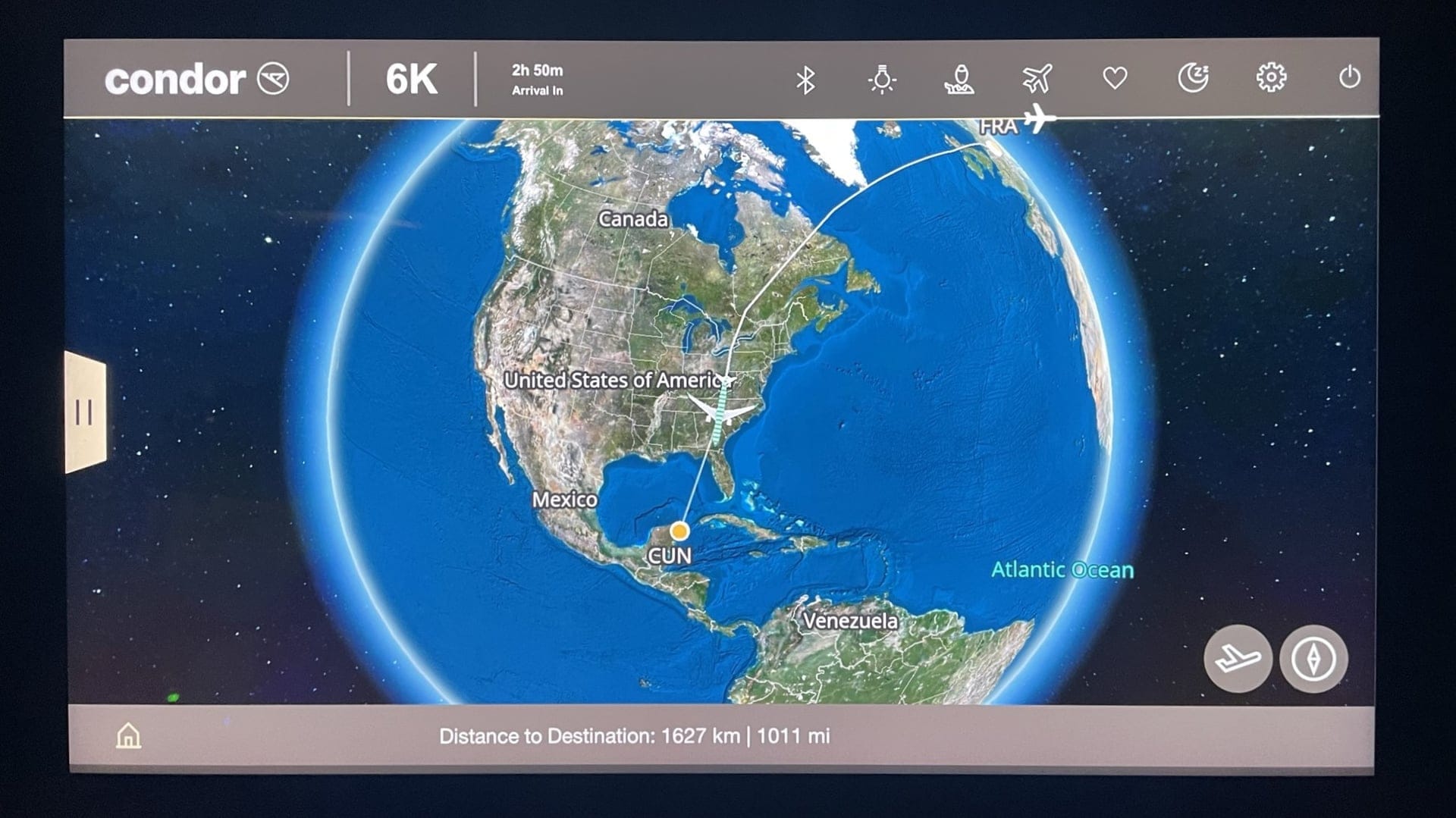
Condor’s business-class seats on Airbus A330neo planes have 17.3-inch 4K entertainment screens. Passengers can navigate the entertainment system using the touchscreen or the handheld remote control, which helps once the seat reclines.
The entertainment system covers movies, series, documentaries, music, and children’s programming. German-language content is available alongside English-language and international options.
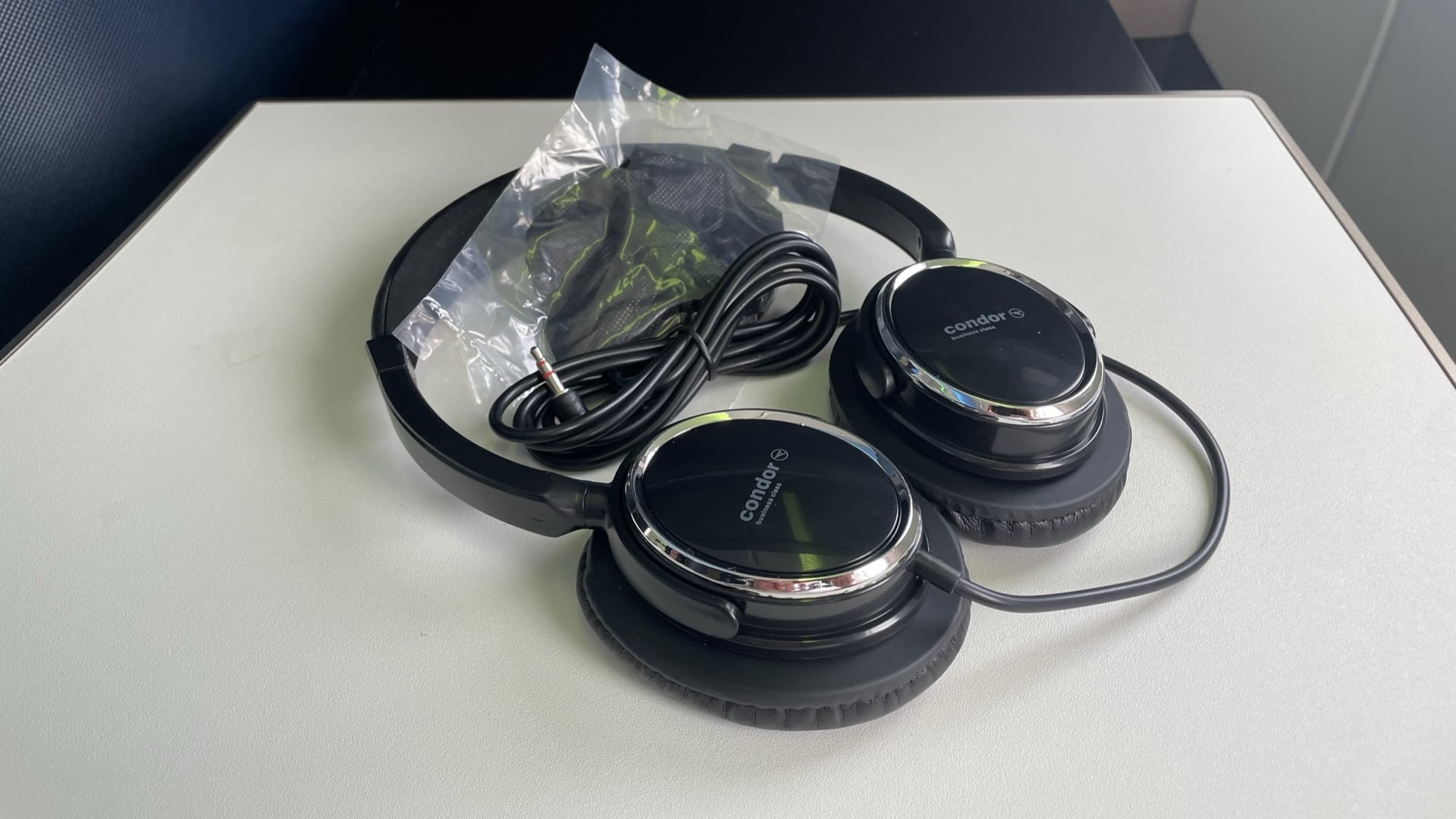
Each business-class seat comes with headphones, and the entertainment system supports Bluetooth pairing with compatible wireless headphones. This lets travelers use their own headphones instead of the airline-provided set.
Wi-Fi
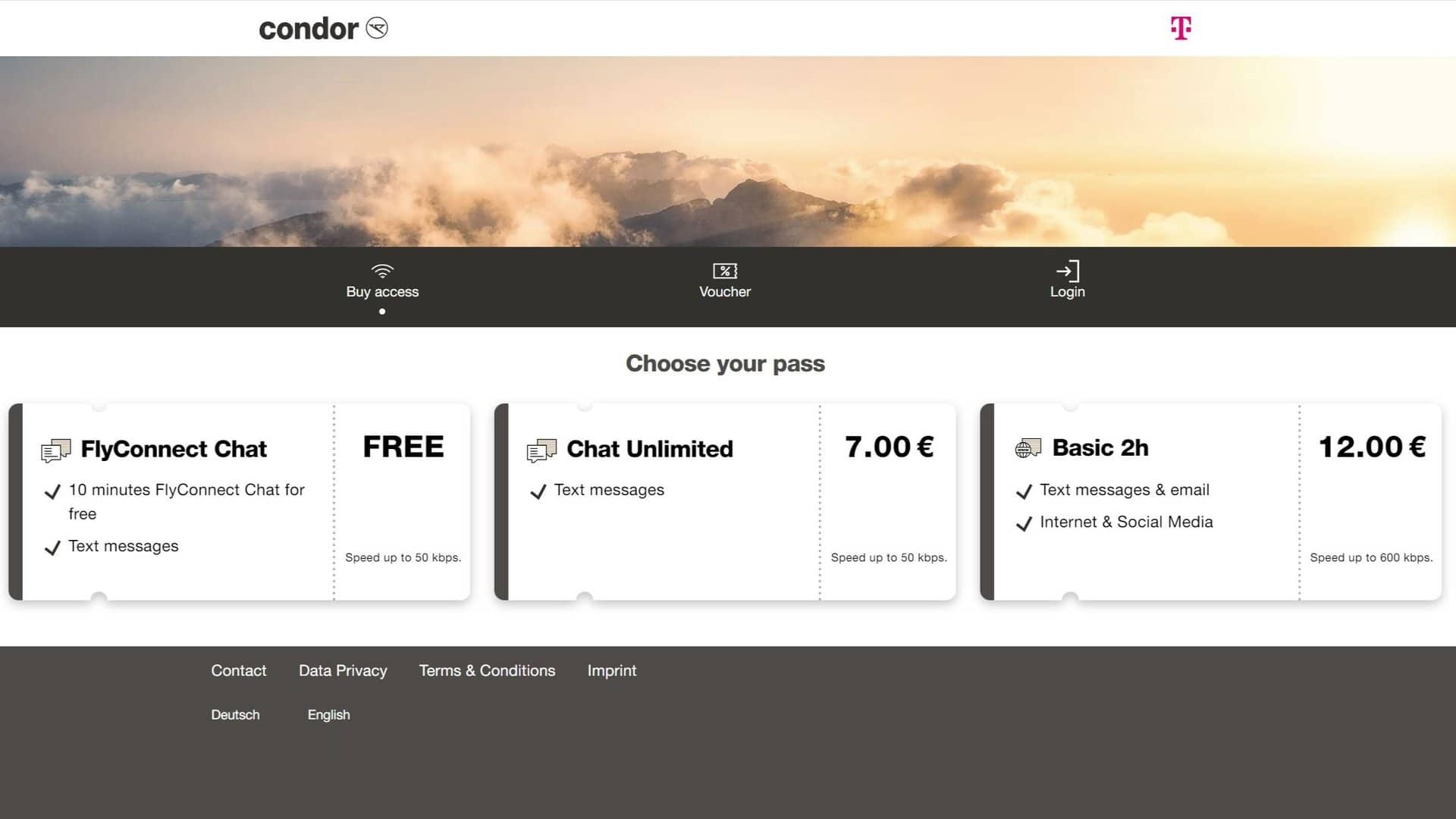
The Condor FlyConnect service offers Wi-Fi connectivity on the Airbus A330neo. The service has separate options for basic messaging and broader internet use.
FlyConnect Chat covers text messaging, while FlyConnect Surf is suitable for email, web browsing, music streaming, and VPN use. Like most in-flight Wi-Fi, performance can vary by route, coverage, and onboard demand, so it suits lighter online tasks more than heavy work.
Condor Bordshop
Condor also offers onboard shopping through the Condor Bordshop. The catalog can include fragrances, accessories, watches, sweets, children’s products, and aviation-themed merchandise.
Amenities
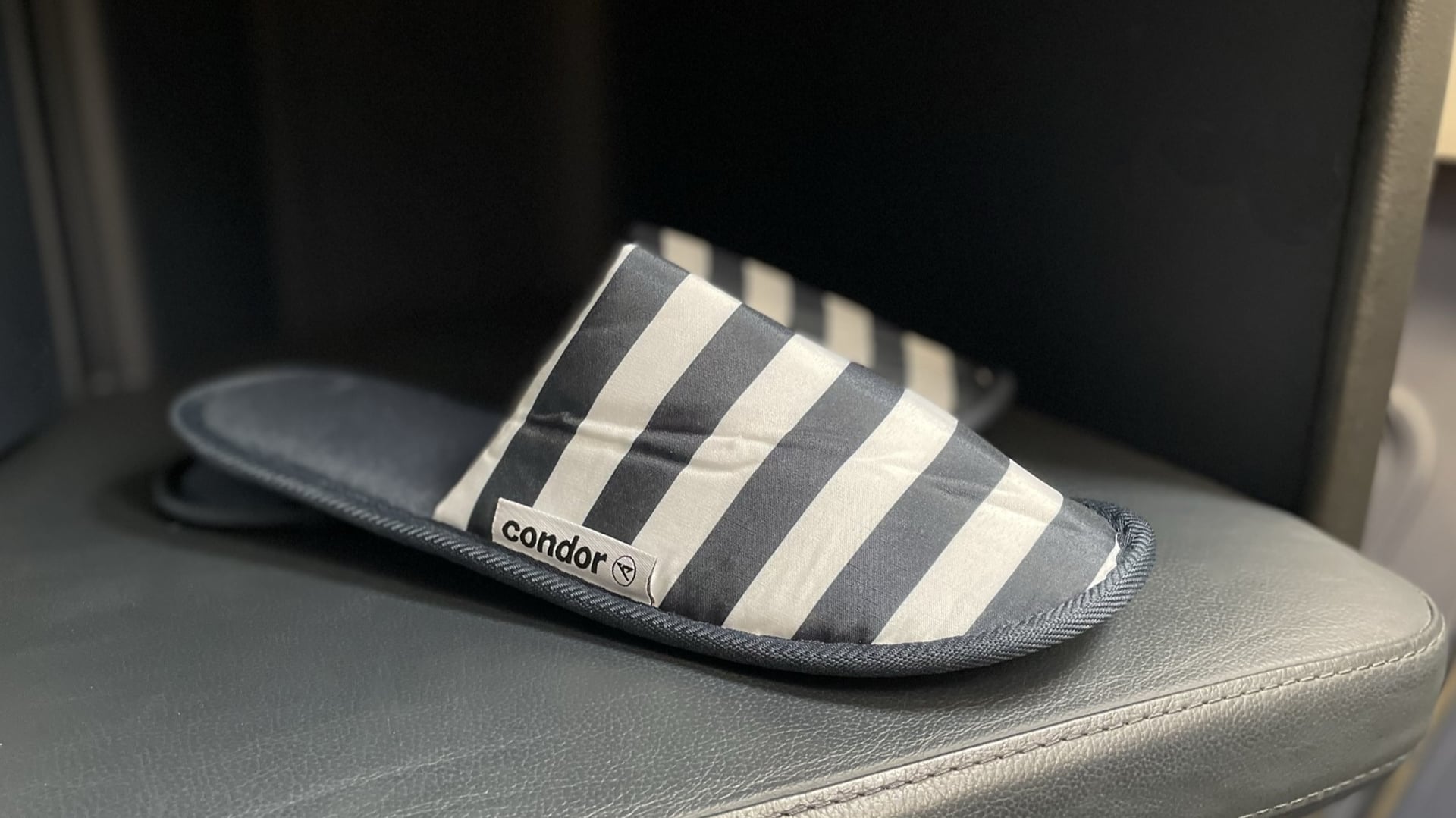
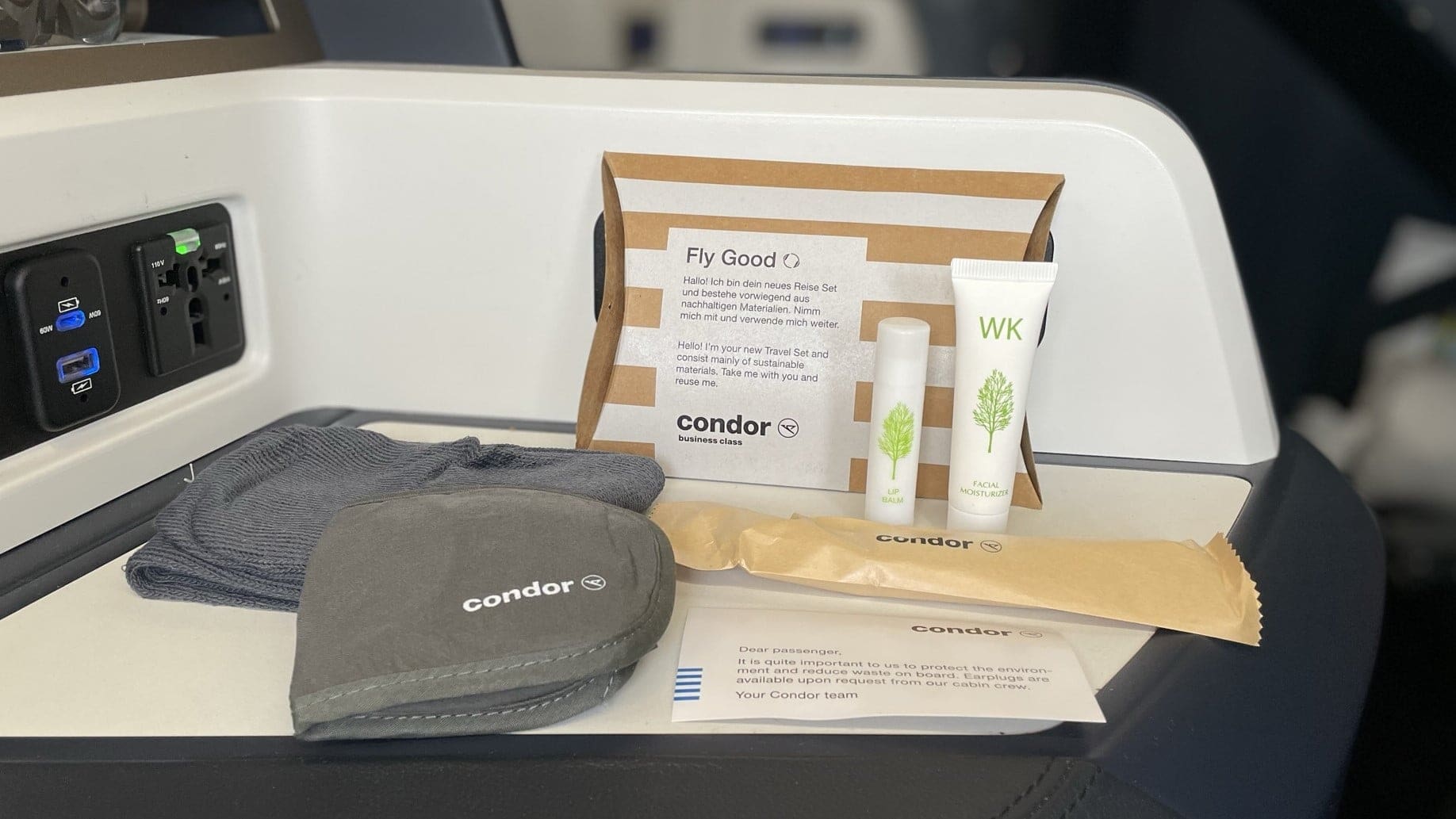
Each Condor business-class seat on longer flights includes the core items needed for rest and basic in-flight care:
- Bedding: pillow, blanket, and mattress pad
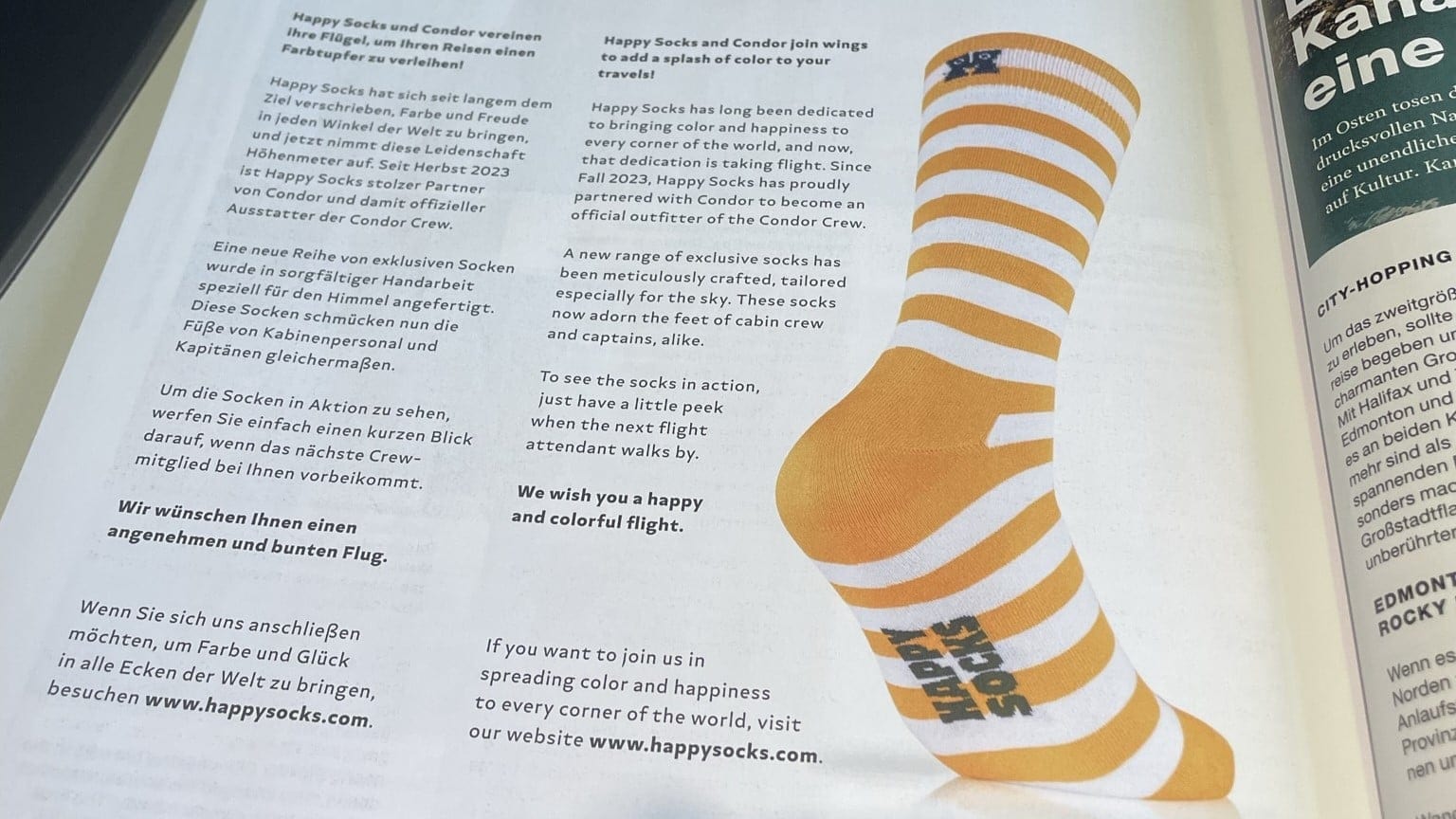
- Cabin comfort: slippers and socks
- Amenity kit: eye mask, dental items, lip balm, and facial moisturizer
- Dental kit: toothbrush and toothpaste
- On-request items: earplugs
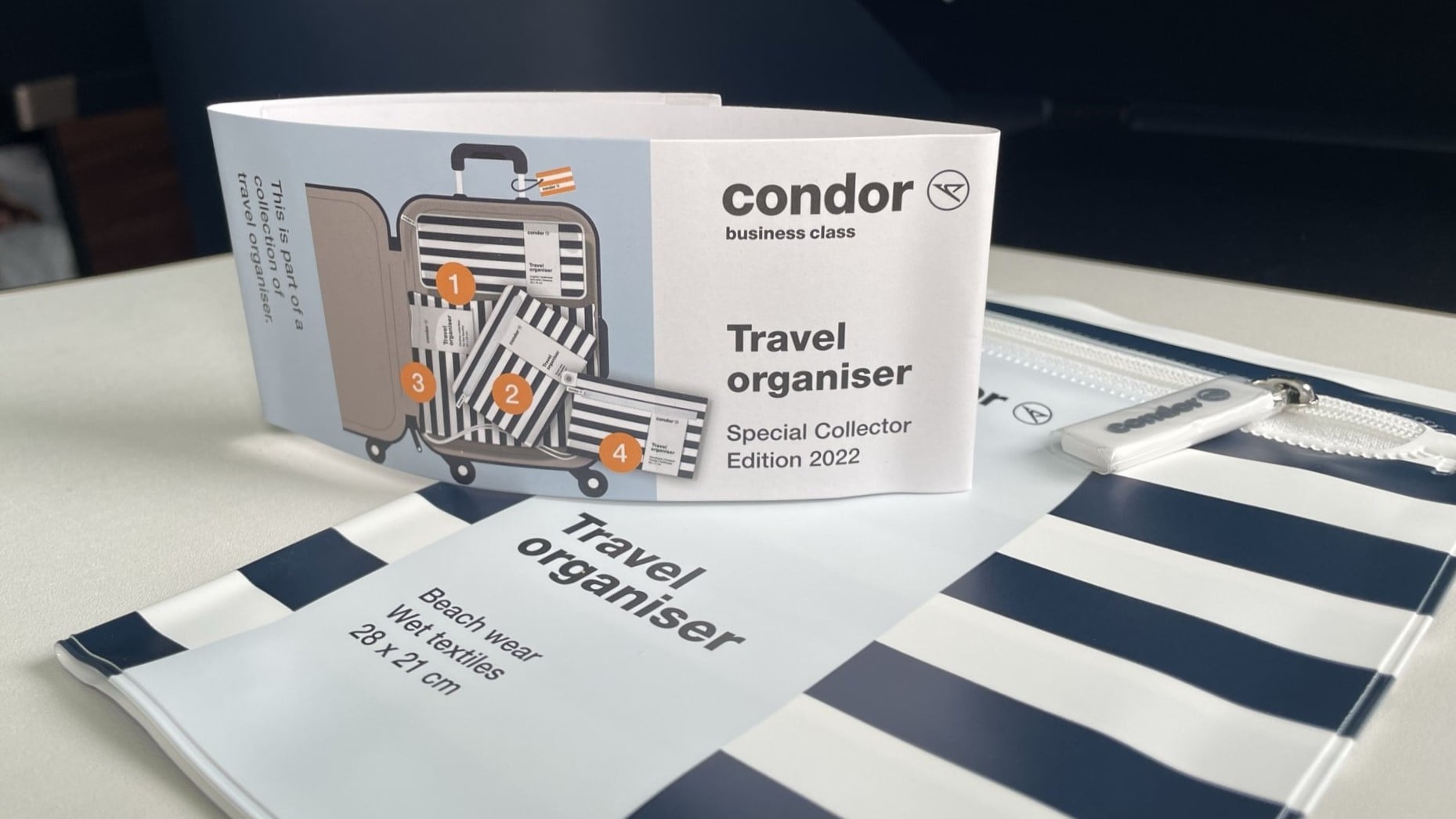
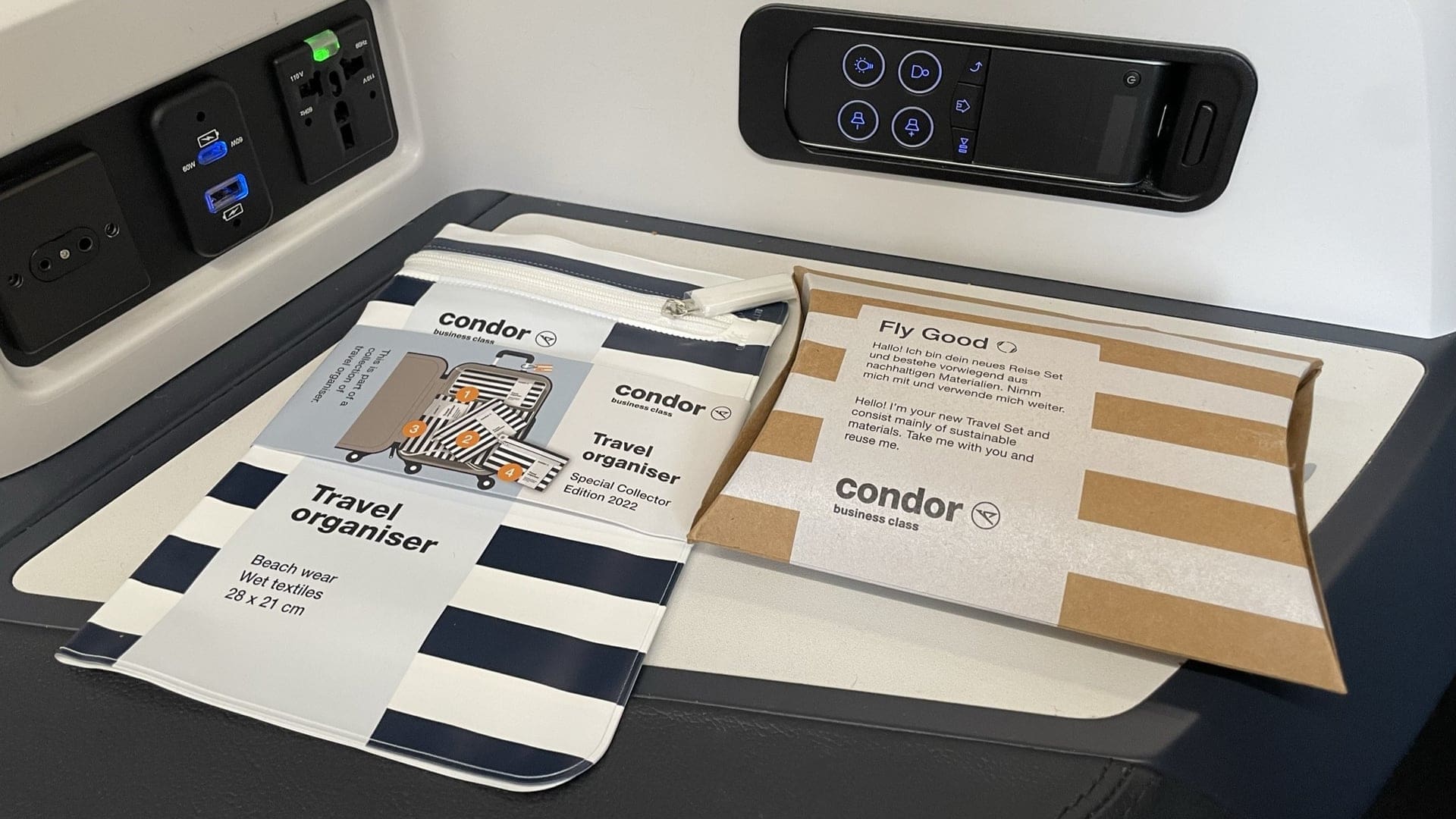
- Reusable travel organizer: a practical item for clothing, documents, cables, or smaller personal items
Prime Seat passengers receive the standard amenities, plus pajamas and a personal snack basket.
On night routes, the mattress pad, pillow, and blanket make the lie-flat seat easier to use for sleep. The amenity kit is simple, but it covers the items passengers are most likely to need during the flight.
The reusable travel organizer replaces some of the usual amenity packaging with an item passengers can keep and use after arrival.
Short and Medium-Haul Flights
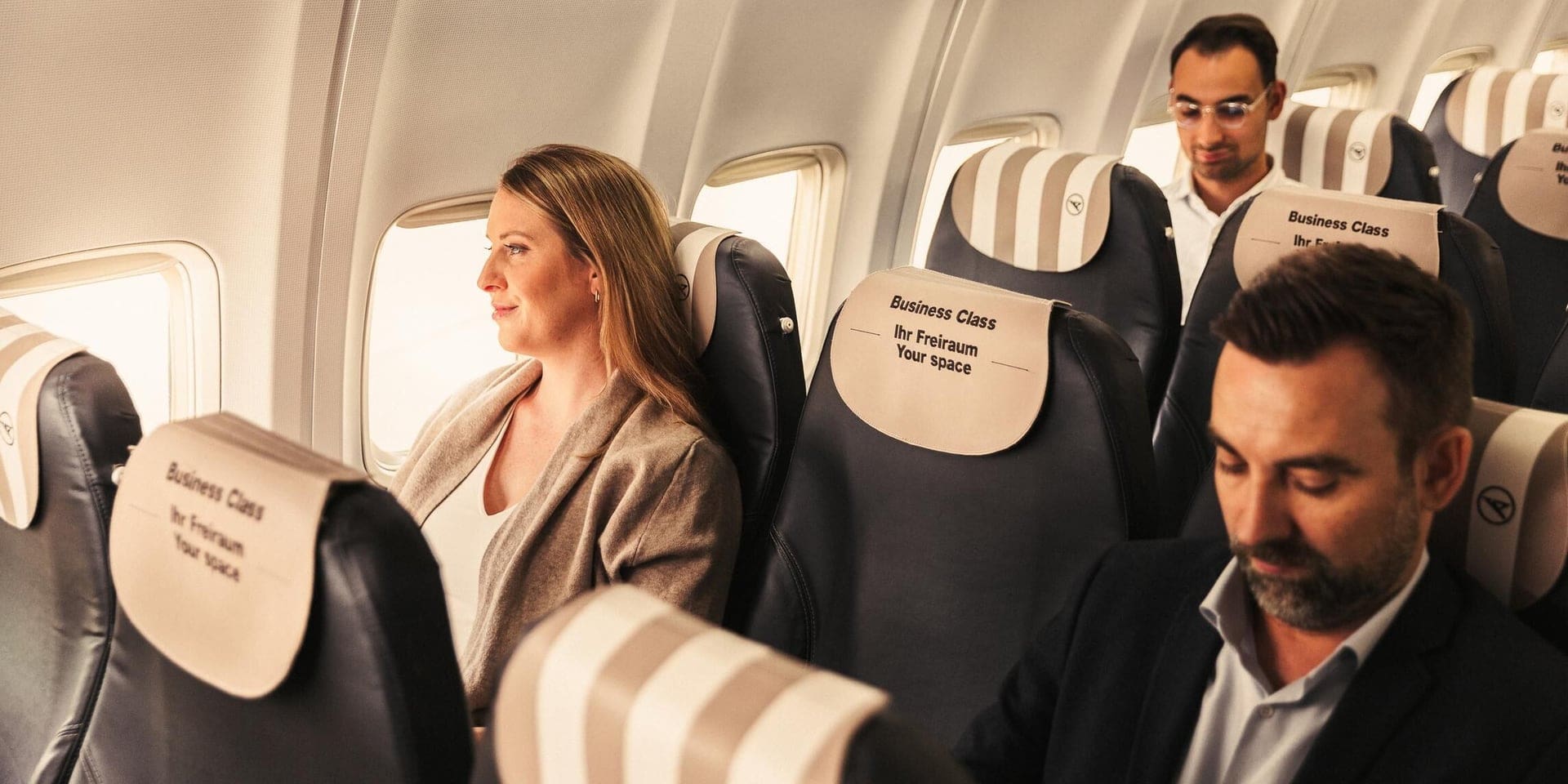
Condor Airlines’ business class on short and medium-haul flights follows the European narrow-body model. It has a 3-3 layout and is at the front of the aircraft, with a blocked middle seat and a movable divider separating it from economy class.
The seat itself is closer to an economy-style seat than a wide-body business-class seat. The main differences are the forward-cabin position, extra room around the passenger, and the included onboard service.
Seating on Newer Aircraft
Condor’s newer Airbus A320neo and Airbus A321neo aircraft improve the short- and medium-haul cabin. The first rows use Recaro BL3710 seats, while the rest of the cabin uses Recaro SL3710 seats. Thus, business-class seats offer:
- More seat pitch in the forward rows
- More recline than the seats farther back
- A longer armrest than in the economy rows
- Larger overhead storage
These changes make the front rows more suitable for medium-length flights, where legroom, cabin position, and carry-on space improve comfort.
Onboard Experience
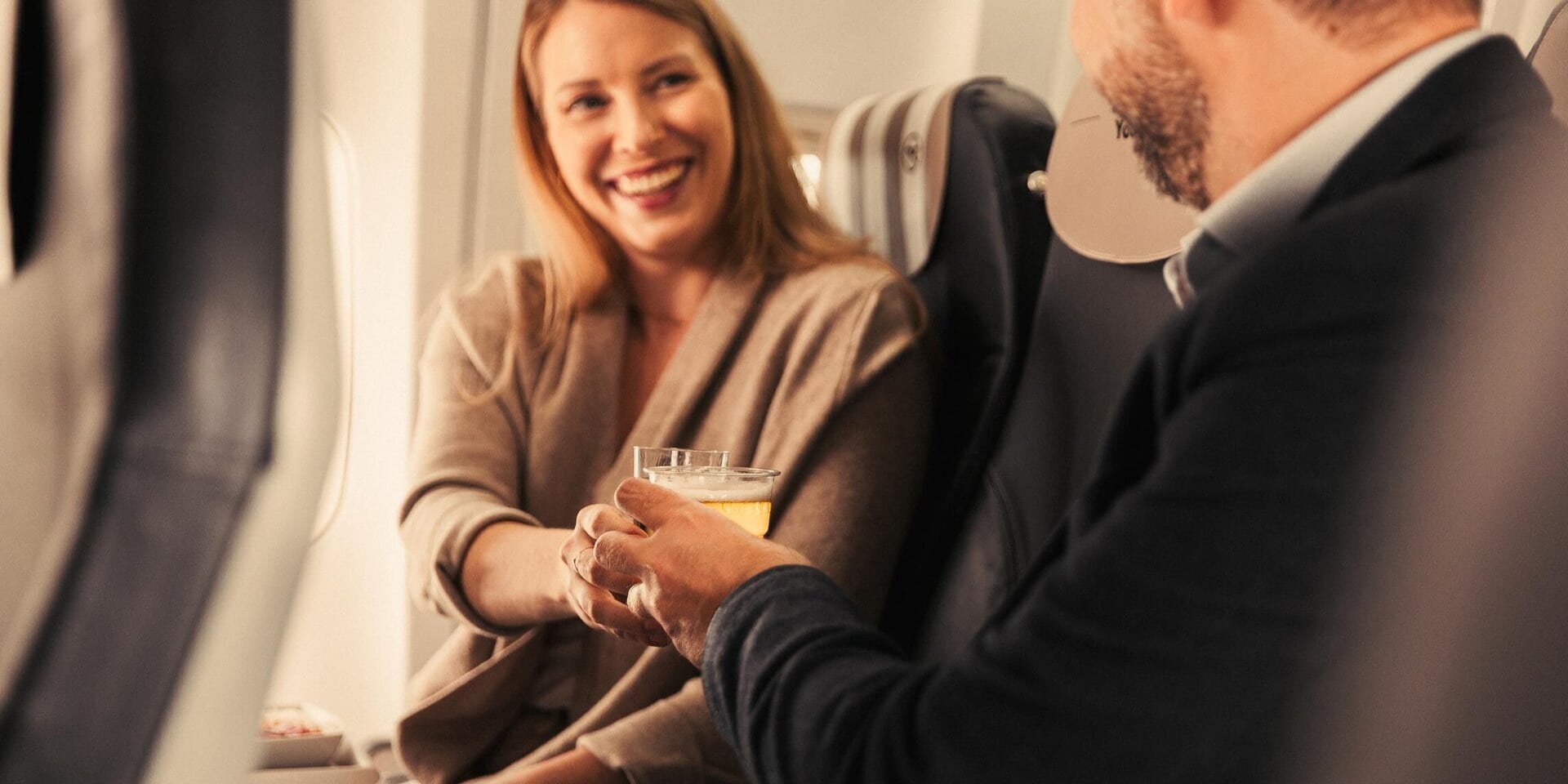
The onboard experience is simpler than on longer routes. Business-class travelers receive included food and drinks, with meal details depending on flight length and route. On eligible flights, passengers can pre-select a main course before departure.
Some aircraft also offer streaming entertainment to personal devices, and newer aircraft can include FlyConnect internet access.
This is also where Condor differs from some legacy carriers and from any low-cost carrier. The product is still a European-style forward cabin, but the newer aircraft, catering and selected connectivity features, make it more comfortable than a basic blocked-seat setup.
Sustainability
Condor’s sustainability efforts focus mainly on fleet renewal. The airline now uses the Airbus A330neo on longer routes, which reduces fuel consumption and CO₂ emissions compared with older wide-body aircraft. Condor states that the Airbus A330neo uses about 2.1 liters of fuel per passenger per 100 km and reduces CO₂ emissions by about 20%.
The airline is also renewing its short- and medium-haul fleet with Airbus A320neo and Airbus A321neo aircraft. These newer aircraft replace older models and support lower fuel burn, lower emissions, and quieter operations.
Condor also offers sustainability-related booking options. Green Fares support the use of sustainable aviation fuel and certified climate projects. Passengers can also use the “Round Up for the Future” option to make a voluntary contribution toward more sustainable aviation.
On board, the reusable travel organizer in business class reduces the need for a conventional amenity-kit pouch and gives passengers an item designed for use after the flight.

Core Considerations
The Airbus A330neo cabin gives Condor a high-quality long-haul product. The 1-2-1 layout, direct aisle access, and lie-flat seats make Condor’s business-class offering much stronger than the older leisure-airline model passengers may expect.
Prime Seats create a valuable upgrade opportunity. The larger footwell, open ottoman area, 24-inch screen, pajama set, and snack basket make the front row meaningfully more comfortable, especially when comfortable sleep is a priority for passengers.
The business-class dining options add a refined touch to the experience. The multi-course meal service, three main-course choices, bread basket, cheese course, and aircraft-shaped salt and pepper shaker give the experience a recognizable Condor touch.
Quick Facts
On the Airbus A330neo, Condor’s business-class cabin gives the leisure airline a serious long-haul product, with a 1-2-1 layout, direct aisle access, lie-flat seats, and paid Prime Seats in the front row. Condor’s business class is best suited to transatlantic routes, where the modern seat, multi-course dining, partner lounge access, and efficient service support a comfortable long-haul flight without the formality of a legacy flagship carrier. Standard seats have less width, storage, and privacy than some suite-style competitors, while short- and medium-haul business class follows a simpler European blocked-middle-seat model. Condor’s business class is worth booking when the fare is attractive, and travelers would like to benefit from a direct-aisle-access cabin.
Business Class Product: Airbus A330neo with 1-2-1 lie-flat seats
Best Upgrade: Prime Seat
Best Use: Transatlantic routes
Main Weakness: Limited suite-style privacy
Reviewed: May 2026