
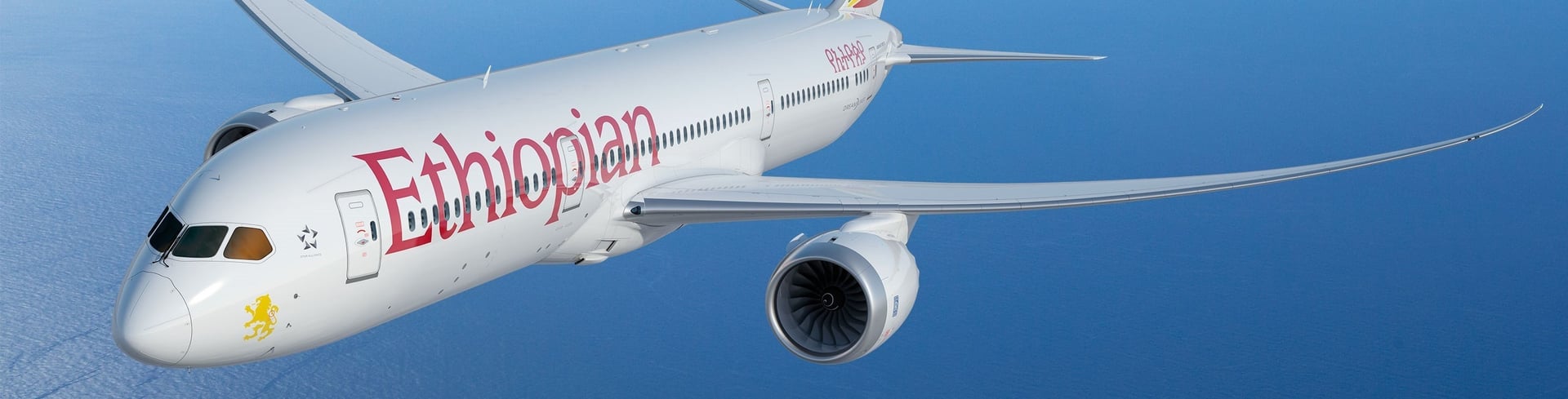
Ethiopian Airlines is one of Africa’s largest international carriers, with a long-haul network built around its hub at Addis Ababa Airport (ADD). The airline connects Africa, Europe, North America, Asia, and the Middle East, which makes lounge access, transfer efficiency, and onboard comfort especially relevant on international itineraries.
As a member of Star Alliance, Ethiopian Airlines allows passengers to earn and redeem Sheba Miles across the alliance and with other partner airlines. Eligible business-class passengers also receive priority airport services, lounge access, and reciprocal benefits with airlines such as Air Canada, Lufthansa, SWISS, Thai Airways, and United Airlines.
This review examines the main aspects of the Ethiopian business class, including the airport experience, the business-class cabin, seat comfort, meal service, amenities, and entertainment options.
Airport Experience
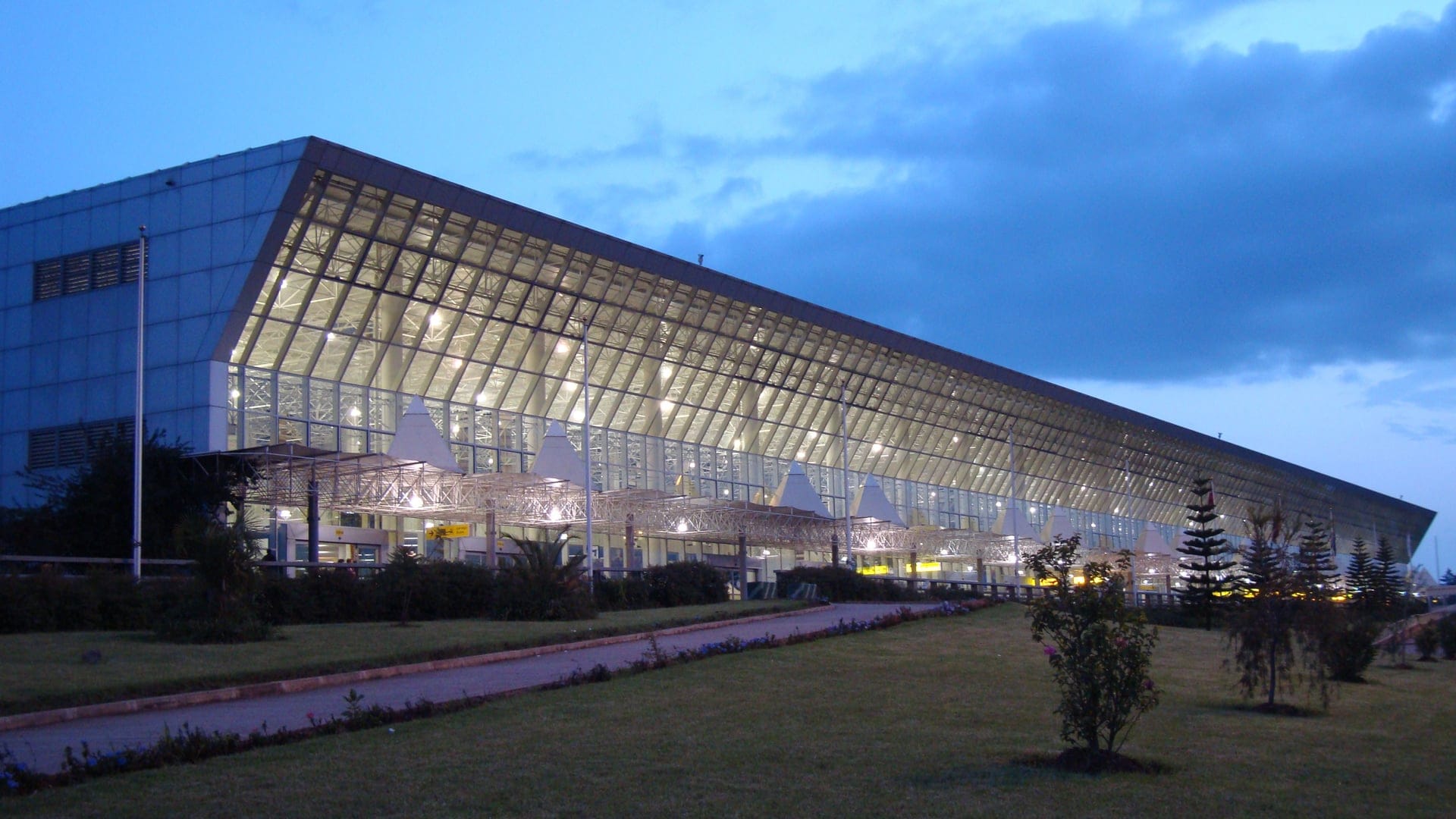
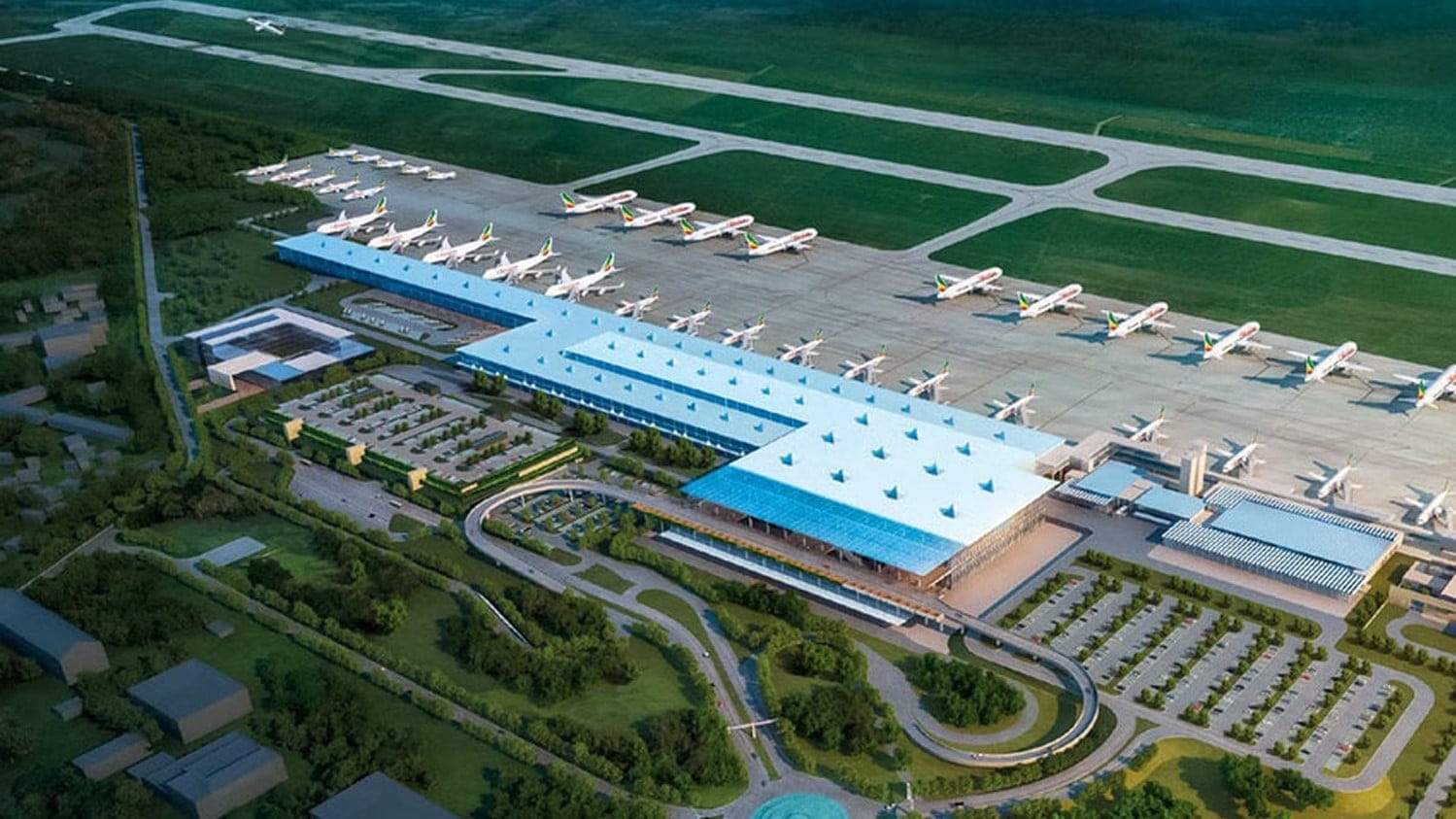
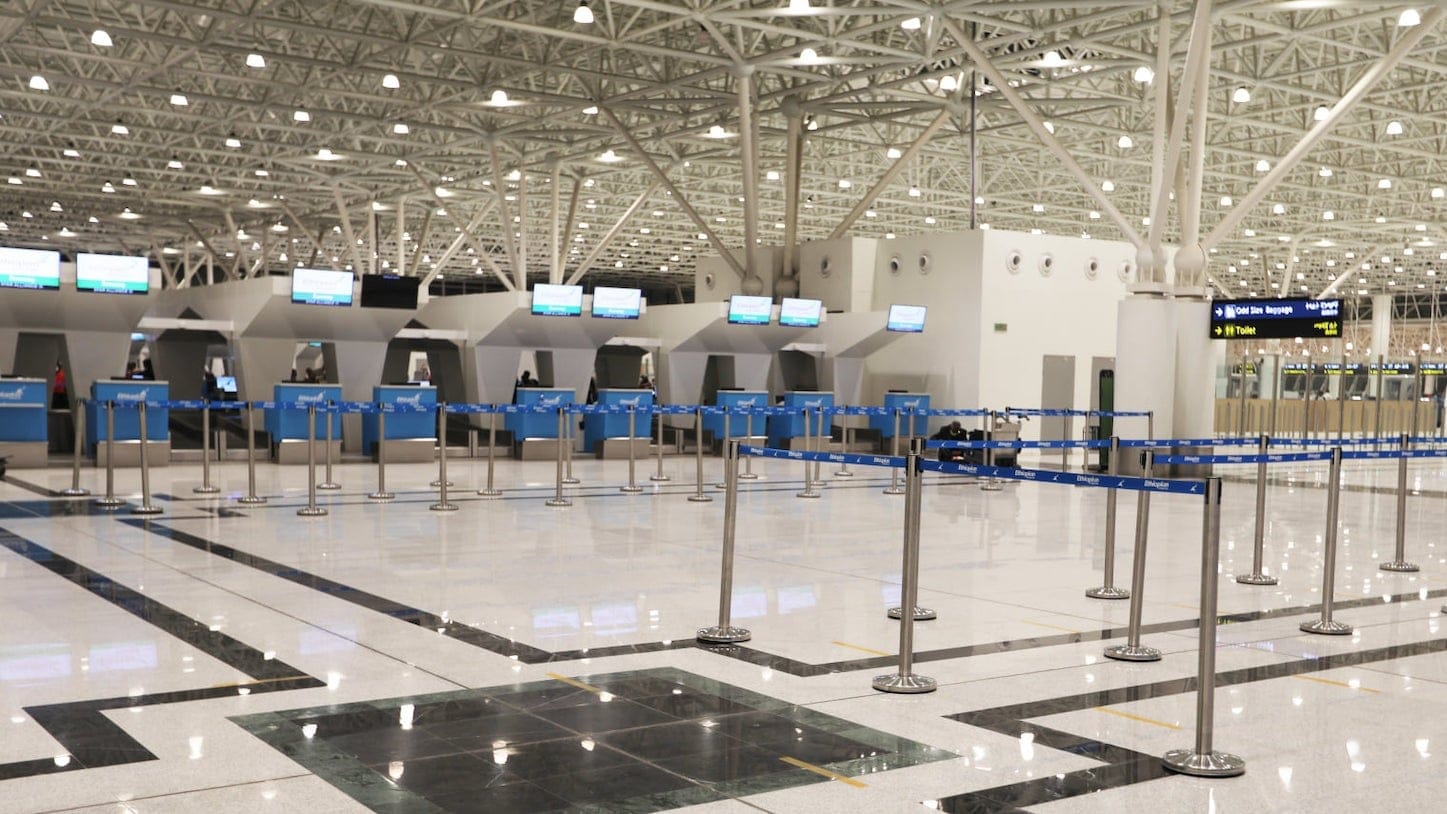
Addis Ababa Airport, officially Addis Ababa Bole International Airport (ADD), serves as the main hub for Ethiopian Airlines and is one of the largest airports in Africa. The airport plays a central role in Ethiopian Airlines’ connecting network, particularly for passengers traveling between Africa, Europe, North America, Asia, and the Middle East.
For connecting itineraries, the airport experience depends heavily on transfer time, terminal movement, lounge access, and aircraft location. At the airport, transfer procedures can involve bus transfers between terminal areas or remote aircraft stands, particularly during short layovers.
Lounges at Addis Ababa Airport (ADD)
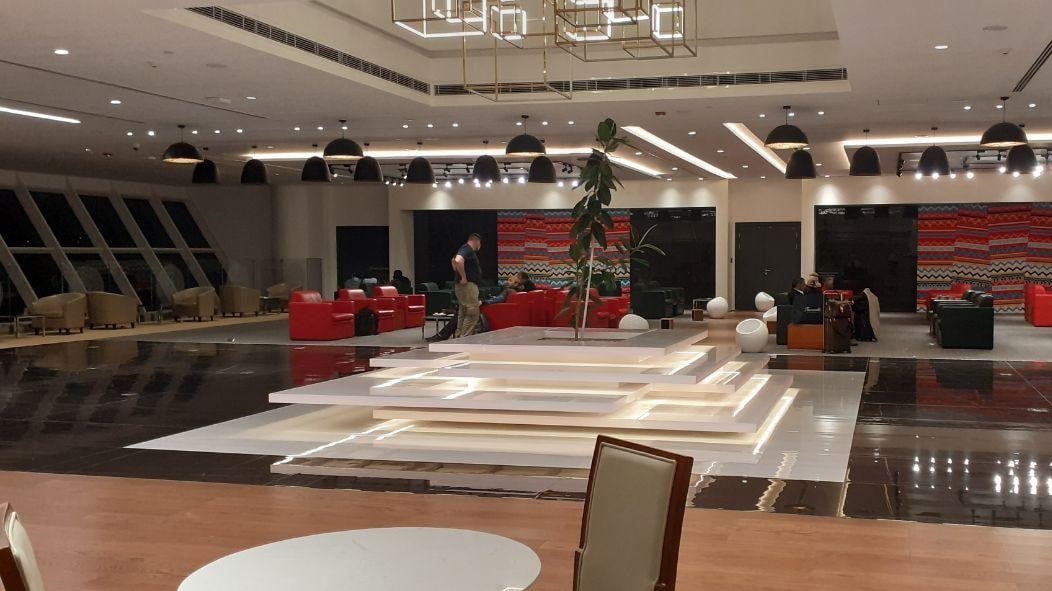
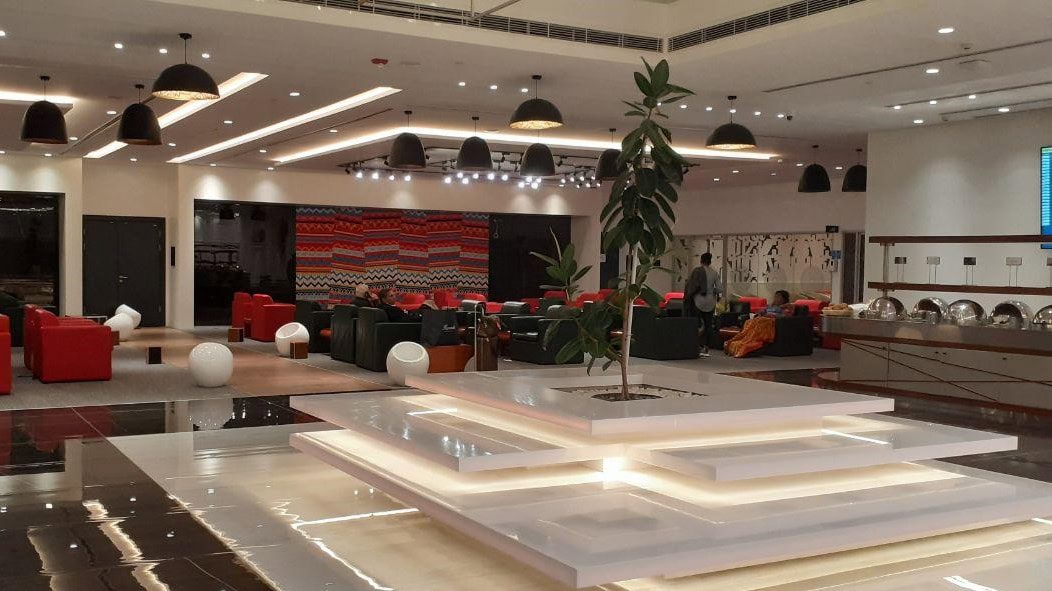
Eligible Ethiopian Airlines business-class travelers receive access to the Cloud-9 Lounge at the Addis Ababa hub. The Cloud Nine Lounge is the main business-class lounge for premium international departures. The lounge spans roughly 53,800 square feet (5,000 square meters), which gives it enough space to handle a major flow of visitors on long-haul departures.
The space includes buffet dining areas, shower suites, seating zones, and a dedicated coffee ceremony area serving traditional Ethiopian coffee. The food selection combines international dishes with regional options, including Ethiopian food, stews, and Ethiopian flatbread.
During quieter morning hours, the lounge is easier to move through, but it becomes noticeably busier later in the day as more passengers arrive for departing flights.
Check-In, Transfers, and Boarding
Business-class travelers receive priority check-in, priority boarding, and priority baggage handling across much of the Ethiopian Airlines international network.
At Addis Ababa Airport (ADD), Ethiopian Airlines ground staff often assist business-class passengers during short layovers, helping reduce transfer time between arriving and departing flights.
Boarding procedures vary depending on the airport and aircraft stand position. For some flights, passengers board through a jet bridge, while for others, they use remote stands and shuttle buses. On remote-stand departures, the airline may provide a dedicated business-class shuttle.
Cabin and Seats
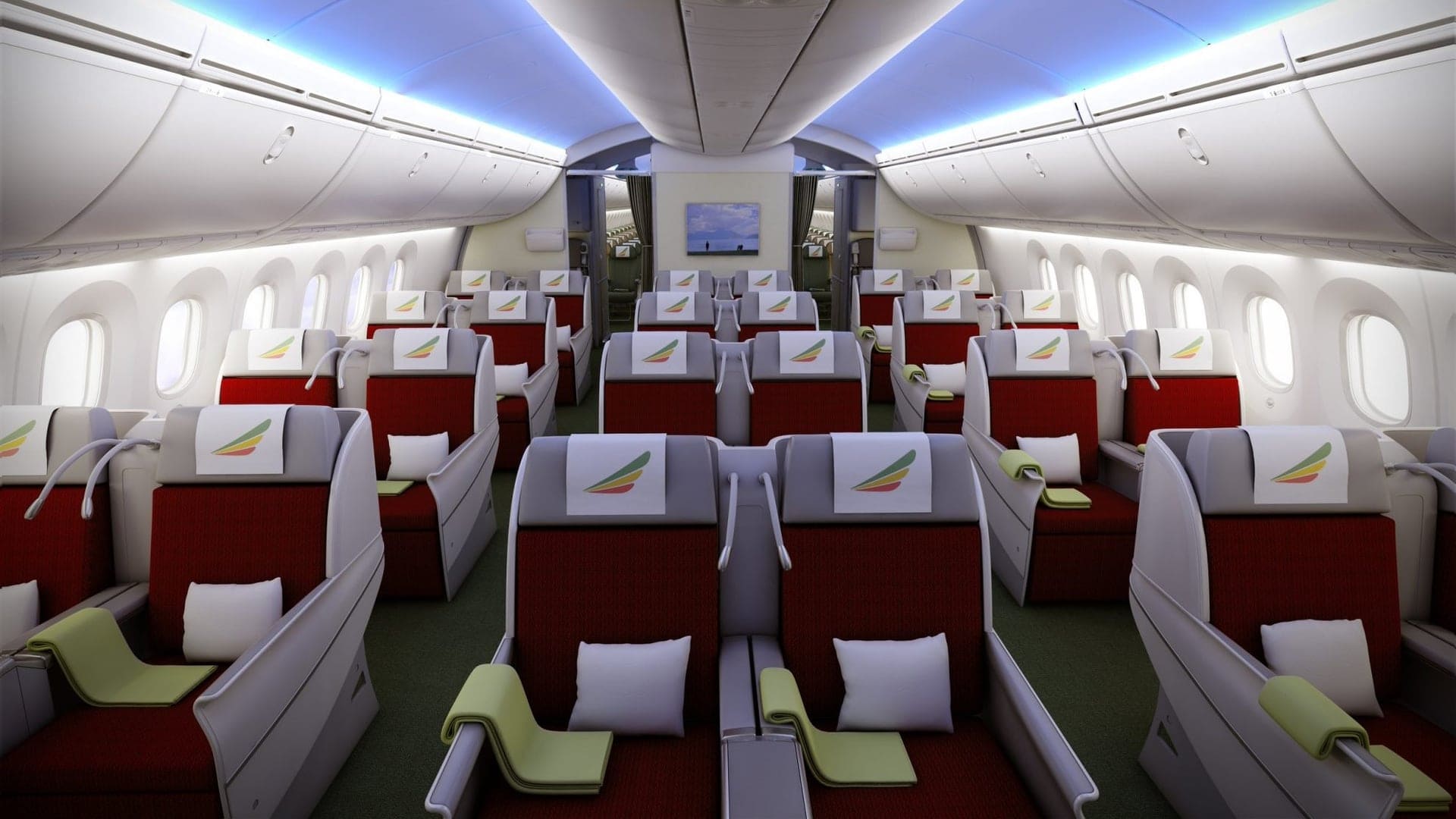
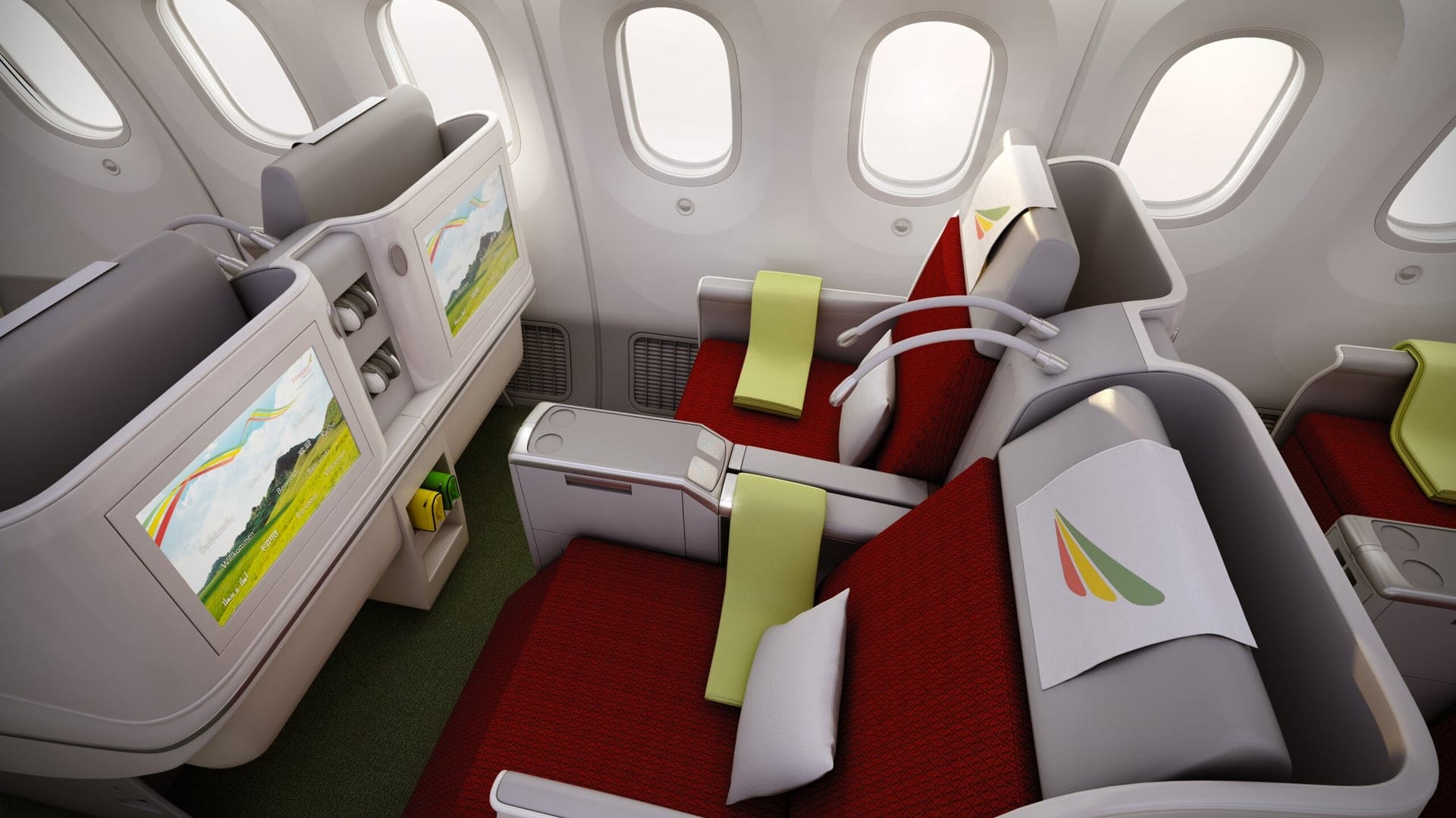
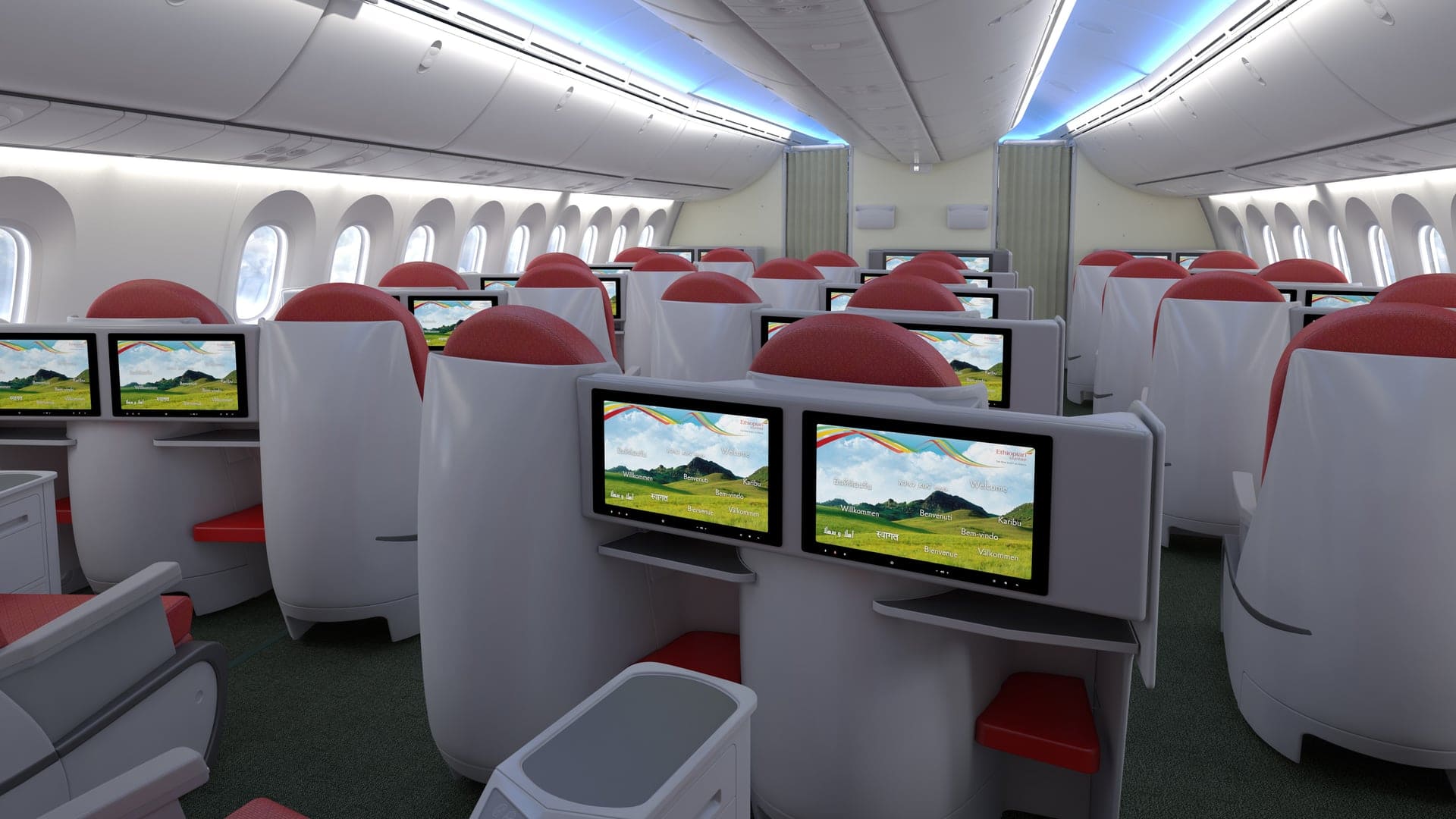
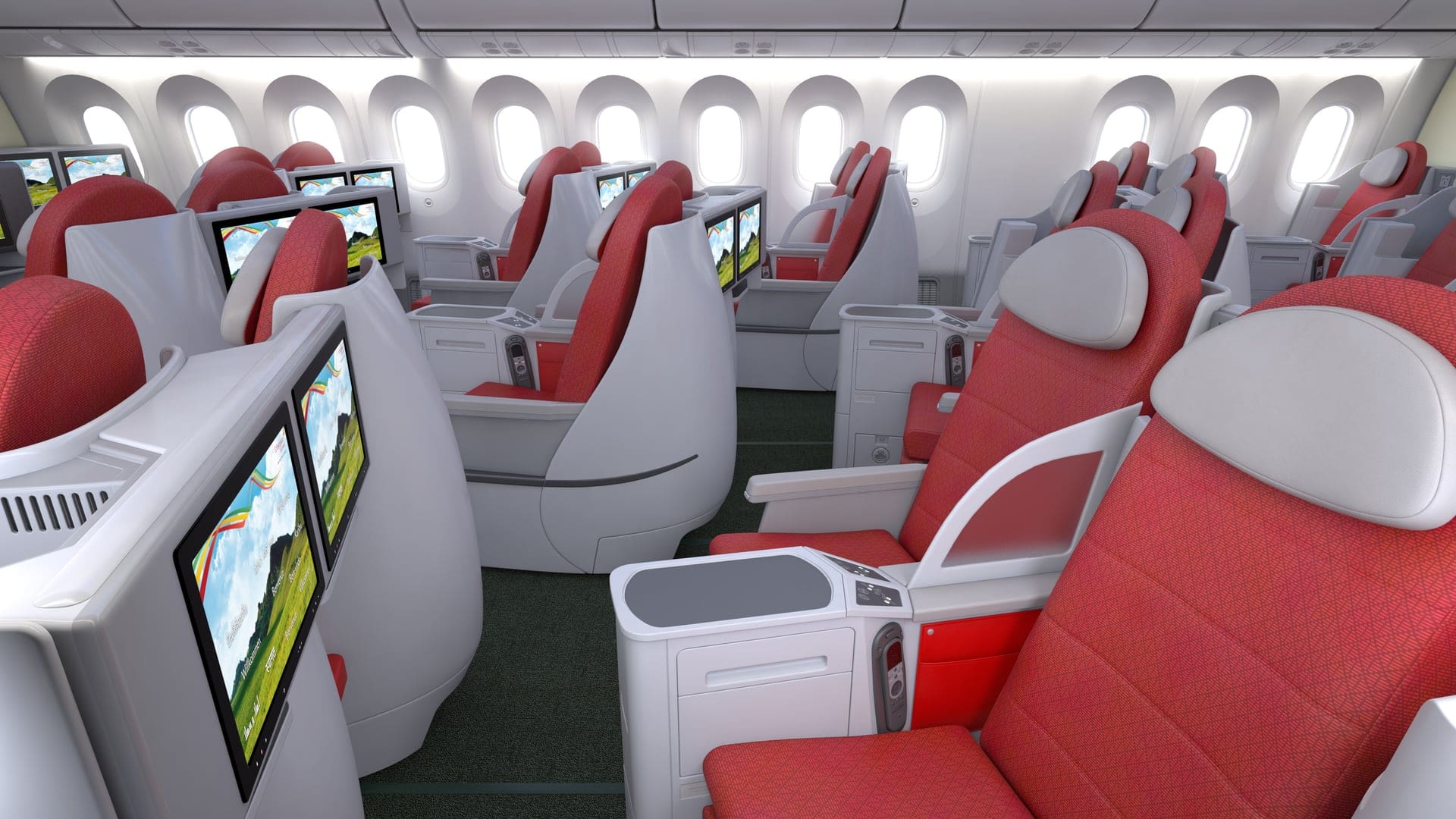
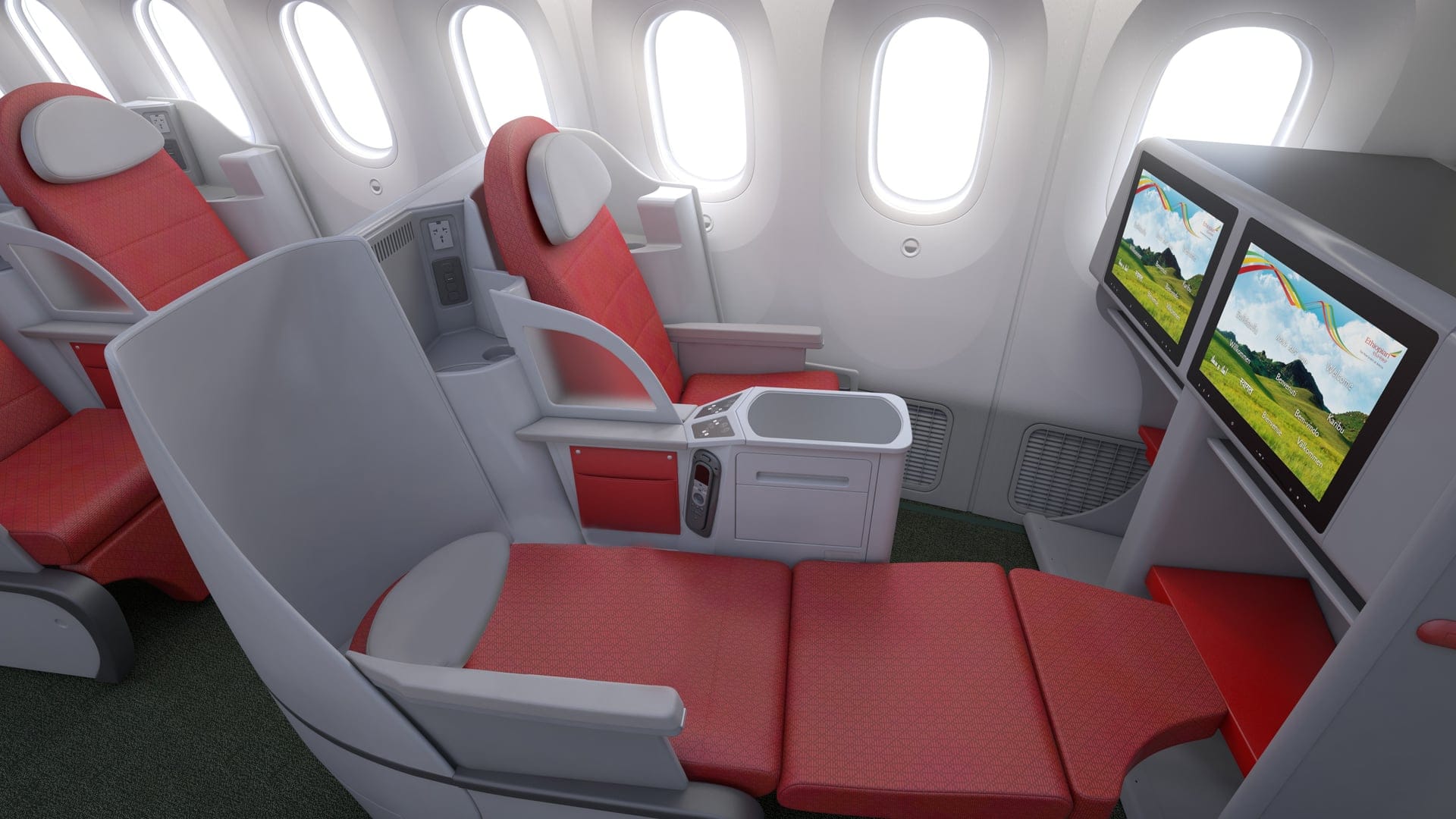
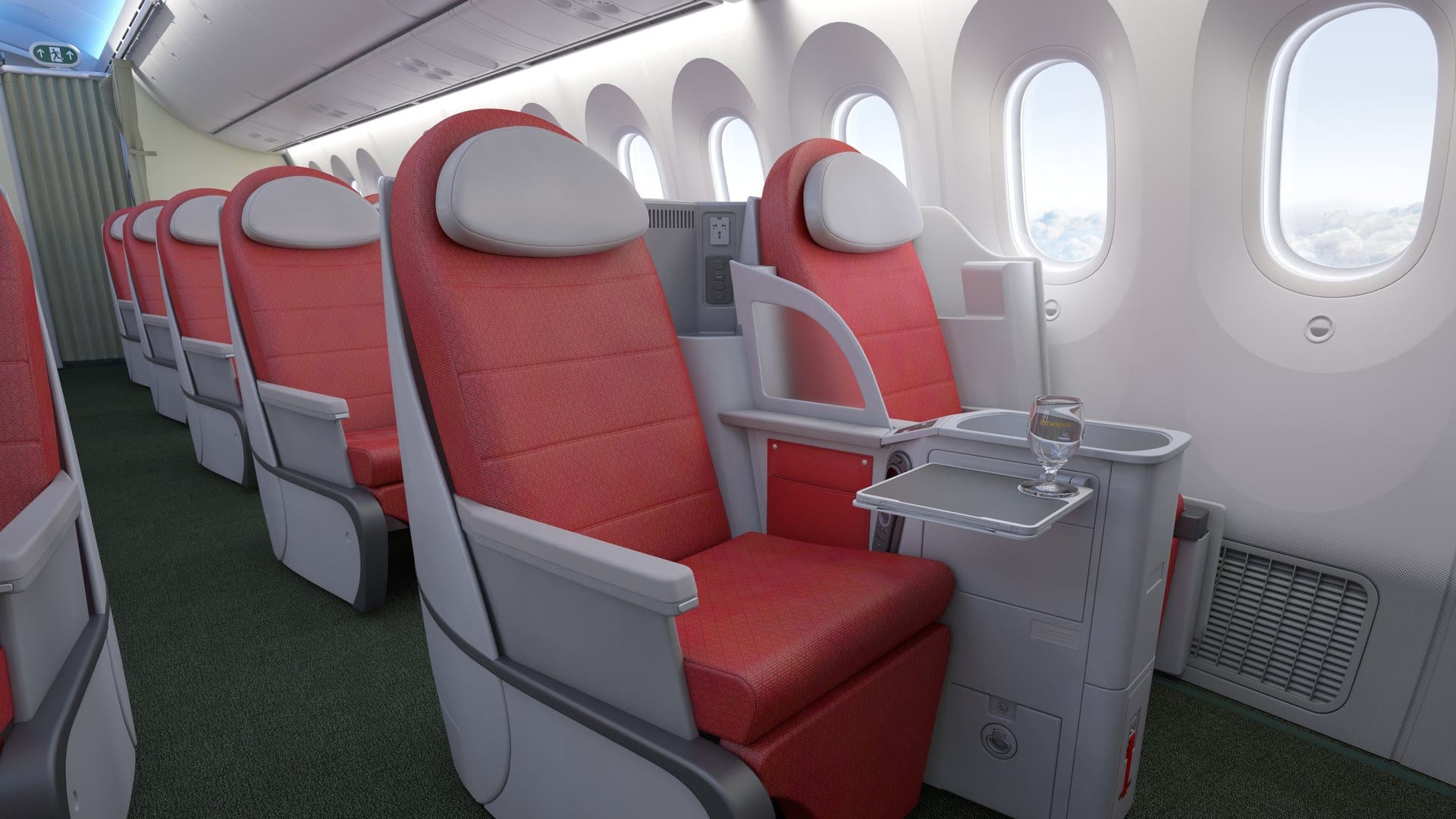
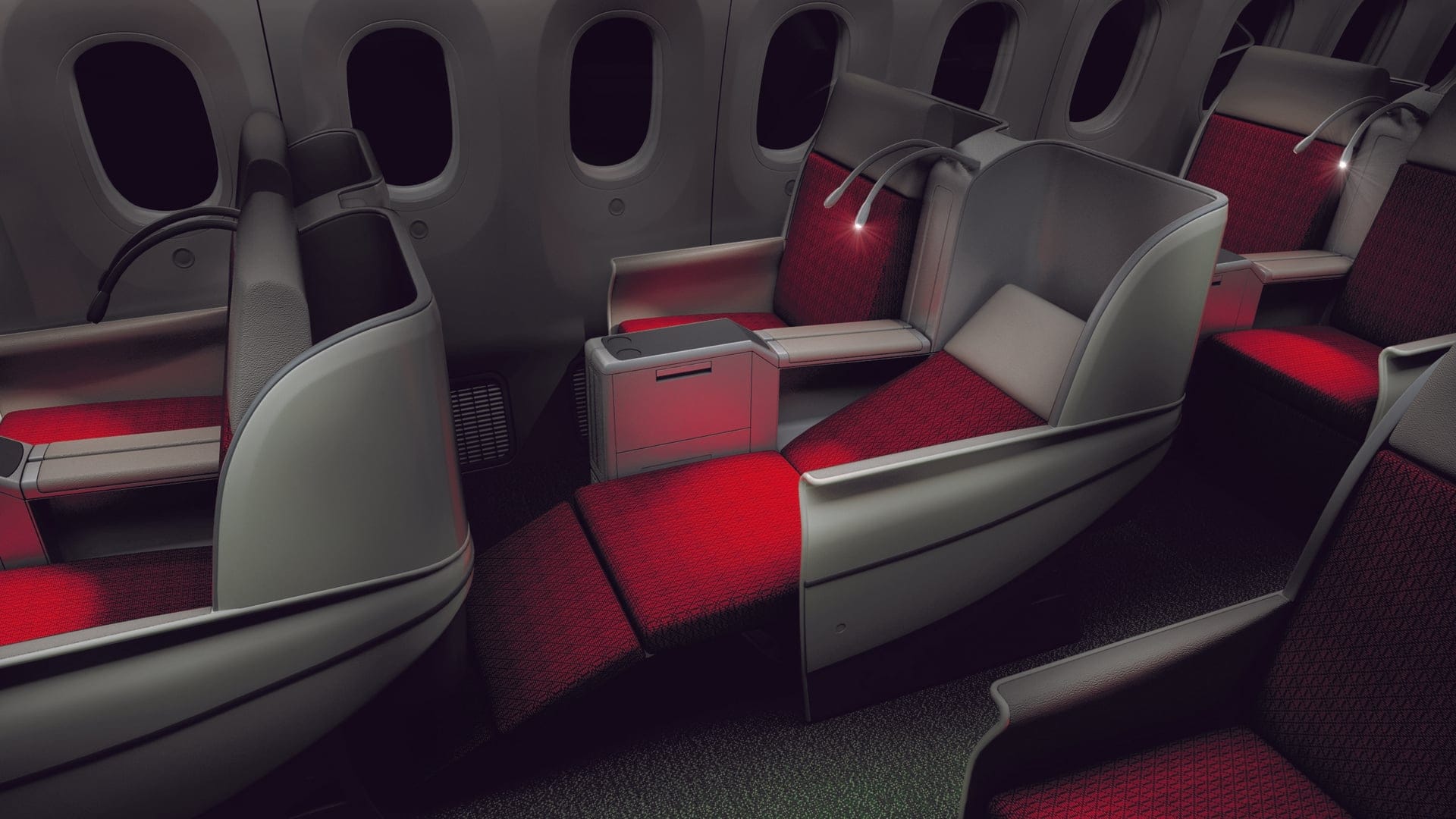
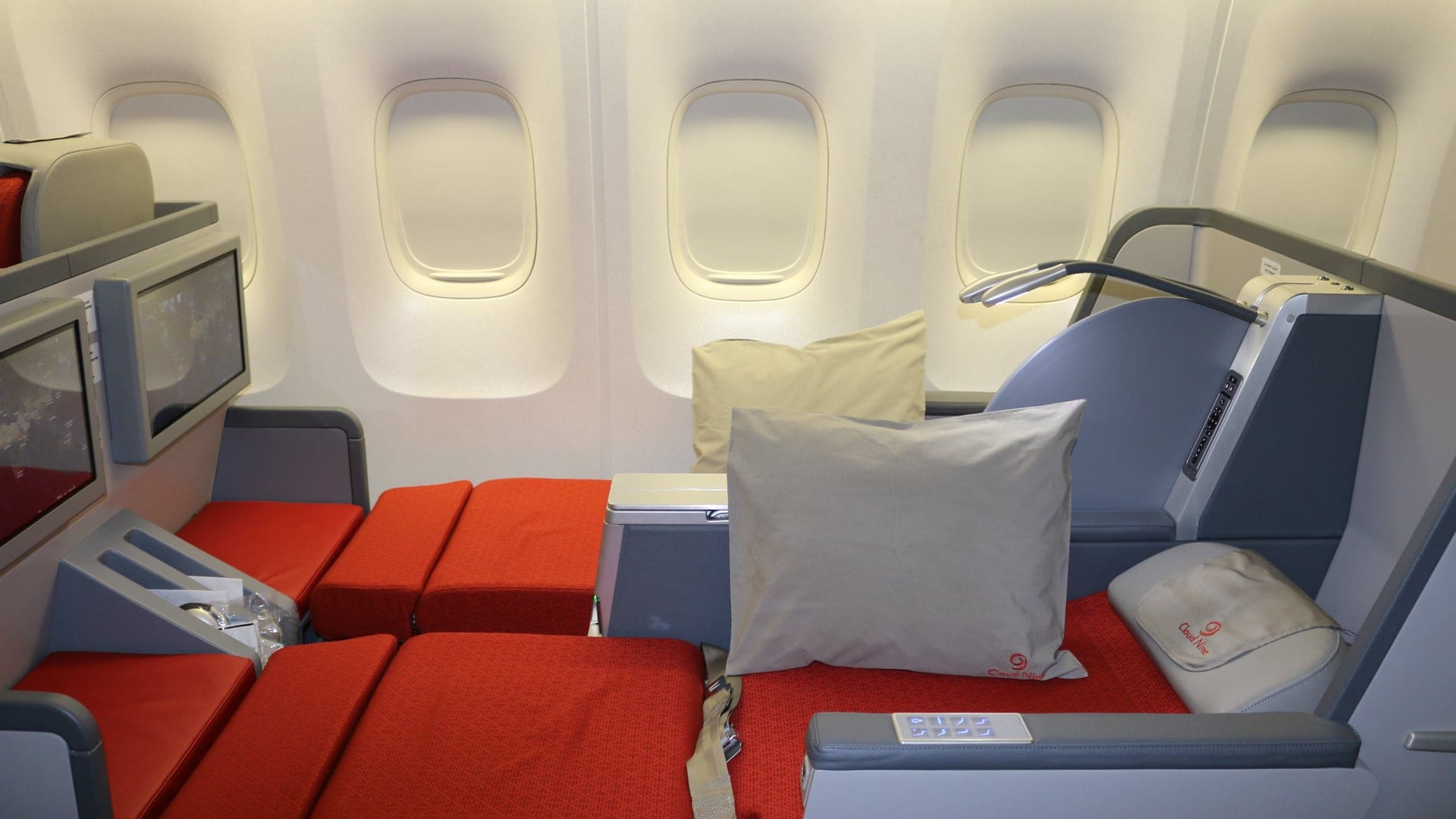
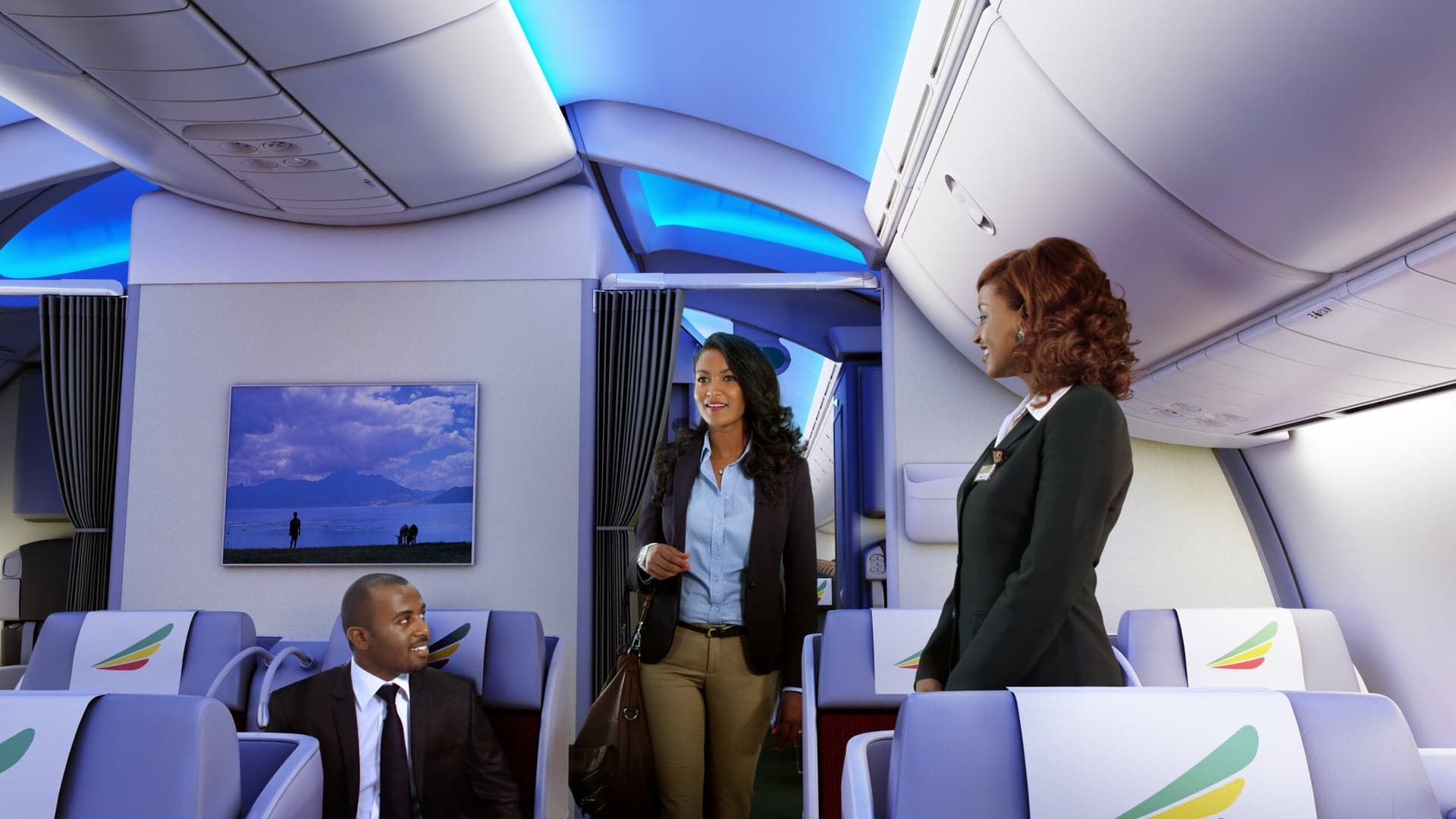
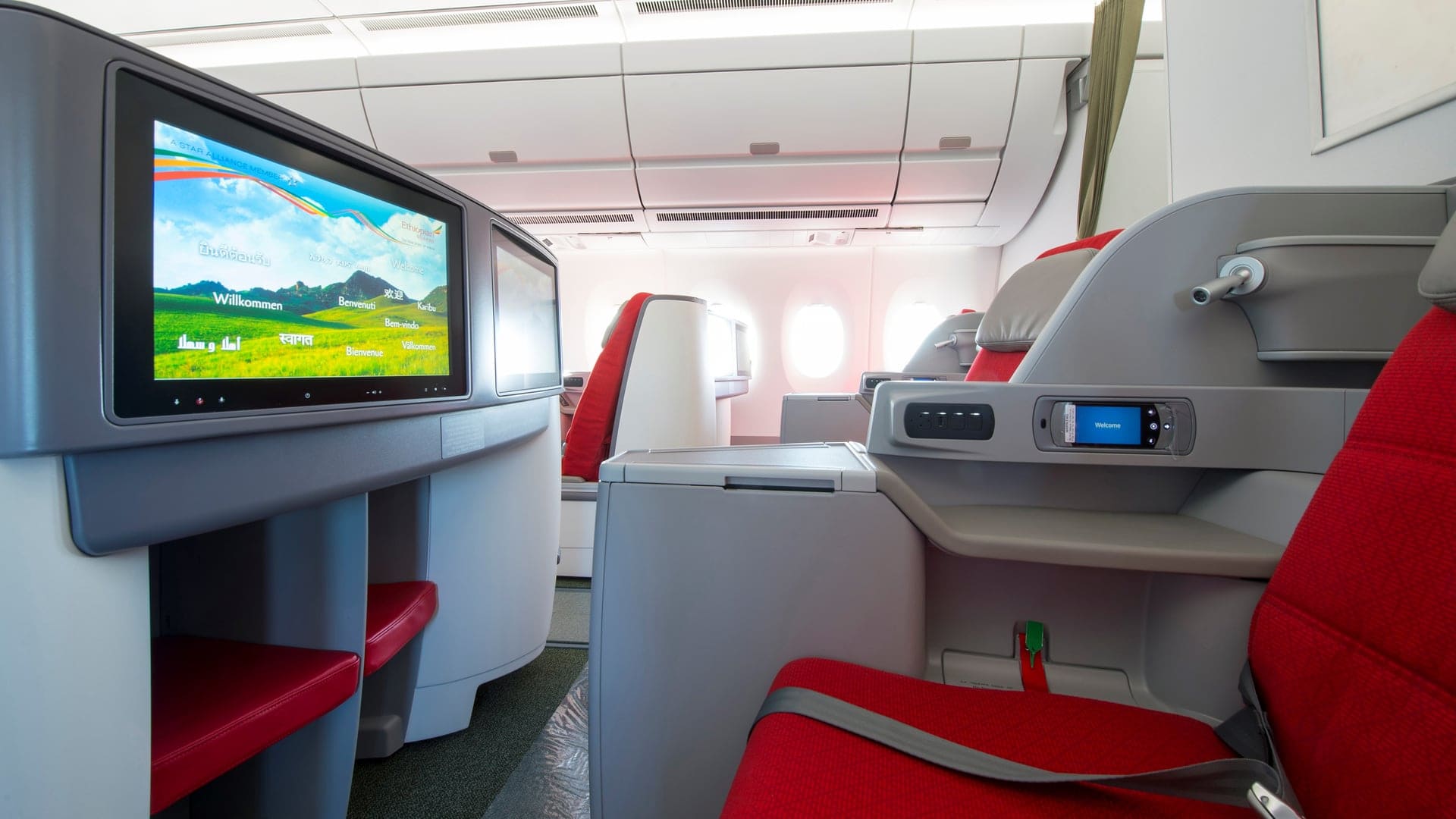
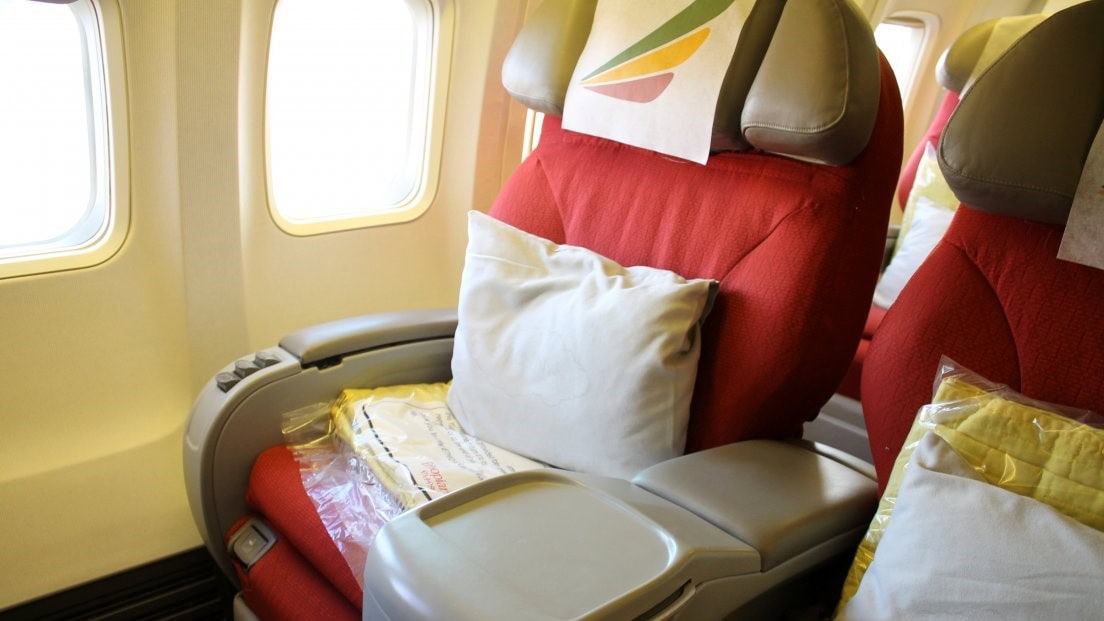
Cloud Nine is Ethiopian Airlines’ business-class product on international and certain regional routes. It includes a premium cabin seat, priority airport services, lounge access, enhanced baggage allowance, and long-haul onboard dining. The exact onboard product depends on the aircraft, as Ethiopian Airlines uses several cabin layouts across its Boeing 777, Boeing 787, Airbus A350, Boeing 737, and Dash 8 aircraft.
Boeing 787 Dreamliner
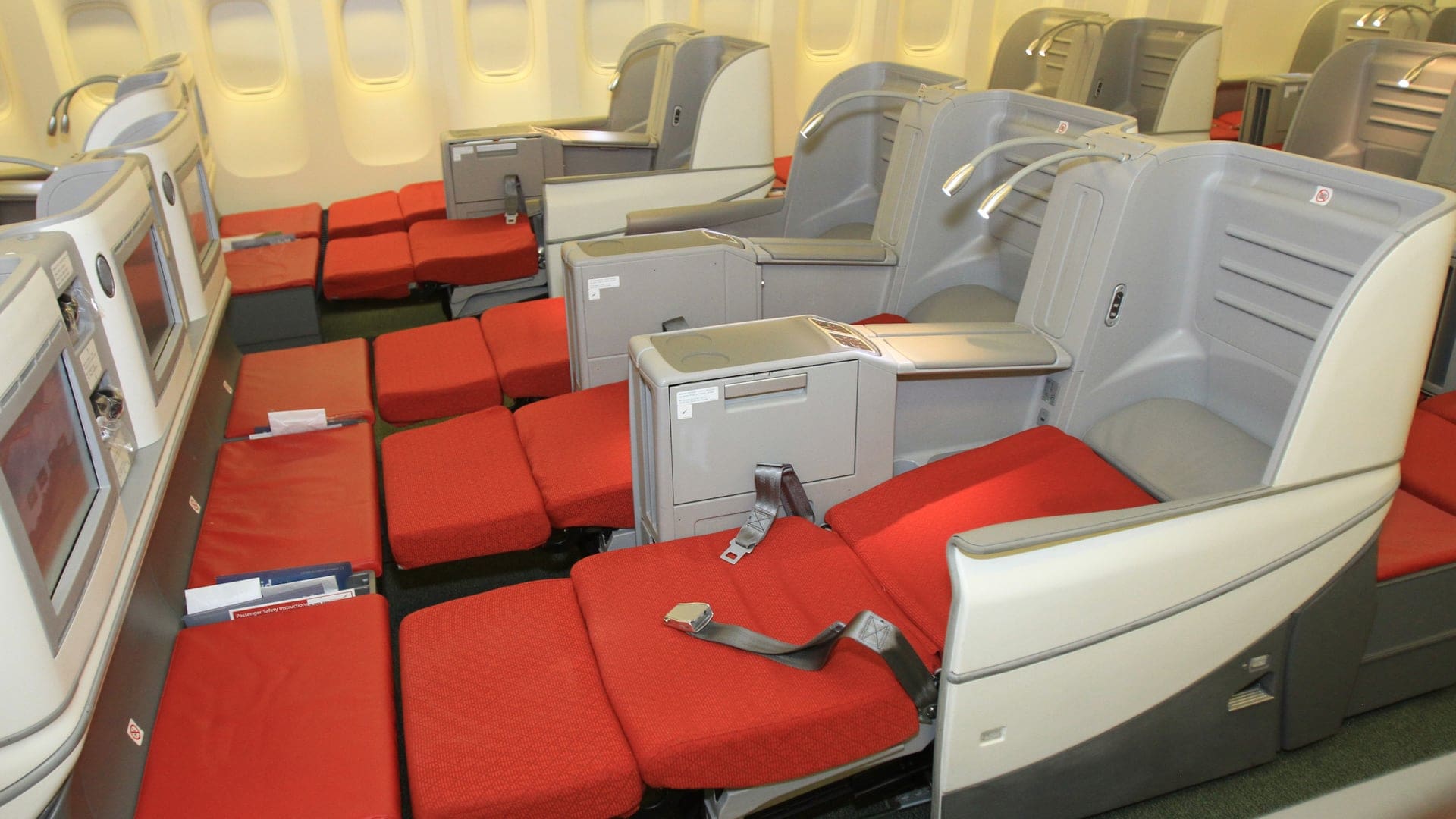
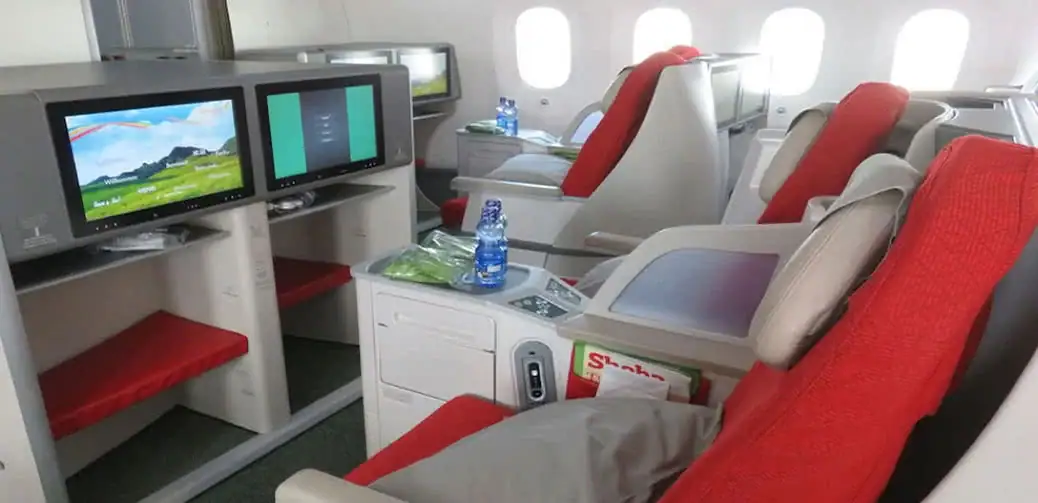
The Boeing 787 Dreamliner fleet includes several Cloud Nine layouts. Some Boeing 787-8 ET-ASG and Boeing 787-8 ET-AOO aircraft use angled-flat seats in a 2-2-2 configuration, while others use fully flat seats in the same layout.
Boeing 787-9 ET-AUO aircraft also use the 2-2-2 layout with lie-flat seats, while B787-9 ET-AXS has introduced a 1-2-1 configuration with direct aisle access.
Airbus A350
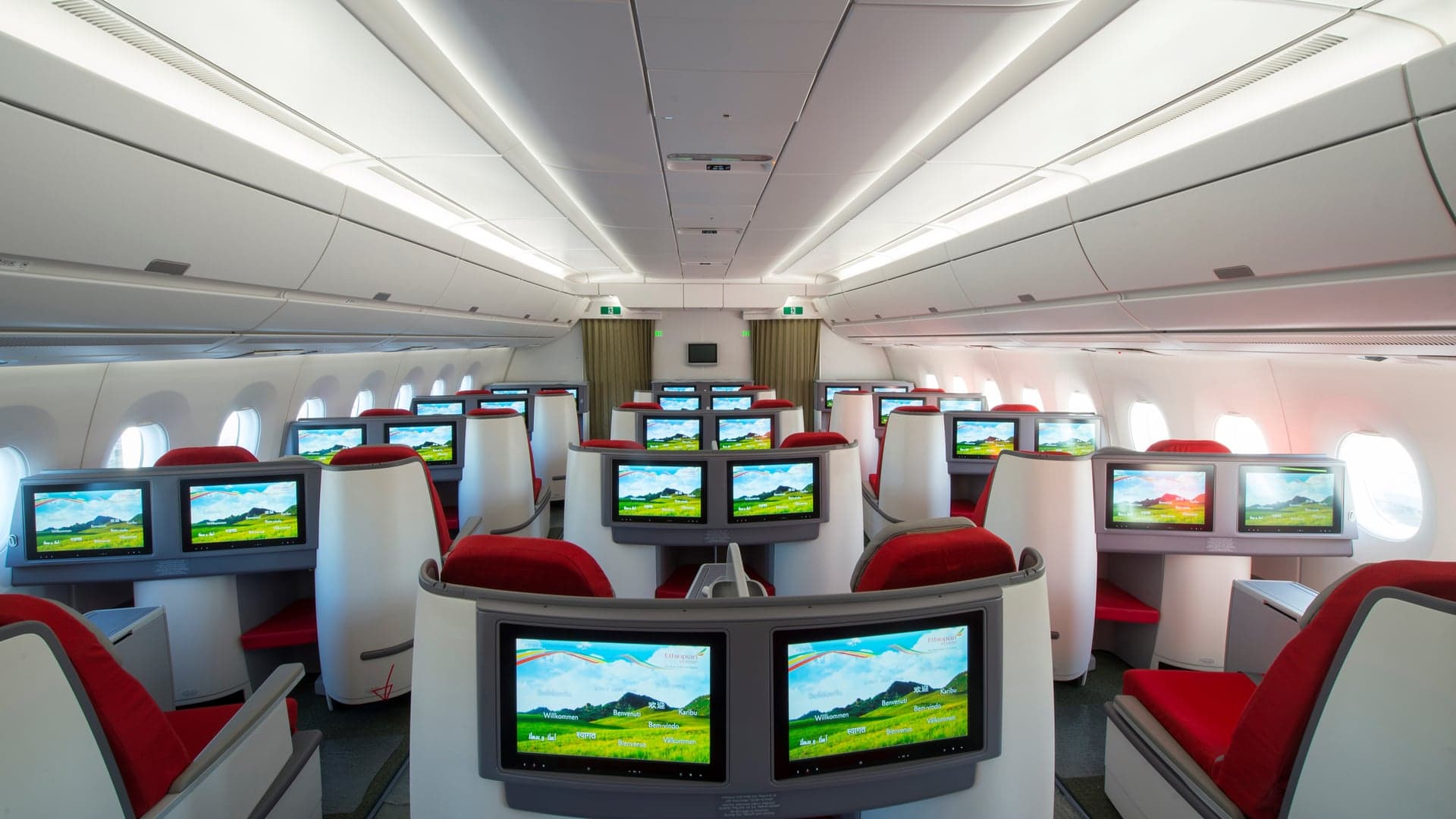
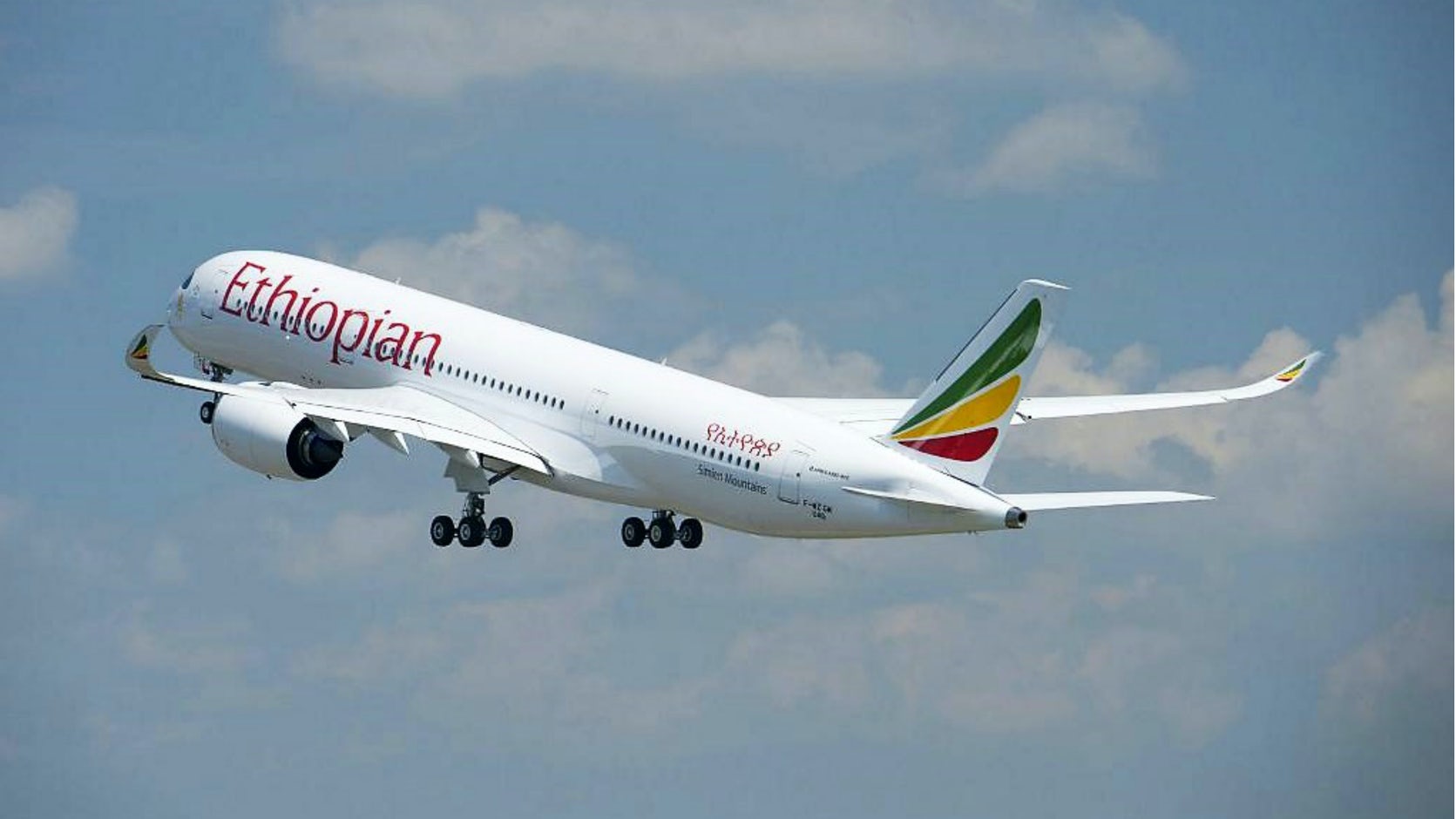
Airbus A350-900 ET-ATQ uses fully flat 2-2-2 seats, while newer Airbus A350-900 ET-AYA aircraft and the Airbus A350-1000 ET-AWB use a 1-2-1 layout with direct aisle access.
The 1-2-1 layout improves privacy and aisle access, especially on an overnight flight or other long flights where movement, sleep, and cabin access are important. The older 2-2-2 layout still provides a flat bed, but window-seat passengers do not have direct aisle access.
Boeing 777 and Regional Aircraft
Ethiopian Airlines’ Boeing 777-200 ET-ANN and Boeing B777-300 ET-APX aircraft use fully flat seats and feature a 2-3-2 seat configuration.
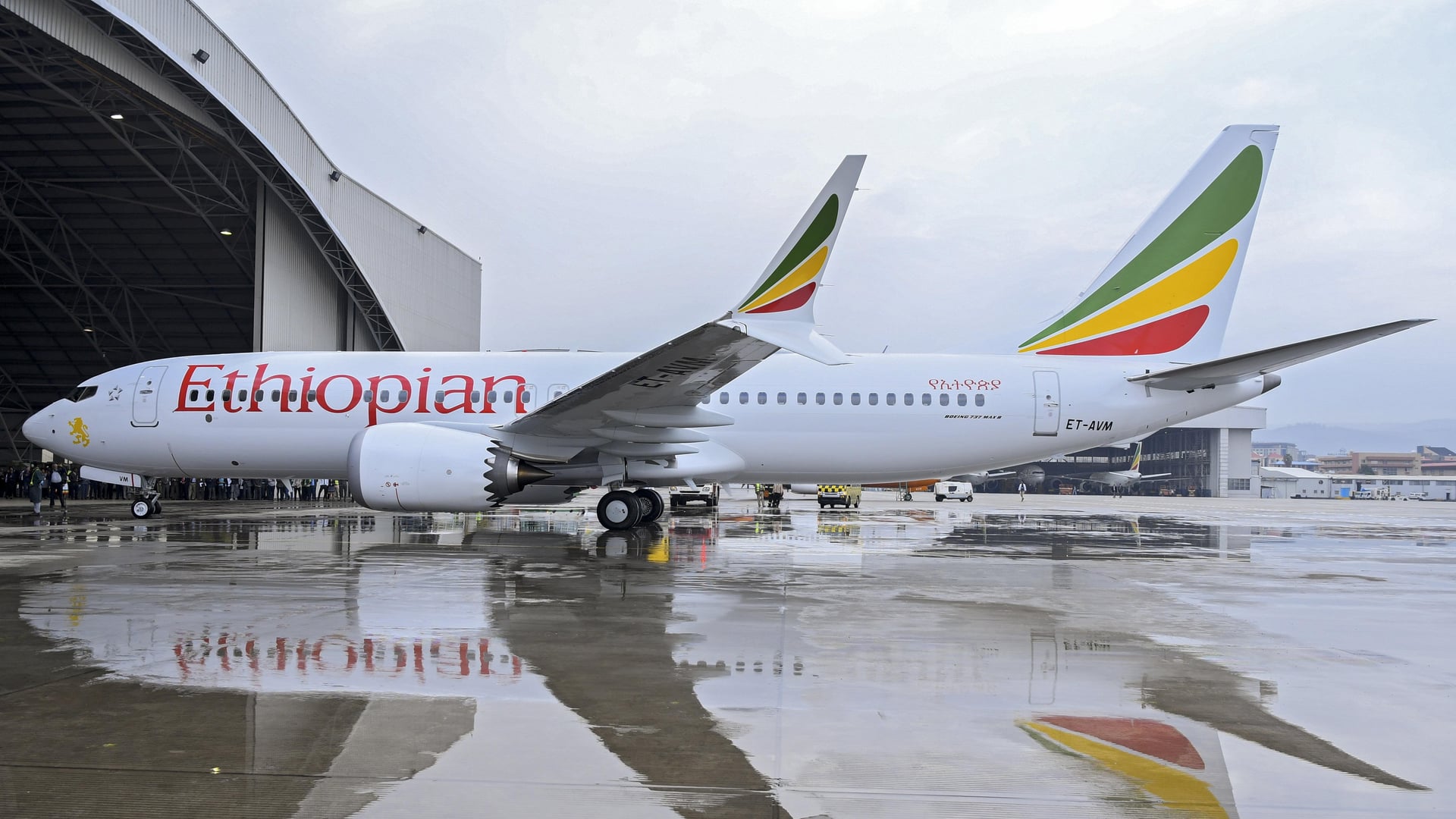
On regional African and European routes, Boeing 737 MAX 8 and Boeing 737-800 aircraft use recliner seats in a 2-2 configuration. These aircraft suit shorter flights better than overnight or longer routes, where flat-bed comfort matters more.
Older Cabins
Older cabins create the largest difference within Ethiopian Airlines business class. Some earlier Boeing 787-8 aircraft still use outdated angled-flat seats, while newer Airbus A350 and Boeing 787-9 aircraft offer more modern layouts with better privacy and aisle access.
Storage, tray-table size, and seat controls also vary by plane. Newer wide-body cabins generally offer better storage and more straightforward seat controls, while older cabins rely more on simpler layouts and manual adjustments.
Cuisine
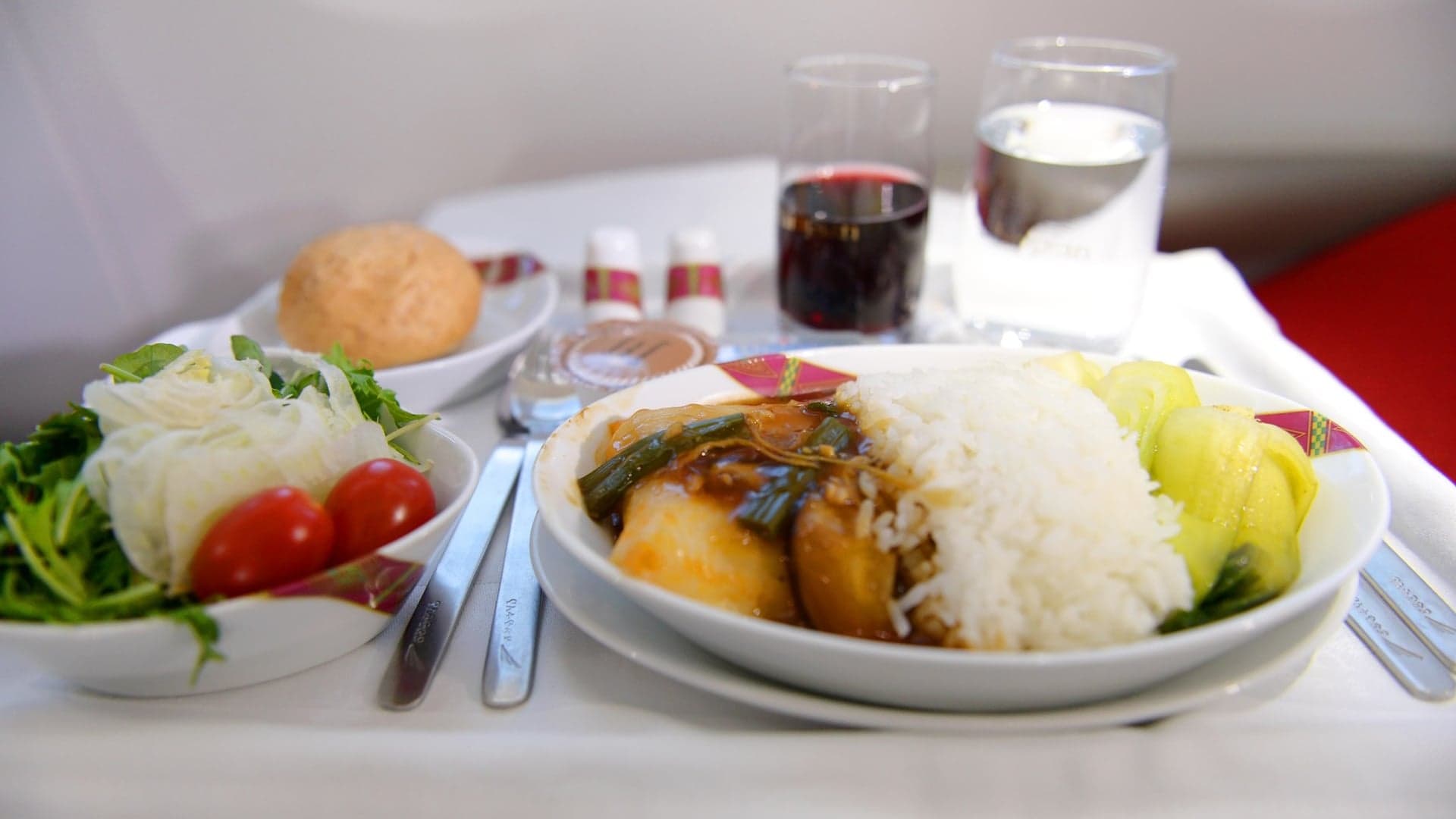
The dining program in Ethiopian Airlines’ business class combines international dishes with regional Ethiopian food across the airline’s medium- and long-haul flights. Ethiopian Airlines includes a mix of appetizers, Ethiopian national dishes, cheese, fruit, and dessert in its Cloud Nine menus.
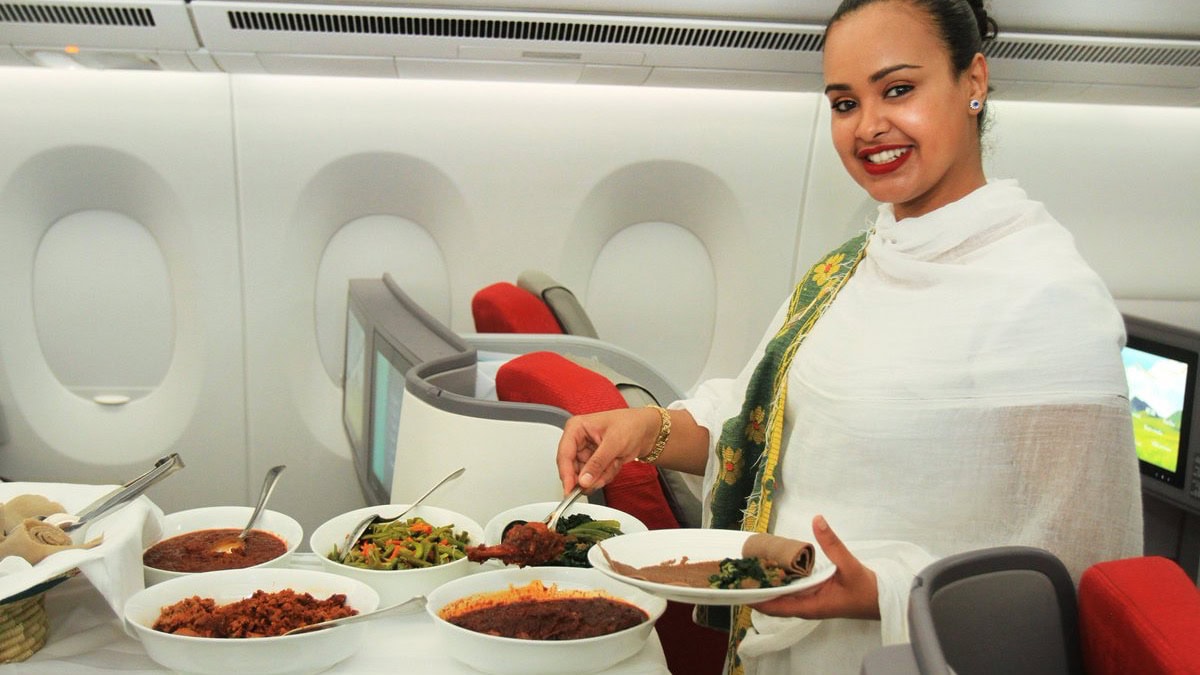
Menus often include short explanations of regional ingredients and cooking styles, which gives international passengers more context for dishes such as injera, stews, and spiced vegetable preparations.
Meal Service
Shortly after departure, the crew usually begins the meal service with drinks and smaller snacks, including kolo, a roasted barley snack common in Ethiopia.
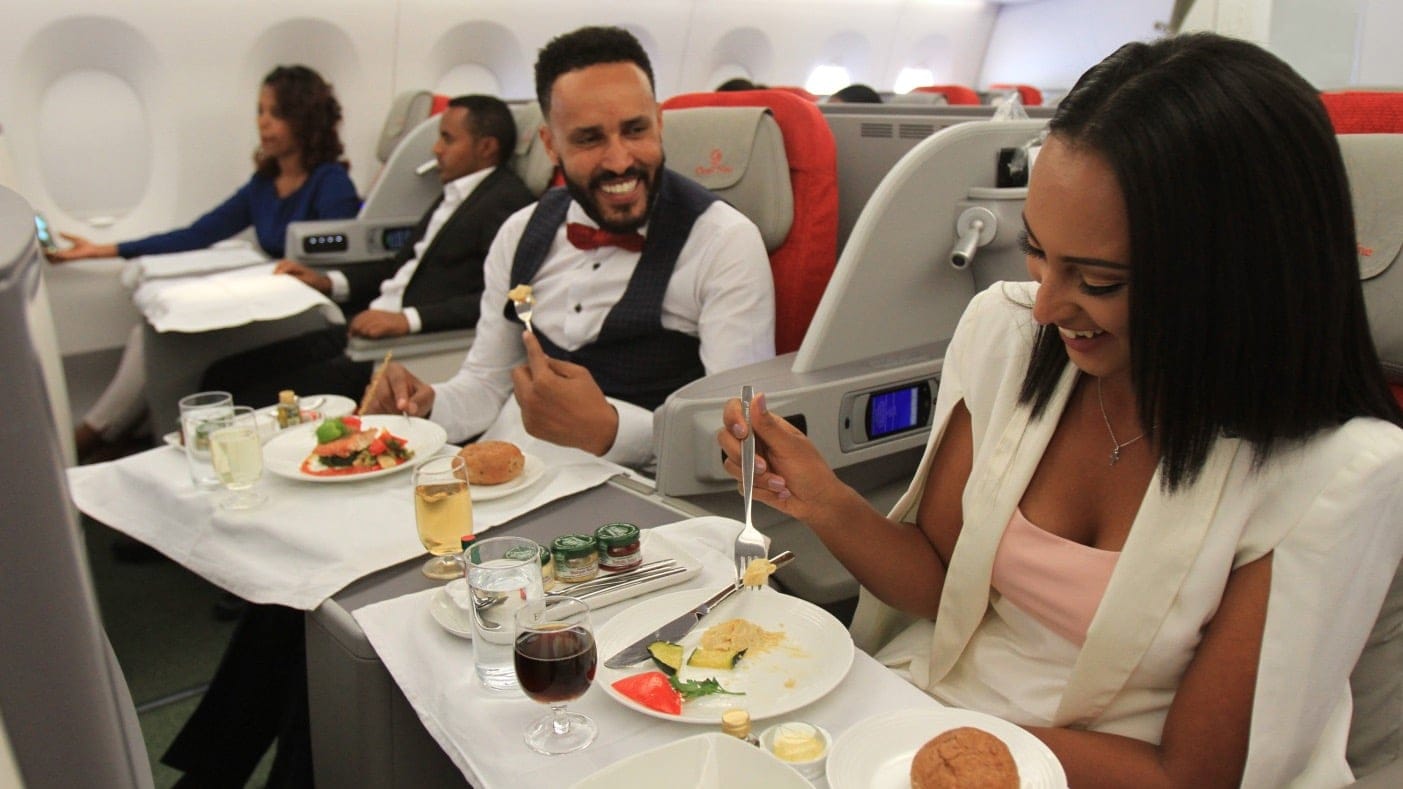
On longer international routes, the dinner service usually includes appetizers, salads, bread, a choice of main course options, and dessert with coffee or tea. Depending on the route and aircraft, the crew may serve meals course-by-course or on a single tray.
Flights departing Ethiopia place greater emphasis on regional cuisine, including injera and several stews served with Ethiopian flatbread. Some itineraries also include tasting-style presentations that allow passengers to try multiple Ethiopian dishes during the same meal.
Main Courses and Dessert
The main course selection typically includes beef, poultry, fish, pasta, and vegetarian options. On some routes, dishes centered around grilled vegetables and lentils stand out because Ethiopian seasoning often gives these options more depth than standard international vegetable dishes. Dessert service generally includes pastries, cakes, a fruit plate, or a cheese plate, followed by Ethiopian coffee or tea.
Breakfast Service
The crew serves breakfast later in the flight, with a small selection of hot and cold items. Ethiopian Airlines also offers special meals, and passengers can check menus by flight number through the airline’s in-flight meal menu tool.
Beverages
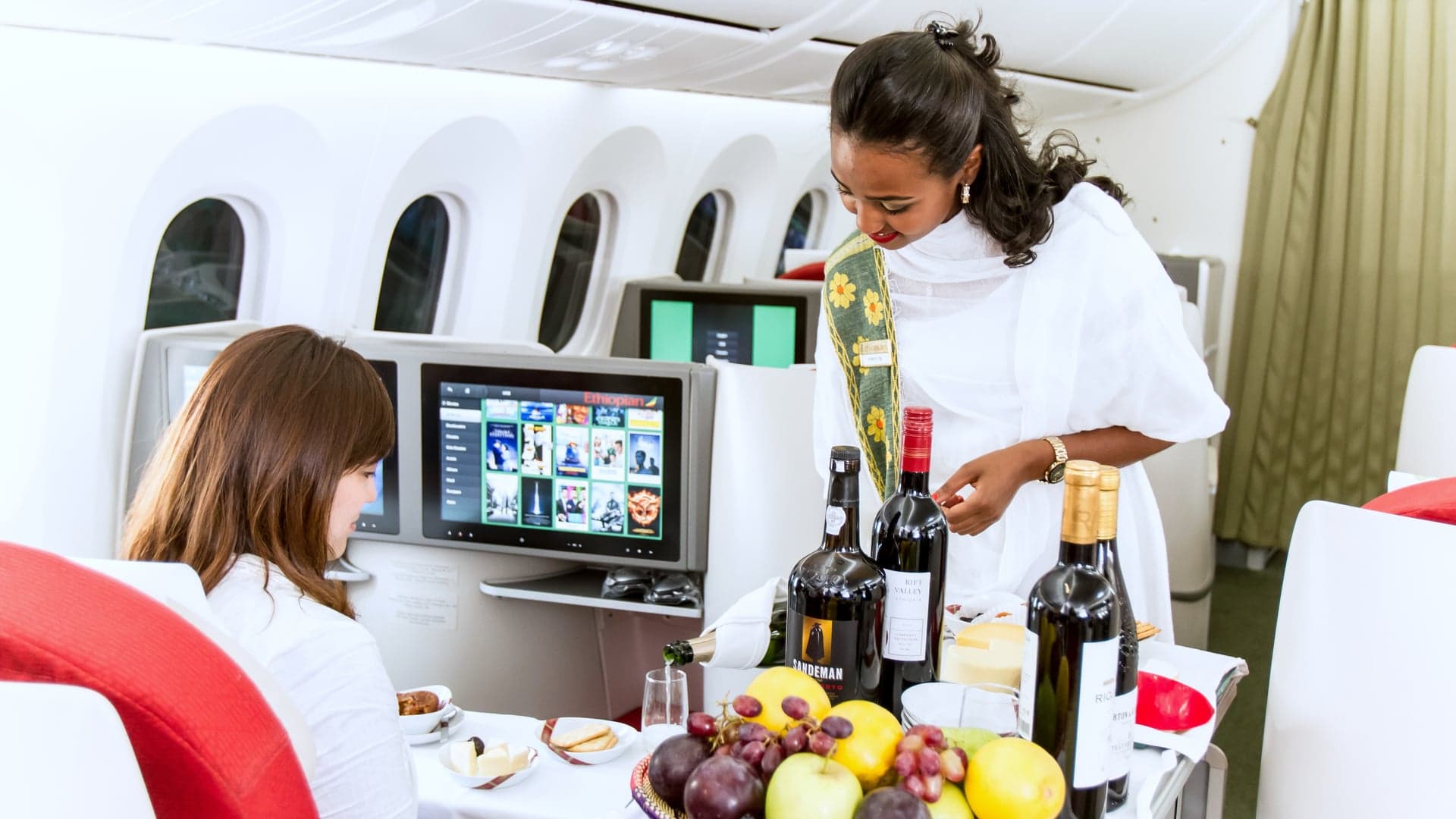
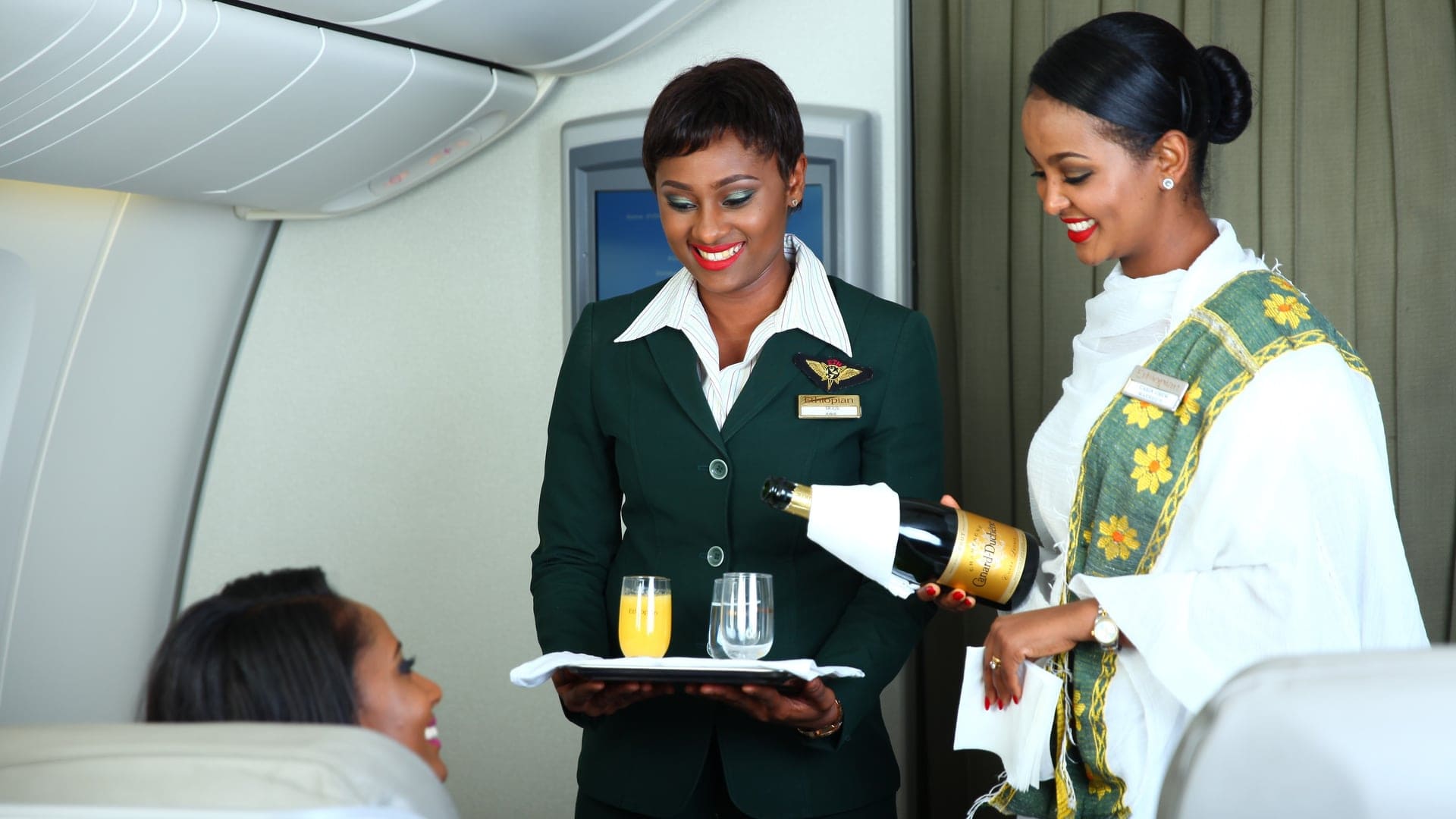
After boarding, Cloud Nine passengers usually receive welcome drinks, with options like Champagne, mineral water, and fresh juices such as orange juice. The crew also serves alcoholic and non-alcoholic beverages during the main cabin service, including wine, beer, soft drinks, juice, tea, coffee, and spirits.
The drink selection may include Ethiopian red and white wine, Champagne, Prosecco, water, juice, beer, and spirits such as Johnnie Walker Black Label, Chivas, Campari, gin, vodka, and Martini. Exact labels and availability vary by route, aircraft, and catering station.
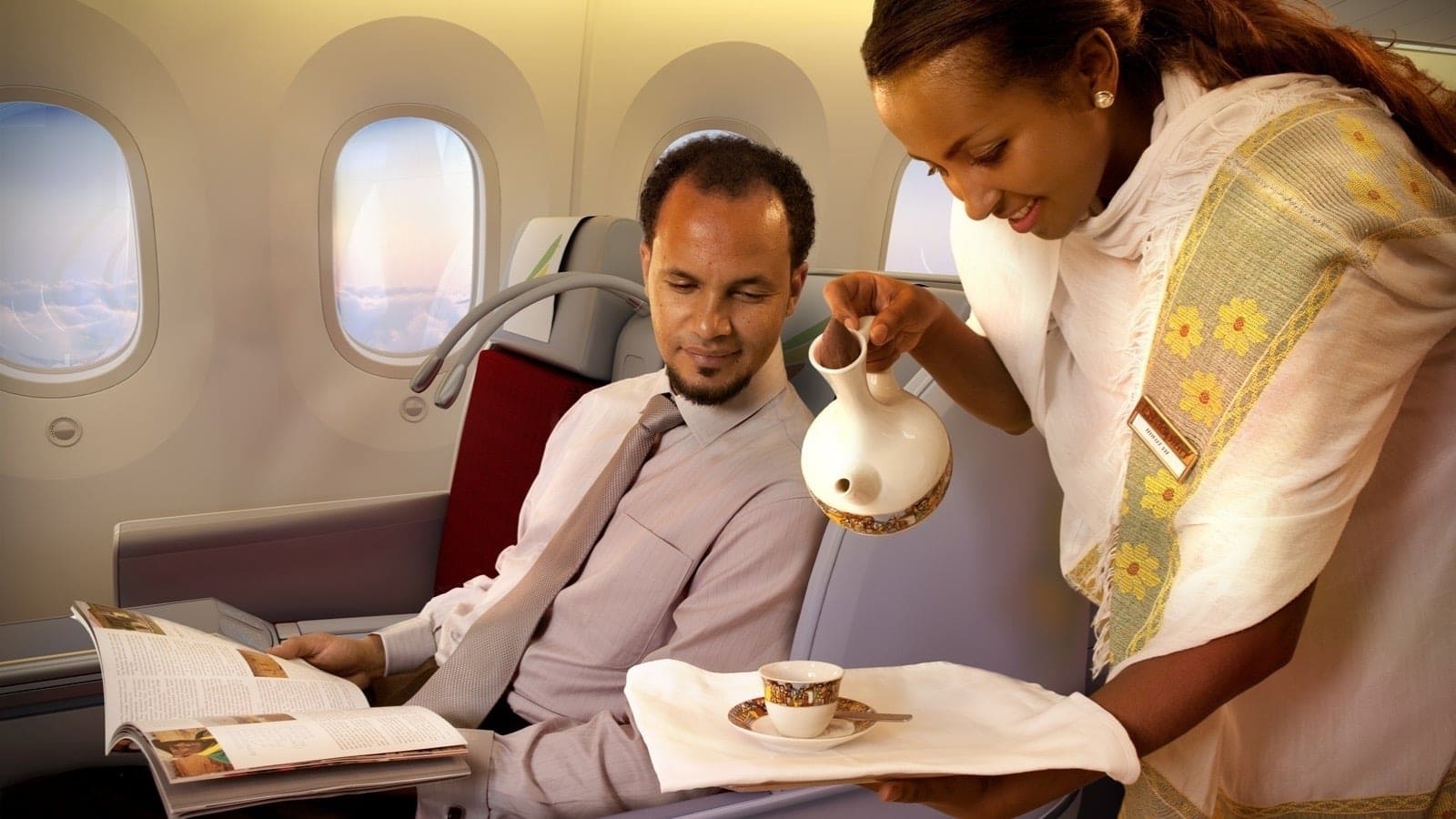
Coffee is part of the onboard identity, especially on flights departing Ethiopia. Traditional Ethiopian coffee fits naturally with the airline’s regional dining program and broader presentation of Ethiopian cuisine.
Drink service usually follows a cart-based sequence during the meal service, with refills handled during service rounds or on request.
Service
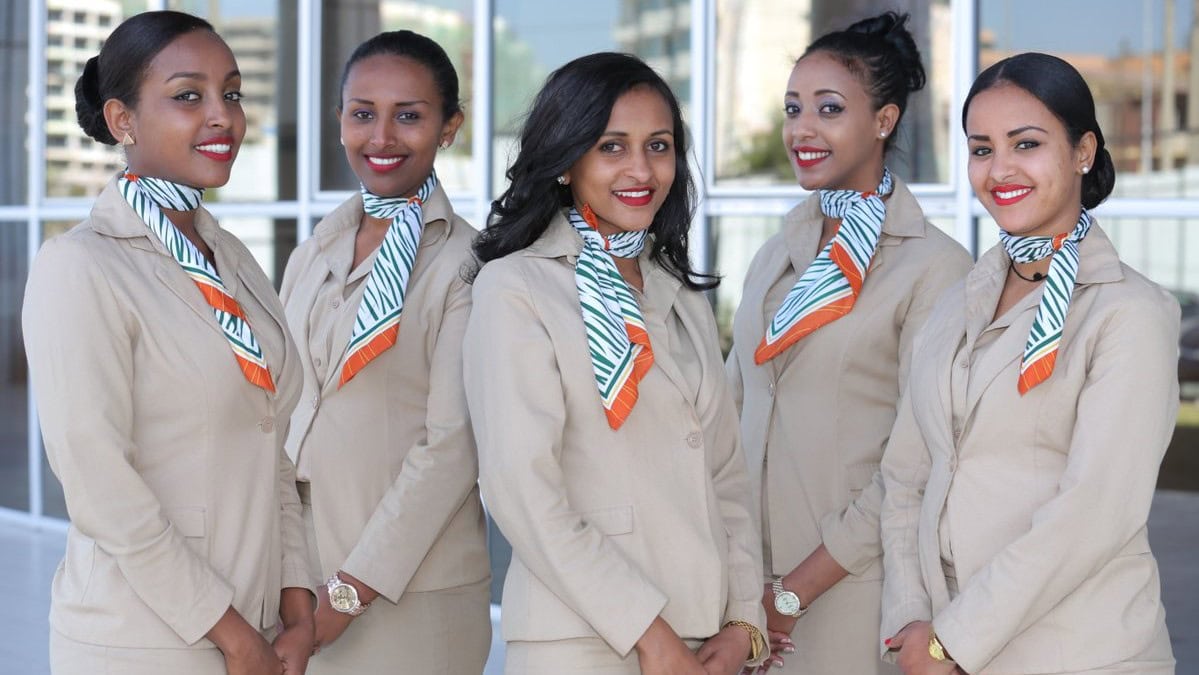
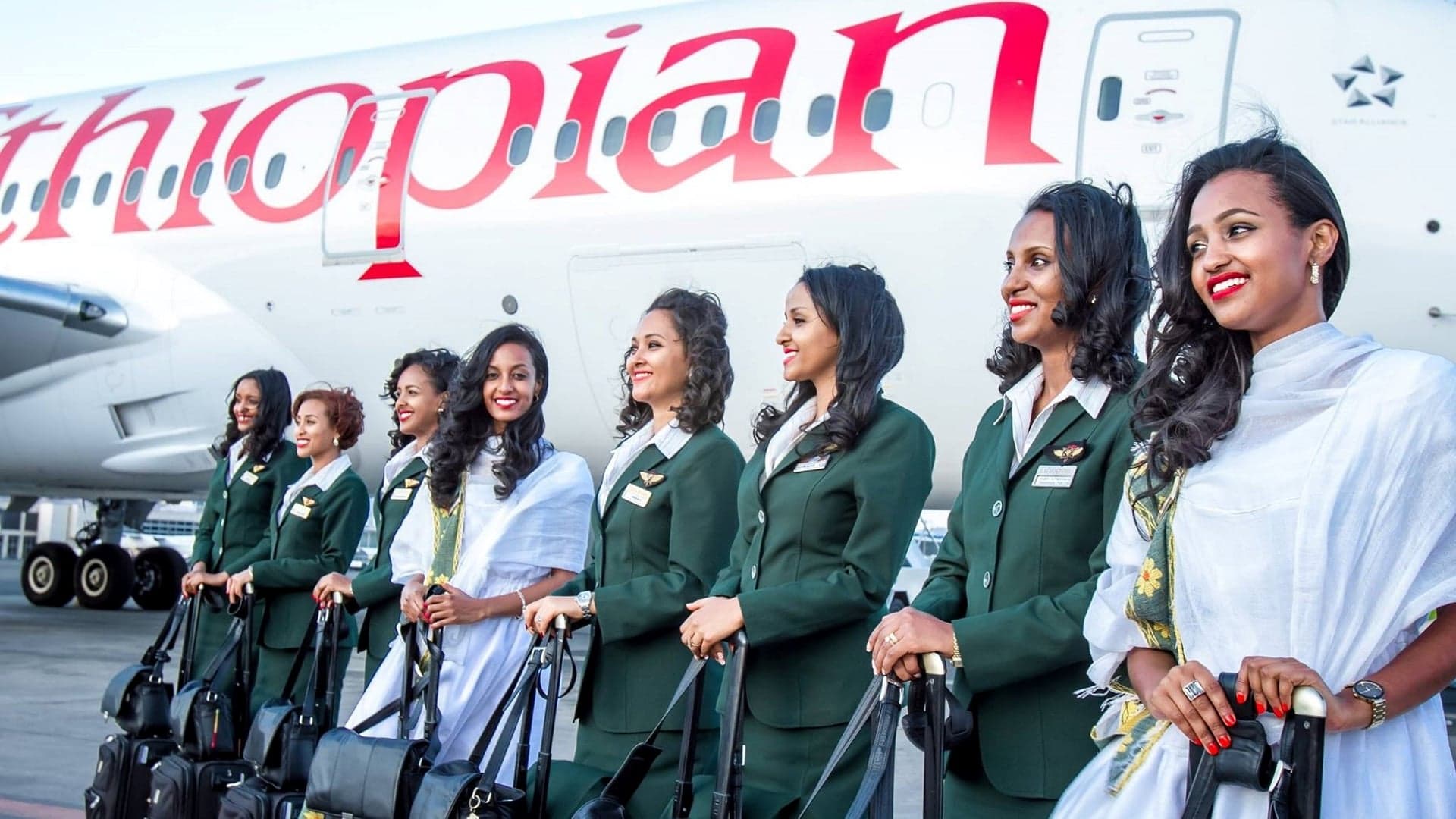
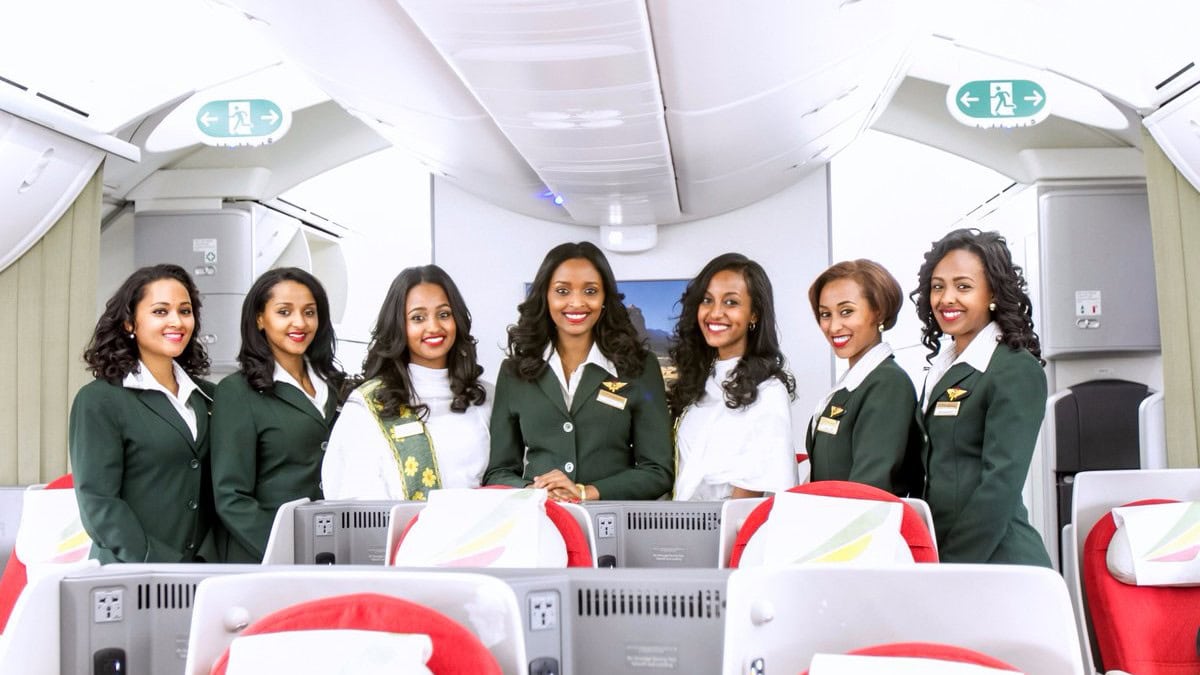
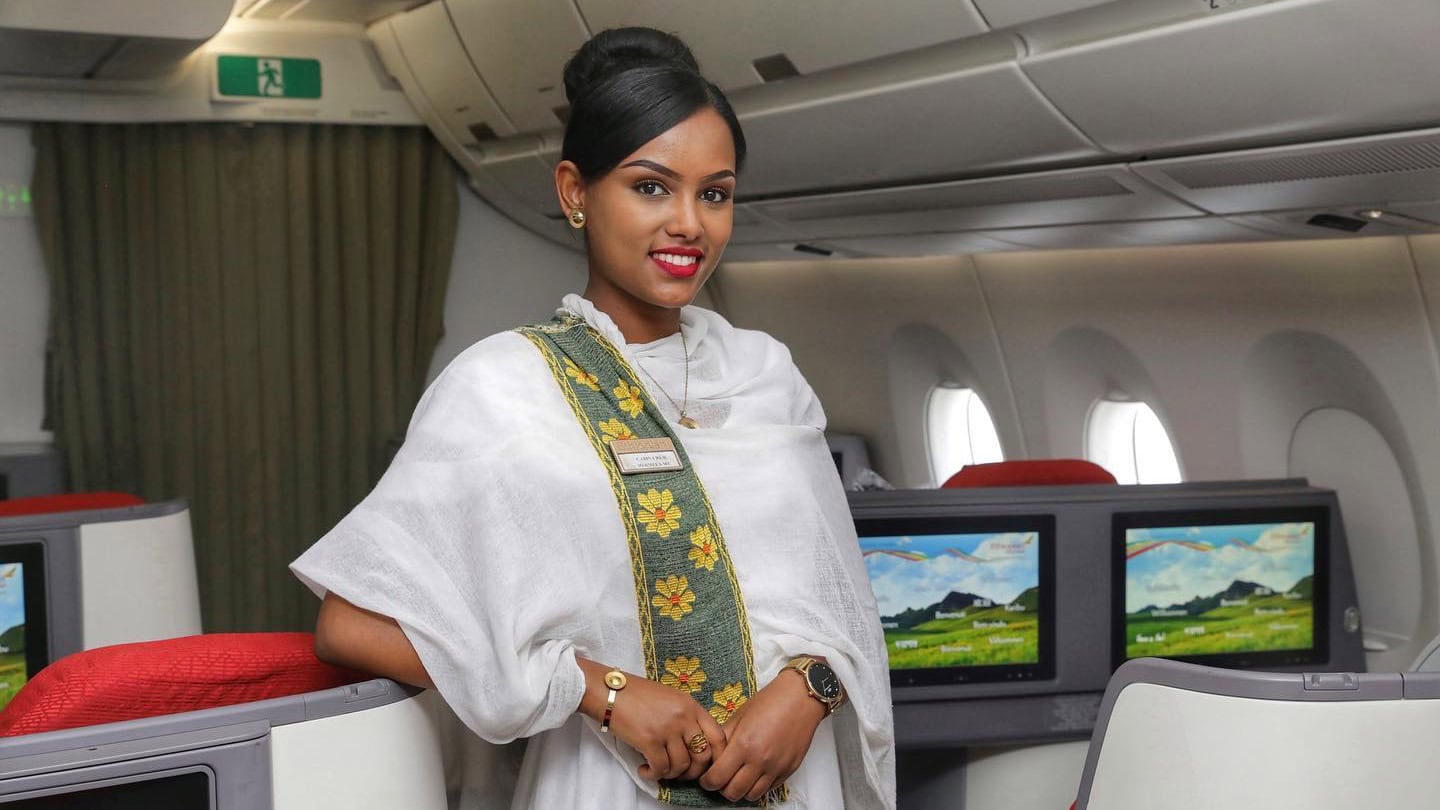
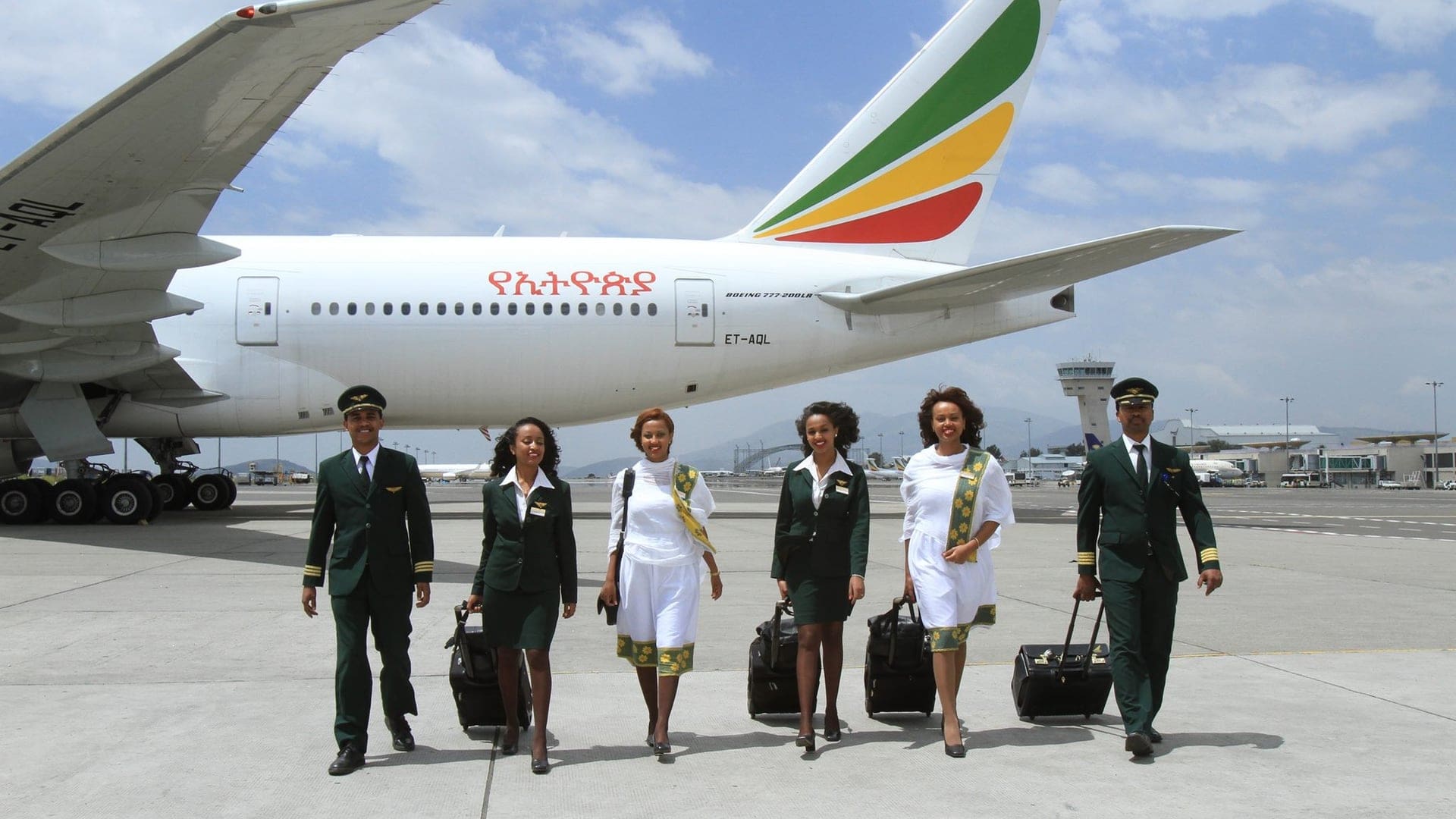
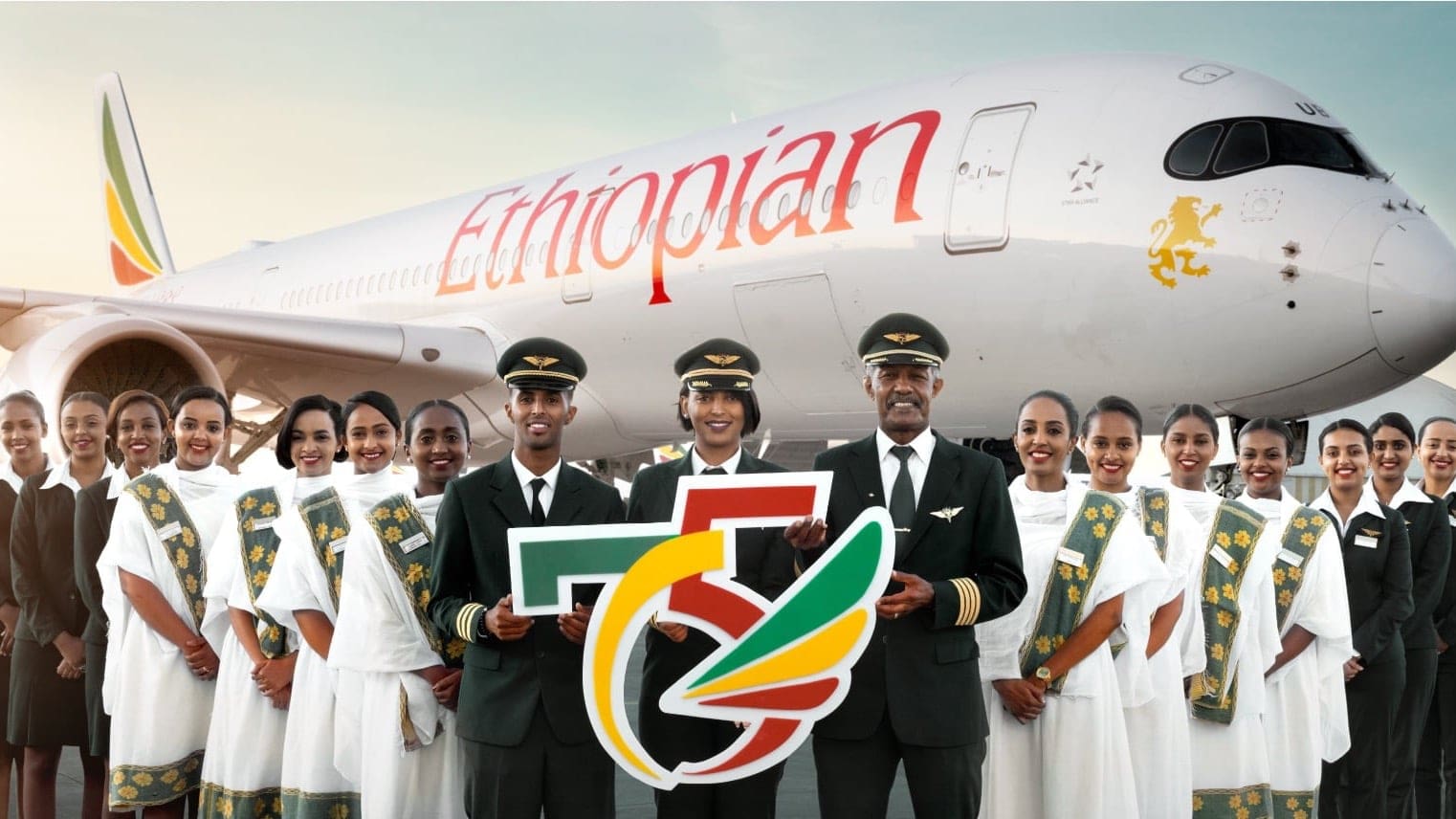
Ethiopian Airlines brings its national identity into the Cloud Nine cabin through crew presentation, dining rituals, and coffee service. The cabin crew wears the airline’s green uniform, while some flights include traditional Ethiopian attire during coffee or meal presentation.
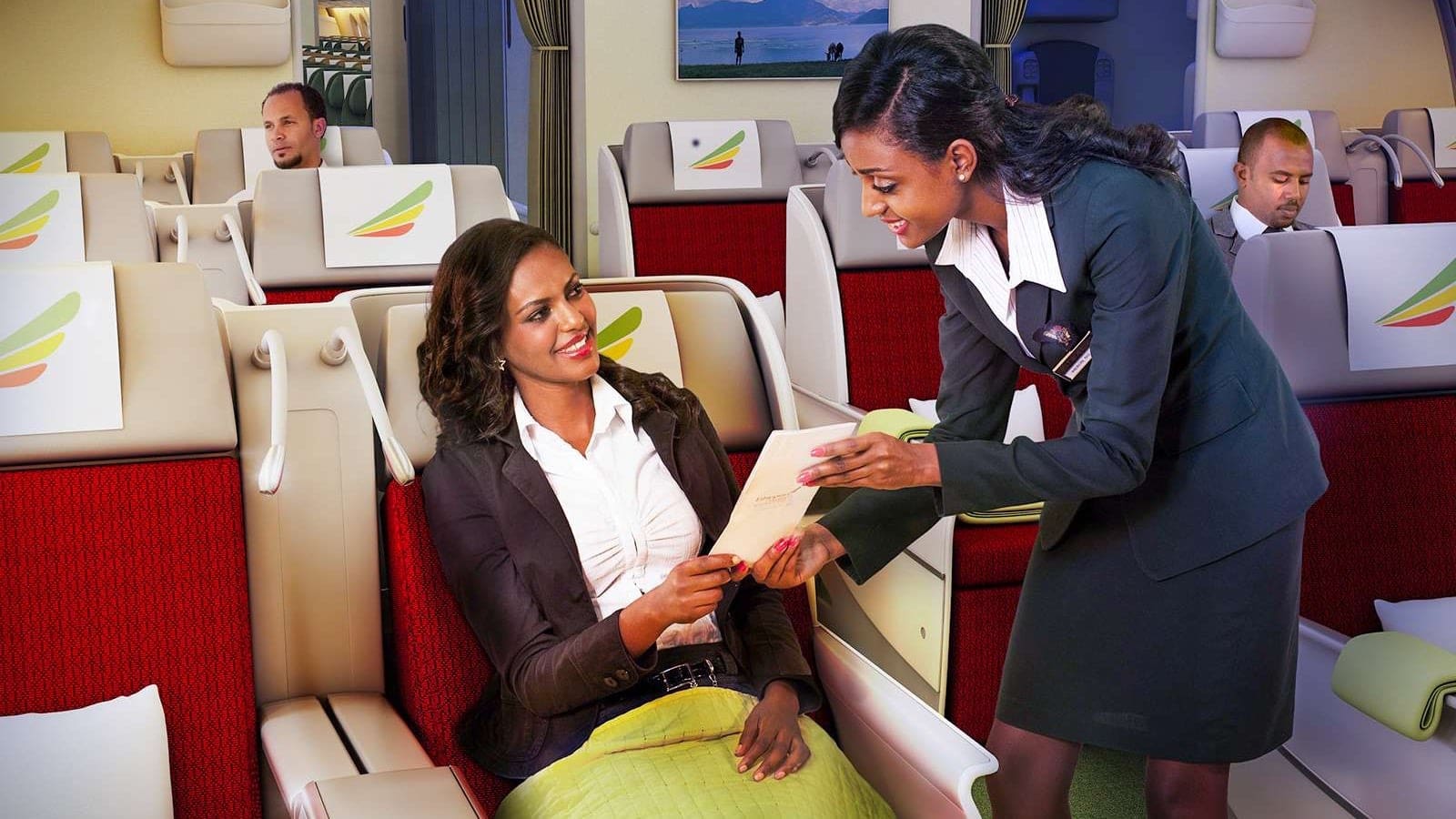
The onboard service follows a calm rhythm across welcome drinks, meal service, beverage rounds, cabin checks, and pre-arrival preparation. On long flights, this structure helps the cabin move naturally from dining to rest.
The flight attendants are polite, warm, and responsive throughout the flight. The dining and coffee service are some of the more recognizable parts of the onboard experience, where Ethiopian hospitality connects more directly to the airline’s identity.
Entertainment
The in-flight entertainment setup in Cloud Nine depends heavily on the aircraft assigned to the route.
Newer Airbus A350, Boeing 787, and Boeing 777 aircraft feature larger touch-screen displays, broader entertainment libraries, and onboard Wi-Fi. On the Airbus A350, the in-flight entertainment system uses 17-inch seatback screens with movies, television series, documentaries, music channels, games, and moving map displays available throughout the flight.
Ethiopian Airlines also offers ShebaSkyConnect Wi-Fi on Airbus A350 and Boeing 777 aircraft, as well as most Boeing 787 aircraft. Wi-Fi is free for business-class passengers.
Older Boeing 737 and Boeing 767 aircraft use smaller screens with more limited programming and fewer connectivity features. Screen responsiveness, available content, and onboard internet access also vary more noticeably on these aircraft, which makes aircraft selection more important on long flights where entertainment and connectivity matter more.
Amenities
Ethiopian Airlines passengers traveling in Cloud Nine receive an amenity kit with travel essentials such as an eye mask, socks, toothpaste, face mask, lip balm, and hand sanitizer. The kits use color schemes inspired by the Ethiopian flag, including bright red, green, and yellow designs.
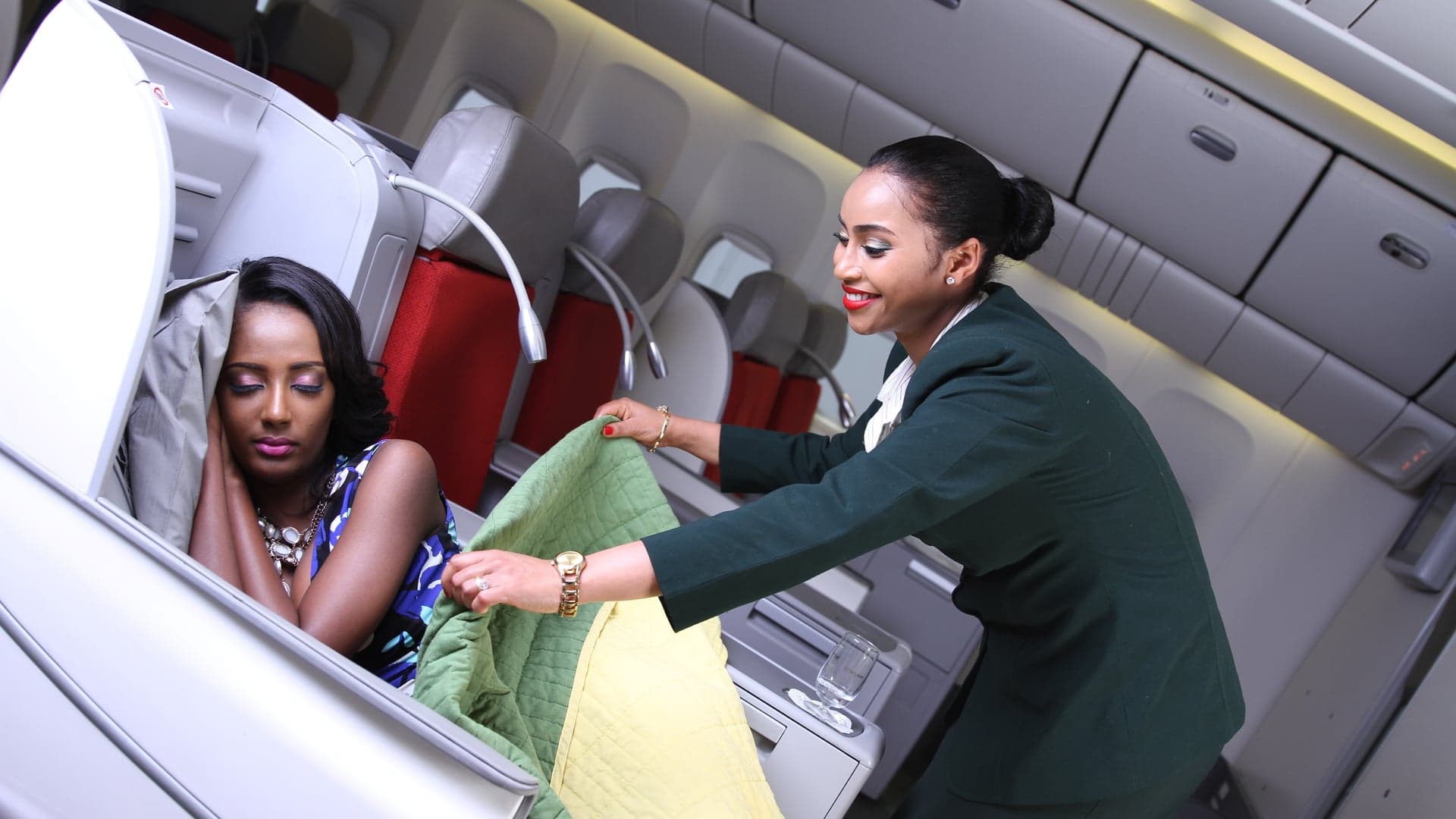
On most medium- and long-haul flights, the airline provides pillows and blankets as part of the onboard sleep setup. On some international routes, the crew presents a single rose during boarding, one of the more recognizable details in the Cloud Nine product.
Ethiopian Airlines passengers traveling in Cloud Nine also receive an expanded baggage allowance on most international routes. The standard allowance often includes up to three checked bags weighing 51 pounds (23 kg) each, while some US and Canadian routes allow two checked bags weighing up to 70 pounds (32 kg) each.
Short and Medium-Haul Flights
On short and medium-haul routes, Ethiopian Airlines uses a mix of regional aircraft and certain wide-body aircraft. Thus, the cabin can differ significantly by route: some flights use Airbus A350, Boeing 787, or Boeing 777 aircraft with a long-haul-style Cloud Nine cabin, while others use Boeing 737 or Dash 8 Q400 aircraft with a more limited regional setup.

Aircraft Types and Seats
- Airbus A350, Boeing 787, and Boeing 777 aircraft operate some regional or medium-haul routes. These aircraft usually provide the stronger Ethiopian Airlines business-class product, with lie-flat or angled-flat seats, larger cabins, and a more complete long-haul-style setup.
- Boeing 737 aircraft use recliner-style seats in a 2-2 configuration instead of fully flat beds.
- Dash 8 Q400 aircraft operate shorter domestic and regional routes. Ethiopian Airlines uses Q400 aircraft both with and without Cloud Nine, so the onboard product can feel closer to premium economy than a traditional business-class cabin on some routes.
Across most international and regional routes, Cloud Nine passengers receive a full meal service and beverage selection, including alcoholic and non-alcoholic drinks. On shorter domestic routes operated by Q400 aircraft, the cabin usually uses a smaller regional setup, with fewer seats and simpler catering options and onboard amenities than the wide-body Cloud Nine product.
Sustainability
Ethiopian Airlines links its sustainability work to flight operations, waste reduction, recycling, and long-term environmental programs. The airline’s environmental initiatives include fleet modernization, operational efficiency measures, recycling programs, and tree-planting projects in Ethiopia.
The tree-planting work forms part of Ethiopian Airlines’ Fly Greener campaign, which began in 2008 and focuses on reforestation in Ethiopia. The airline also signed a UN Environment-backed pledge to plant 9 million trees, with the project framed around one tree for every passenger flown.
Beyond environmental programs, Ethiopian Airlines also invests in aviation training through Ethiopian Aviation University in Addis Ababa. The university includes pilot, cabin crew, maintenance, simulator, ticketing, airport, cargo, operations, and leadership training schools, which support professional development across the African aviation sector.


Core Considerations
Ethiopian Airlines operates one of the largest international route networks in Africa, connecting the continent with Europe, North America, Asia, and the Middle East through Addis Ababa Airport.
Membership in Star Alliance allows passengers to earn and redeem miles across partner airlines while also providing reciprocal lounge access and priority airport benefits.
Traditional Ethiopian elements are visible throughout the Cloud Nine experience, particularly through the coffee ceremony service, regional-inspired dining options, and cabin design.
The Cloud Nine product places greater emphasis on route coverage, connectivity, and long-haul practicality than on highly customized luxury features or private-suite-style cabin design.
Quick Facts
Ethiopian Airlines’ business class varies more by aircraft than by route, which makes seat selection especially important before booking. Newer Airbus A350 and some Boeing 787-9 aircraft use 1-2-1 layouts with direct aisle access, while older Boeing 787 aircraft and some other wide-body aircraft use 2-2-2 or 2-3-2 layouts with less privacy. Cloud Nine dining emphasizes Ethiopian dishes on flights departing Addis Ababa, with injera, stews, Ethiopian flatbread, coffee service, and international main course options on long-haul routes.
At Addis Ababa Airport (ADD), business-class passengers receive access to the Cloud Nine Lounge, which features buffet dining options, shower suites, seating areas, and a dedicated coffee ceremony space. The lounge covers roughly 53,800 square feet (5,000 square meters), but it can get crowded during peak departure times.
Seat Type: Mixed, lie-flat seats
Aircraft: Airbus A350, Boeing 787, Boeing 777
Dining: Ethiopian dishes and coffee
Lounge Access: Cloud Nine Lounge Addis Ababa
Reviewed: May 2026