
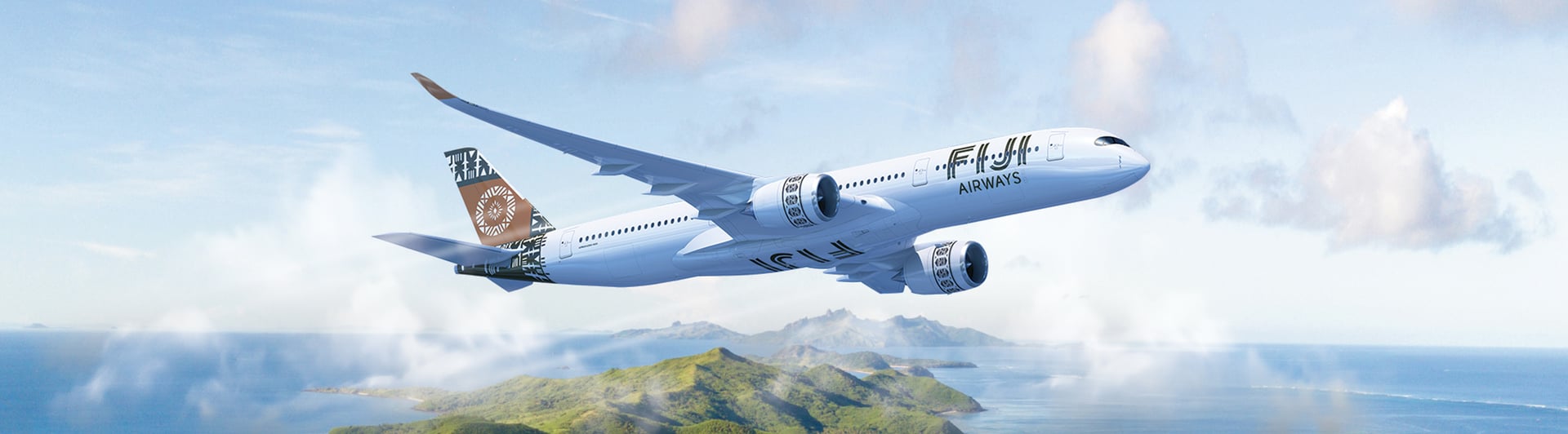
Fiji Airways brings a distinct South Pacific identity to business-class travel, with service shaped by Fijian hospitality and the airline’s role as the flag carrier of the Republic of Fiji. Its network centers on Nadi International Airport (NAN), connecting Fiji with major cities across Australia, New Zealand, North America, Asia, and the wider Pacific region. Additionally, the airline became a full Oneworld member in 2025, which strengthened its appeal for travelers who value alliance benefits, partner connectivity, and mileage redemptions.
In this review of Fiji Airways’ business-class product, we will examine how the airline’s premium cabin performs in terms of seat comfort, dining, onboard service, lounge access, and the overall travel experience.
Airport Experience
Nadi International Airport (NAN)
Nadi International Airport (NAN) serves as the main gateway for Fiji Airways and is located on the western coast of Viti Levu, the largest island in Fiji. The airport handles nearly all international arrivals and departures in the country, which makes it the center of the country’s tourism traffic and the natural starting point for most Fiji Airways long-haul itineraries.
Although Suva is Fiji’s capital, Nadi functions as the country’s main international aviation hub. Suva is about 71 miles (115 km) from Nadi, and you can reach it by a short domestic flight or by a scenic drive across Viti Levu.
Fiji Airways’ business-class guests receive several ground-service benefits at Nadi International Airport, including priority check-in, expedited boarding, and generous baggage allowances. The airline also organizes boarding in dedicated groups, which helps travelers move from the gate to the aircraft with minimal delay.
One distinctive part of the Nadi airport experience comes at the gate. After leaving the jet bridge, you step onto a covered open-air balcony with views across the runway. The design gives the boarding process a distinctly Fijian character and offers an immediate sense of the island’s tropical setting.
Fiji Airways Premier Lounge
The Fiji Airways Premier Lounge forms the core of the airline’s business-class airport experience at Nadi International Airport. Located on the ground level, the lounge can accommodate up to 200 guests and has various seating areas, including private alcoves, lounge chairs, and communal tables. The layout gives visitors space to work, dine, or unwind before their flight without the atmosphere feeling crowded or impersonal.
Dining plays a strong role in the lounge experience. Guests can choose dishes from a curated à la carte menu and a varied self-service buffet, and enjoy drinks from a wide selection that includes barista-style coffee, premium spirits, regional wines, soft drinks, and juices. The Fiji Bean Cart adds a local touch, offering Fijian confections that make the lounge feel more connected to the destination.
Travelers have access to a dedicated workstation area with complimentary high-speed Wi-Fi, USB charging points, electrical outlets, and printers. A glass-enclosed media lounge adds another useful space, with international news, live sports, and a curated library for guests who prefer a quieter setting before boarding.
The lounge also supports longer waits and family travel. Showers come with plush towels, hairdryers, and Pure Fiji amenities, while wheelchair-accessible restrooms make the space more inclusive. Nearby spa services offer massage treatments for guests who want to relax before a long flight. Families traveling with young children can use Lailai Land, a supervised play area staffed with qualified professionals.
Cabin and Seats
Aircraft and Cabin Layouts
Fiji Airways has several business-class cabins, and the experience changes noticeably by aircraft type.
- Airbus A350-900: This aircraft model offers the most modern premium cabin. These planes primarily operate on long-haul routes to cities such as Los Angeles, San Francisco, Sydney, and Auckland. They feature 33 Collins Aerospace Super Diamond fully lie-flat seats arranged in a 1-2-1 herringbone layout. Every passenger gets direct aisle access, and the angled position creates better privacy than the airline’s older business-class products.
- Airbus A330: Such planes in Fiji Airways’ fleet use a more traditional business-class layout, with 24 angled lie-flat seats arranged in a 2-2-2 configuration. Fiji Airways uses these aircraft on flights to Australia, New Zealand, Hong Kong, Tokyo, and Singapore. The cabin still provides generous space, but it does not match the privacy or sleeping comfort of the Airbus A350. Passengers who are next to the window also need to step past their neighbor to reach the aisle.
The onboard design also reflects the airline’s Fijian identity. After its rebranding, Fiji Airways introduced a livery featuring indigenous motifs on the tail and engines, along with similar cultural details inside the aircraft. Neutral tones, Masi-inspired cushions, and soft finishes create a warm design without making the space feel overly decorative.
Seat Features
Fiji Airways’ best business-class product is available on the Airbus A350-900. Each seat converts into a fully flat bed and measures up to 44 inches (112 cm) in pitch. The seats also include several practical features:
- A 17-inch touchscreen entertainment display
- An entertainment remote control
- Two USB charging ports
- Universal in-seat power outlets
- Dual storage compartments
- Armrest cubbies for smaller personal items
- A tri-fold tray table that stores beneath the entertainment screen
- Personal reading light
- Individual air nozzles
The Airbus A330 cabin has a more traditional setup. Each guest can enjoy a 60-inch (152 cm) pitch and a 15.4-inch entertainment screen. USB ports and privacy dividers add convenience, but the angled lie-flat design limits comfort on longer flights.
Best Seats to Choose
On Fiji Airways’ Airbus A350-900, solo travelers could choose a window seat, which offers more privacy and separates them from the center section of the cabin.
Aisle seats on the Airbus A330 offer easier movement and make the most sense for solo travelers, while window seats provide a better view but might be inconvenient if they need to get up during the flight.
Travelers flying together could opt for the paired seats on both aircraft.
Cuisine
Fiji Airways gives business-class dining a strong sense of place, with menus shaped by Executive Chef Richard Cross and built around native Fijian ingredients, global techniques, and contemporary presentation. The result feels polished without losing its island identity: fresh produce, vivid flavors, and carefully plated dishes that bring more character to the meal service.
The menu changes quarterly, yet main courses may include dishes like seared tiger prawns with crispy vermicelli, grilled mahi-mahi fish, aged beef tenderloin with peppercorn jus, or chicken breast stuffed with feta. Smoked specialties are also available on the rotating seasonal menu, including house-cured walu and Spanish mackerel, which add a distinctly Fijian note to the onboard dining experience.
Presentation plays an important role throughout the service. The crew sets each meal on crisp linens with Fijian motifs, and the plating reflects the same attention to detail. Dinner typically follows a restaurant-style format, with a bread selection served alongside the main course.
The crew then presents a selection of pastries, cakes, and curated fruit plates. A highlight of the in-flight dessert menu is the signature kava and cinnamon ice cream, as well as cookies and cream banoffee parfait and bittersweet chocolate panna cotta.
Before arrival, Fiji Airways serves breakfast with the same focus on quality and presentation.
Beverages
After boarding, a flight attendant will greet guests with a welcome drink of their choice, which could be refreshing orange juice or a glass of Gardet Champagne Tradition Brut Chigny-lès-Roses.
The wine list brings together labels from several well-known wine regions. Travelers can expect wine options such as a crisp Marlborough Sauvignon Blanc and Akarua 'Rua' Pinot Noir from New Zealand and a Sean Minor Chardonnay from California’s Central Coast. The exact labels can vary by route, but the selection usually offers a balanced mix of lighter whites, fuller reds, and dessert wines.
One of the most distinctive parts of the beverage service is the Fiji Airways Welcome Cocktail. The airline mixes eight-year Fiji Rum Liqueur with coconut rum, maraschino cherries, citrus, and bitters, creating a tropical drink that fits the carrier’s island identity without feeling generic. A non-alcoholic mocktail version is also available.
The broader bar menu includes spirits, liqueurs, local and international beers, soft drinks, and juices. Non-alcoholic choices include Fiji Water, sodas, and hot drinks like tea, coffee, and hot chocolate.
Service
Fiji Airways’ crew brings much of the warmth and generosity associated with the country on board. Their service style feels gracious, attentive, and relaxed, which helps create a welcoming atmosphere from the start of the flight. The crew’s uniforms, decorated with traditional Fijian patterns, also add a subtle sense of place and reinforce the airline’s island identity.
Flight attendants balance professional efficiency with genuine friendliness. Staff also tend to anticipate their guests’ needs proactively, which makes the experience feel polished without becoming intrusive.
Fiji Airways does not typically use passenger names as part of the standard service routine. However, the lead crew member often introduces themselves before takeoff and thanks each guest before landing. These small gestures add a personal touch and help make the onboard experience feel warm, sincere, and distinctly Fijian.
Entertainment
Fiji Airways offers in-flight entertainment on most of its international fleet, although the exact setup depends on the aircraft. Guests have 17-inch personal screens on the Airbus A350 and 15.4-inch ones on Airbus A330 planes.
The entertainment selection has options suitable for both adults and children:
- Movies, including ones from Disney and HBO
- TV shows
- Music
- Audiobooks
- Meditation and breathwork programs
- Games
- Children’s programming
- Fiji-focused destination content
Travelers can enjoy these while wearing a comfortable pair of noise-canceling headphones. Additionally, on board the Airbus A350, they have access to two aircraft camera views that allow them to watch the takeoff and landing from different perspectives.
Wi-Fi
Wi-Fi is currently available only on Airbus A350 aircraft, and it is complimentary for business travelers. Its speed supports general web browsing and messaging.
Amenities
Travelers flying with Fiji Airways can expect the following amenities during their flight:
- Bedding and comfort items: The airline provides plush mattress toppers, soft duvets, and premium pillows. These items help create a more restful setup, especially when the flight operates through the night.
- Amenity kits: Fiji Airways also provides business-class guests with amenity kits on long flights. The kit features the airline’s signature geometric design and includes Pure Fiji skincare products, an eco-friendly dental kit, an eye mask, earplugs, lip balm, a writing pen, and comfortable socks. These items cover the main essentials for rest, skincare, and basic in-flight convenience. On some flights, the airline offers travelers a basket of essentials to choose from, instead of traditional amenity kits, which aligns with its sustainability efforts.
- Lavatory amenities: The cabin features dedicated lavatories stocked with Pure Fiji toiletries. This adds a local touch to the onboard experience and gives the space a more polished, elegant feel.
- Family-friendly features: Families traveling with infants can use two bassinets at the front bulkhead on the Airbus A350. A washroom with baby-changing facilities is located near the forward exit, which is convenient for parents.
Short and Medium-Haul Flights
Fiji Airways uses Boeing 737 planes on many short and medium-haul routes, including flights within the South Pacific and to Australia, New Zealand, and Honolulu.
The Boeing 737 plane generally features the following in business class:
- Reclining seats instead of fully flat beds
- A 2-2 layout
- A smaller cabin with a more compact feel than on the airline’s long-haul planes
These planes operating short flights do not provide the same level of privacy or sleeping comfort as the Airbus A350 business-class cabin. Yet guests can still fly comfortably, enjoy in-flight entertainment, and receive a fantastic meal and beverage service. The crew also distributes noise-canceling headphones before departure, and while the lavatories are more compact than those on wide-body planes, they are still equipped with Pure Fiji amenities.
Sustainability
Fiji Airways places sustainability at the center of its role as the national airline of an island nation directly affected by climate change. Its environmental strategy focuses on fuel efficiency, conservation, waste reduction, and practical programs that support Fiji’s coastal ecosystems.
Operational efficiency is a major part of this approach. The airline uses fuel-management practices to reduce unnecessary consumption, while aircraft such as the Airbus A350 help lower emissions through more efficient design and performance.
Conservation also plays a visible role. Through its “Every Take-off, One Tree” initiative, Fiji Airways funds the planting of a mangrove seedling for every international flight and has already planted more than 89,000 mangroves since the program began in 2017. These projects support carbon sequestration, shoreline protection, marine biodiversity, and local community resilience. Onboard, the airline has also reduced single-use plastics, introduced more sustainable amenity kits, and adopted biodegradable or lower-waste packaging where possible.
Core Considerations
Signature Fijian hospitality: The crew's genuine warmth, professionalism, and cultural pride create a memorable onboard atmosphere.
Innovative in-flight dining: The ongoing collaboration with award-winning Chef Richard Cross demonstrates a commitment to culinary excellence in the skies.
Fiji Airways Premier Lounge: Attentive service, premium comfort, and thoughtfully designed amenities, with a generous six-hour maximum stay, make this lounge stand out.
Quick Facts
A South Pacific character shapes the Fiji Airways business-class experience, from Fijian-patterned cabin details and Pure Fiji amenities to a dining program built around local ingredients, seasonal menus, and the airline’s signature rum cocktail. Airbus A350-900 aircraft offer the most comfortable business-class cabin, with 33 fully flat Collins Aerospace Super Diamond seats in a 1-2-1 layout, direct aisle access, complimentary Wi-Fi, and more privacy than the Airbus A330 or Boeing 737 products. It suits travelers flying long-haul through Nadi who value warm service, Oneworld benefits, and a premium experience with a clear sense of place. The main weakness of the airline is inconsistency by aircraft, since the Airbus A330 has angled lie-flat seats and the Boeing 737 has recliners. This product is worth flying on the Airbus A350, especially on overnight or long-haul routes.
Best Seats: Fully flat 1-2-1
Best Aircraft: Airbus A350-900
Lounge: Fiji Airways Premier Lounge
Wi-Fi: Airbus A350 only, complimentary
Reviewed: May 2026