
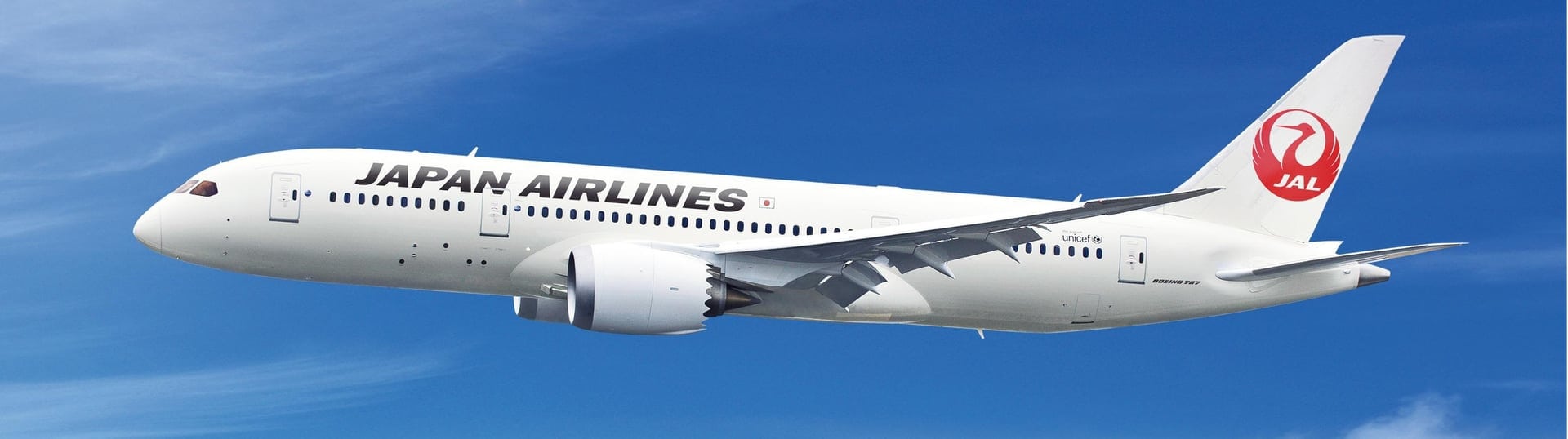
Japan Airlines (JAL) is the nation’s flagship carrier and second-largest airline, maintaining a strong reputation for operational consistency, attentive onboard service, and a structured long-haul business-class product. JAL business class combines traditional Japanese service with modern cabin design. Both are equally important on overnight routes where privacy, sleep quality, and efficient onboard service directly affect arrival condition after a long flight.
As a member of the Oneworld alliance, Japan Airlines works with global partner airlines such as American Airlines, British Airways, Cathay Pacific, Finnair, Iberia, Qantas, Qatar Airways, and Royal Jordanian. With this extensive global network and partnerships across the alliance, flying Japan Airlines provides access to a wide range of international routes and coordinated itineraries. It allows frequent flyers to earn and redeem airline miles across multiple carriers, thus expanding the number of ways to book a flight.
Booking
JAL business class is available through the airline’s website and a range of booking channels, including specialist travel agencies such as BusinessClass.com, where agents assist with route planning, seat selection, and ticketing support. Although these bookings use cash rather than award redemptions, eligible fares still allow passengers to collect miles and loyalty points.
Many travelers also use American Airlines miles to book JAL business class, particularly on long-haul routes where the combination of a lie-flat seat, attentive Japanese service, and direct aisle access creates a consistent overnight experience. Oneworld Sapphire and Oneworld Emerald status members receive lounge access on eligible international itineraries, including entry to the JAL Sakura Lounge and other Oneworld premium facilities, regardless of travel class.
Managing an account through the loyalty program also makes it easier to track points, review award availability, and monitor eligible lounge access before departure.
Airport Experience
Japan Airlines operates a "two-hub" system in Tokyo, which is a key part of its network strategy: Tokyo Haneda (HND) and Tokyo Narita (NRT), supplemented by regional bases at Osaka Kansai (KIX), Osaka Itami (ITM), and Nagoya Chubu Centrair (NGO). The airport experience reflects the carrier’s structured approach to ground service, particularly during check-in, lounge entry, and boarding.
Business-class passengers have access to dedicated check-in counters and a baggage allowance of up to three checked bags each weighing up to 70 pounds (32 kg). Staff interaction is efficient and attentive across both domestic and international airports, helping passengers move through busy travel periods and short connections smoothly.
JAL Sakura Lounge
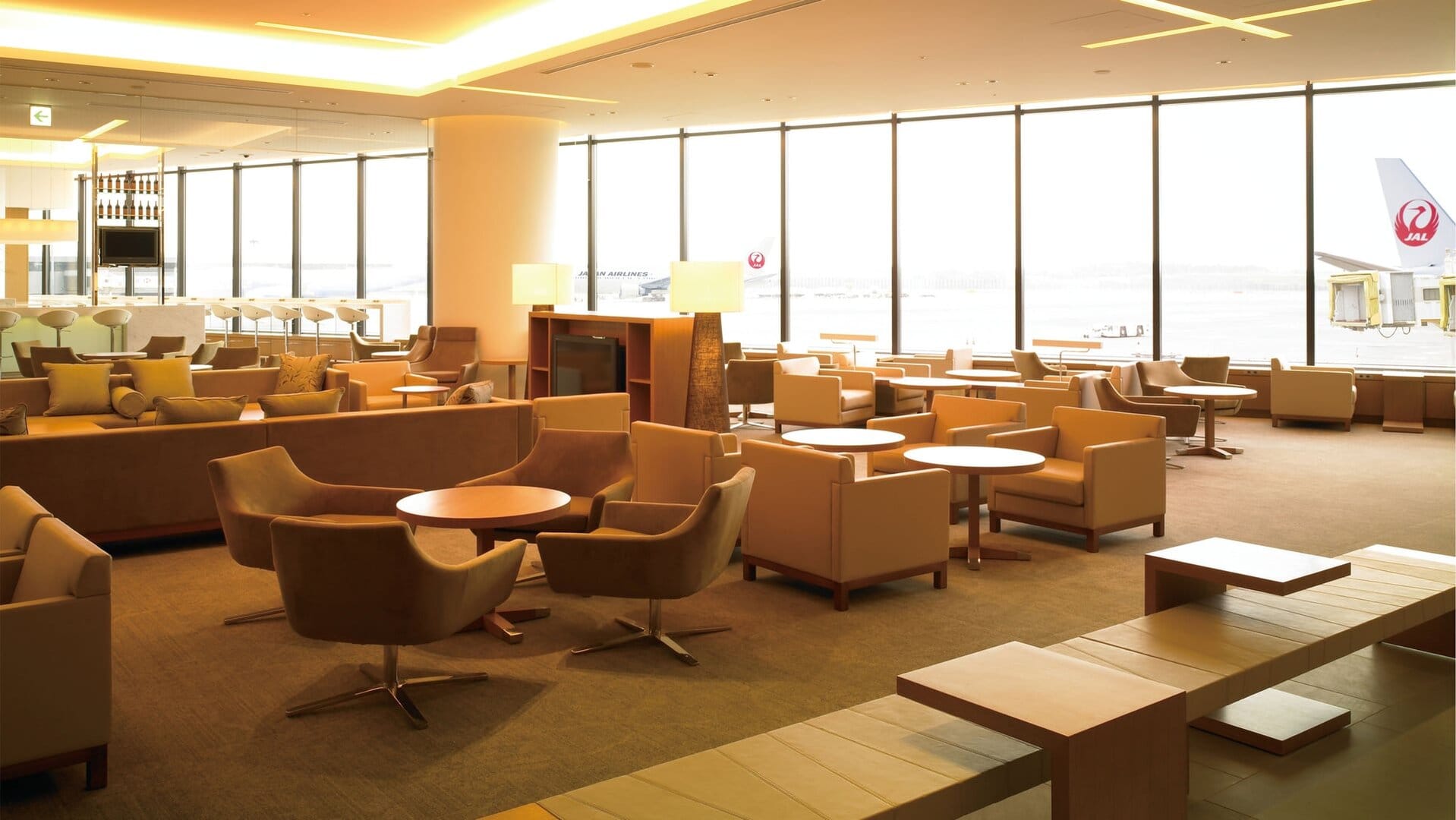
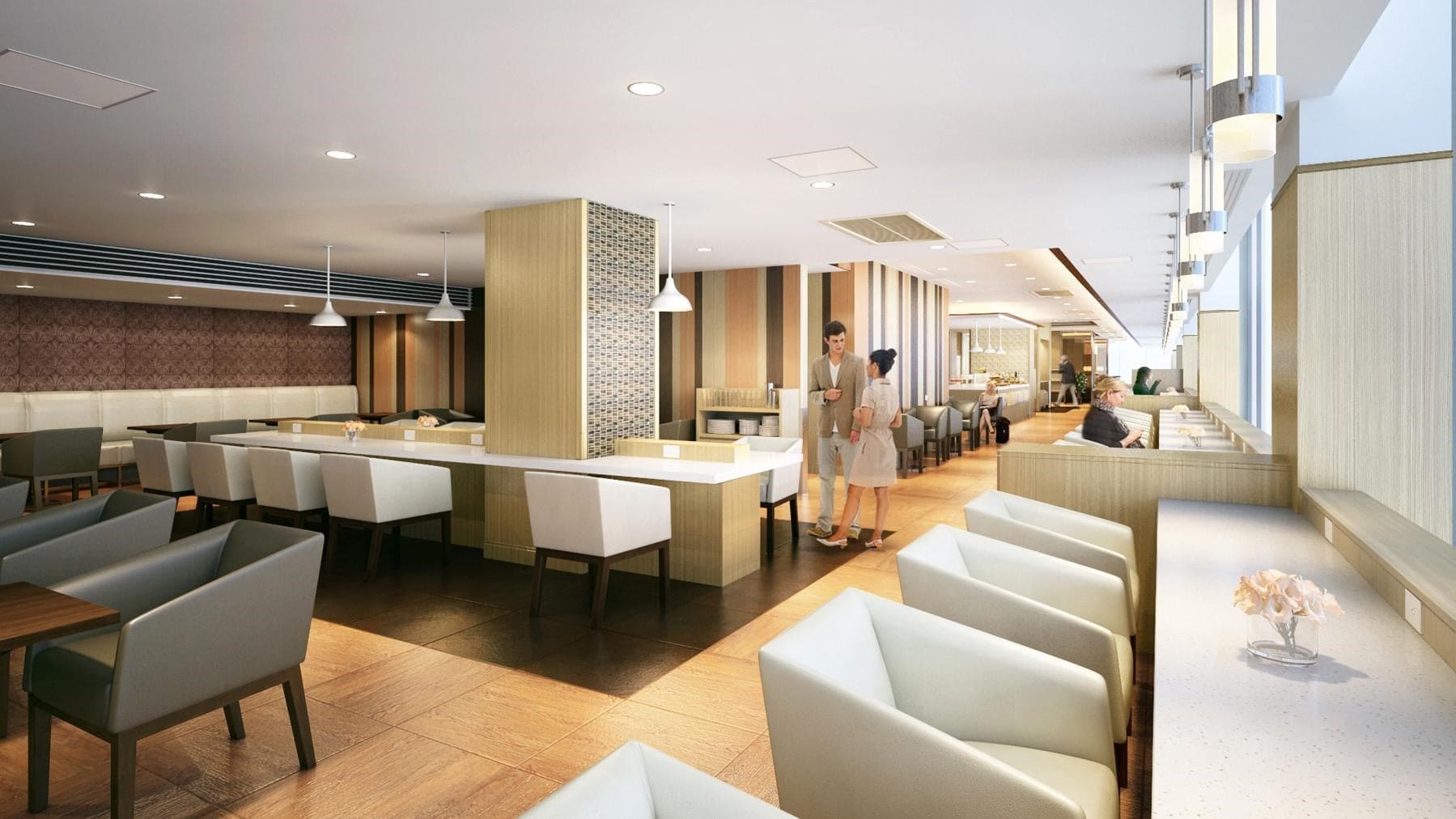
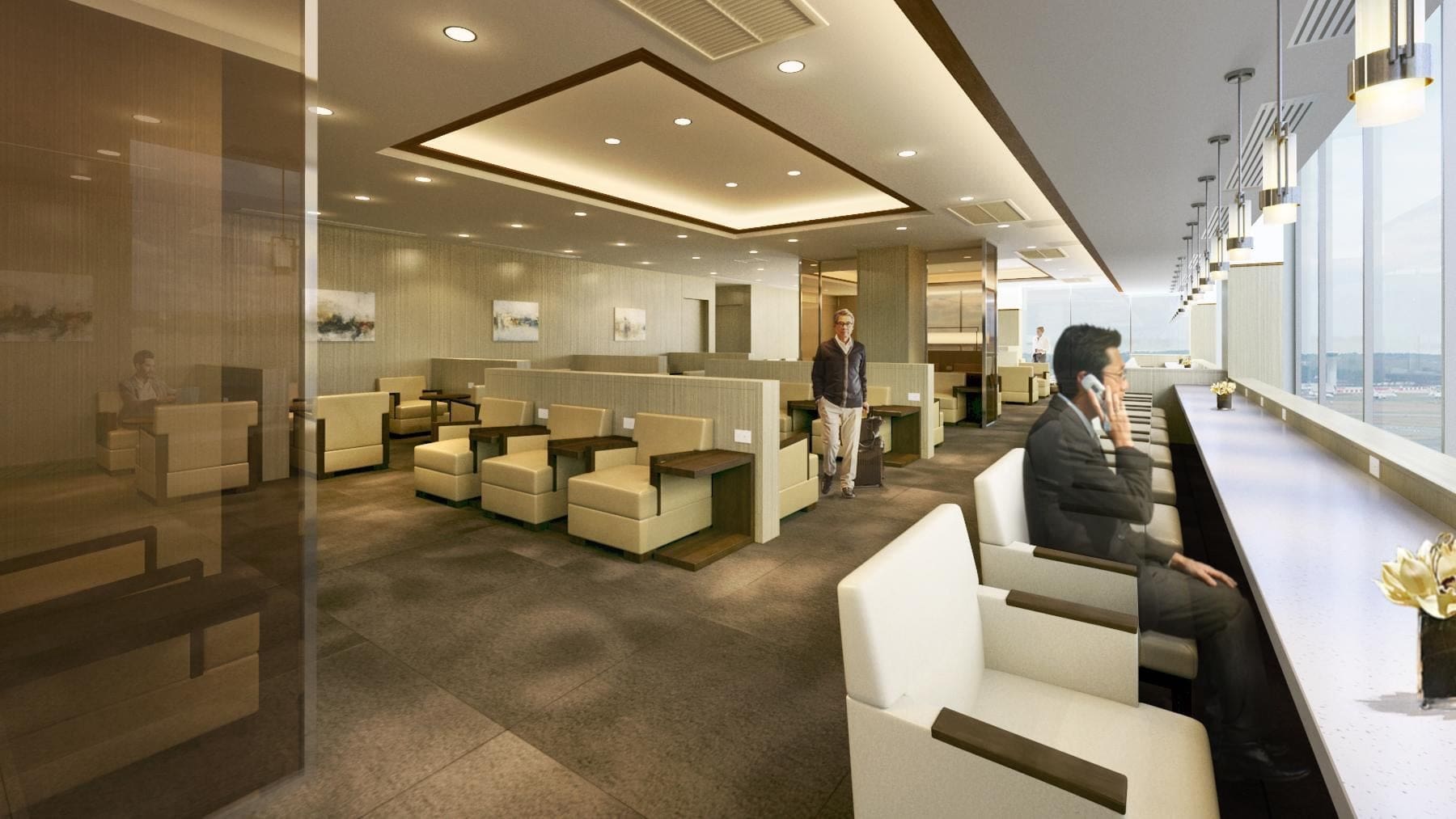
The JAL Sakura Lounge network includes separate areas for business- and first-class passengers, with access determined by ticket class and elite status. First-class sections are reserved for qualifying ticket holders and travelers with Oneworld Emerald status, while JAL business-class passengers receive access to the Sakura Lounge business-class areas before applicable international departures.
These lounges provide runway views and offer tailored pre-flight amenities, including shower suites, dedicated quiet zones for pre-flight rest or work, Japanese and international food at the carrier's signature JAL Original Beef Curry buffet, and self-service beverage stations. At Haneda Airport, a minimal contact system allows passengers to order food and book shower rooms directly through a mobile app.
Domestically, class lounge facilities are available at Japan's primary gateways, including Tokyo (HND/NRT), Osaka (ITM/KIX), and Nagoya (NGO). Internationally, JAL maintains dedicated facilities at key hubs, including Bangkok (BKK), Honolulu (HNL), Manila (MNL), and San Francisco (SFO). In locations without a branded facility, eligible passengers can access Oneworld partner lounges, such as Cathay Pacific or British Airways.
Priority boarding for business-class passengers also reduces congestion during the final stage before departure and creates a more orderly transition from the lounge to the aircraft.
Cabin & Seats
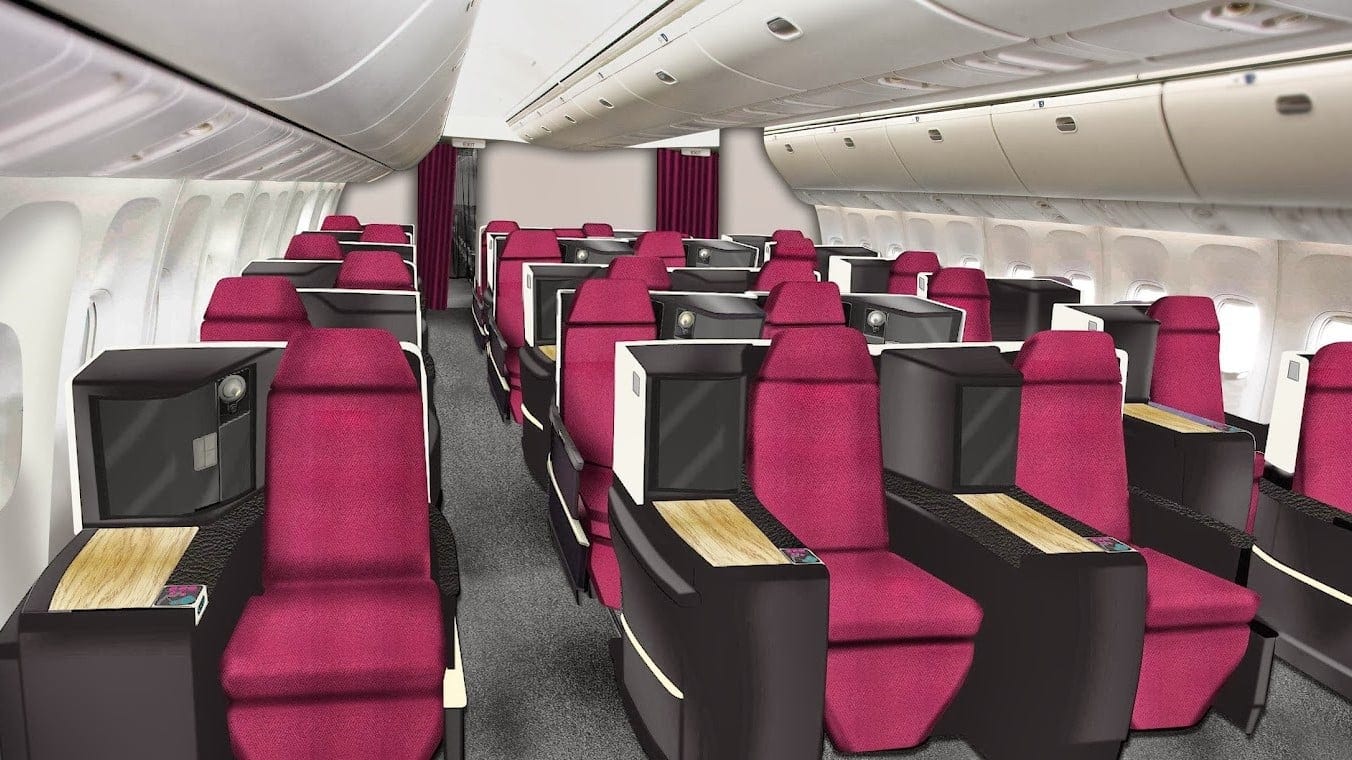
Japan Airlines business class spans multiple aircraft types, and the onboard experience varies significantly depending on the specific plane and seat generation assigned to the route.
Airbus A350-1000 Business Suite
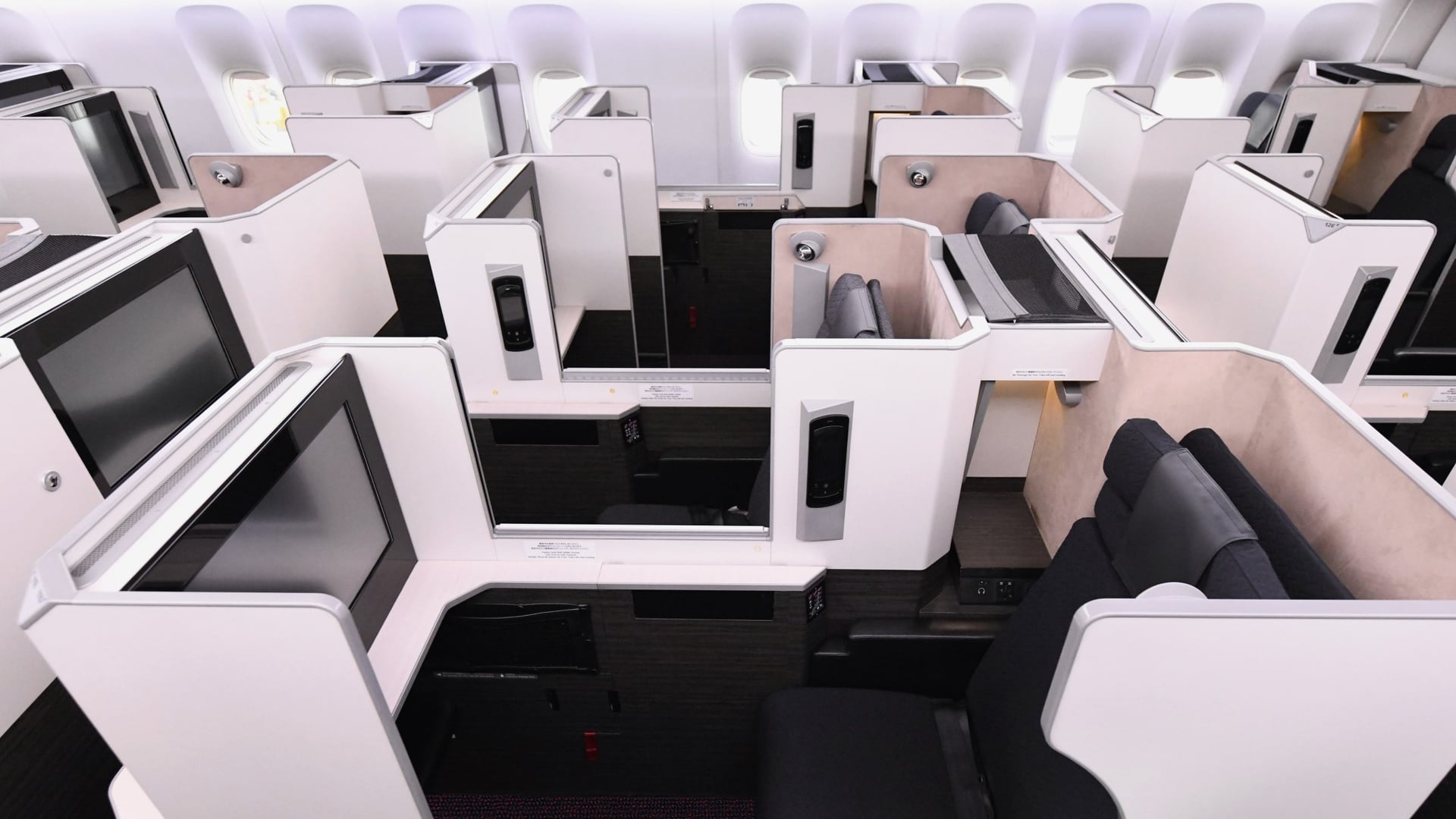
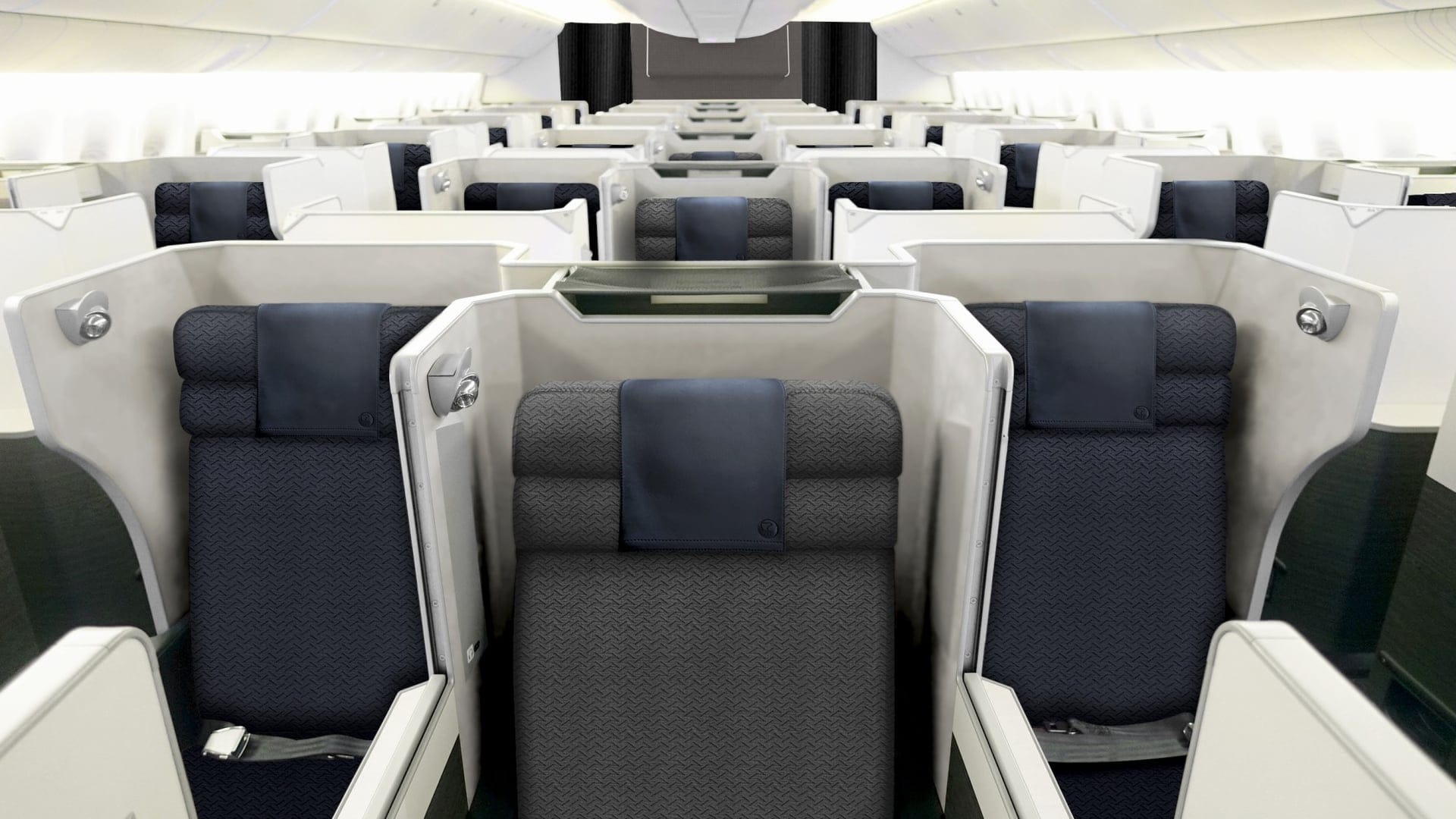
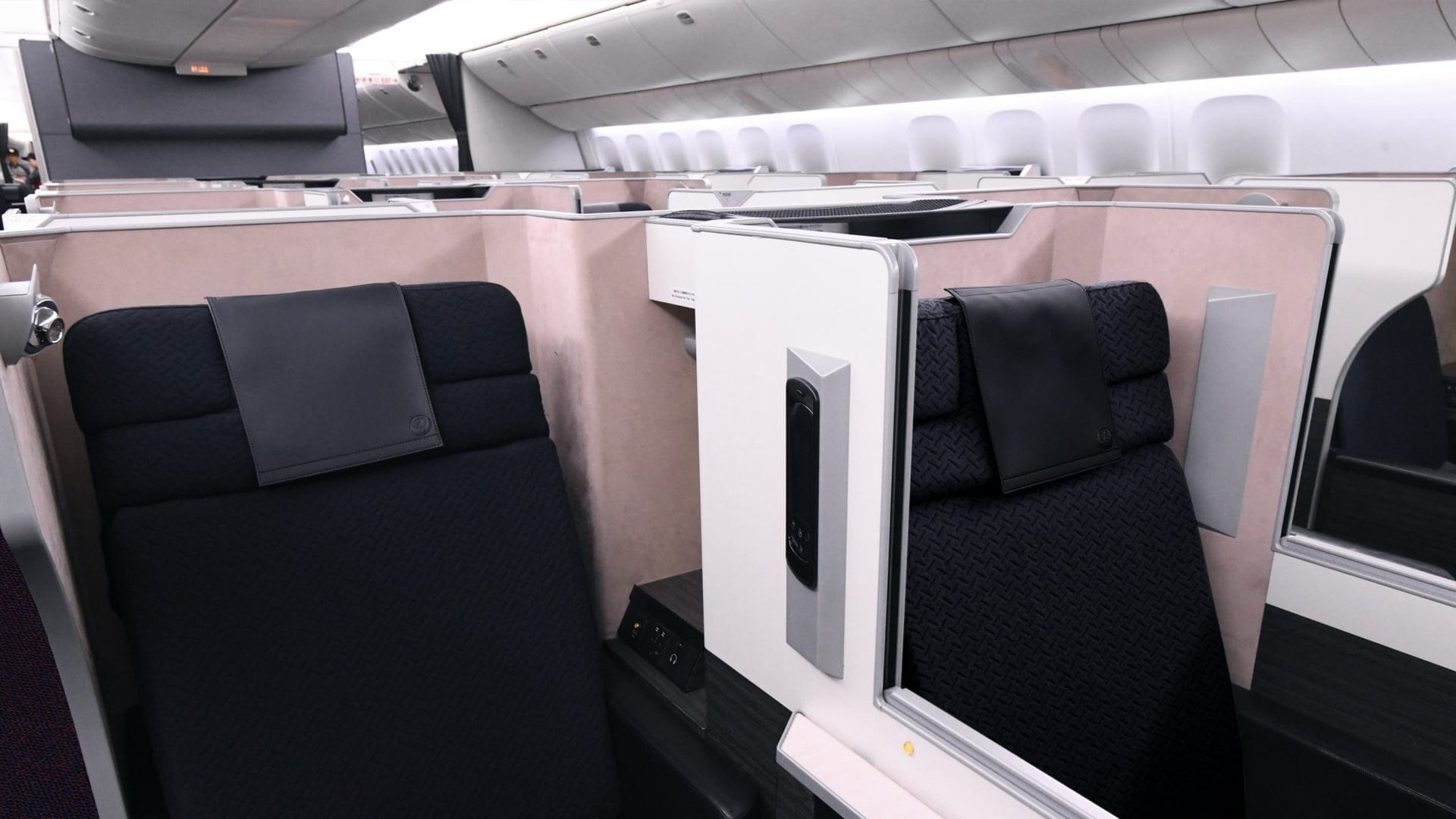
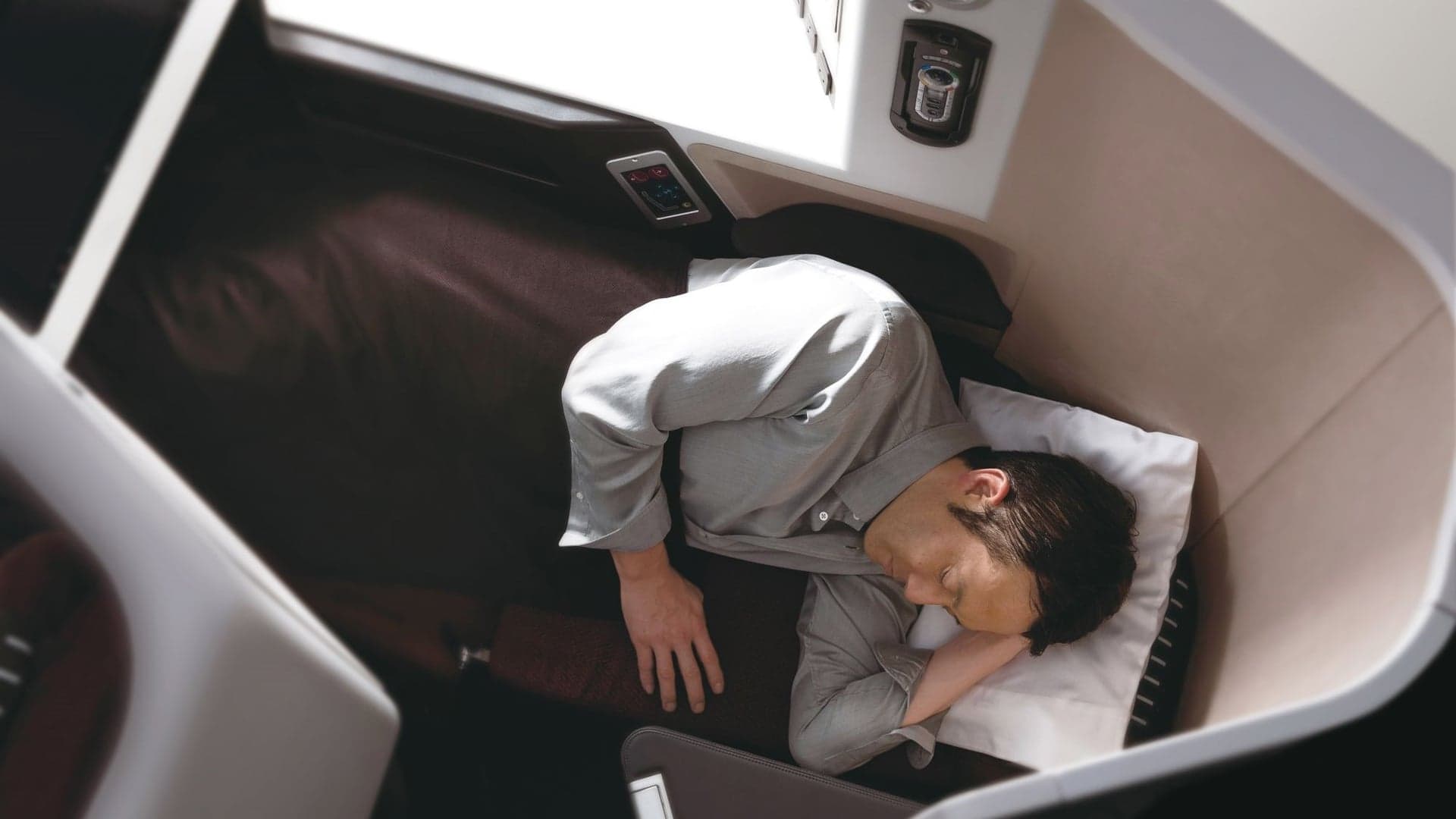
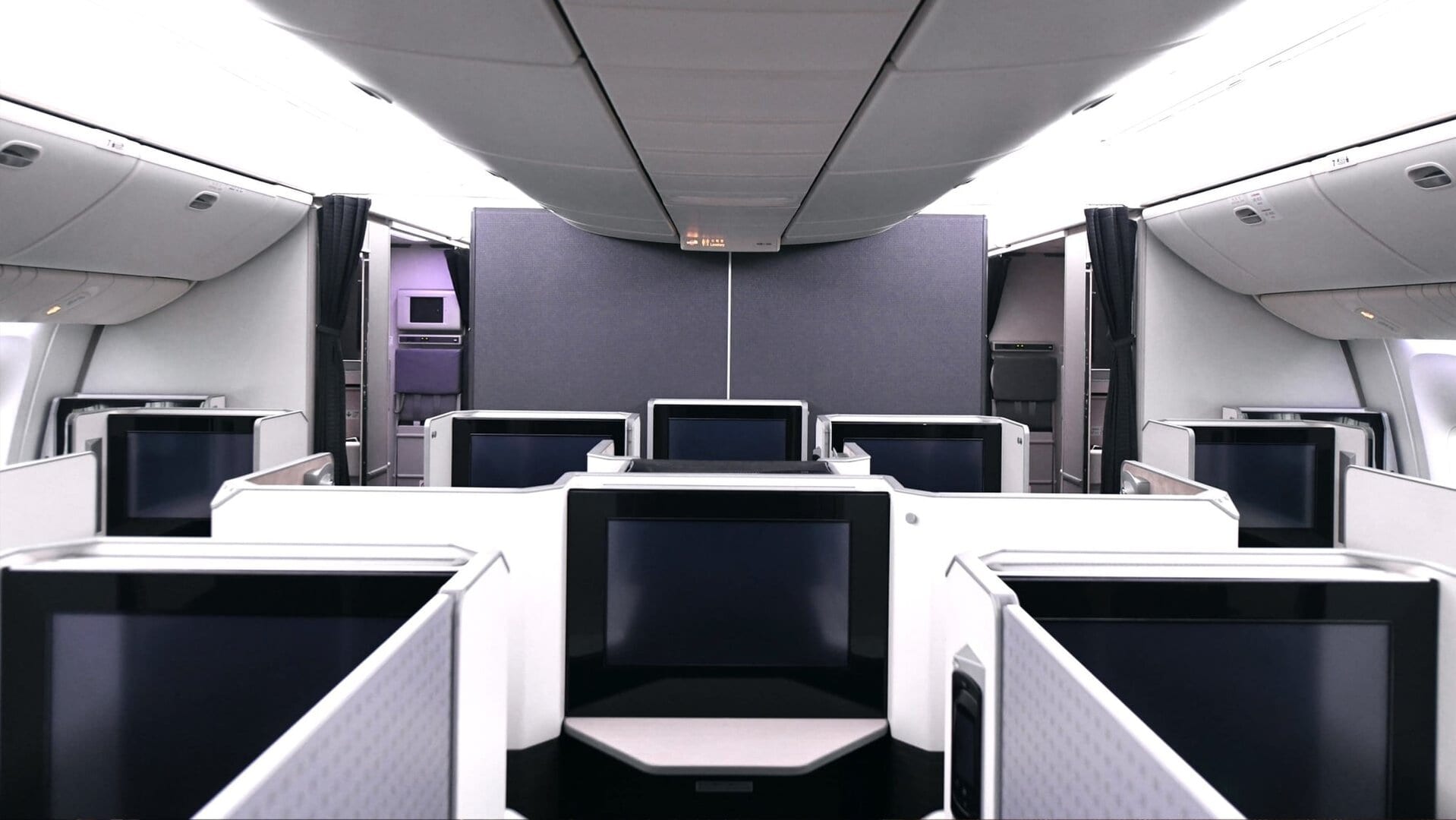
The carrier's newest Airbus A350-1000, now operating on several flagship international routes, represents the most advanced JAL business product in the fleet. The aircraft features 54 Safran Business Suites in a 1-2-1 layout, with each suite enclosed by 52-inch (132 cm) privacy walls and sliding doors. This marks the first fully enclosed business-class seat design introduced by JAL and creates a private environment, especially valuable on overnight and ultra-long-haul routes.
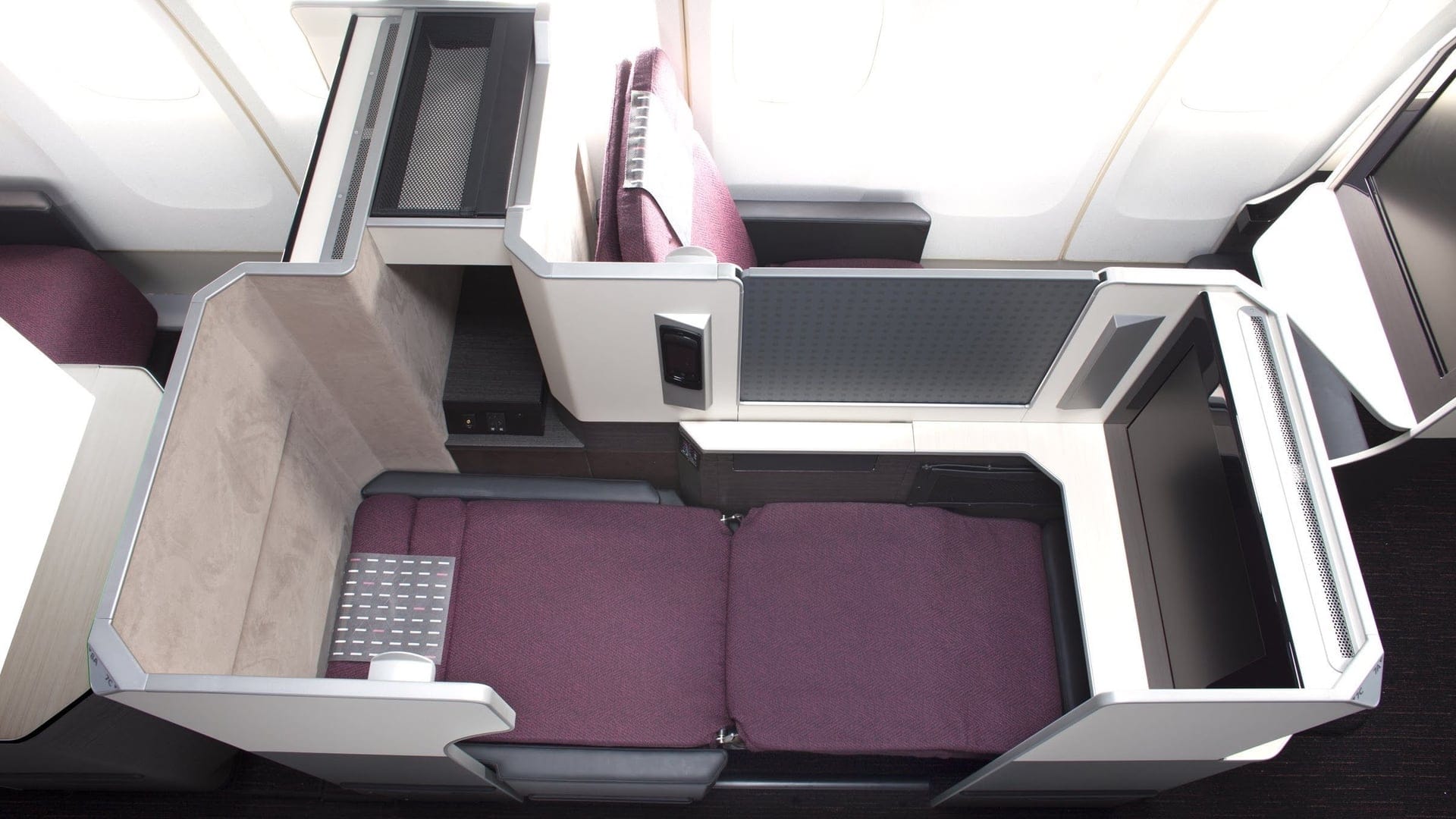
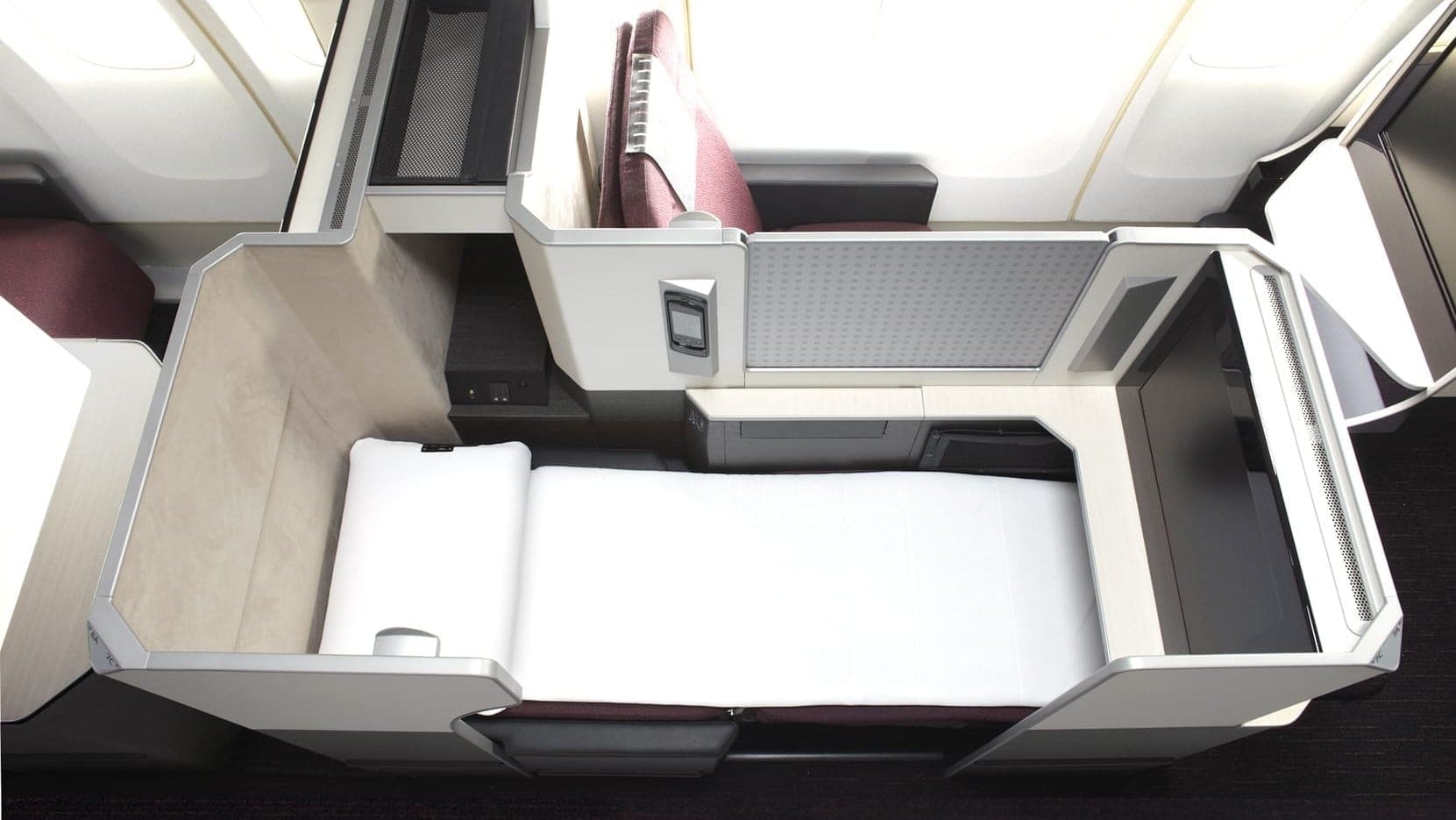
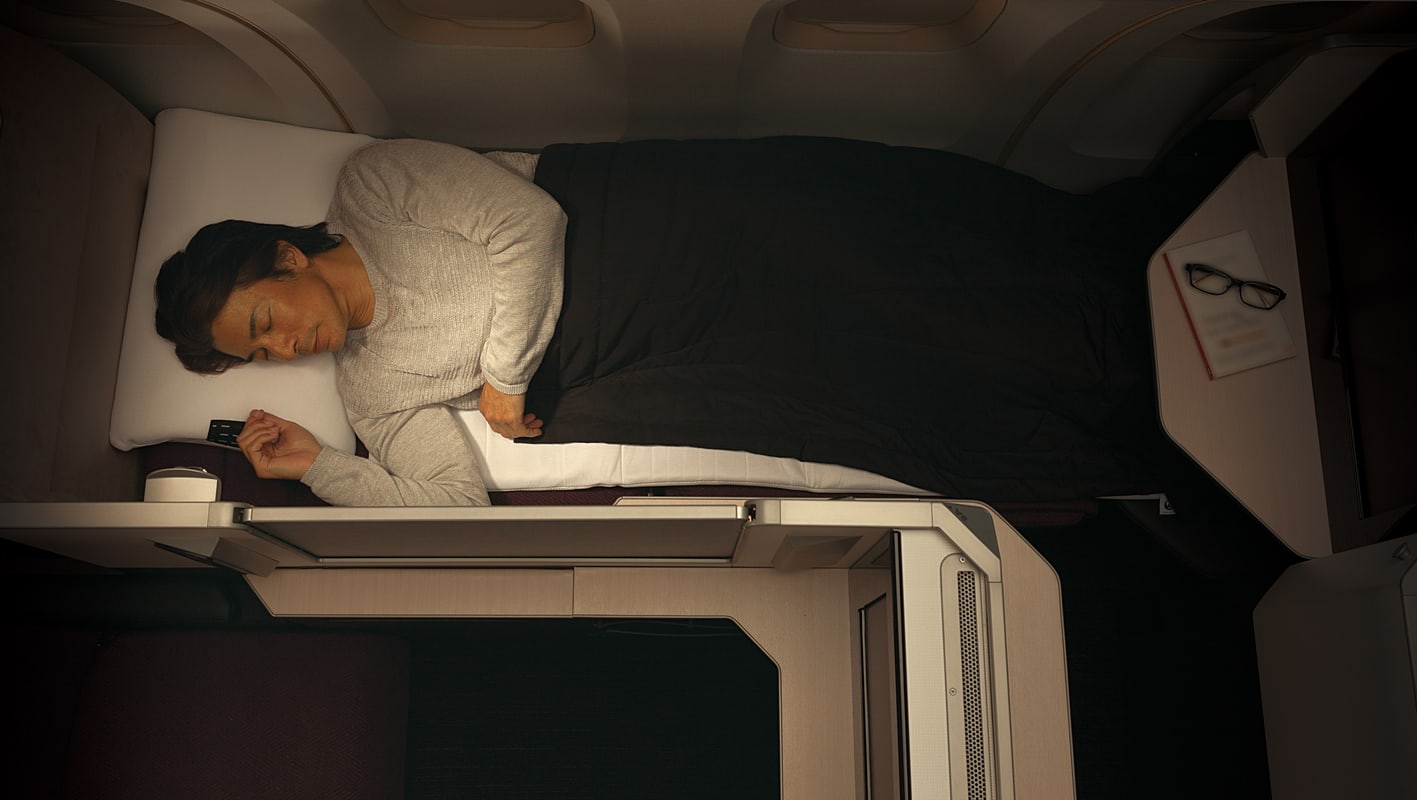
The suites convert into a 78-inch (198 cm) fully lie-flat bed, measuring 22 inches (56 cm) wide. Additional features include personal wardrobes, dedicated storage compartments, and pressure-relieving seat cushioning designed to improve comfort during long flights. A standout addition on the Airbus A350-1000 is the integrated headrest speaker system, which allows passengers to listen to entertainment without headphones through the 24-inch 4K Panasonic screen. Bluetooth connectivity also supports personal headphones for a more customized setup.
Newer JAL SKY SUITE Products
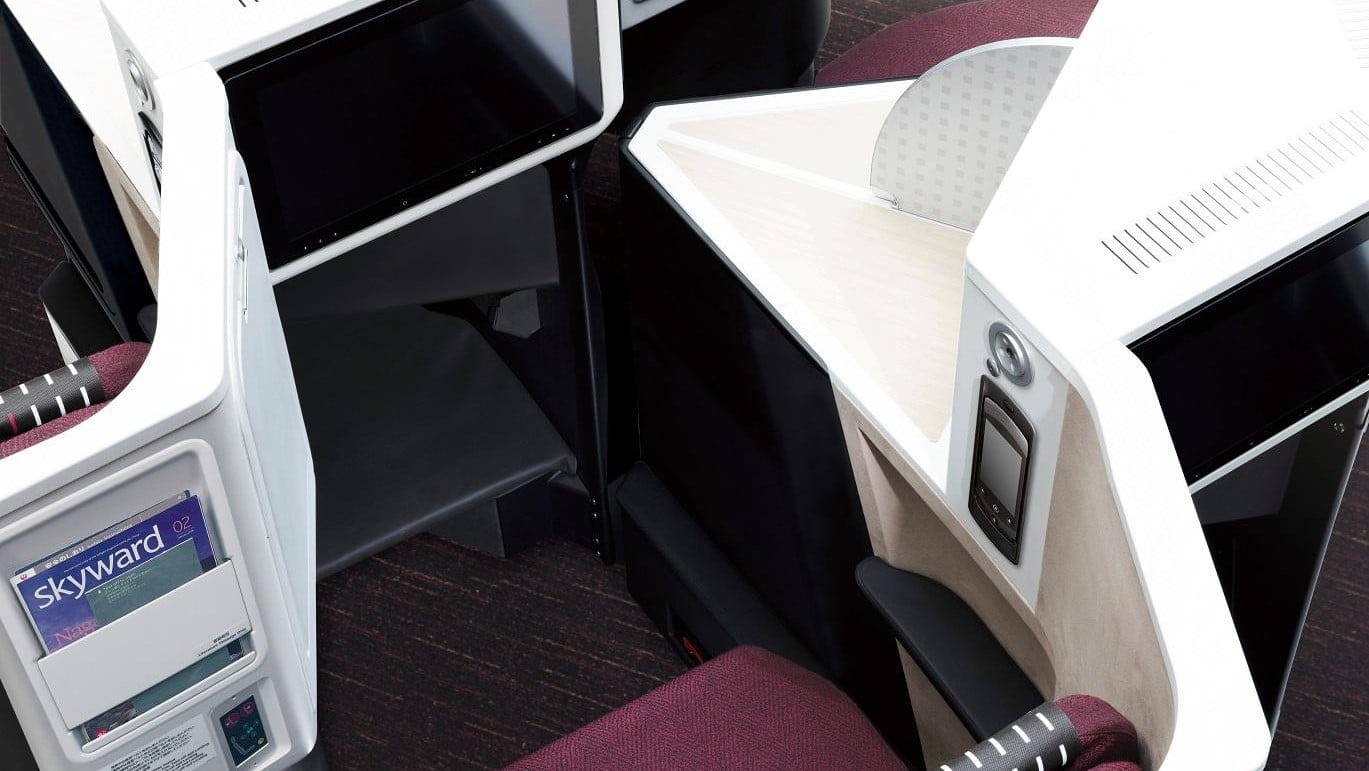
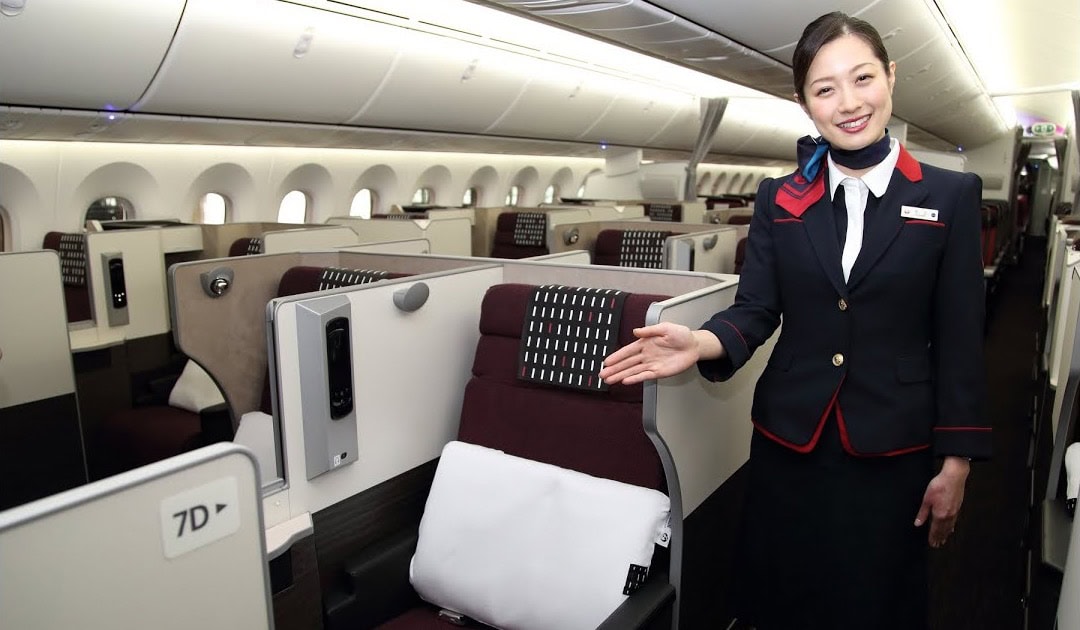
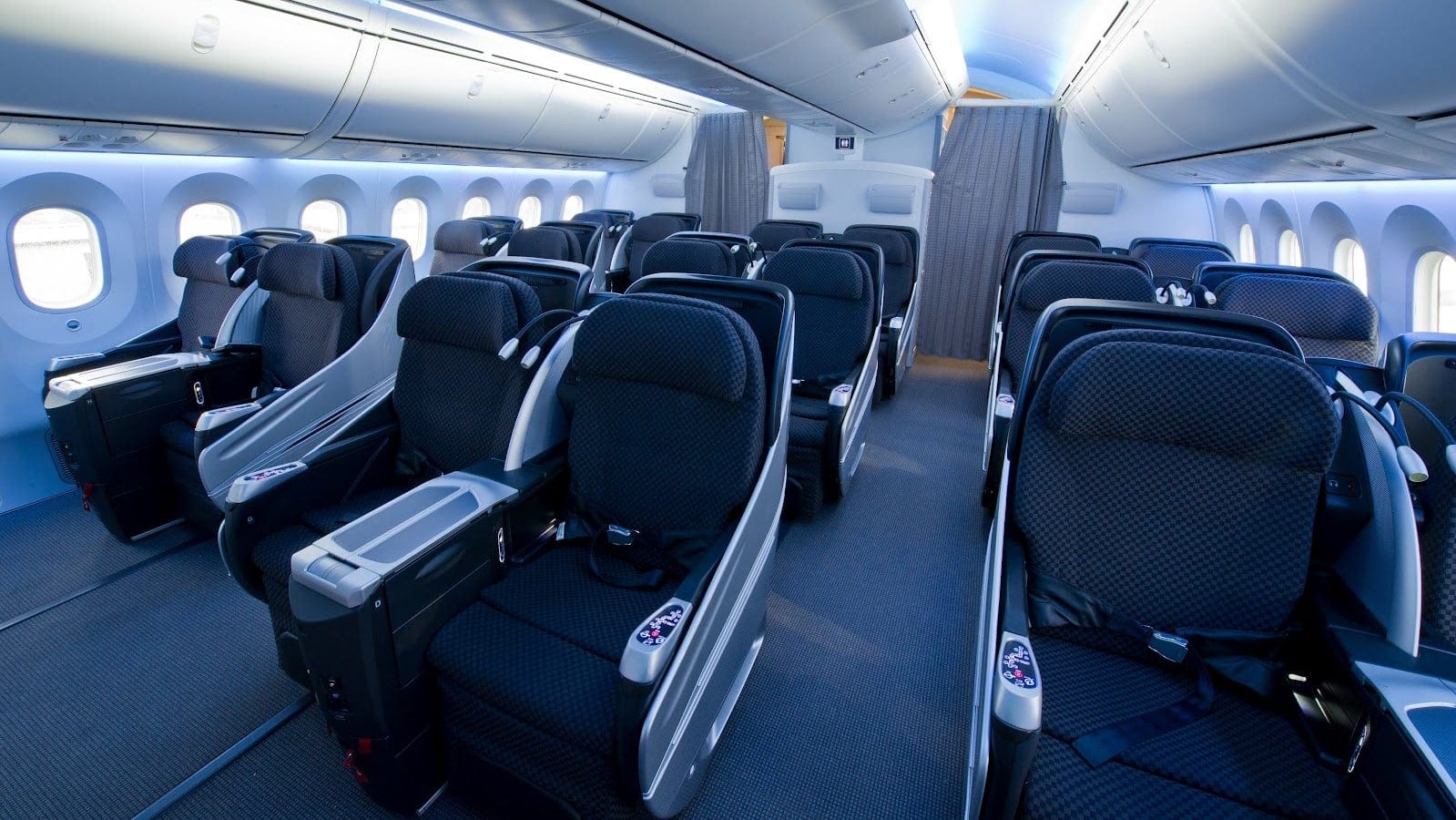
Across the Boeing fleet, including Boeing 777-300ER, Boeing 787-8, and Boeing 787-9, Japan Airlines operates multiple class seats and layouts that vary significantly by route and aircraft. Configurations range from 1-2-1 to 2-2-2 and 2-3-2, which directly affect privacy and personal space. Although the denser 2-2-2 and 2-3-2 layouts may initially appear less convenient, many of these aircraft use the Apex Suite platform, which still gives every passenger direct aisle access through individual passageways positioned beside each seat, including the window seats.
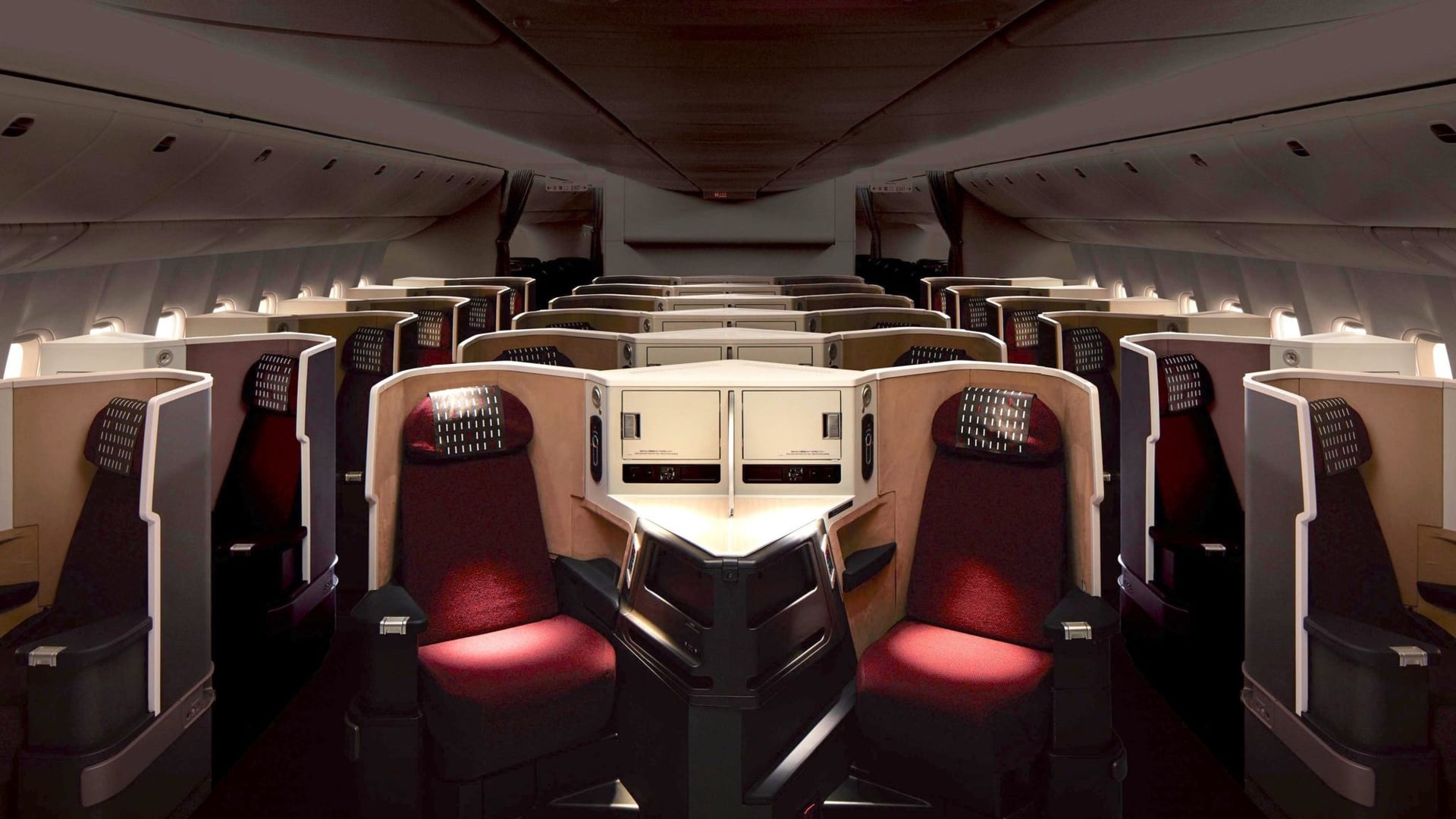
The JAL SKY SUITE product installed on these aircraft uses staggered and herringbone layouts with privacy dividers, Airweave bedding, and 23-inch entertainment monitors. Bulkhead rows also provide additional legroom, which improves comfort on longer international journeys. Adjustable center partitions allow pairs traveling together to interact more easily while maintaining separation when preferred.
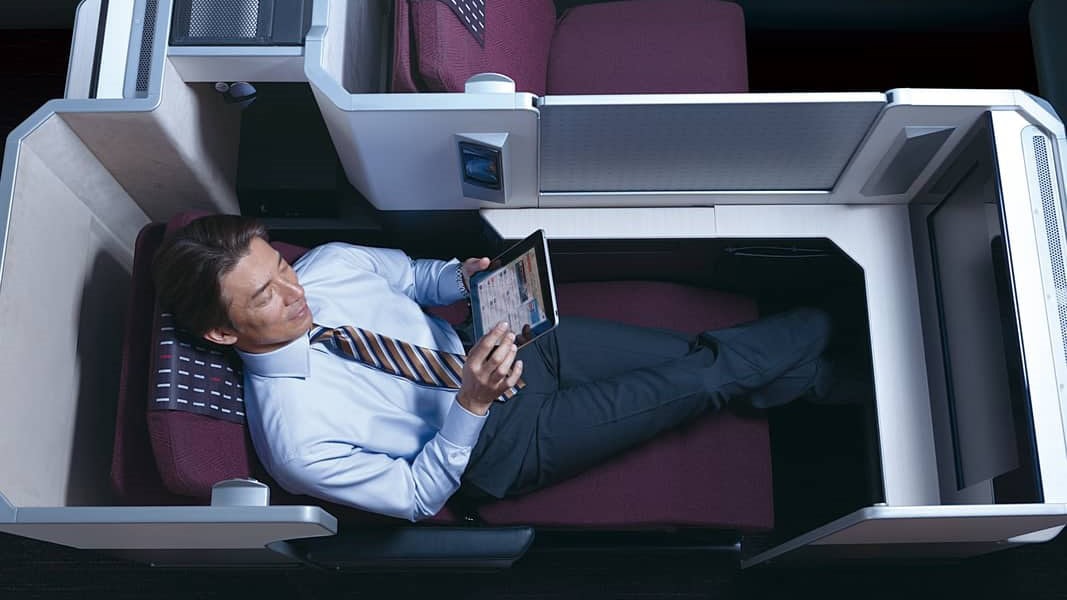
The JAL SKY SUITE III, operated on some Boeing 787-9 aircraft, adopts a reverse herringbone 1-2-1 layout. This layout makes it easier to move through the cabin and gives window-seat passengers more privacy. On overnight routes, a window seat with direct aisle access generally creates the quietest sleeping environment because it limits foot traffic and places passengers farther from the center section.
JAL SKY SUITE II and Older Regional Seats
On the Boeing 767-300ER, JAL operates the JAL SKY SUITE II, a staggered 1-2-1 business-class configuration with 15.4-inch monitors and direct aisle access across all seats. Older products such as the angled-flat JAL SHELL FLAT NEO and recliner-style JAL SKYRECLINER are in operation primarily on some Boeing 787-8 aircraft on shorter regional flights.
Although these products still provide more space than economy, they differ substantially from the newer fully flat long-haul products. On overnight international routes, fully flat business-class seats are significantly better suited to sleep and post-arrival productivity.
Aircraft Selection
Aircraft selection matters more than the airline branding alone on some routes because the JAL fleet includes multiple seat generations and configurations. Two flights marketed as JAL business class can deliver noticeably different experiences depending on the specific plane assigned to the route.
All business-class seats include power outlets, tray tables, and dedicated storage compartments, but privacy, bed design, monitor size, and overall cabin layout vary considerably across aircraft types. Reviewing seat maps before booking helps identify the most suitable configuration for a specific route, particularly on overnight flights and other long-haul international journeys.
Cuisine
Dining is one of the defining elements of the JAL business-class experience, particularly on long-haul international flights where meal timing and flexibility directly affect rest and overall comfort.
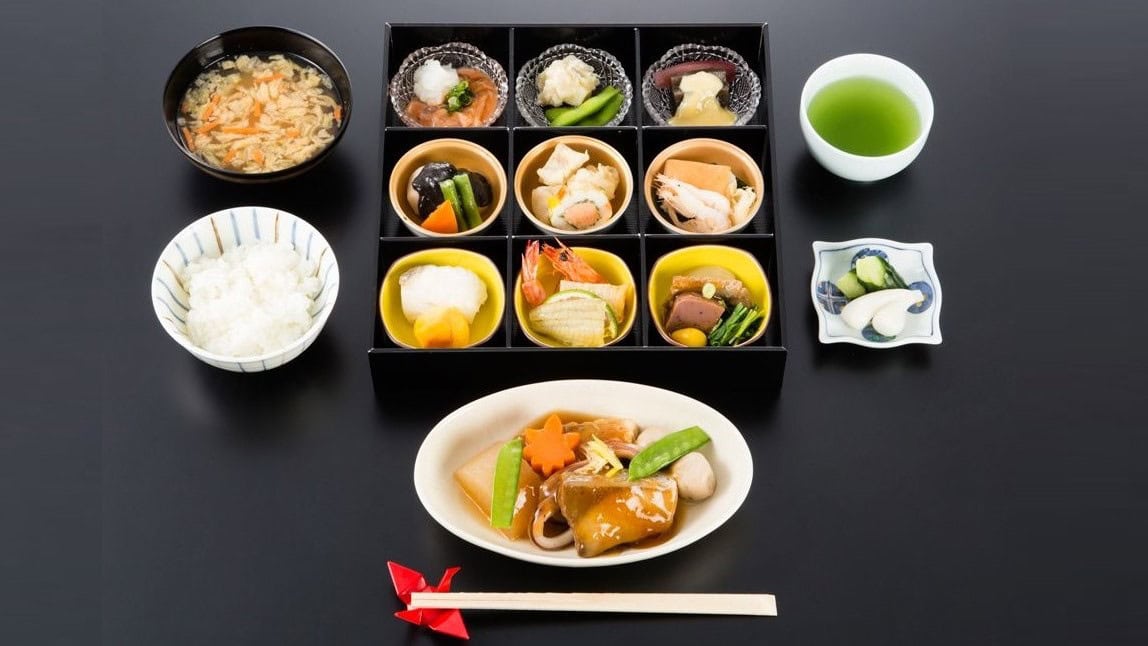
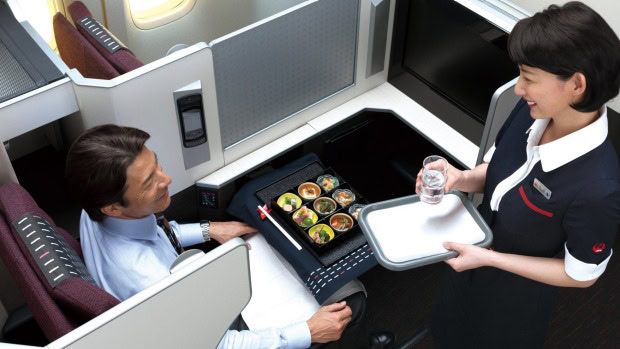
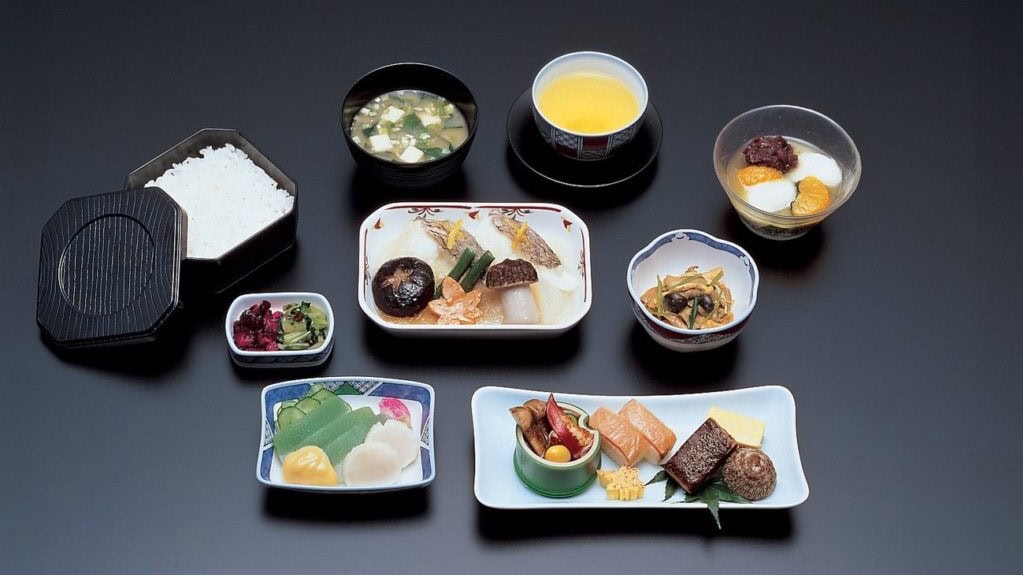
BEDD Dining Program
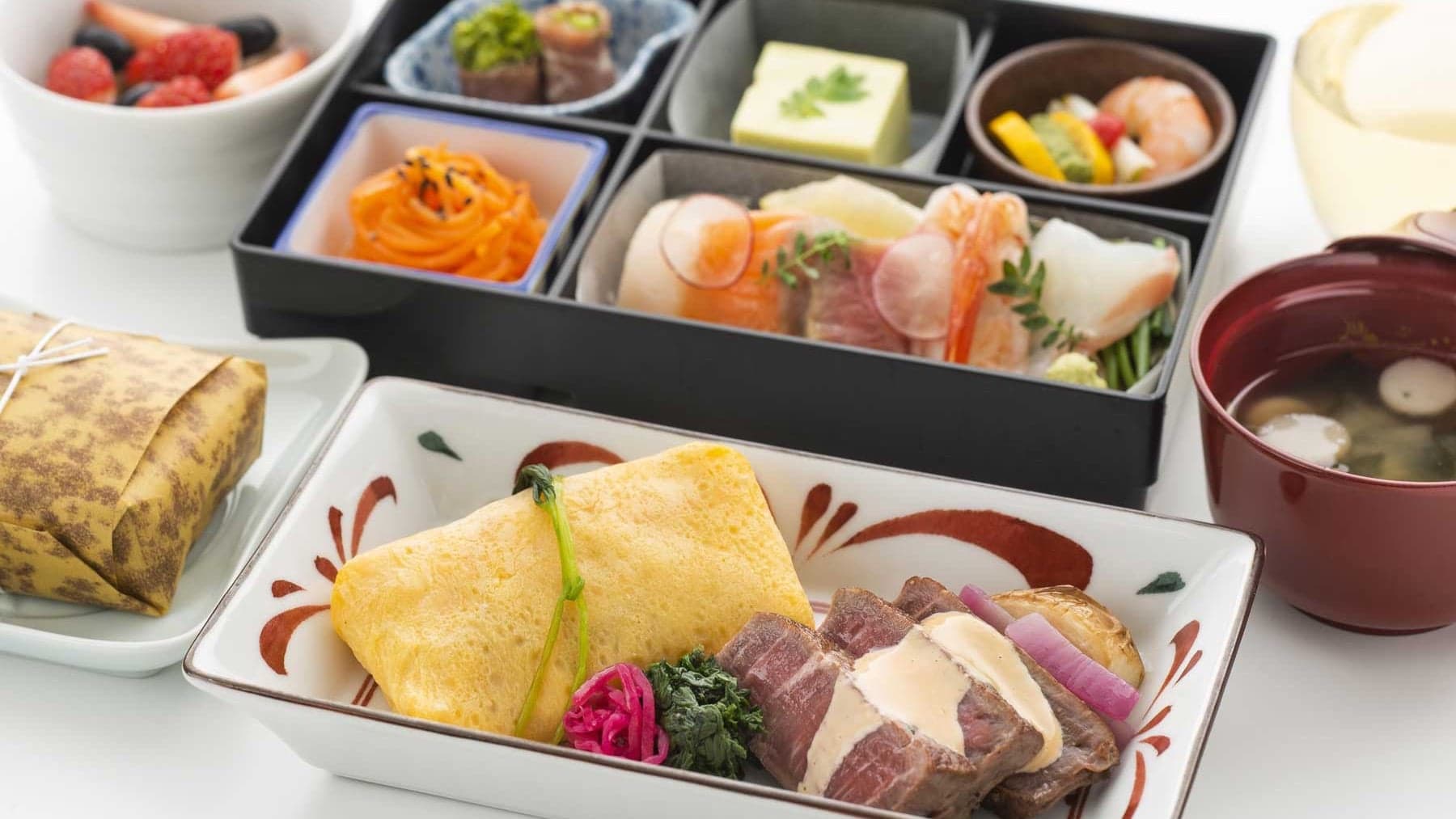
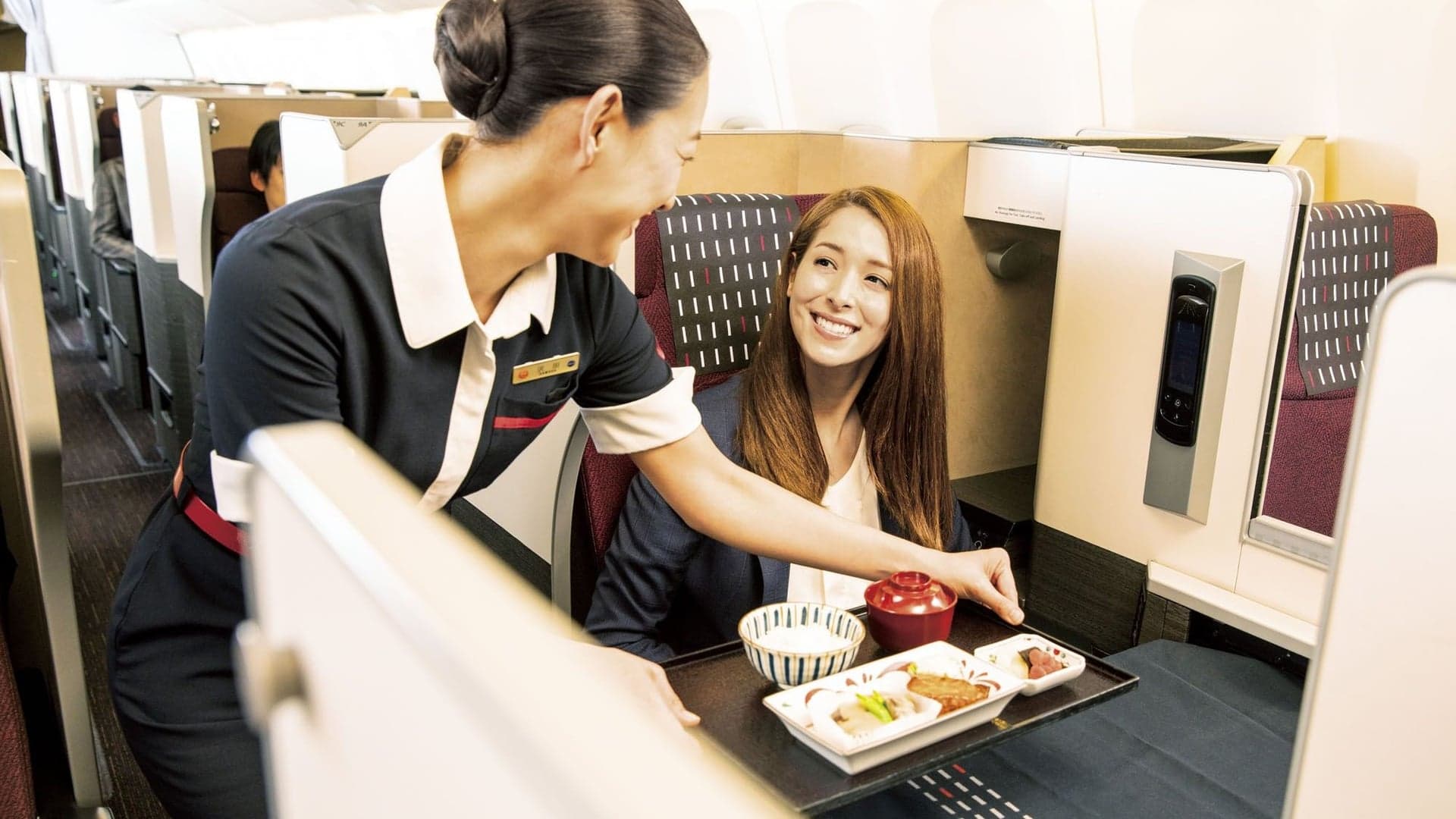
The airline’s BEDD (“Bed, Dining, Delicious”) dining program, under which JAL’s Business Class dining is presented, combines multi-course Japanese menu options with a rotating selection of international dishes. Menus typically include seasonal starters, seafood and meat courses, lighter Western dishes, and traditional components such as miso soup and steamed rice, which reinforce the carrier’s focus on structured Japanese service onboard.
Meal Timing and Dine-on-Demand Service
Meal timing varies by route and departure schedule. On early afternoon departures, passengers generally receive a more extensive opening meal service shortly after takeoff, while late-evening departures place greater emphasis on faster dining options that allow more uninterrupted sleep on a long flight. Although pre-departure beverages are not standard during boarding, the onboard dining sequence usually begins with a welcome drink and lighter snacks before the first full meal service.
With the introduction of the Airbus A350-1000, JAL expanded its vegan and vegetarian selections and introduced dine-on-demand service on specific long-haul routes, alongside lighter Express Meal options designed for passengers prioritizing rest over a multi-course service. This approach gives JAL business-class passengers more control over dining schedules during overnight itineraries.
A “no meal” option is also available for passengers who want to maximize rest and reduce unnecessary food waste during the journey through the airline’s Meal Skip program, which supports the TABLE for TWO charity initiative.
Chef Partnerships and Regional Menus
The onboard food program includes several long-running partnerships with notable chefs and culinary brands. The main meal service on flights departing Tokyo is created by Chef Mishina Jun of REN MISHINA, a Michelin-starred restaurant in Ginza, with menus built around seasonal Japanese ingredients. Japan Airlines also collaborates with chefs such as Fumiko Kono and Yuki Onishi on selected menus, while routes departing Europe occasionally feature destination-themed donburi bowls linked to cities including London, Helsinki, and Frankfurt.
The carrier has also maintained partnerships with Maison Kayser for bread selections and Jean-Paul Hévin for chocolate offerings for more than 20 years.
Snacks and Special Meals
Additional onboard snacks may include:
- Soranoiro ramen
- Signature JAL chicken curry
- Sandwiches
- Rice bowls
These items are typically served between scheduled meal periods on long-haul international flights. The signature curry also appears inside the JAL Sakura Lounge, which creates more continuity between the ground and in-flight dining experience.
Families traveling in business class can pre-select children’s meals and special dietary requests before departure.
Beverages

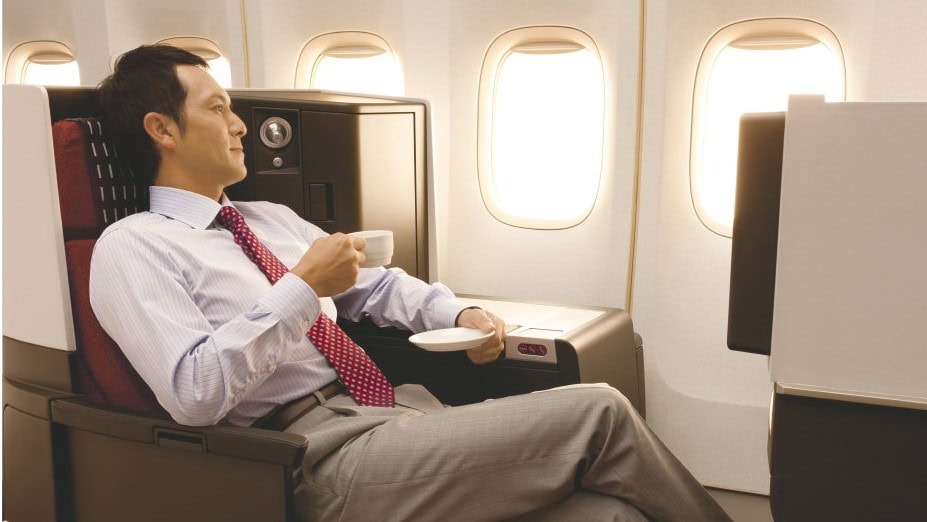
Champagne, Wine, and Japanese Spirits
The beverage program in JAL business class focuses on Japanese products alongside a rotating selection of international wines and Champagne. The onboard wine list is curated by JAL consulting sommelier Motohiro Okoshi and includes international red and white wines, premium sake, shochu, spirits, and Japanese and international beers.
Champagne labels change periodically and include Champagne Duval-Leroy Brut Réserve NV, Champagne Drappier Carte d'Or NV, and Charles Heidsieck Brut Réserve on some international flights. The sake program also changes seasonally and often includes regional Japanese labels that are difficult to find outside Japan, particularly on long-haul routes departing Tokyo.
Coffee, Tea, and Non-Alcoholic Options
Non-alcoholic drinks include juices, soft drinks, specialty teas, and Japanese beverages such as Ayataka green tea. Recent menu updates have also expanded non-alcoholic options, including matcha-based beverages, in business class.
Coffee and tea are an important part of the onboard meal experience, particularly on overnight routes and early-afternoon departures, where beverage timing aligns closely with dining and rest schedules. The JAL CAFÉ LINES program, developed by world-class Coffee Hunter José Kawashima, uses coffee blends designed specifically for in-flight consumption, accounting for the way cabin pressure can affect taste perception.
The broader beverage selection supports the carrier’s emphasis on structured Japanese service, especially when paired with the seasonal Japanese menu offered in business class.
Service
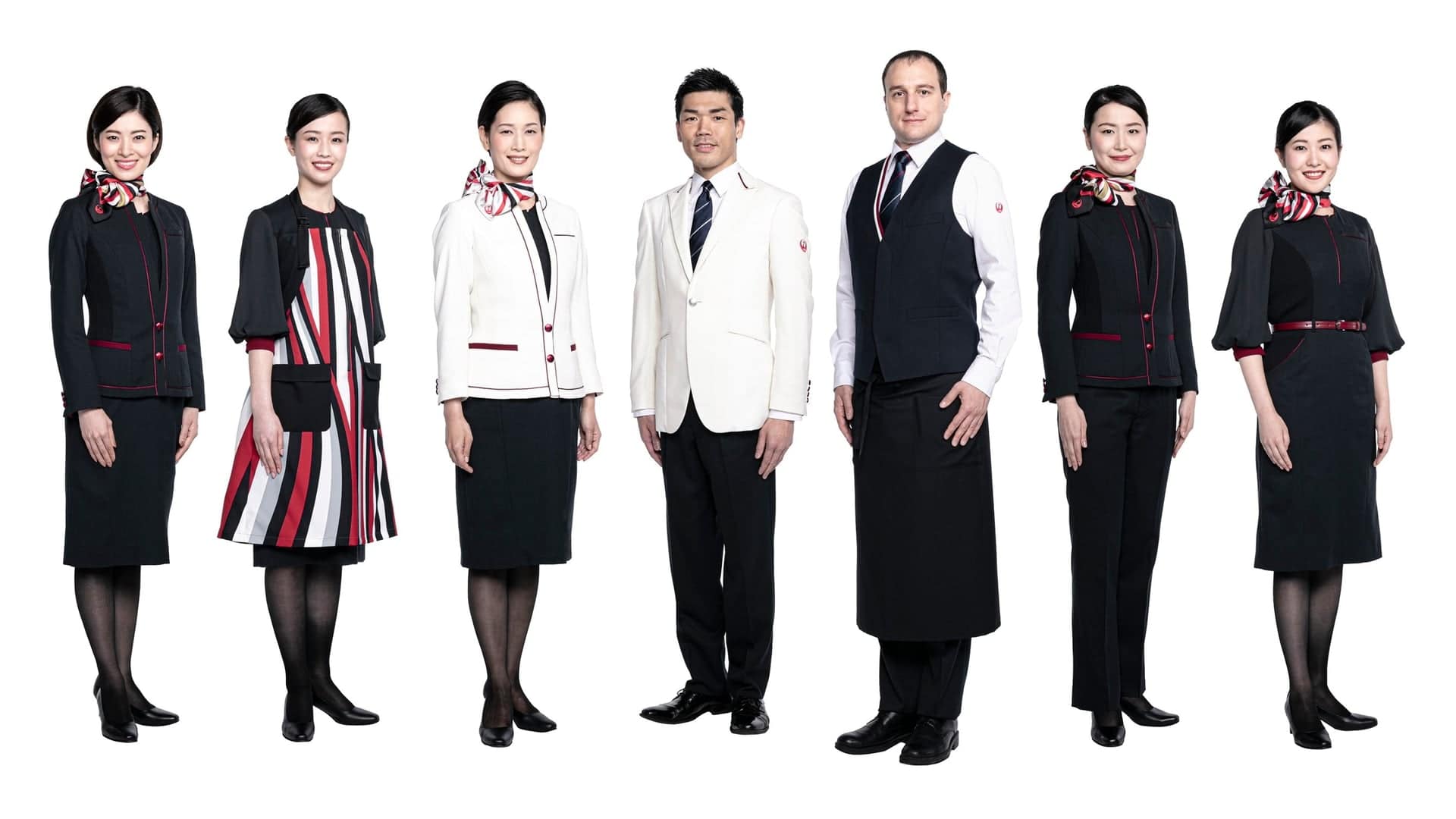
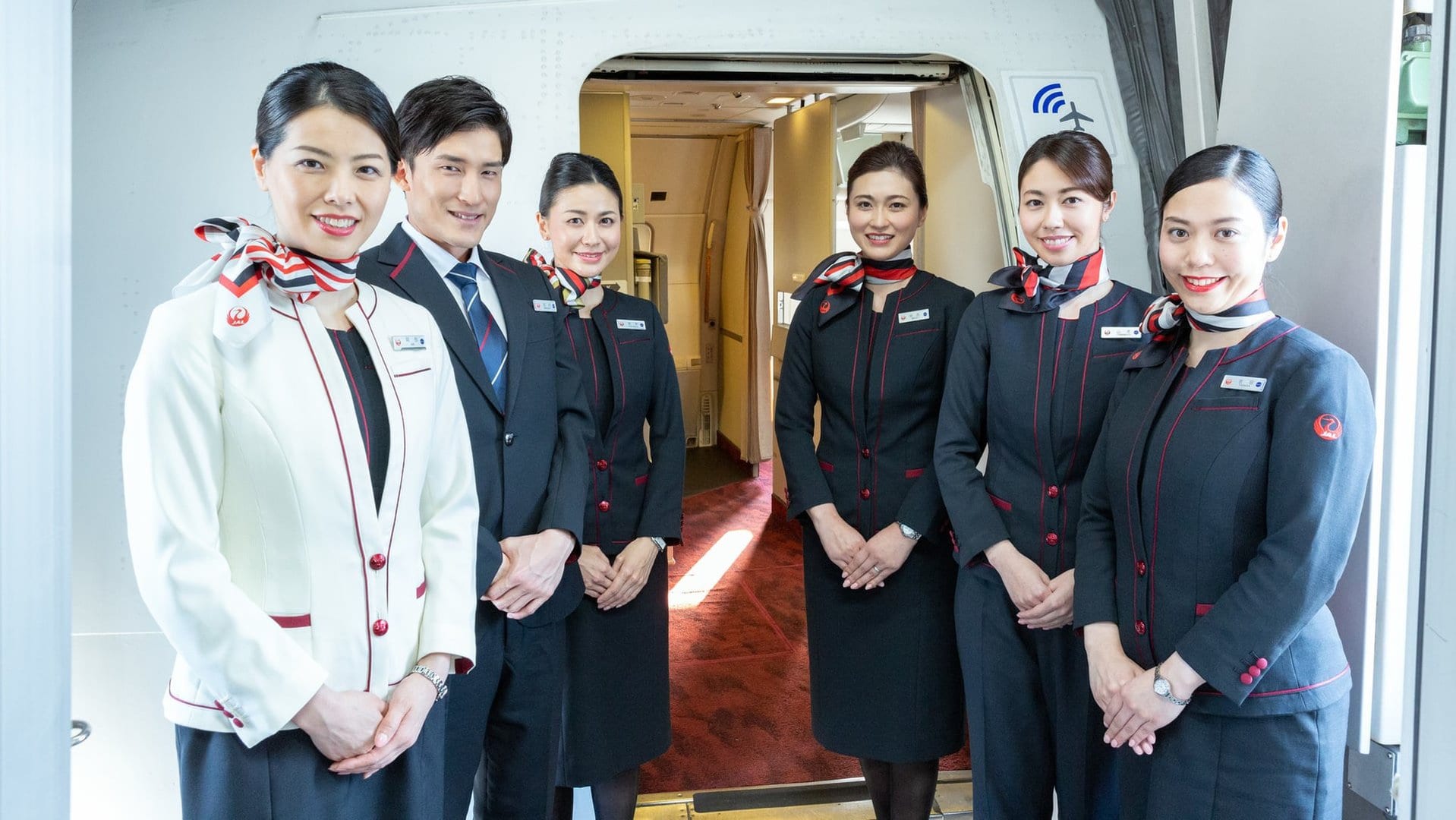
Japan Airlines approaches onboard service with a stronger emphasis on restraint, consistency, and timing than many international competitors. The carrier’s interpretation of omotenashi, the Japanese approach to hospitality, shapes how cabin crews interact with passengers throughout the flight. Instead of conducting constant walkthroughs inside the cabin, crew members generally minimize interruptions during rest periods while remaining responsive when assistance is requested.
The flight attendants maintain a formal, attentive style of service during meal service, beverage requests, and overnight segments. Passengers can use the call button to request additional drinks, bedding adjustments, or other onboard support, and crew response times are generally prompt throughout the flight. This approach works particularly well on overnight international journeys, where uninterrupted sleep often matters more than highly visible crew interaction.
All JAL international cabin crew are proficient in English and can handle all service requests and safety procedures with ease. However, because the service style is quite formal, very complex or idiomatic English conversations might lead to "minor misunderstandings”. In such situations, senior staff often step in to provide additional clarification.


Entertainment
Japan Airlines uses its MAGIC in-flight entertainment system across the long-haul business-class fleet, with content in multiple languages. Selections include Hollywood movies, Japanese cinema, television programs, documentaries, music, and interactive games such as mahjong and word puzzles. Passengers receive noise-canceling headphones, and the system also includes moving map displays and external aircraft camera views on some aircraft.
Complimentary Wi-Fi is now available for most international business-class passengers on equipped long-haul JAL aircraft, supporting messaging, browsing, and basic productivity during longer flights.
On the Airbus A350-1000, the entertainment setup differs significantly from older aircraft in the fleet. The newest JAL business-class suites include 24-inch 4K displays, Bluetooth audio connectivity, and integrated headrest speakers that allow passengers to listen without wired headphones.
Older Boeing 777 and 787 aircraft generally use smaller monitors depending on the seat generation and configuration. Combined with the enclosed suite layout and sliding doors, the A350-1000 setup creates a quieter and more private viewing environment on long-haul international flights.

Amenities
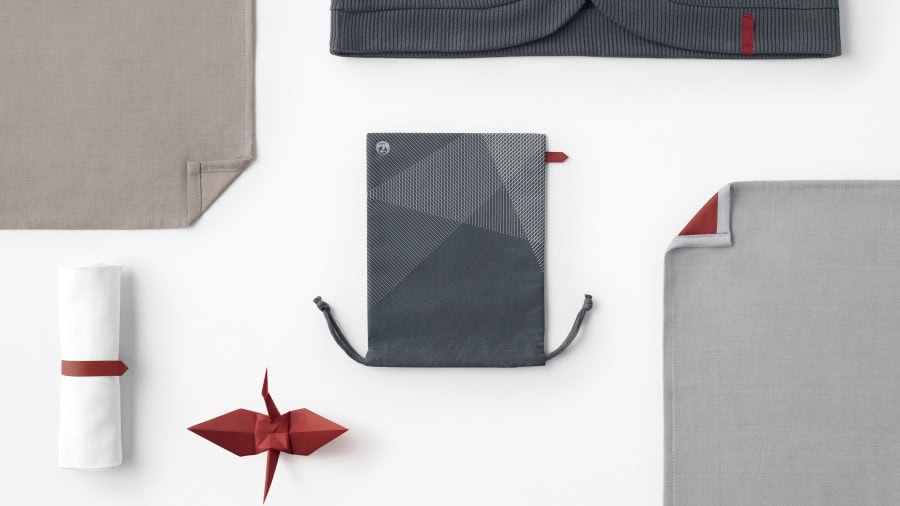
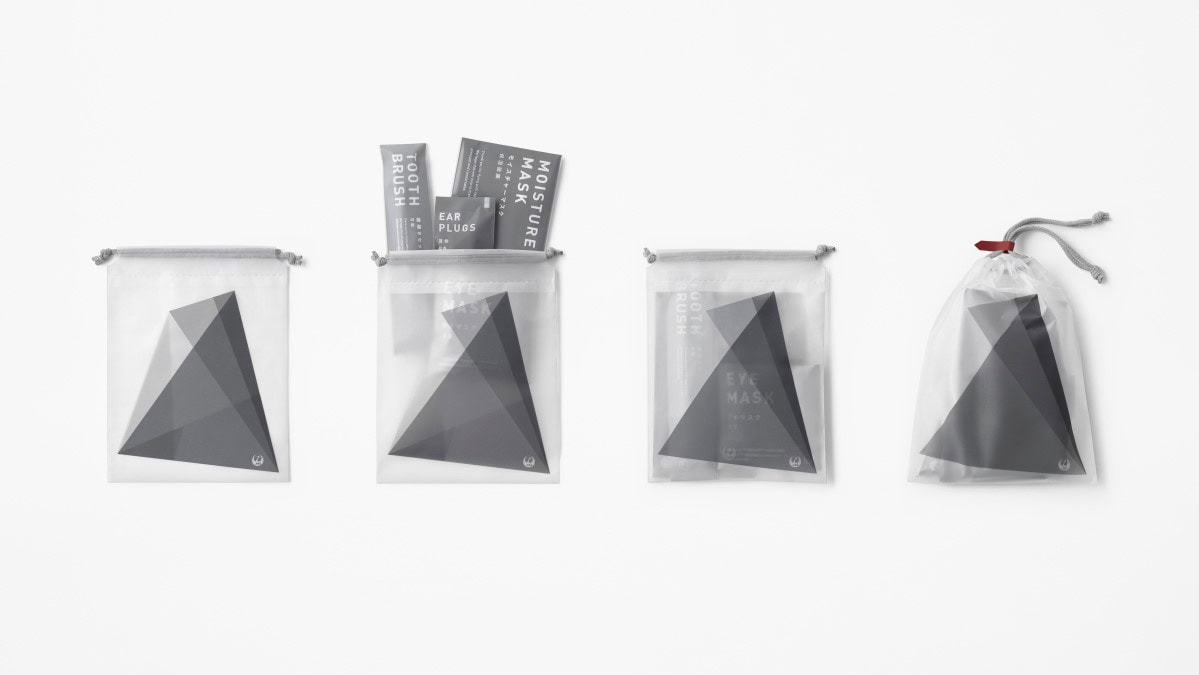
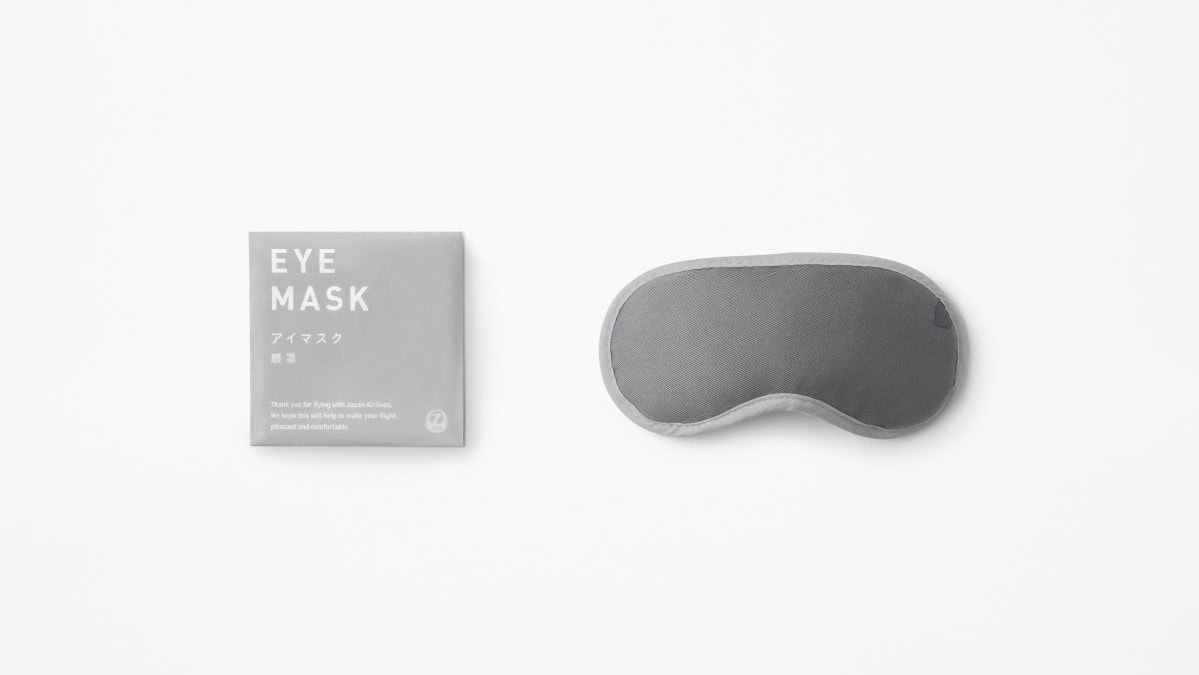
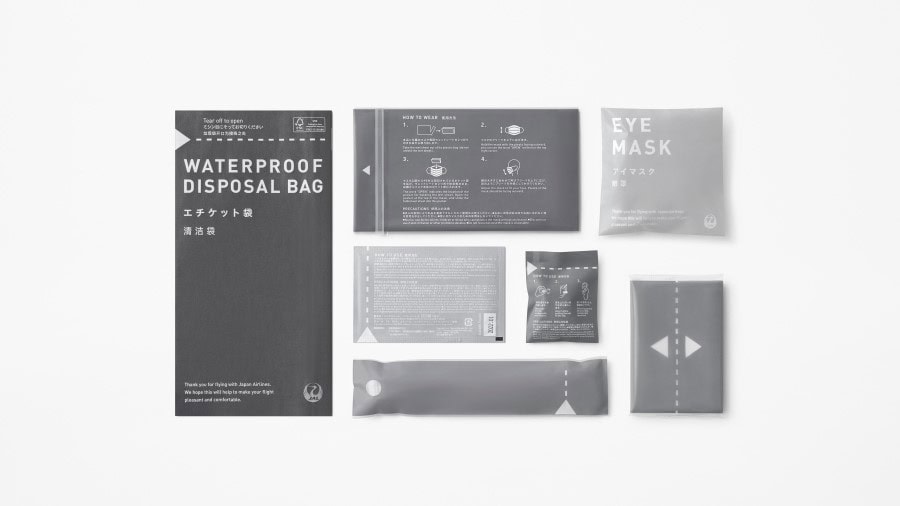
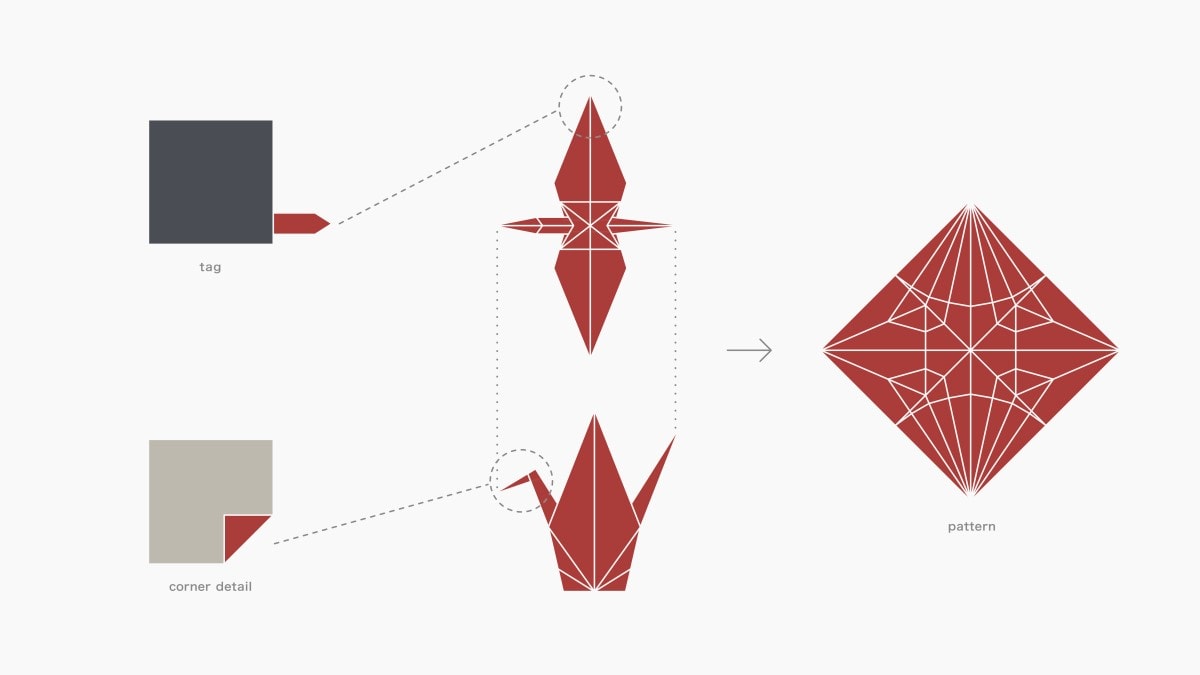
The JAL business-class amenity program reflects the carrier’s attention to presentation, branding consistency, and Japanese design elements. Since 2021, Japan Airlines has partnered with design studio Nendo to develop onboard textiles and amenity kit collections inspired by origami patterns and the airline’s tsurumaru crane emblem. Cabin items such as blankets, napkins, and table linens incorporate these design motifs, while red accents recur across pillows, sleepwear, and onboard packaging.
For families traveling with infants, JAL also provides bassinets on eligible long-haul flights. These facilities become more important on overnight routes where sleep schedules and movement within the cabin affect both parents and neighboring passengers during the journey.



Amenity Kits and Wellness Items
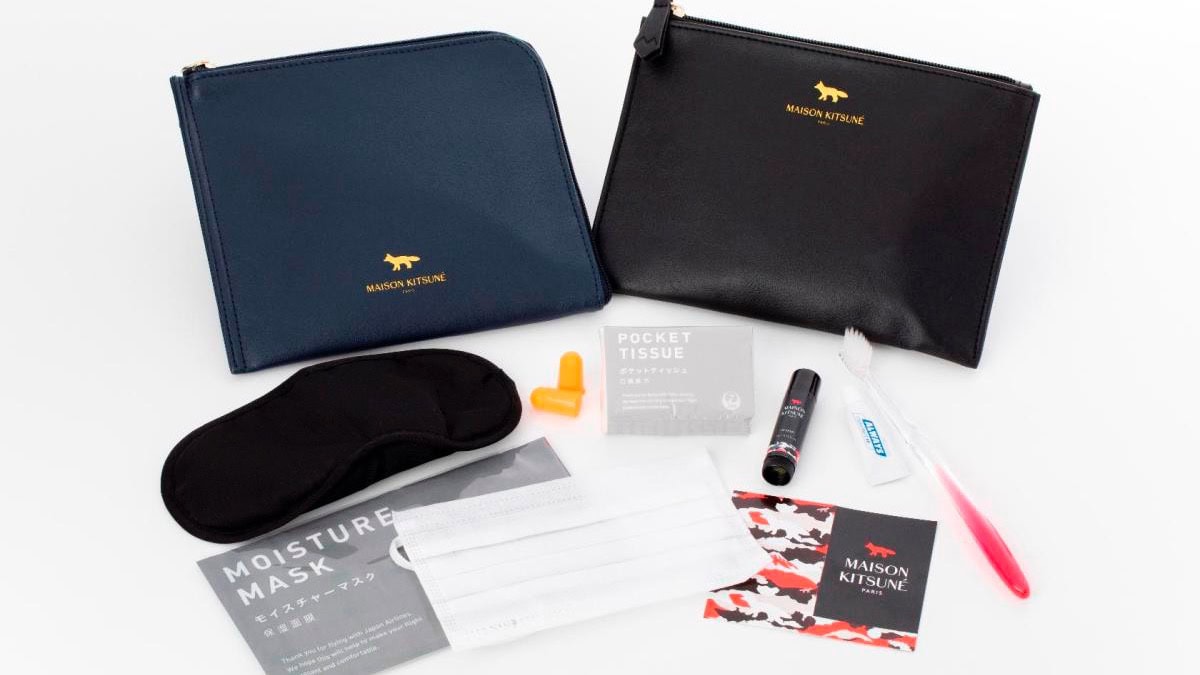
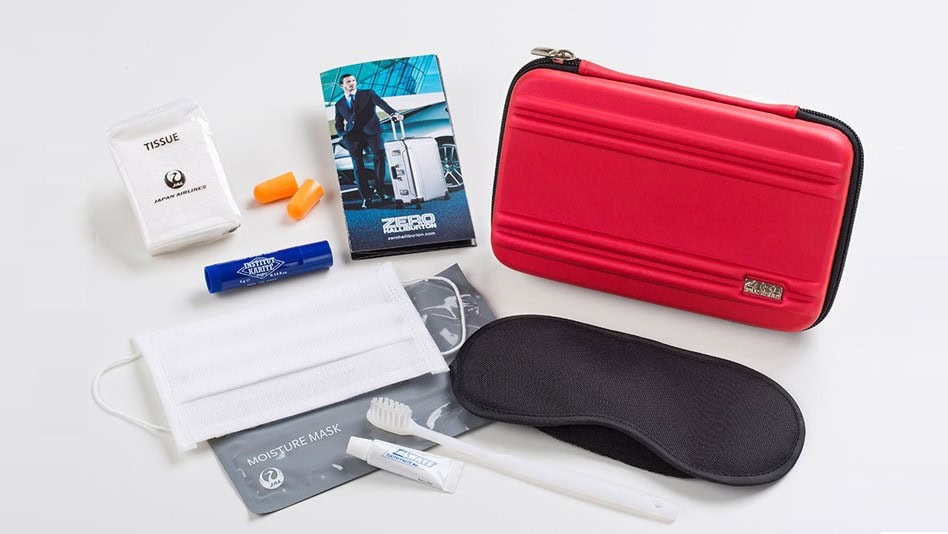
Each amenity kit includes skincare products, toiletries, slippers, a sleep mask, and additional travel items depending on the route and aircraft. Previous collaborations involved Zero Halliburton and textile artist Tatsumura, while newer collections introduced in 2025 feature artwork from Heralbony.
On specific international flights, passengers also receive wellness-focused items such as aromatherapy sprays and moisture masks. The kits now use sustainable paper wrapping, and passengers traveling on the Airbus A350-1000 receive MISOKA toothbrushes designed for water-only use.
Sleepwear and Onboard Comfort
Additional onboard comfort items vary by aircraft and route. Passengers on Airbus A350-1000 flights can borrow lightweight cotton loungewear made with UCHINO Airy Touch fabric, which improves comfort during overnight rest periods and longer international journeys. Cabin crew provides cardigans on request, although some passengers may still find cabin temperatures warmer than expected during sleep periods on long-haul routes.
The airline includes slippers across much of its business-class network, especially on long-haul international flights. Passengers often change into them after takeoff to stay more comfortable during long seated periods or overnight rest.
Short and Medium-Haul Flights
On shorter regional international flights, JAL business class differs noticeably from the carrier’s flagship long-haul product. Many routes still use recliner-style business-class seats instead of fully lie-flat beds, although the onboard service structure is broadly consistent across the network. Depending on the route length and departure time, passengers generally receive a meal service with both Japanese and Western dining options, along with a full beverage selection.
Aircraft operating regional routes may also use denser cabin layouts than the airline’s newest long-haul aircraft, including 2-2-2 and 2-3-2 configurations on Boeing fleets. While these products provide less privacy and personal space than the latest Airbus A350-1000 suites, shorter flights reduce the impact of these limitations compared with overnight or ultra-long-haul flights.
On domestic routes within Japan, JAL primarily markets its premium seats under the Class J brand instead of a dedicated international-style business-class product. However, on some domestic flights operated by internationally configured aircraft, passengers may still encounter long-haul business-class seats typically used on international routes.
Sustainability
Japan Airlines has expanded its sustainability initiatives across several operational areas, including fuel efficiency, waste reduction, environmental education, and community programs. The broader JAL strategy also includes efforts to reduce noise impact near major airports and support biodiversity-related projects within Japan.
Since 1991, JAL has partnered with UNICEF through the Change For Good foreign currency donation program, which allows passengers to contribute unused international currency during eligible flights. The airline also participates in Japan’s TABLE for TWO initiative, donating 20 yen from staff cafeteria purchases to help fund school meals for children in developing countries.
In addition, Japan Airlines has supported breast cancer awareness campaigns since 2004 through themed Pink Ribbon flights and related onboard initiatives during October. The company also operates the JAL Foundation, established in 1990 to promote international exchange and cultural education programs. One of its best-known initiatives, the World Children’s Haiku Contest, invites students from across the world to submit poetry and artwork focused on cultural expression and creativity.


Comparison with Other Classes
Compared with other travel categories, JAL business class places greater emphasis on sleep quality, privacy, and onboard consistency, particularly on long-haul international flights.
Business Class vs First Class
Across JAL's long-haul fleet, the difference becomes most noticeable in the seat design and overall cabin layout. On aircraft equipped with the Sky Suite products, business-class seats convert into fully lie-flat beds and provide direct aisle access, which significantly improves movement, privacy, and rest on overnight routes.
Compared with first class, the gap narrows on some aircraft because modern JAL business products already include enclosed or highly private seating arrangements. First class still provides more personal space, additional onboard exclusivity, and a higher crew-to-passenger ratio, but many of the core comfort advantages, particularly bed quality and privacy, are available in business class at a lower overall cost.
Business Class vs Economy
The difference between business class and economy is substantially larger. Domestic and international economy products use denser seat layouts with limited recline, fewer onboard amenities, and less personal space, which affects comfort more noticeably on longer international journeys.
In contrast, JAL business-class passengers receive more structured onboard service, expanded dining options, and greater flexibility during the flight, especially on routes where rest and productivity after arrival are essential for travelers.
Service and Overall Experience
The onboard experience also reflects a more detailed approach to Japanese service, particularly during dining and overnight operations, where crews prioritize timing, efficiency, and minimizing unnecessary interruptions. This quieter and more structured approach differs noticeably from airlines that emphasize more visible or highly interactive onboard service styles.
For many long-haul routes, JAL business class creates a more balanced middle ground between the dense seating and operational limitations of economy and the substantially higher pricing associated with first class.
Core Considerations
- Attentive Japanese-style service at the airport and onboard, especially during boarding, meal service, and overnight flights, when clear timing and small details affect comfort
- A stronger dining experience than many standard business-class cabins, with Japanese and international meals, long-running culinary partnerships, and a broad beverage list that gives the product a clearer Japan Airlines identity
- A more private long-haul seat on the Airbus A350-1000, with direct aisle access, a fully lie-flat bed, and updated entertainment technology that make the cabin better suited to long international flights
Quick Facts
Attention to timing, privacy, and onboard organization defines this long-haul business-class experience more than visual luxury or theatrics. The newest Airbus A350-1000 suites include sliding doors, 24-inch 4K screens, Bluetooth audio, and direct aisle access. Older Boeing 787 and 767 Sky Suite aircraft still offer strong lie-flat products, although shorter routes may feature denser seating. Dining focuses on Japanese cuisine with dine-on-demand service on some routes and stronger meal flexibility than many competitors on overnight flights. Sakura Lounges maintain consistent food, shower, and workspace standards across major hubs. This product is most worthwhile on long-haul routes operated by the Airbus A350-1000 or newer SKY SUITE aircraft, where the seat and sleep experience justify choosing it over many competing airlines.
Suite Type: Enclosed suites on Airbus A350-1000
Suite Variations: JAL SKY SUITE, JAL SKY SUITE II, JAL SKY SUITE III
Lounge Access: Sakura Lounge network
Meal Style: Japanese dine-on-demand service
Reviewed: May 2026