

Korean Air is South Korea’s flagship carrier and one of the largest international airlines in Asia, operating a broad global network of flights from Seoul Incheon International Airport. The airline serves major destinations across North America, Europe, Oceania, and Asia, with a strong focus on long-haul international routes.
Prestige Class is the airline’s long-haul business-class product, available across the majority of Korean Air’s wide-body fleet. The experience in Prestige Class differs depending on the aircraft and route, especially in terms of seating, privacy, and cabin layout.
As a founding member of the SkyTeam alliance, Korean Air also offers its passengers access to an extensive partner network and loyalty benefits through the SKYPASS program.
In this review, we will examine Korean Air's business class across its network, including the cabin, onboard dining, lounges, and amenities.
Airport Experience
Seoul’s Incheon International Airport (ICN), located roughly 30 miles (48 km) west of the city, serves as Korean Air’s main hub and one of the airline’s most important operational centers. The airport consistently ranks among the leading international hubs for efficiency, layover experience, and premium facilities, which becomes especially relevant on long-haul flights with tight schedules or overnight layovers.
Incheon International Airport features a wide range of passenger facilities, including transit hotels, relaxation areas, cultural spaces, shopping, dining, and entertainment zones spread across its two terminals. For passengers connecting through Seoul, this layout helps reduce the fatigue that often comes with extended waiting periods on intercontinental routes.
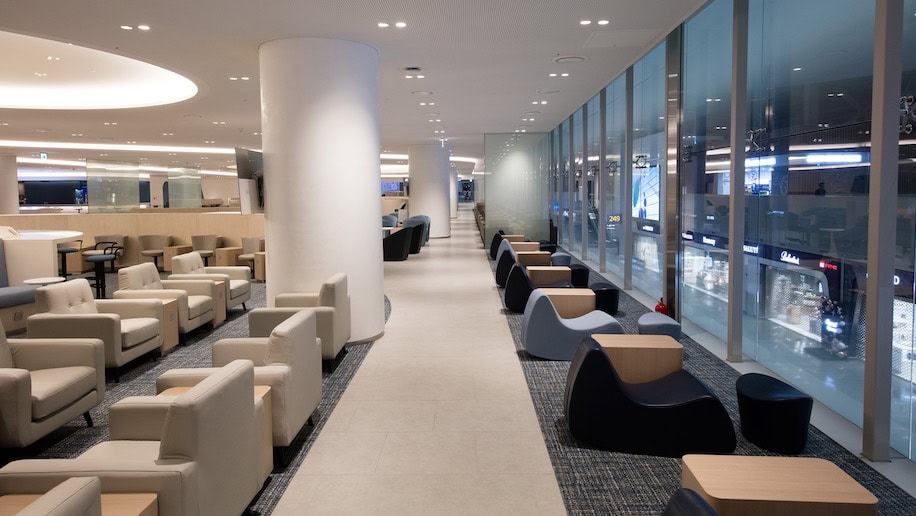
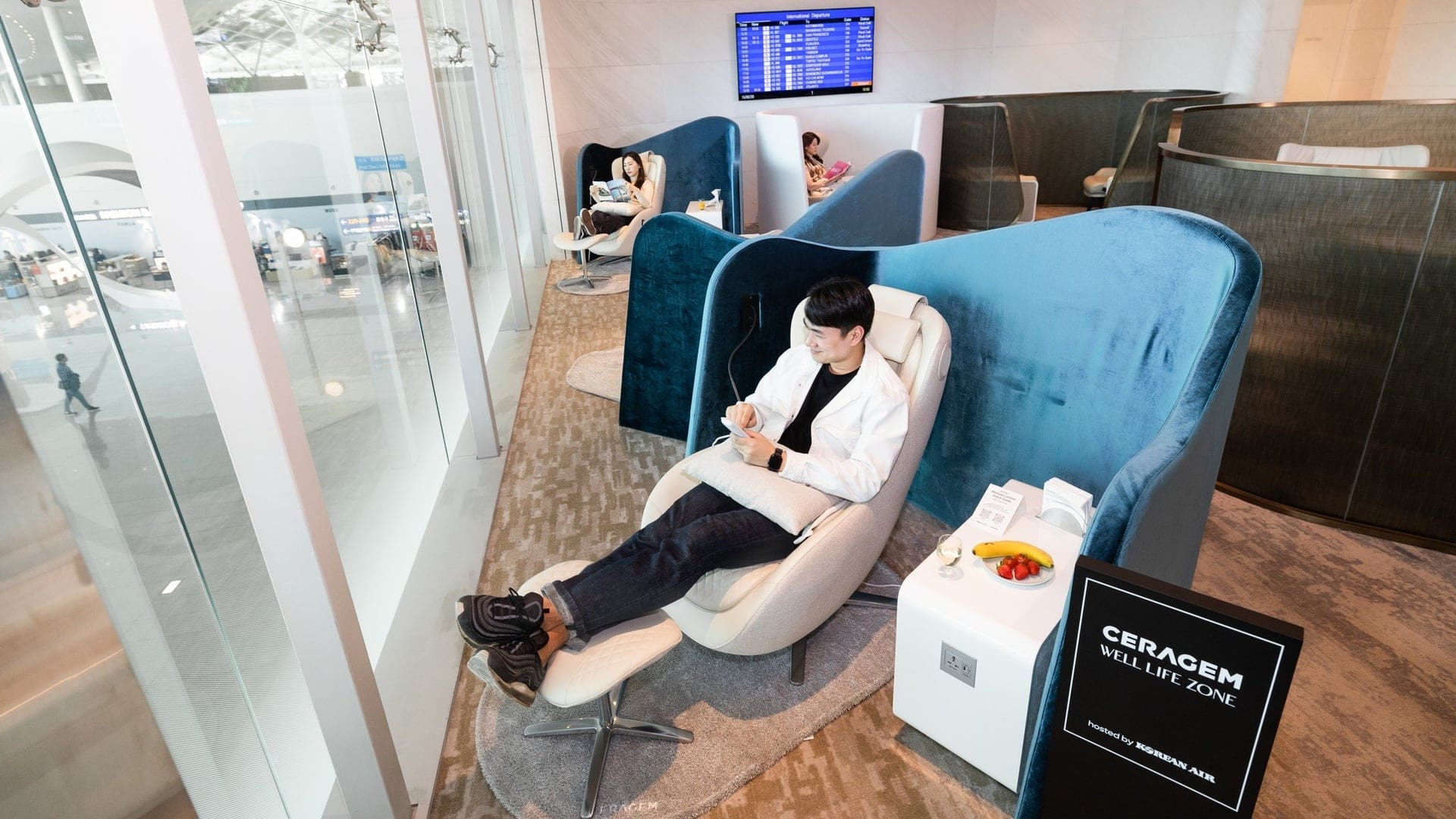
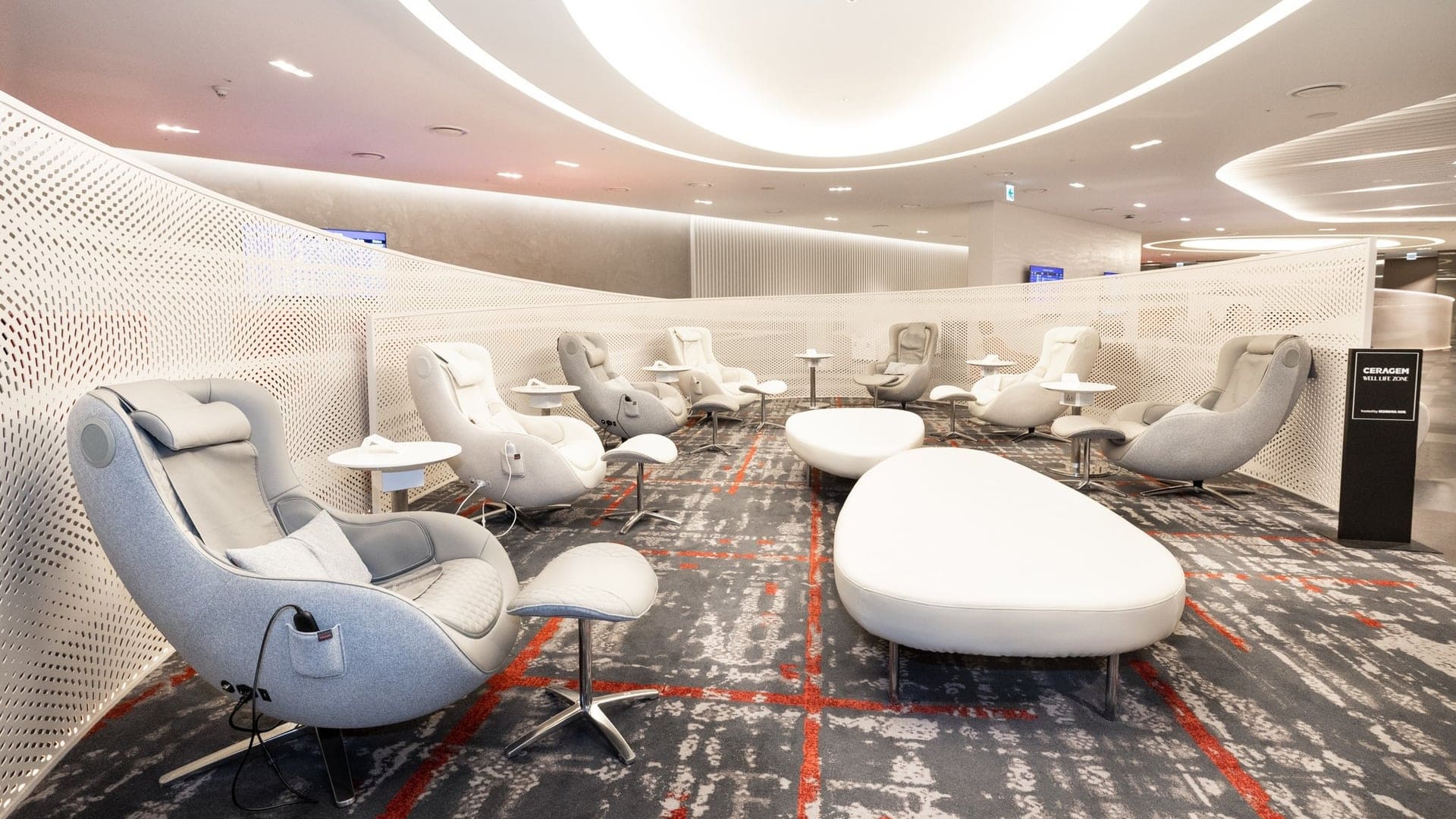
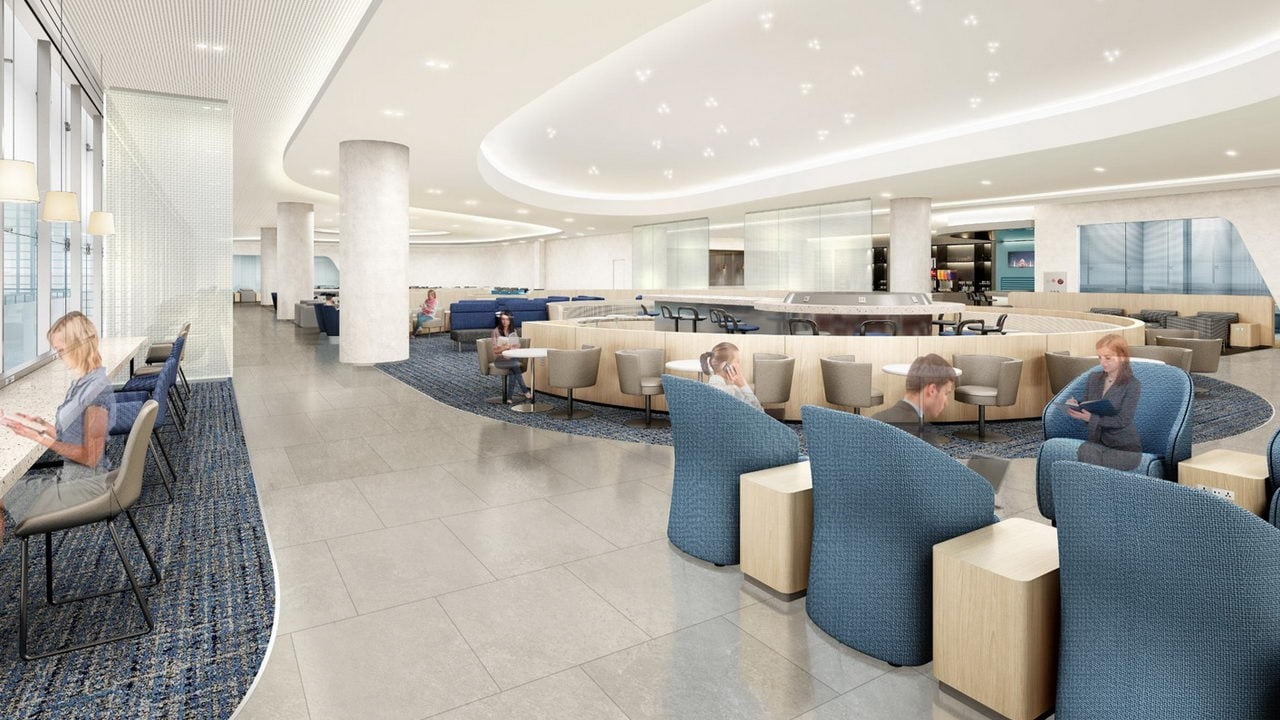
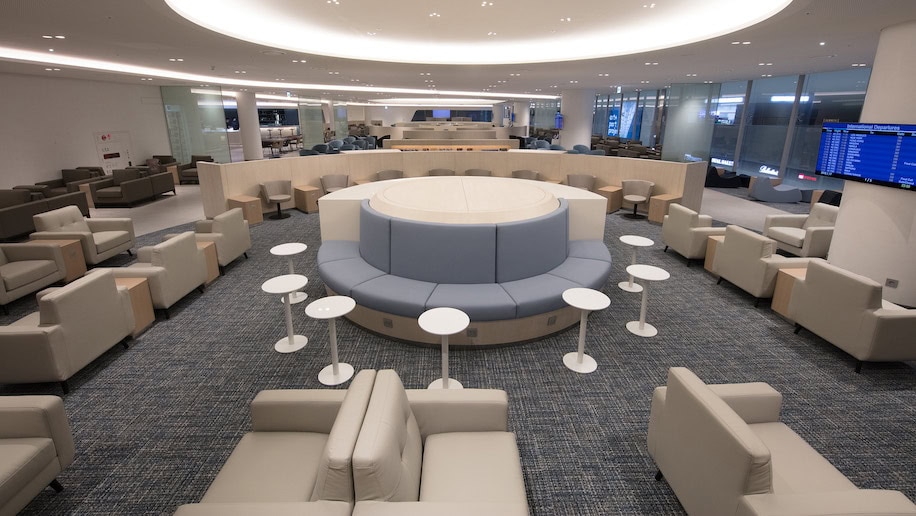
For travelers connecting through Terminal 2, Korean Air operates two Prestige Class lounges in the East and West wings. These lounges offer:
- Runway-view seating areas
- Relaxation zones with massage chairs
- Dining areas with Korean and Western food
- Bars serving wine, spirits, beer, and soft drinks
- Shower suites
- Complimentary Wi-Fi
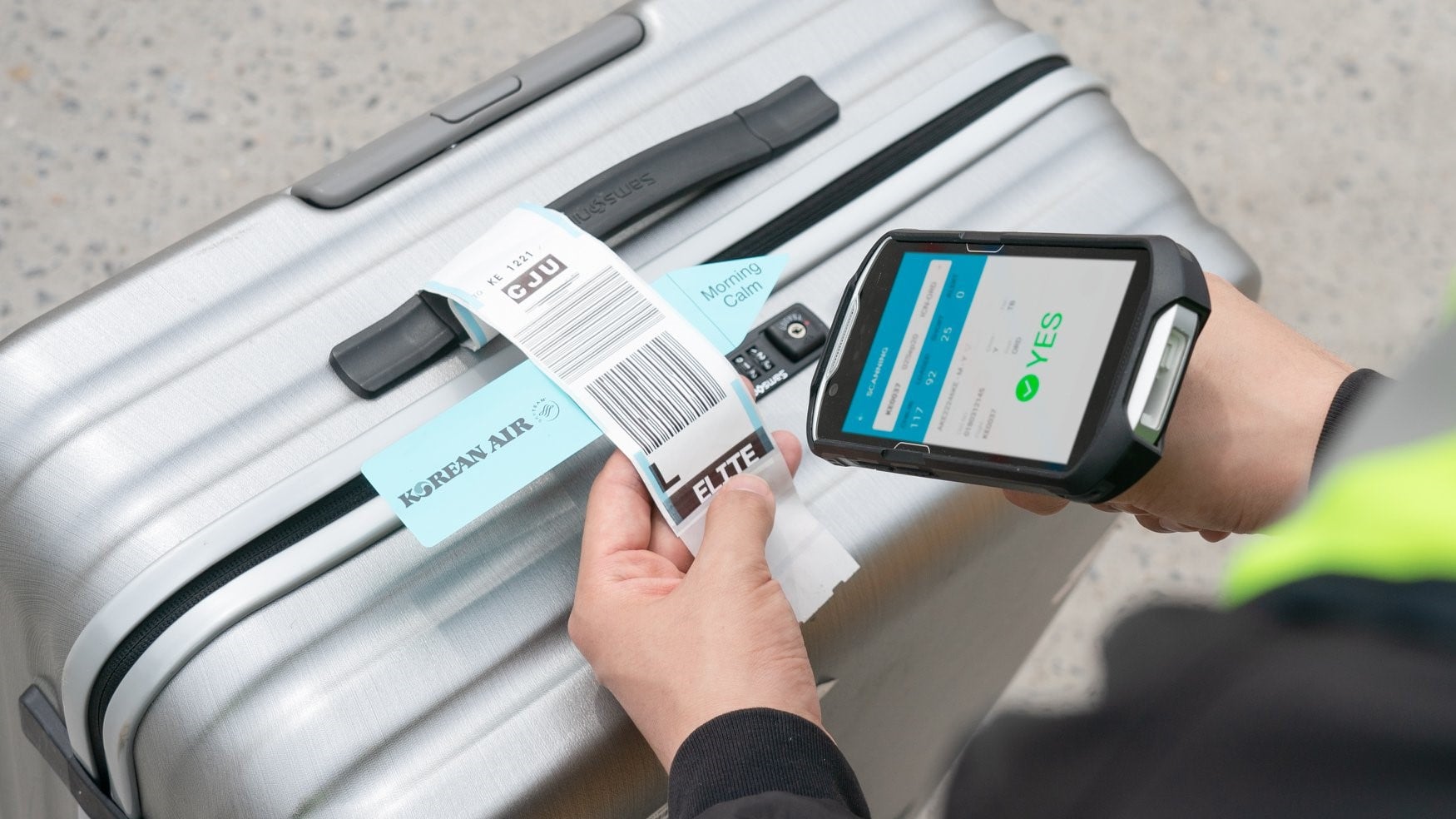
Prestige Class passengers also receive SkyPriority benefits, including dedicated check-in counters, expedited security, priority boarding, and faster baggage handling. On busy international routes, these services reduce airport processing time and make layovers less stressful.
Booking and Check-In Process
The Korean Air website allows passengers to search for flights, compare schedules, and review aircraft layouts before booking a flight. This becomes important on routes where cabin configurations differ between aircraft types. Seat maps make it easier to compare business-class seats, including options with more privacy, additional separation from the aisle, or a preferred window seat location.
The airline’s booking platform also includes tools for meal pre-selection, special service requests, baggage information, and reservation management. Passengers can also review travel details and modify bookings before the flight.
Online check-in on Korean Air’s website opens between 24 and 48 hours before departure, depending on the route, and allows passengers to download their boarding passes, confirm seat assignments, and review travel information before arriving at the airport. The platform supports multiple languages, including English and Korean.
Travelers can also book Korean Air business-class flights with online travel agencies. If you choose to book with BusinessClass.com, for example, our expert travel agents can do everything for you, from searching and comparing flights to sending special meal requests on your behalf.
Cabin and Seats
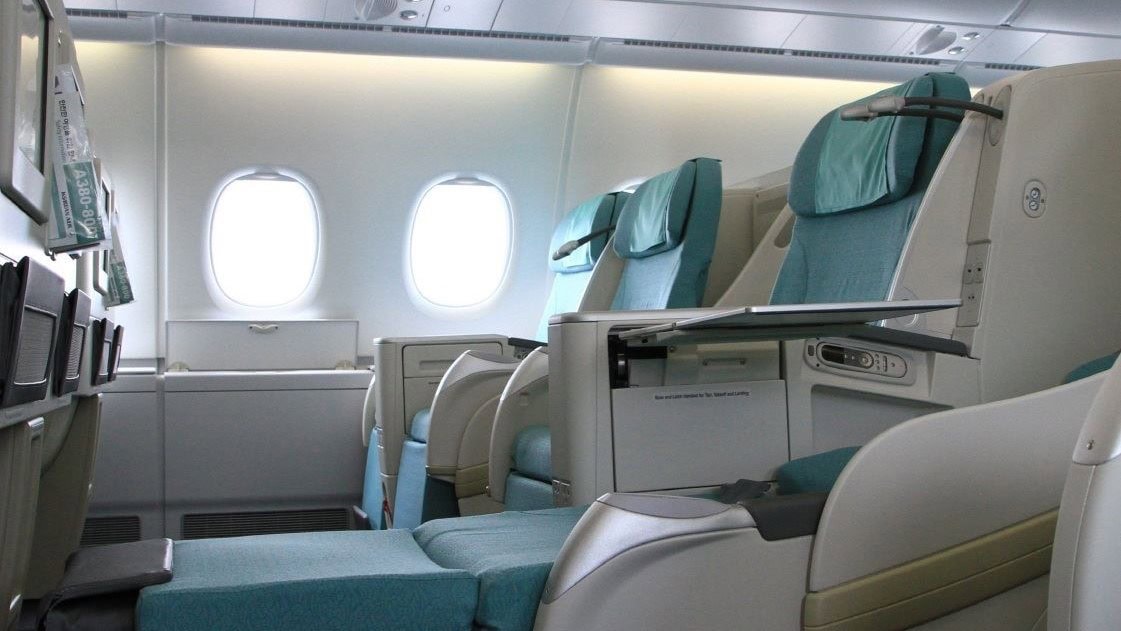
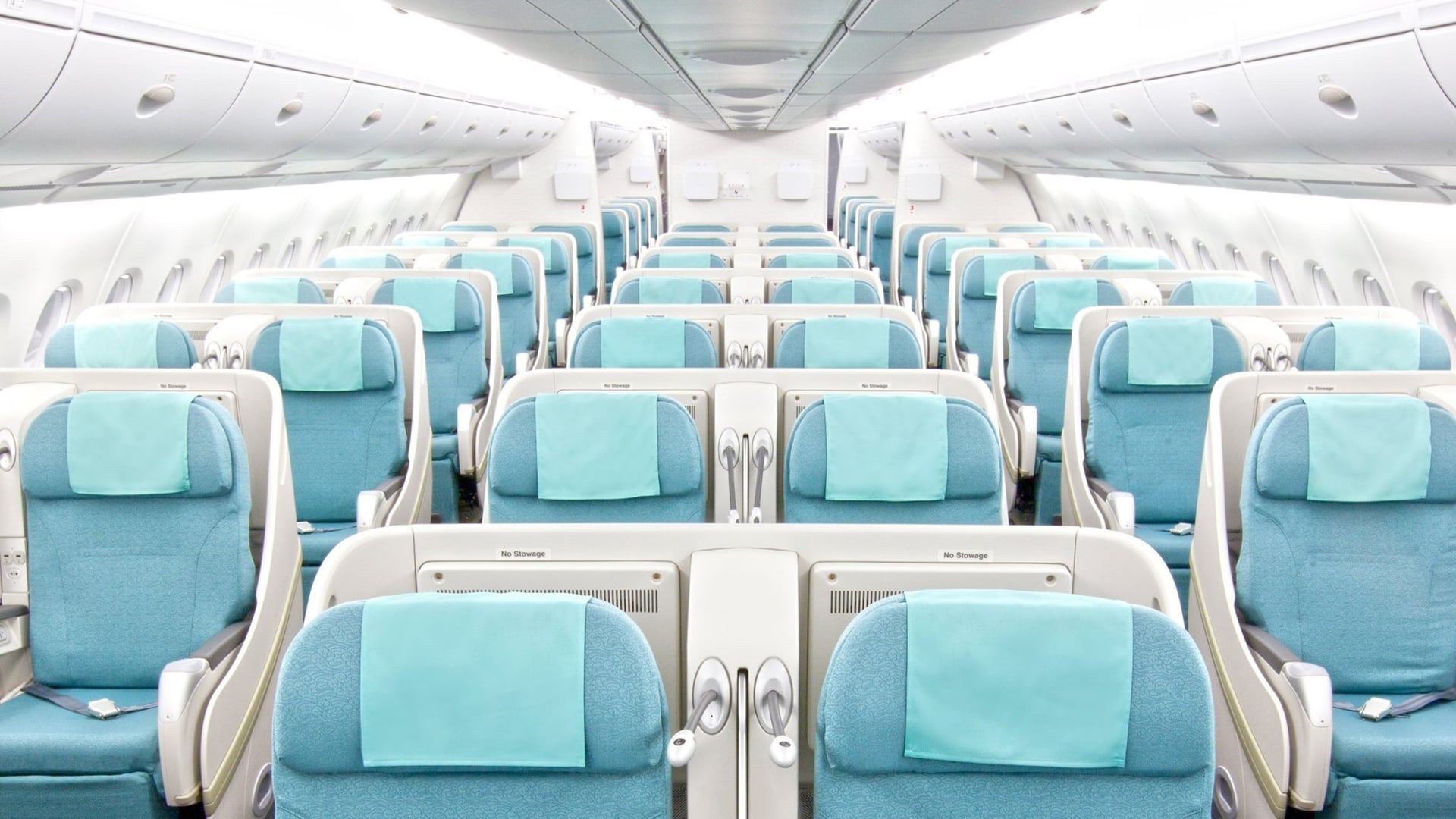
The business-class experience with Korean Air varies significantly across the airline’s long-haul fleet, particularly in terms of cabin layout, privacy, and seat design. The airline currently features several business-class seat configurations across its Boeing 787, Boeing 777, Boeing 747, and Airbus A380 aircraft, making aircraft selection an important part of the booking process.
- Prestige Suite
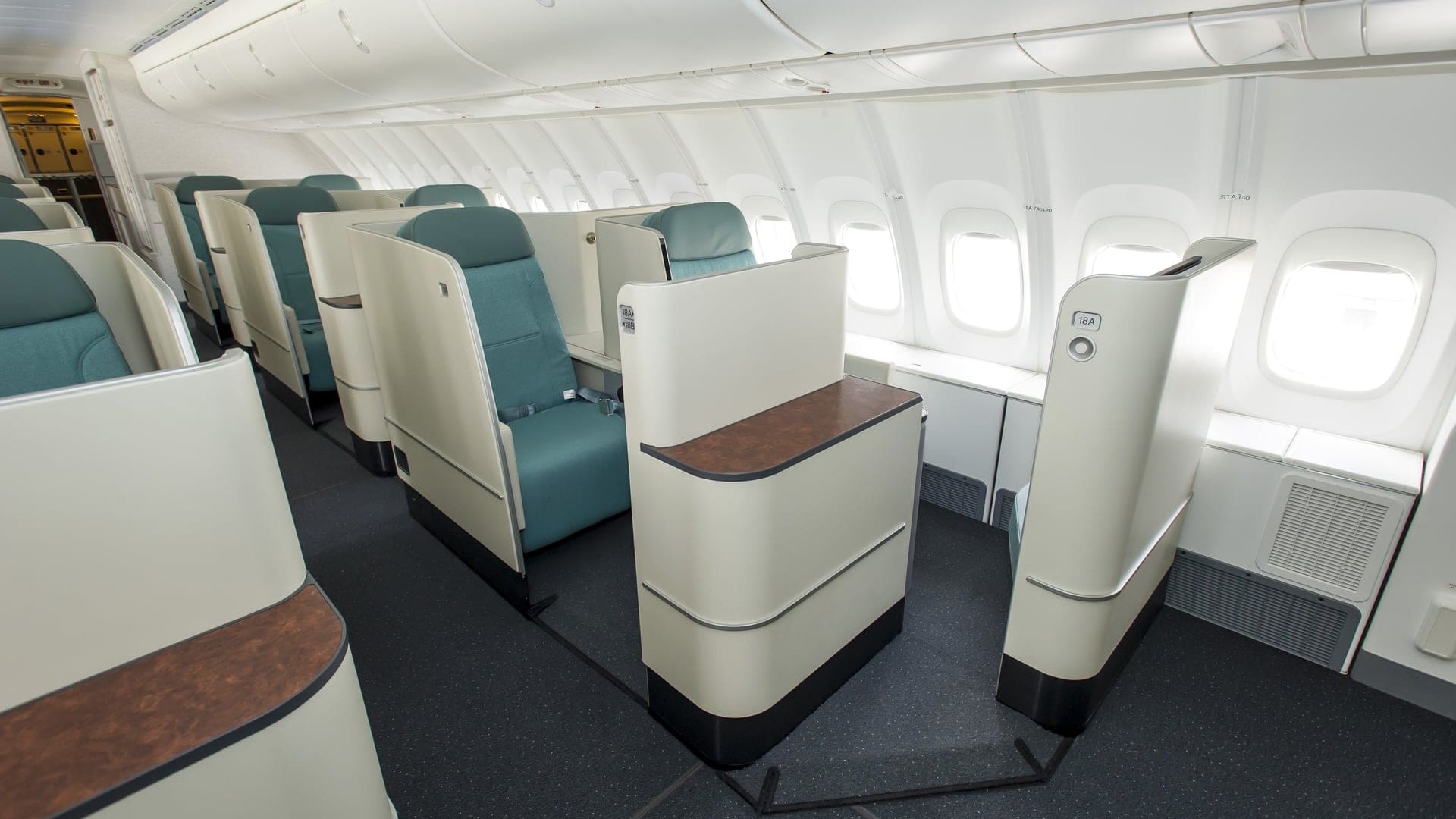
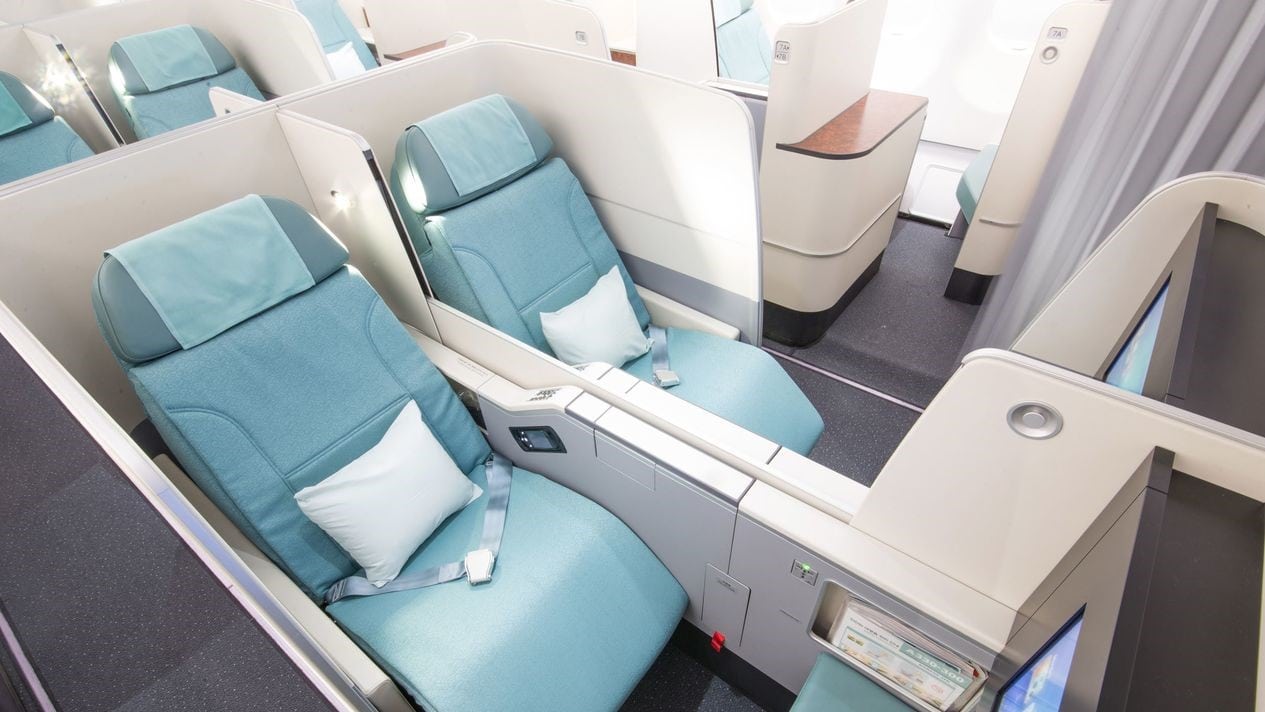
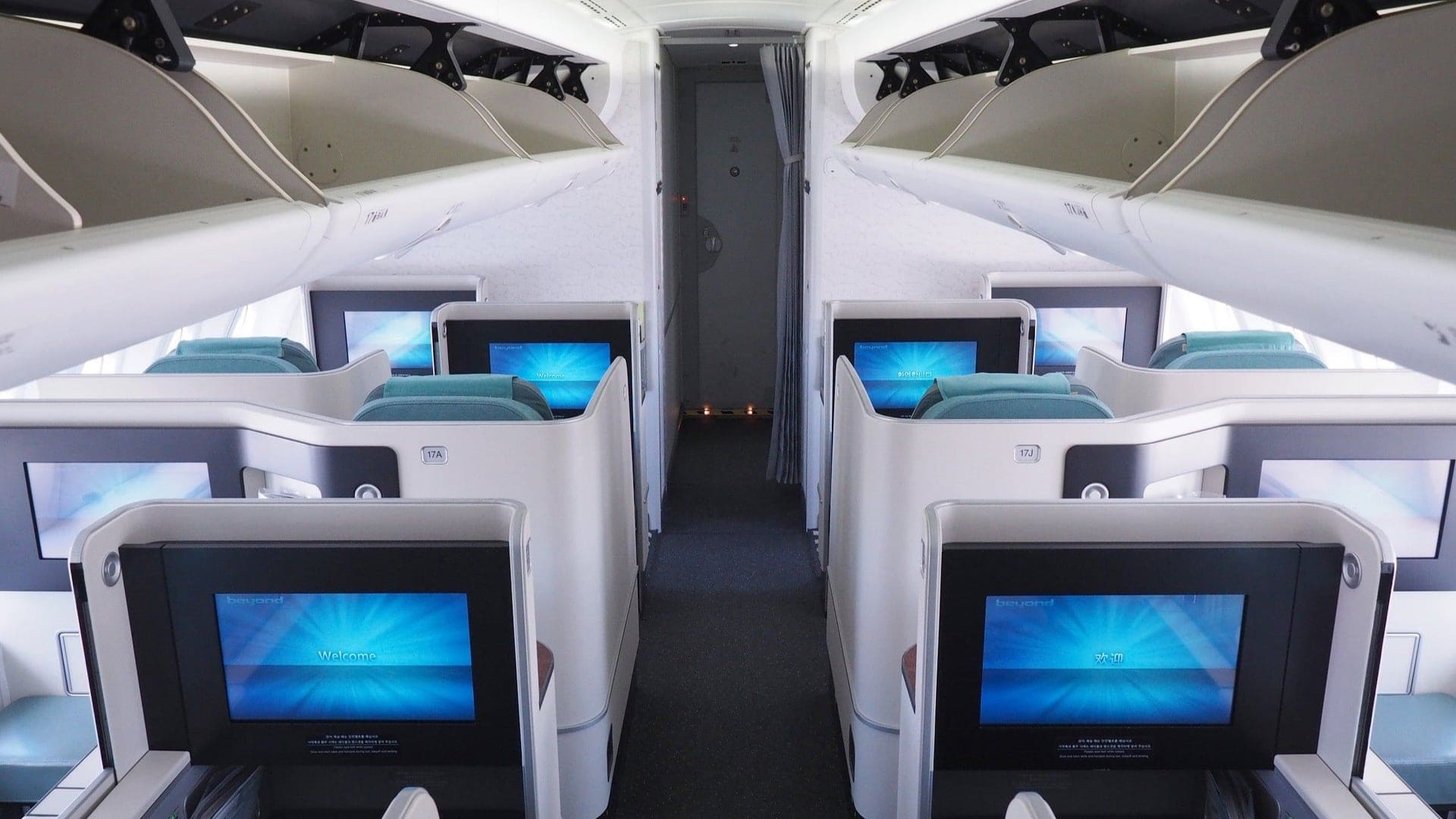
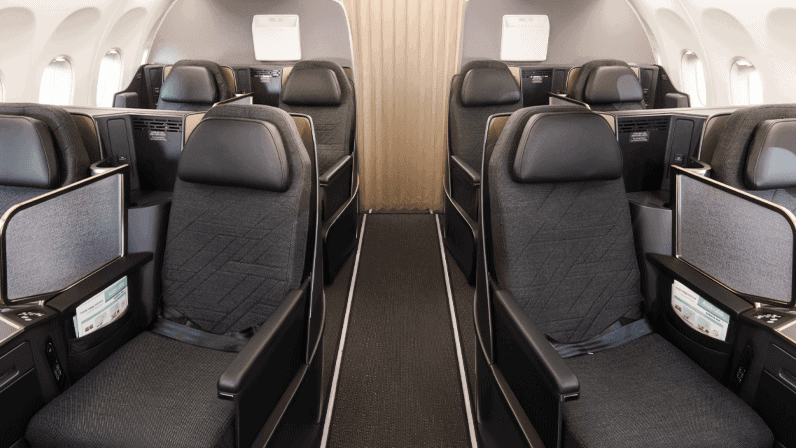
You can find Prestige Suites, also known as the J seats, on Boeing 787-9 aircraft, some Boeing 777-300ERs, Boeing 747s, and some Airbus A330-300 aircraft. Although several cabins still use a 2-2-2 layout, the staggered design gives all passengers direct aisle access. This configuration creates more privacy than a traditional 2-2-2 cabin and is especially comfortable for solo travelers on long-haul flights.
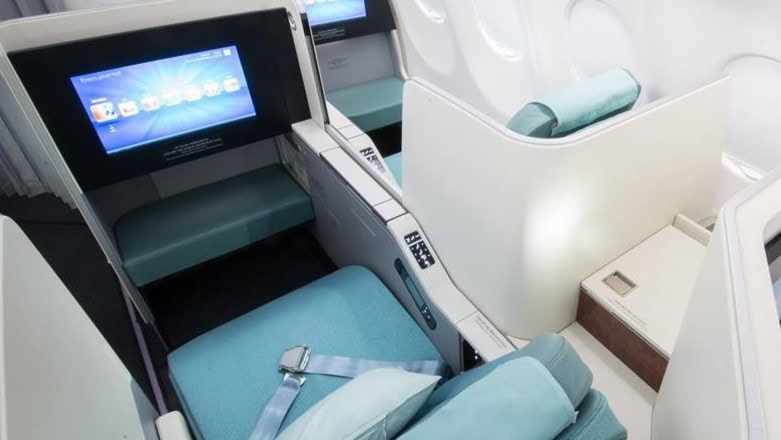
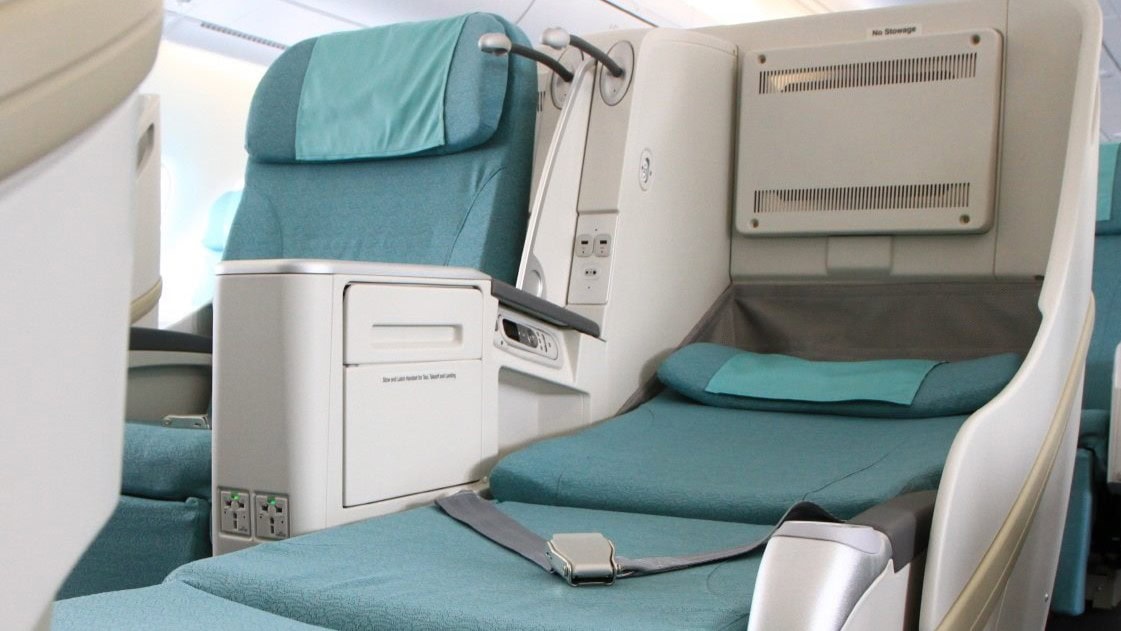
The seats convert into fully flat beds with a length of 73 inches (185 cm) and include storage space for smaller personal items. Each seat also includes 17-inch (43 cm) entertainment screens, USB ports, and power outlets. The overall design focuses more on privacy and personal space than older Korean Air business cabins.
- Prestige Sleeper
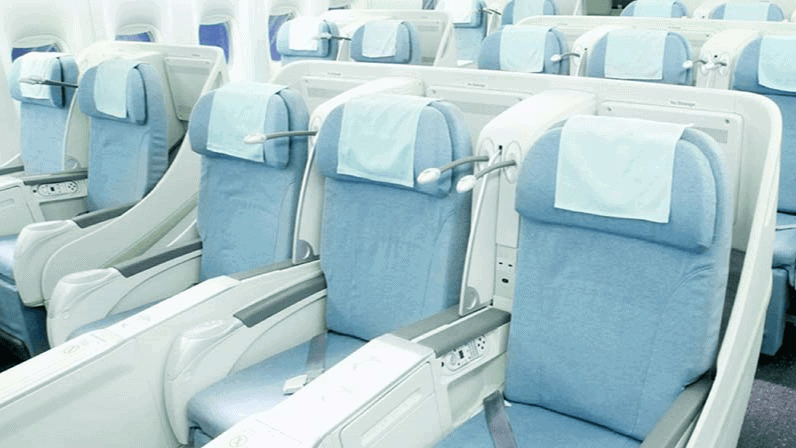
The Prestige Sleeper is another lie-flat product found on certain Boeing 777 and Airbus A330-300 aircraft, as well as on the upper deck of Airbus A380 planes. The seats are arranged in a 1-2-1, 2-2-2, or 2-3-2 layout. Thus, privacy and aisle access vary significantly depending on the aircraft.
All seats transform into a fully flat bed, measuring 73 inches (185 cm). They are equipped with 15.4-inch (39 cm) entertainment screens, power outlets, and USB connectivity.
- Prestige Suites 2.0
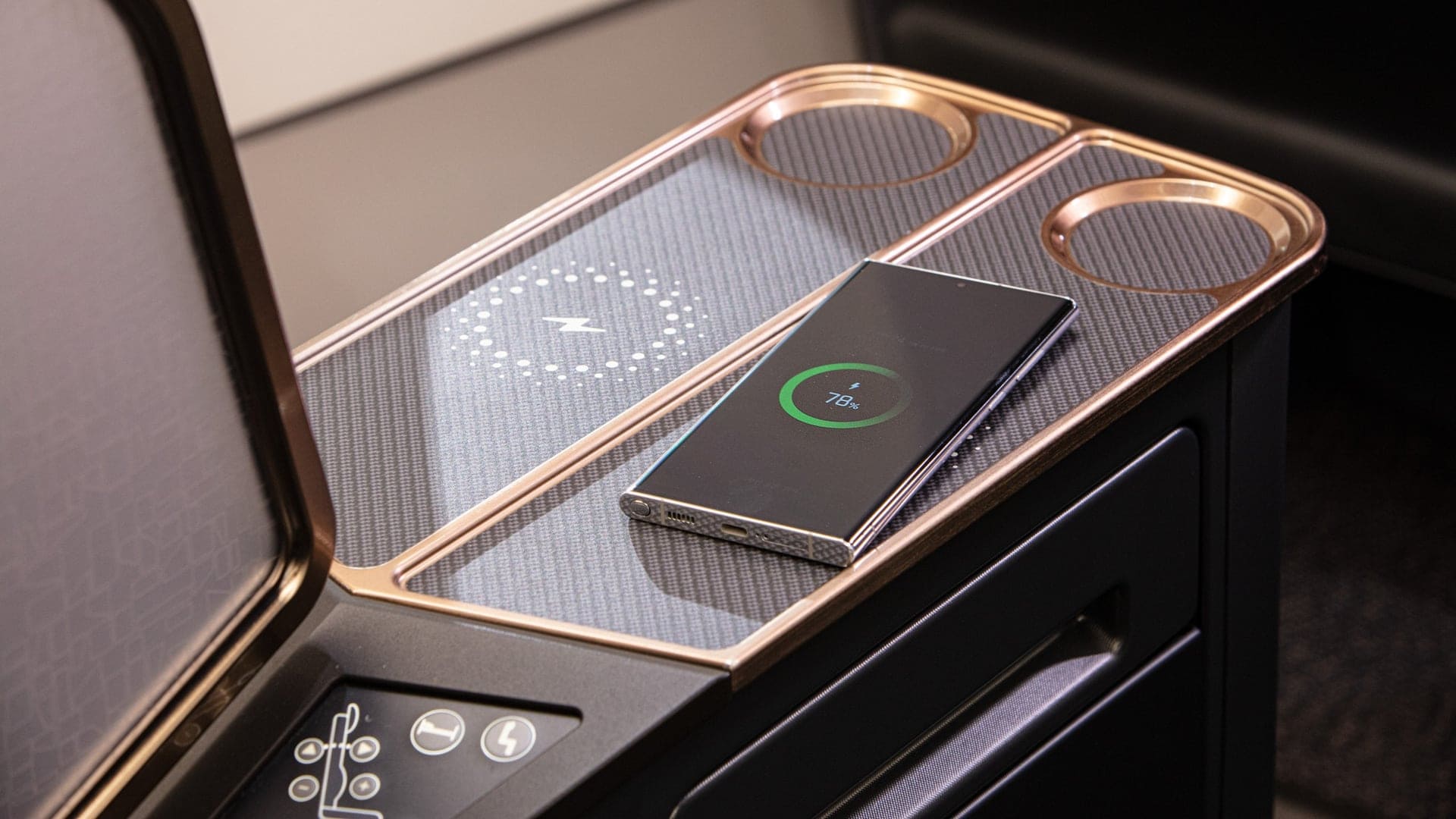
Prestige Plus is available on Boeing 787-10 aircraft in a staggered 1-2-1 seating configuration. Compared to the other Prestige products, these seats transform into longer beds, measuring between 78.2 inches (198 cm) and 79.2 inches (201 cm). The larger 23.8-inch (60 cm) UHD monitors in this suite offer high-end resolution and visibility. The airline also offers passengers 60W ultrafast USB-C charging ports, wireless charging, and in-flight Wi-Fi.
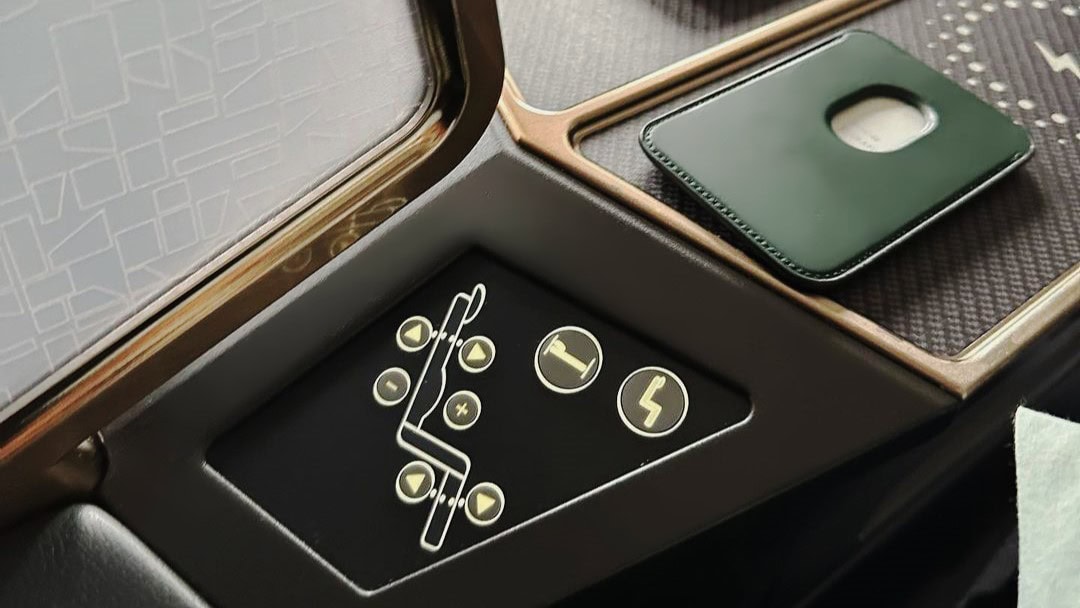
All business-class seats include adjustable seat controls positioned near the armrest for reclining, lounging, or switching into lie-flat mode. Several newer aircraft also include two USB-C ports, wireless charging areas, and updated storage compartments.
Cuisine
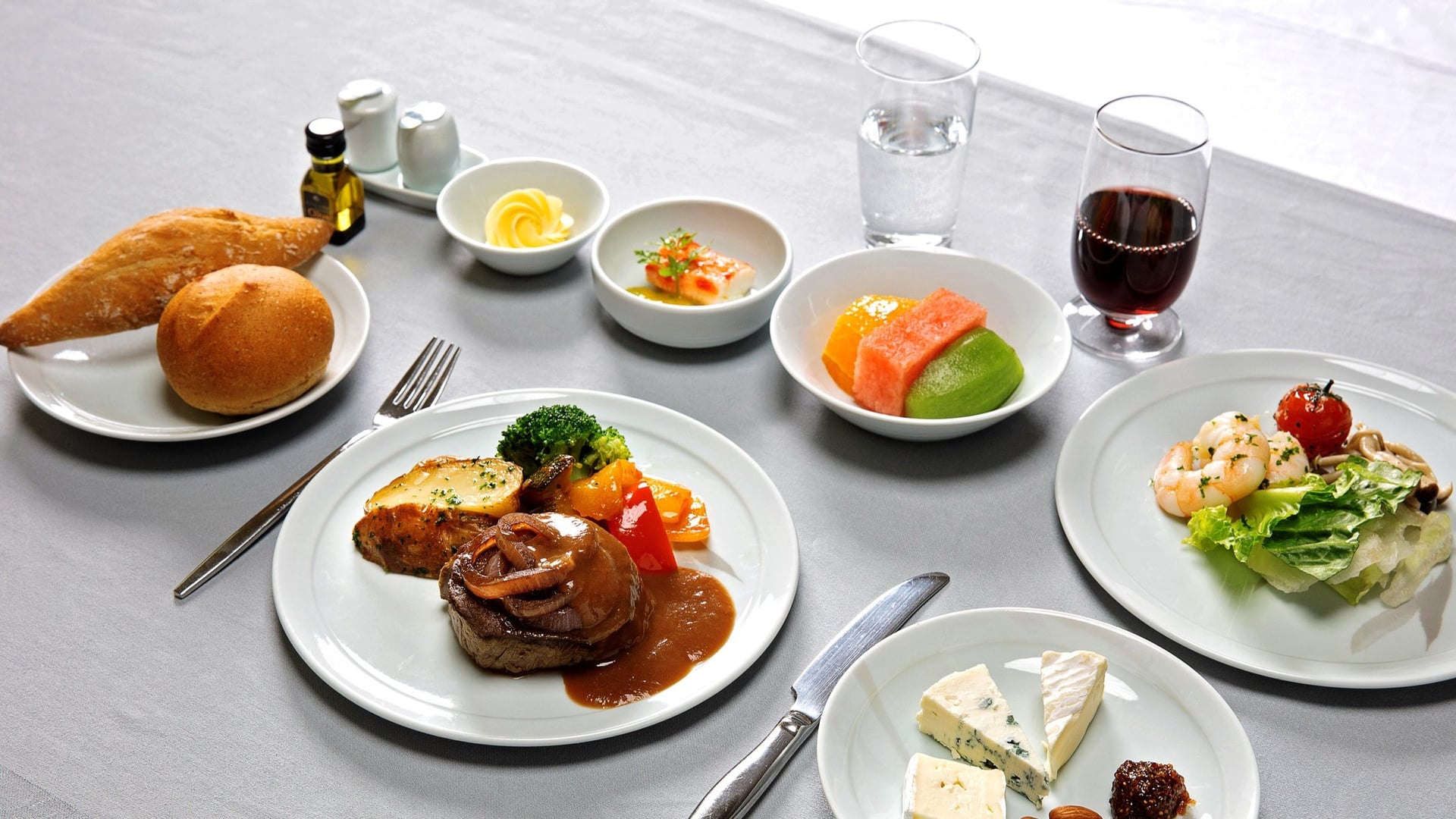
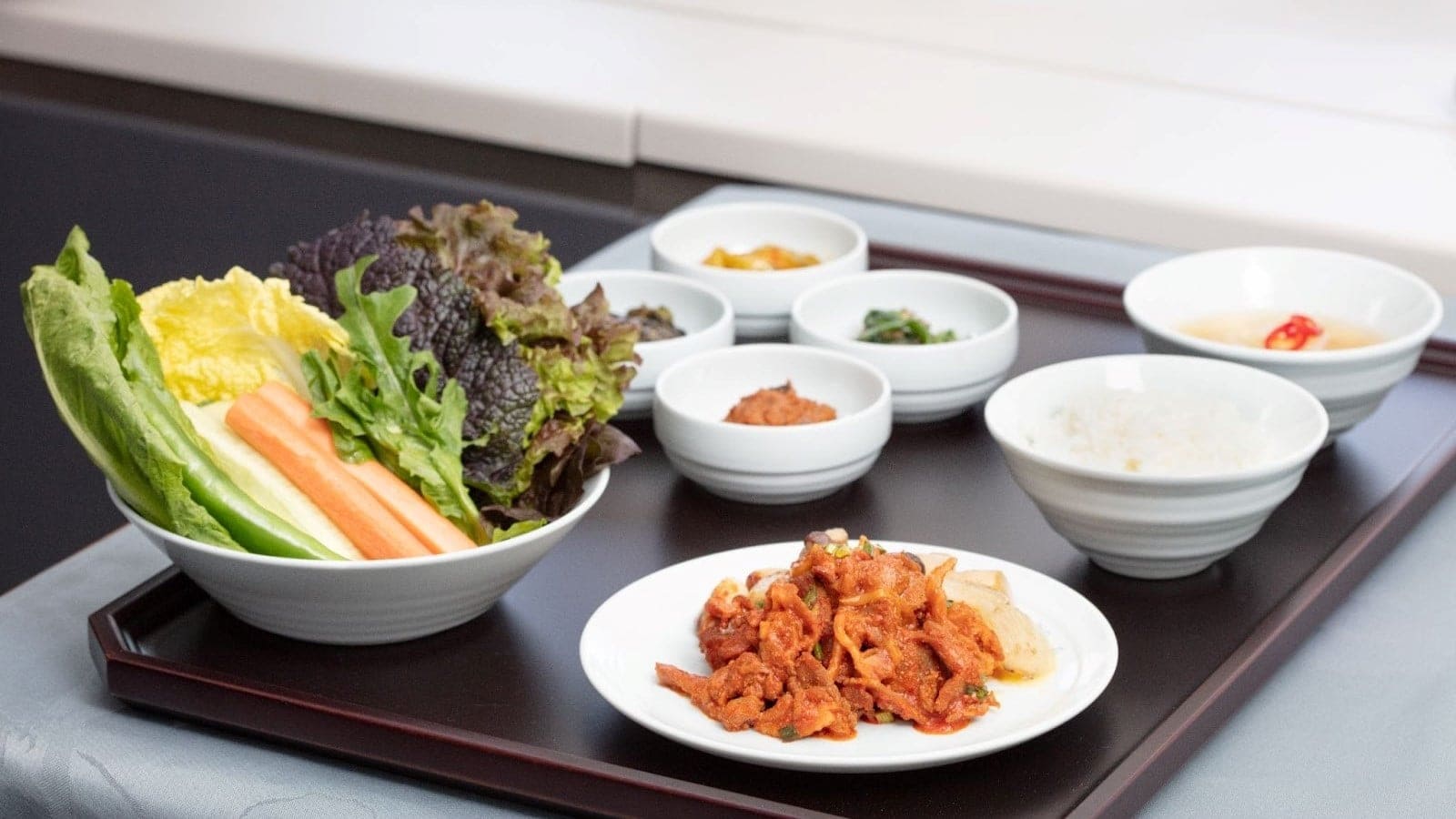
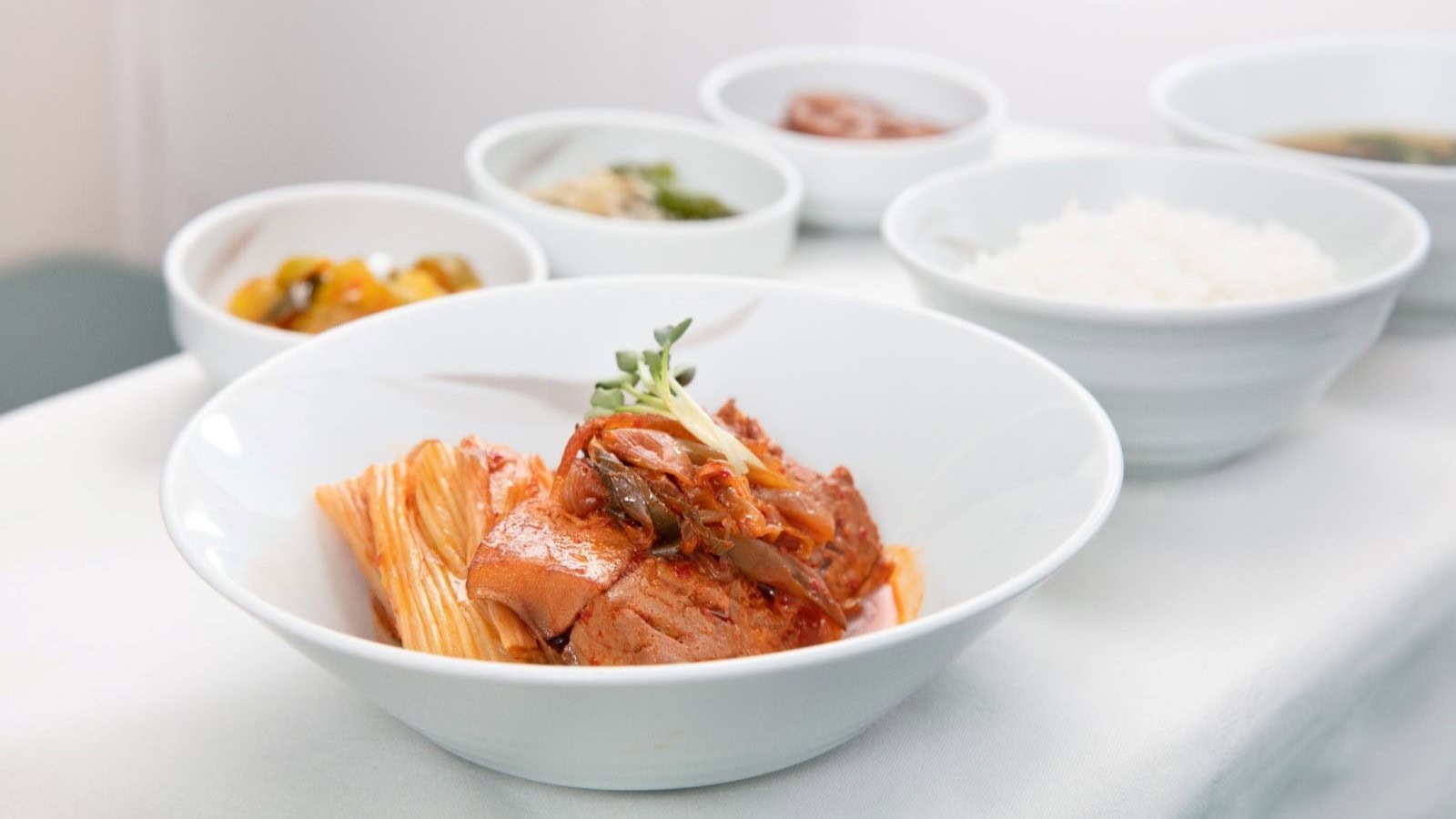
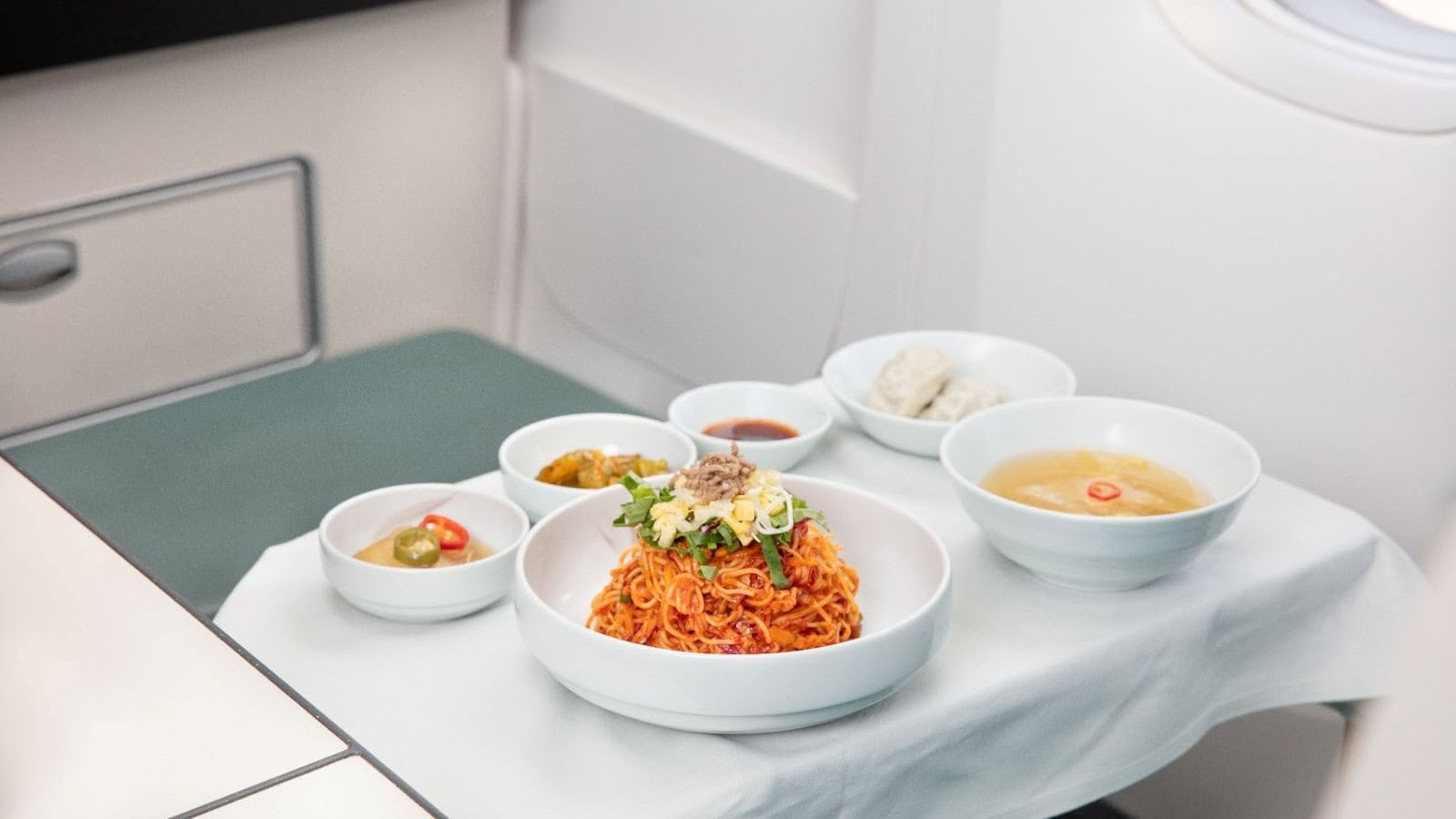
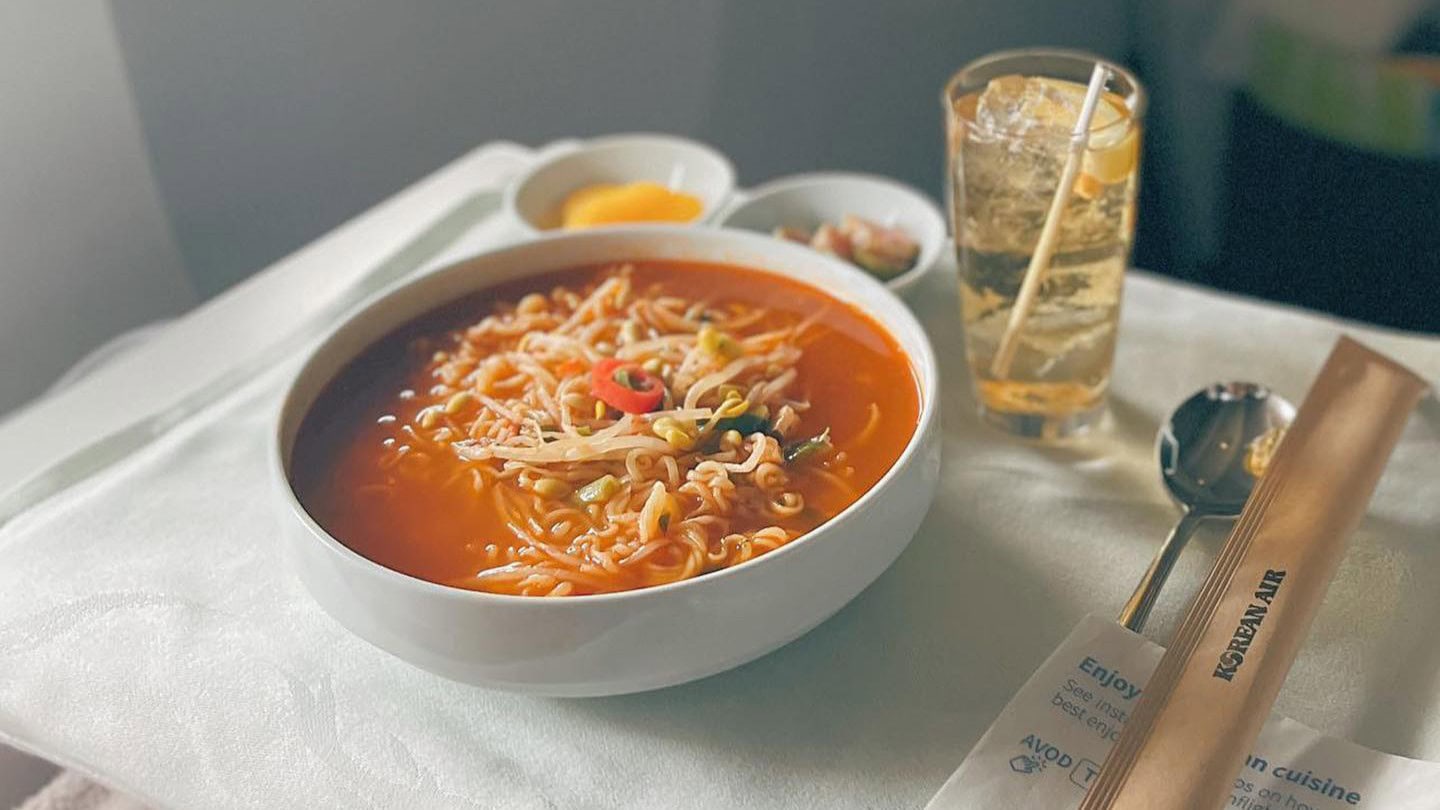
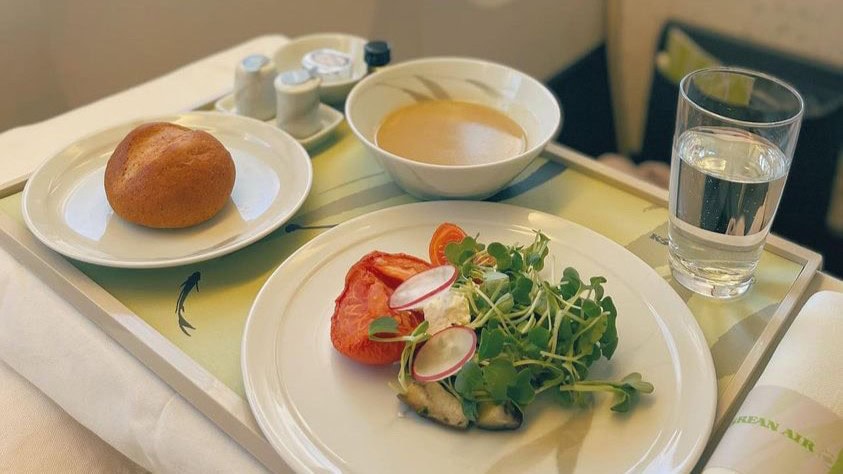
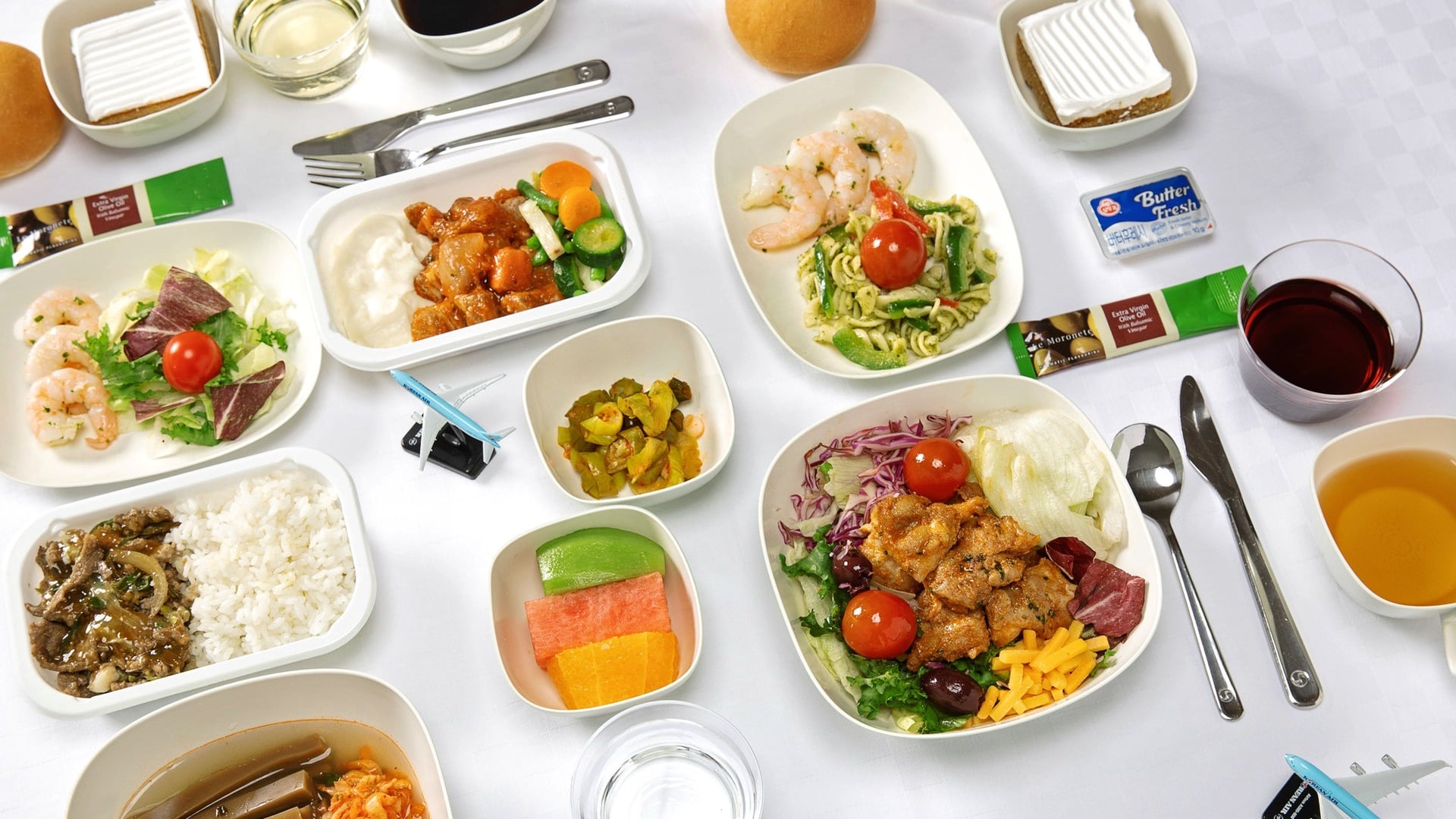
Korean Air's business-class dining stands out as one of the cabin's genuine strengths, and on long-haul routes, the meal service accounts for a meaningful share of the overall flight experience. The airline allows passengers to pre-order meals before departure, including Korean specialties, Western dishes, and several vegetarian options.
Main Meals
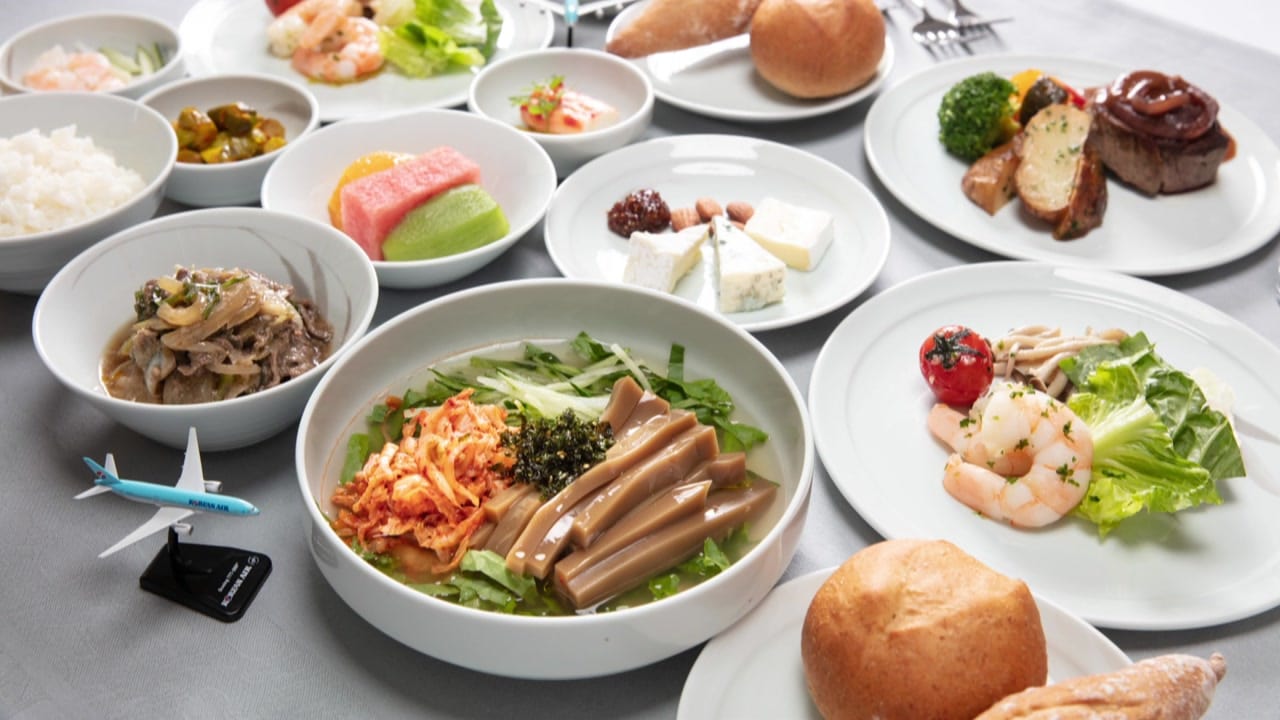
On most intercontinental routes, the onboard meal service includes several choices for the main course. Options often include Korean bibimbap, seafood dishes, or a Western meal with meat or pasta. The airline rotates menus depending on route and season, which creates more variety across the network.
The service usually begins with appetizers and smaller dishes before the main course, followed by dessert, a cheese tray, and fresh fruit, along with Häagen-Dazs ice cream. Some routes also include items such as seared shrimp, soups, breads, and pastries as part of the multi-course dinner service.
Second Meals and Snacks
On overnight routes and other long-haul flights, the crew typically serves a second lighter meal before arrival. This may include breakfast or a smaller pre-arrival service with Korean and international options.
Passengers can order additional snacks throughout the flight, including snack mix, instant noodles, cookies, and lighter refreshments. Hot drinks, tea, coffee, and hot water are also options that travelers can request, even between scheduled services.
Special Meals
Korean Air also offers several pre-ordered vegetarian and specialty meals. The airline’s plant-based Korean option draws inspiration from temple cuisine and includes dishes built around grains, vegetables, tofu, and porridge.
Other pre-order options include lacto-ovo vegetarian, Asian vegetarian, Hindu vegetarian, Jain, and raw vegan meals.
Beverages
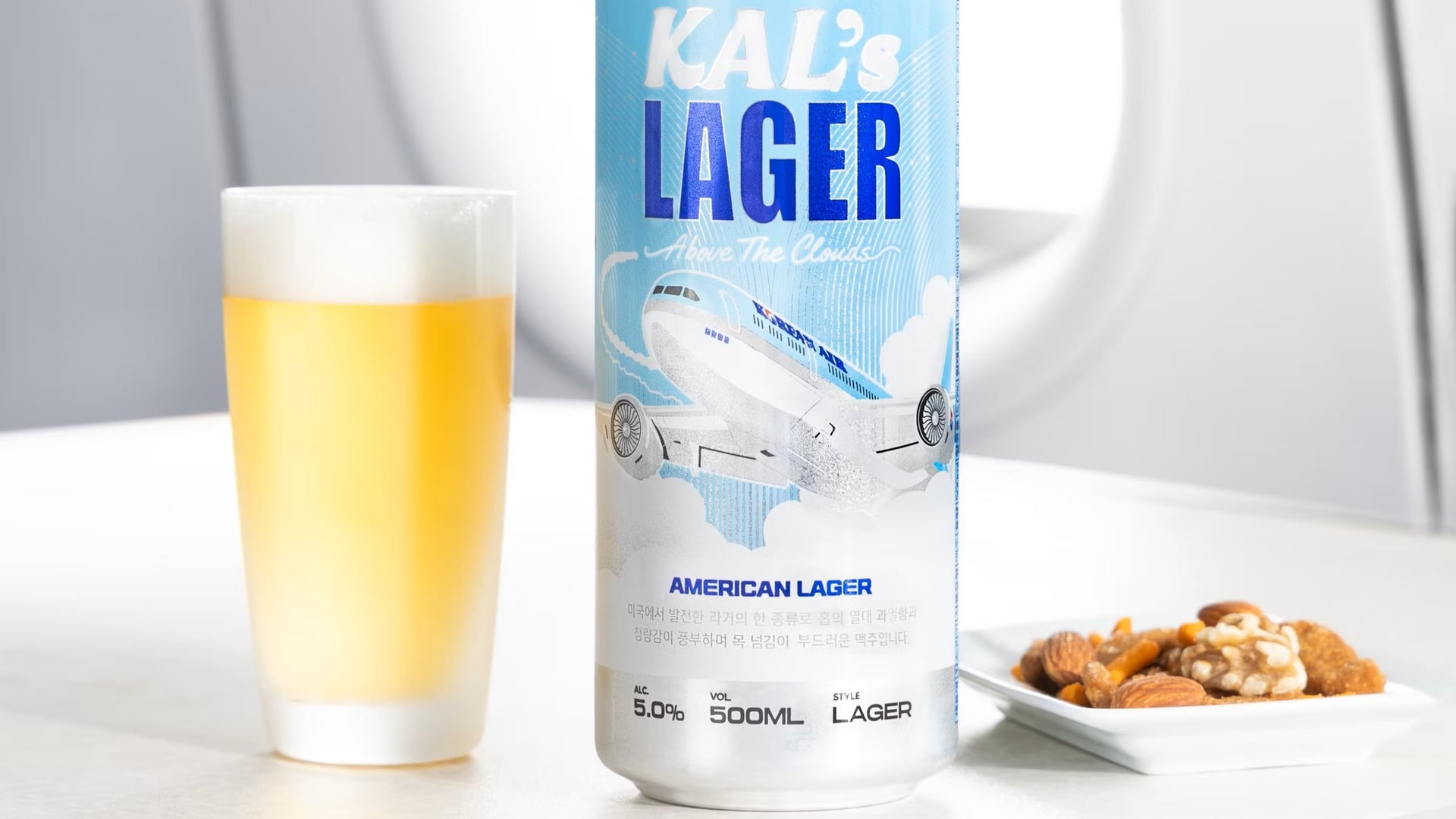
The beverage selection in business class features wine, Champagne, spirits, beer, tea, coffee, and non-alcoholic drinks, with menus that vary slightly depending on route and flight length.
- Wine and Champagne: Korean Air developed its wine program in partnership with Marc Almert, winner of the 2019 Best Sommelier of the World competition. The onboard wine list includes labels from France, Germany, Italy, Spain, Austria, Australia, and the United States.
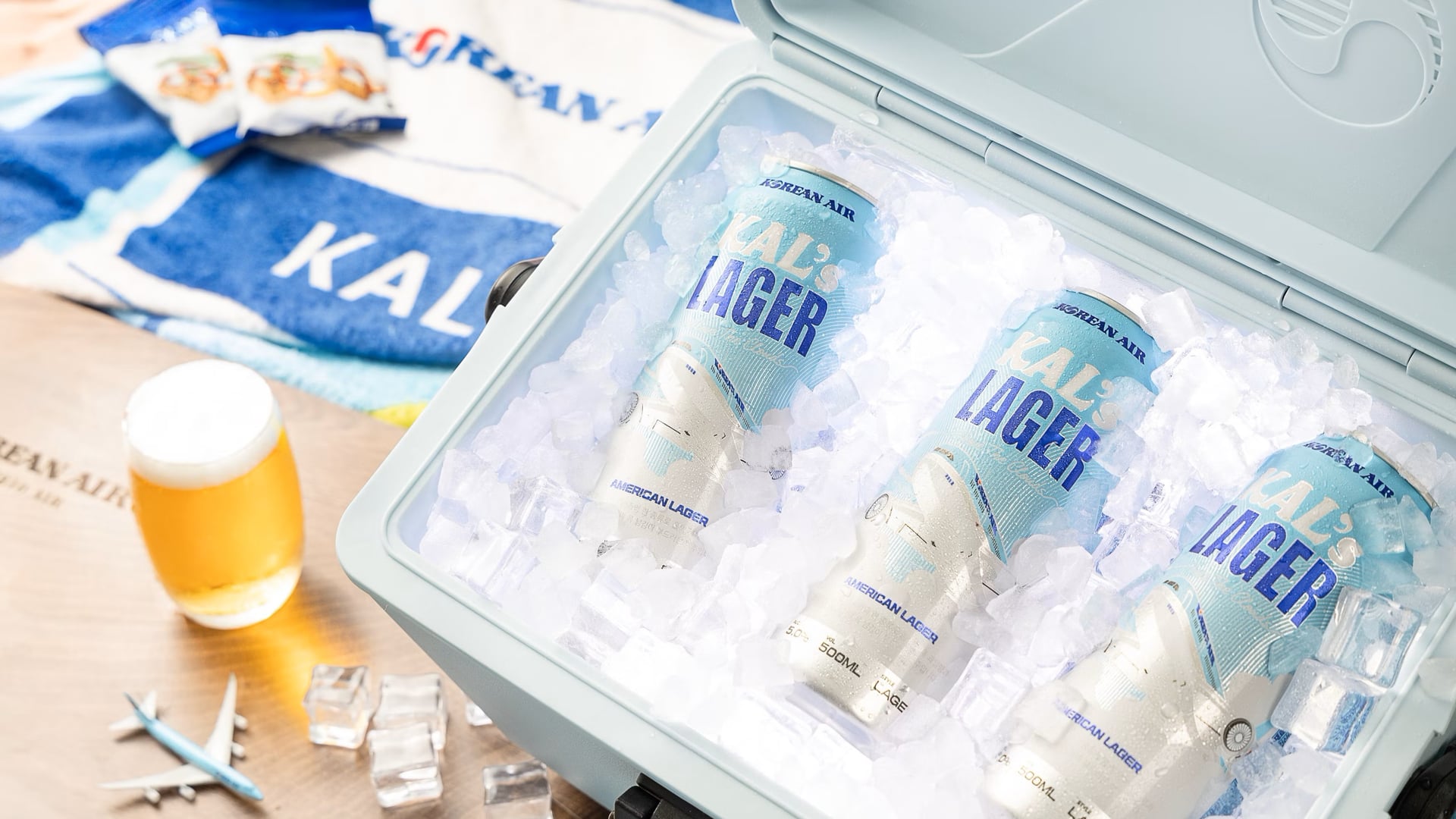
Champagne service also differs by route and aircraft, with some Korean Air flights offering labels such as Perrier Jouët Grand Brut, Joseph Perrier Cuvée Royale, or Charles Heidsieck Brut Millésimé. - Beer, spirits, and soft drinks: The airline serves a range of international spirits, cocktails, and its own KAL’s Lager craft beer. Non-alcoholic options typically include orange juice, soft drinks, sparkling water, and still water throughout the flight.
- Tea and coffee: Tea service includes selections from Dammann Frères, including Darjeeling, Earl Grey, and Korean Red Ginseng tea. The coffee selection includes Starbucks brewed coffee on many international routes.
Service
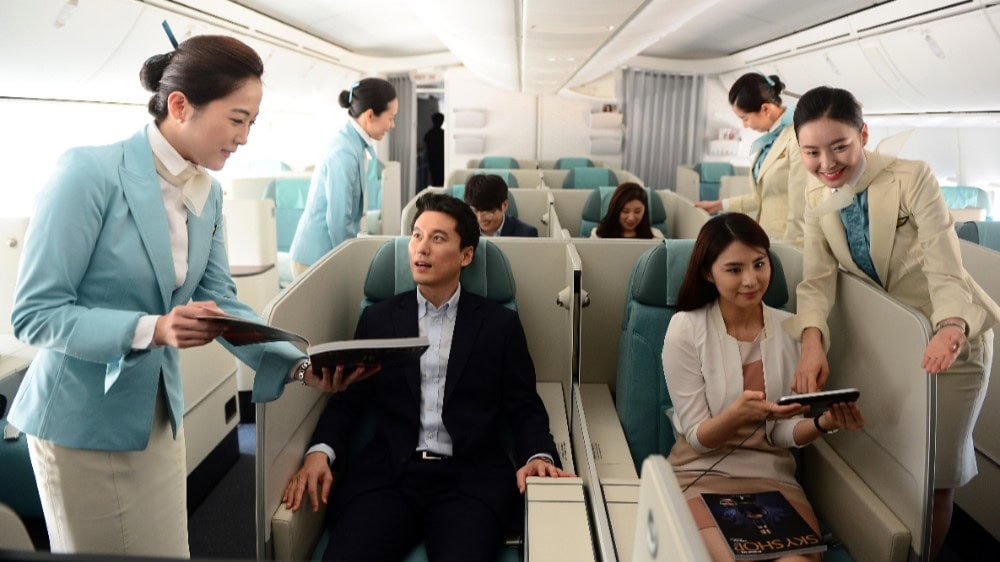
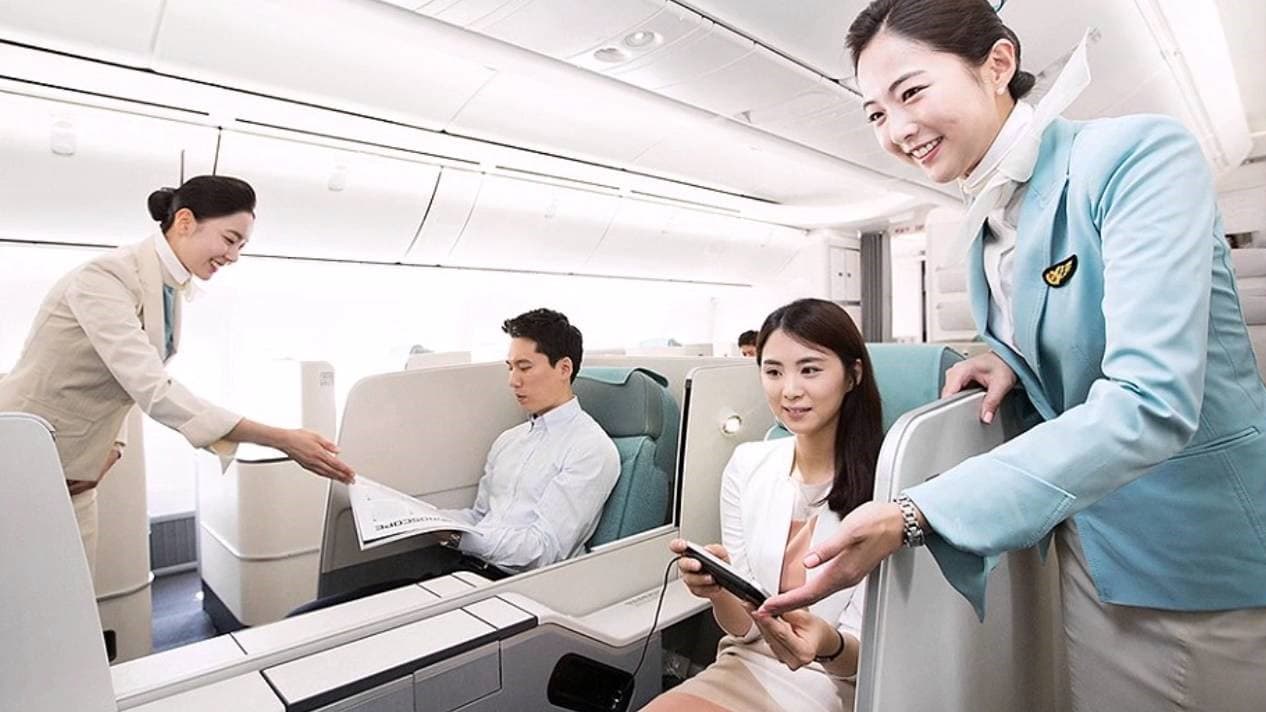
The onboard service follows a more formal style than many Western carriers, particularly on long-haul flights. The flight attendant team distributes amenity kits shortly after takeoff and continues monitoring the cabin after the main meal and dinner services conclude. The business-class lavatories are cleaned and regularly restocked throughout the flight.
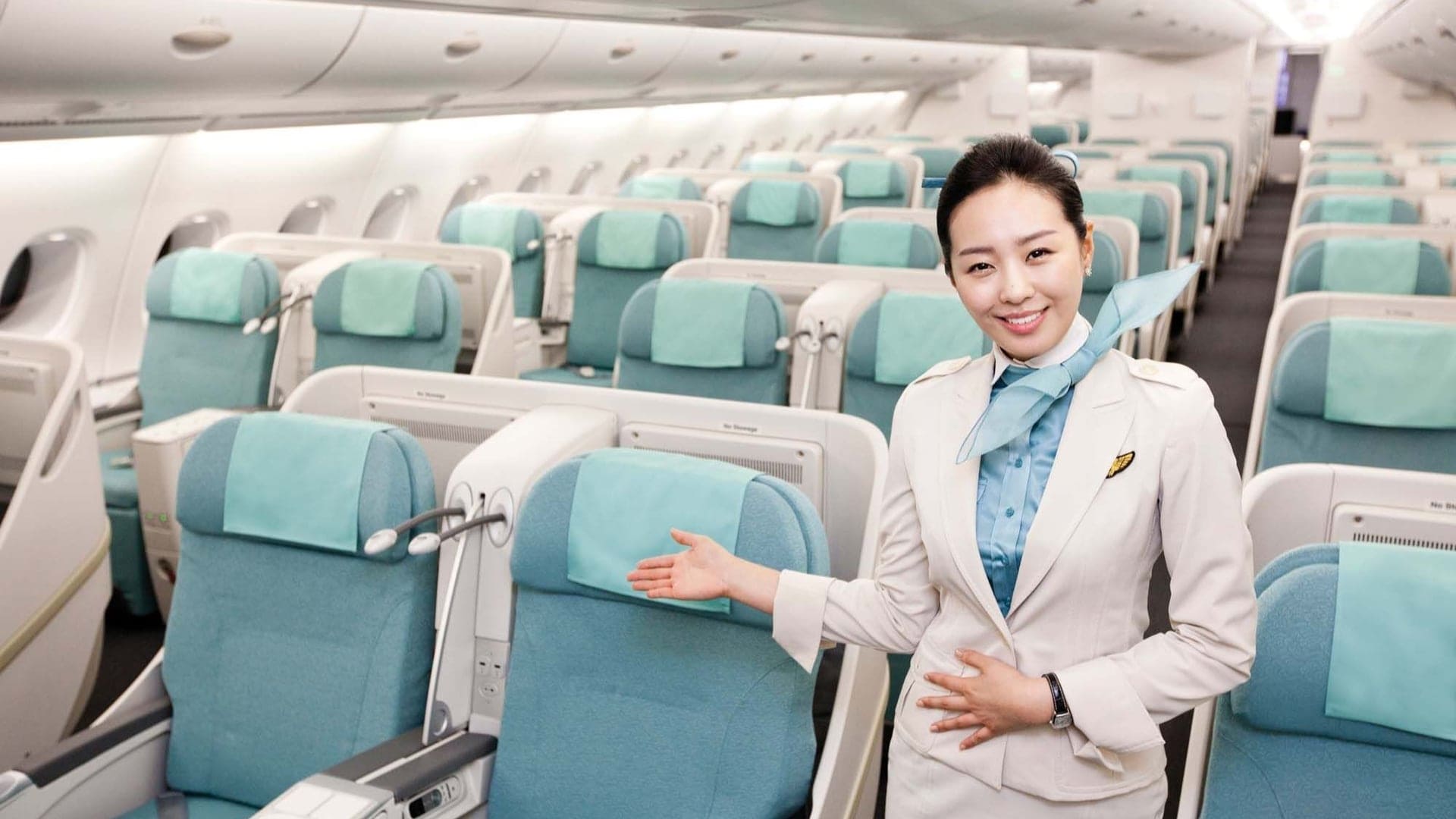
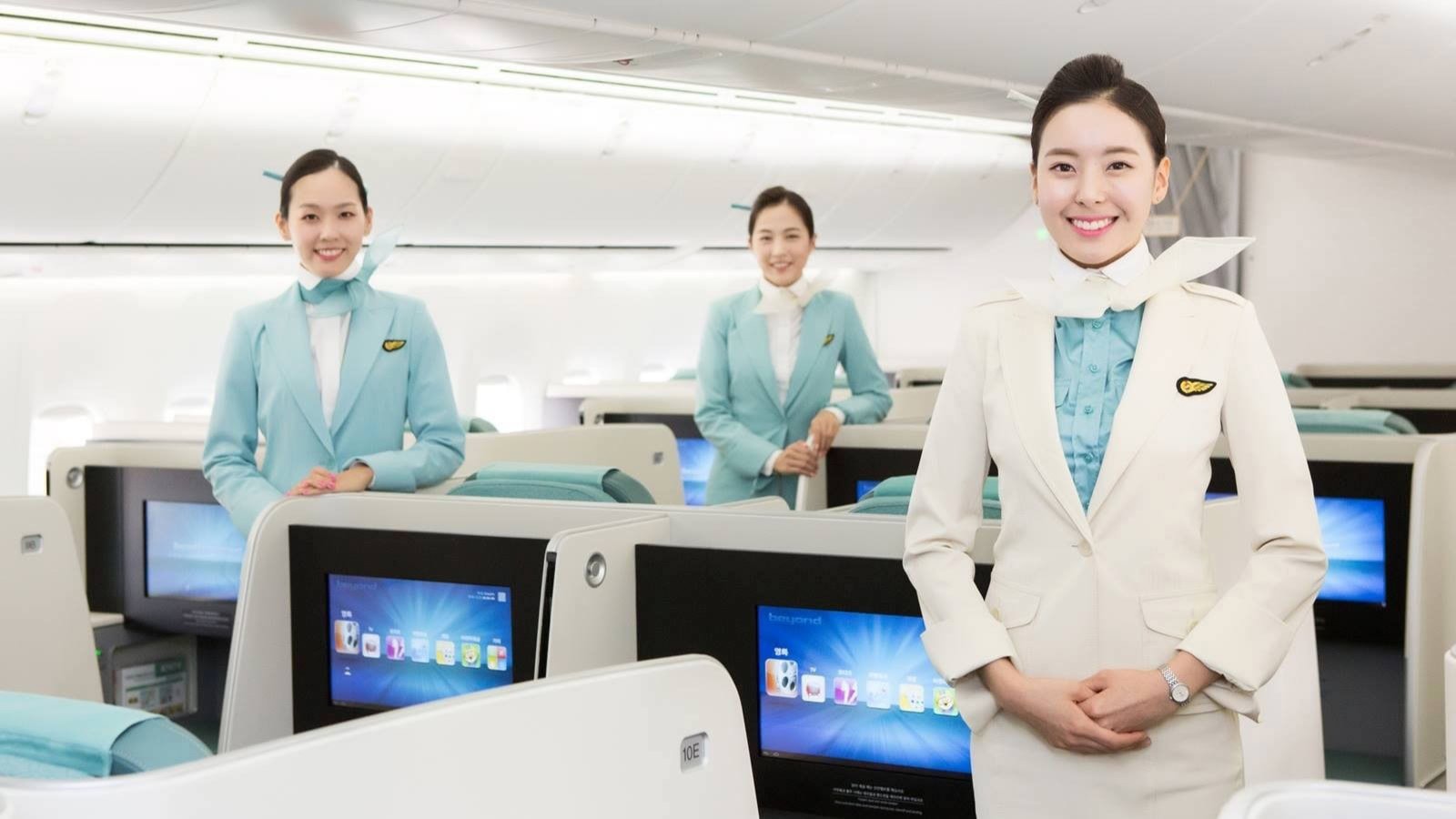
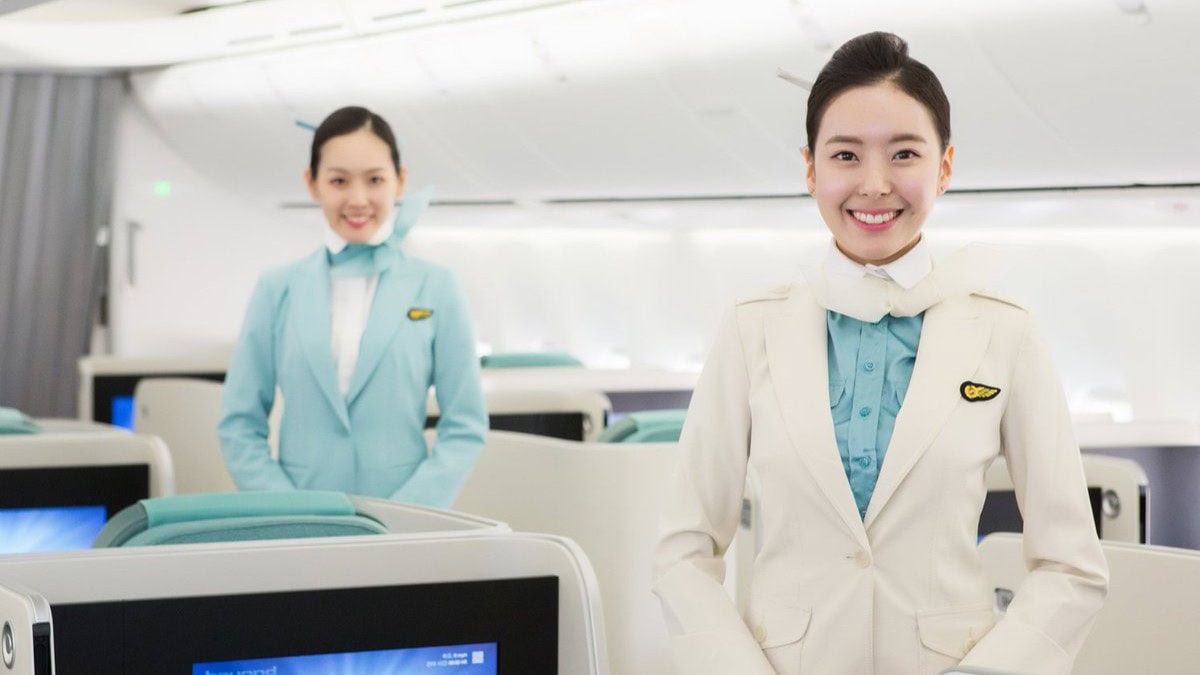
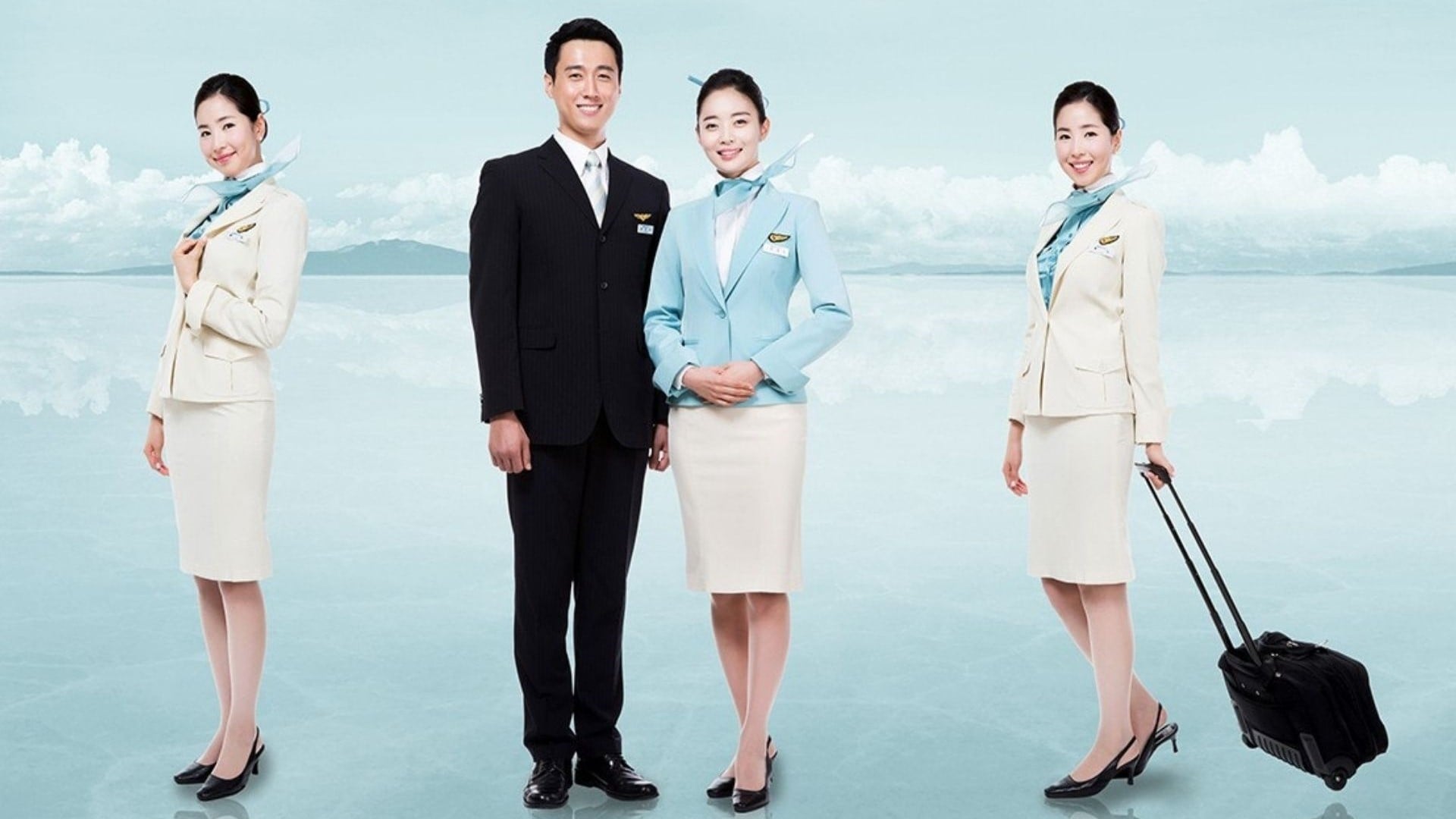
The cabin crew uniforms, designed by the late Gianfranco Ferré, former creative director at Christian Dior, are one of the most recognizable visual elements of the Korean Air business experience. Female crew members wear celadon jackets paired with silk blouses, tailored stone-colored skirts, white scarves, and gloves, reflecting the airline’s soft blue and teal cabin palette.
Male crew members wear tailored suits with a more understated design that maintains the same formal visual identity throughout the cabin.
Entertainment
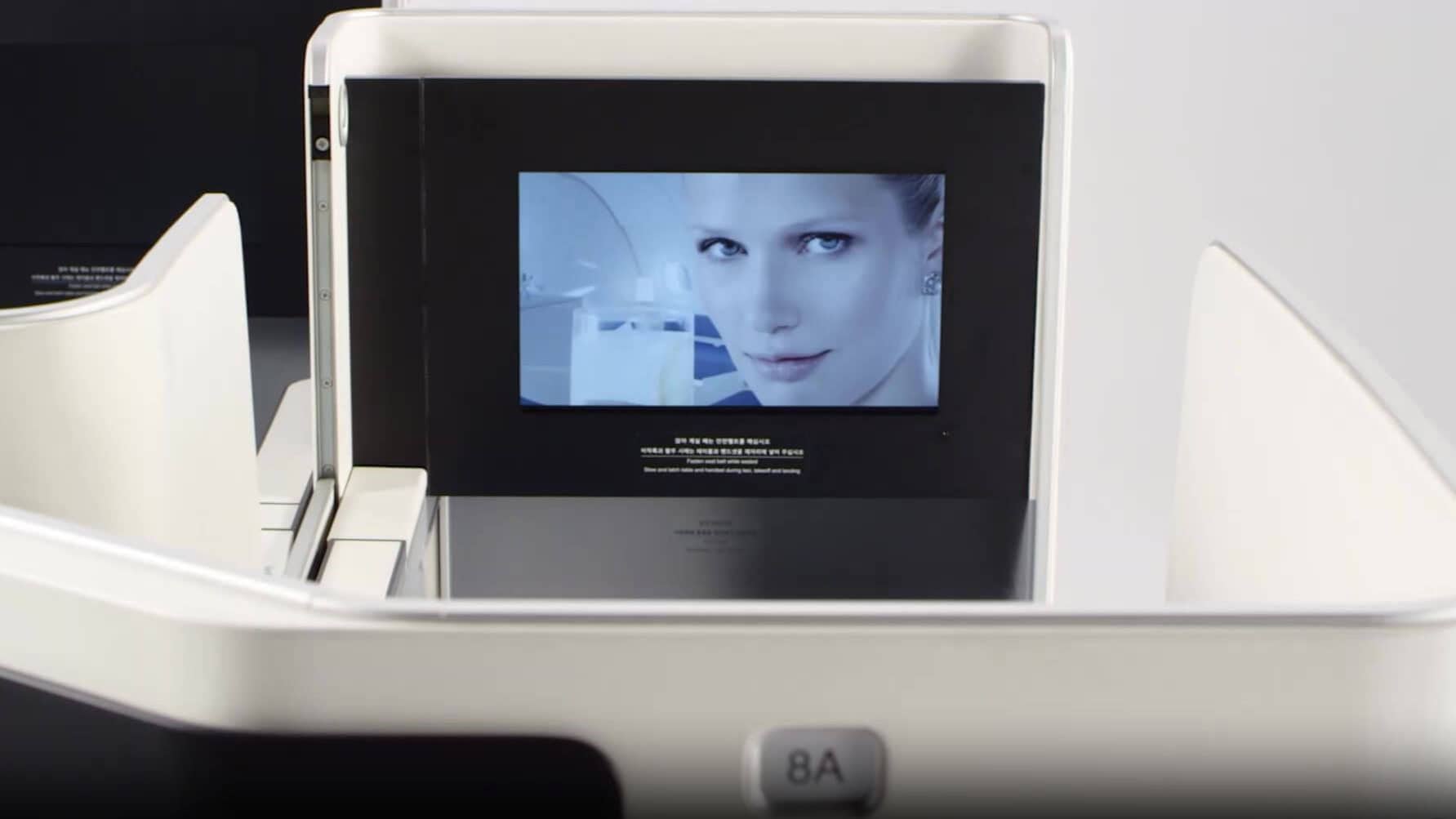
The entertainment system varies by seat type and aircraft configuration, particularly across the airline’s long-haul fleet.
Screens, Hardware, and Content Library
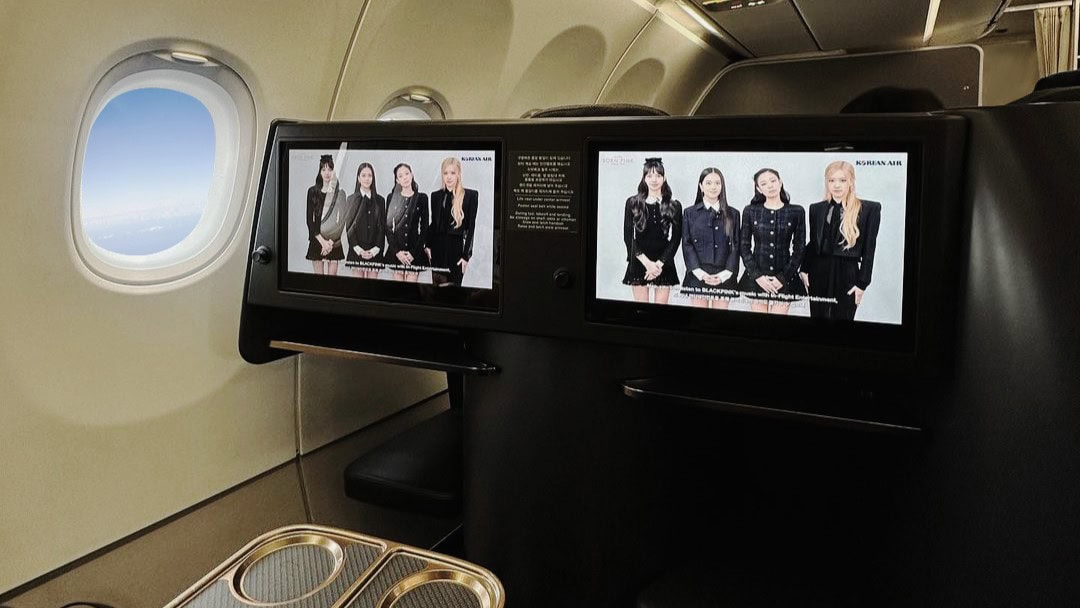
Prestige Suite cabins include larger 17- or 18-inch (43–46 cm) screens, while Prestige Sleeper seats use smaller 15.4-inch (39 cm) displays. Noise-canceling headphones are also standard in the business-class cabin, and some aircraft support streaming content to personal devices during the flight.
The entertainment library includes television programs, sports, music, and a broad selection of movies, including both Hollywood productions and K-Dramas.
Wi-Fi Connectivity
In-flight Wi-Fi availability in Korean Air business class still depends heavily on aircraft type and route. While the airline has expanded connectivity across parts of its fleet, not every long-haul plane currently offers onboard internet access.
On aircraft equipped with Wi-Fi, passengers can purchase internet access during the flight, usually either through time-based plans or data packages. In 2026, full-flight pricing ranges from $5.96 to $20.95, depending on the route, aircraft, and package type.
The service supports standard browsing, messaging, email access, and basic streaming functions, although performance can vary during the flight depending on network demand and aircraft location. Some Boeing 777-300ER aircraft currently offer onboard Wi-Fi across all cabins, including business class.
In the third quarter of 2026, Korean Air plans to introduce Starlink connectivity across more of its long-haul fleet, initially focusing on Boeing 777-300ER and Airbus A350-900 aircraft. The airline expects broader rollout across additional aircraft through 2027, which should improve consistency on international routes.
Amenities
Korean Air business class includes a set of overnight amenities and practical in-flight essentials.
Prestige Class amenity kits include Graff perfume, lip balms, hand creams, earplugs, and eye masks. The staff distributes amenity kits shortly after takeoff on most international routes. Each seat also includes bedding and loungewear from the Italian company Frette.
The business-class lavatories are near the Prestige Class cabin and include touchless fixtures along with extra amenities such as toothbrushes, shaving kits, and mouthwash. Cabin crews also restock the lavatories regularly during the flight, particularly after meal periods.
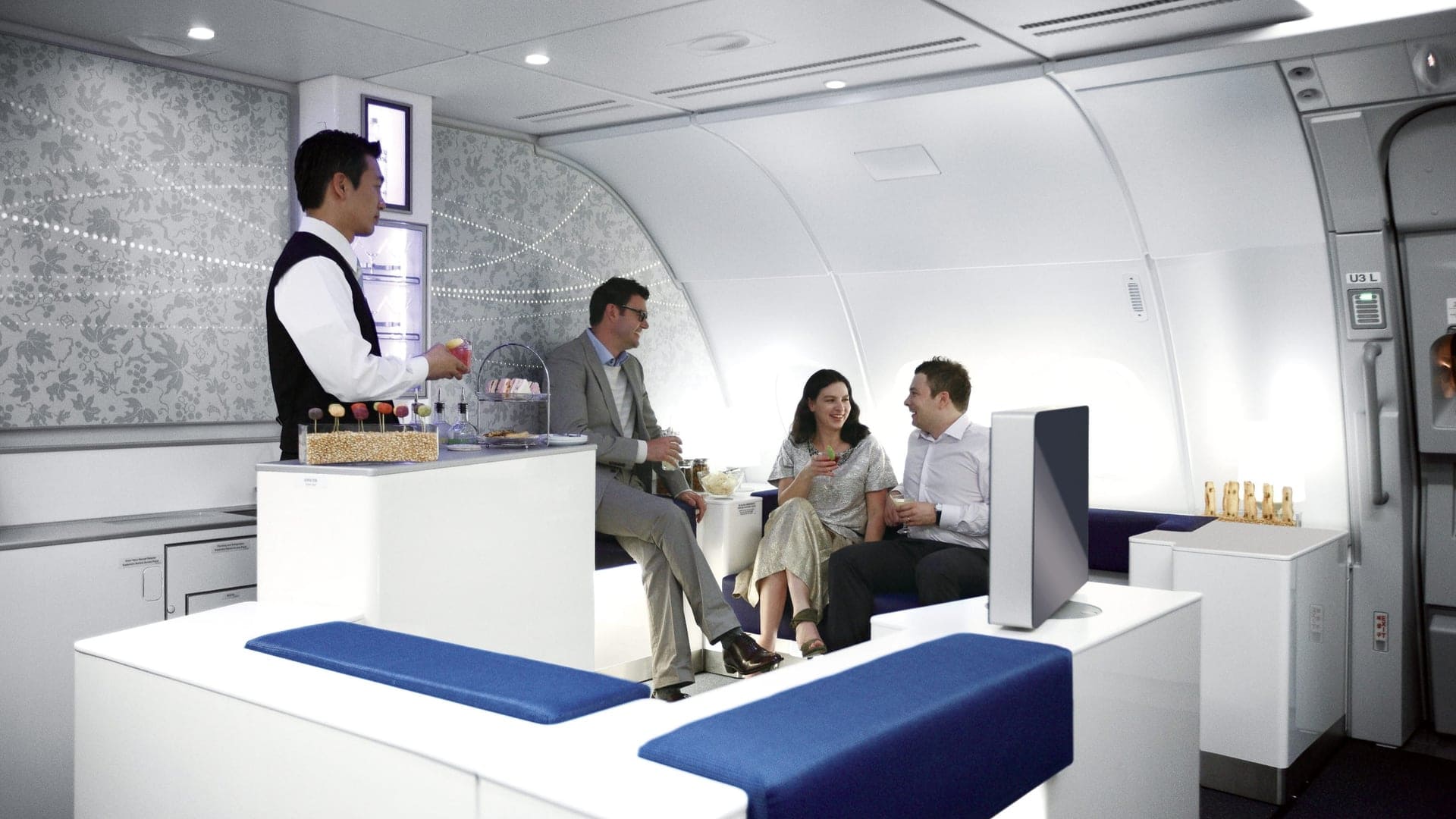
On Airbus A380 aircraft, passengers in Prestige Class can also access the Celestial Bar at the rear of the upper deck. The lounge area functions as a social space separate from the main cabin and serves cocktails and other beverages during the flight.

Short and Medium Haul Flights
On shorter regional routes, Korean Air's business class differs noticeably from the airline’s long-haul Prestige Class product. Cabin layouts, seat types, and onboard amenities depend heavily on the aircraft used for the route.
- Airbus A321neo
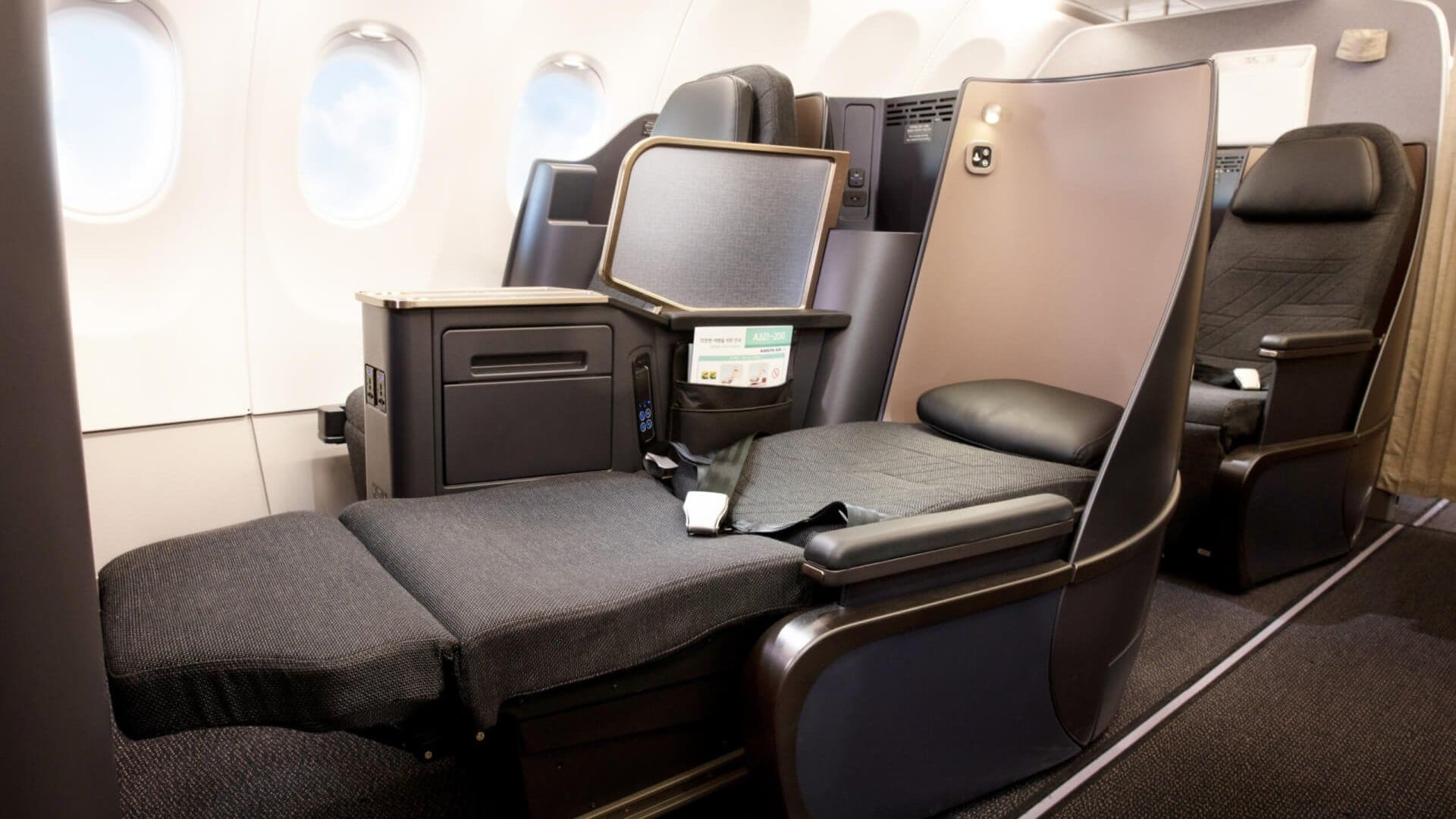
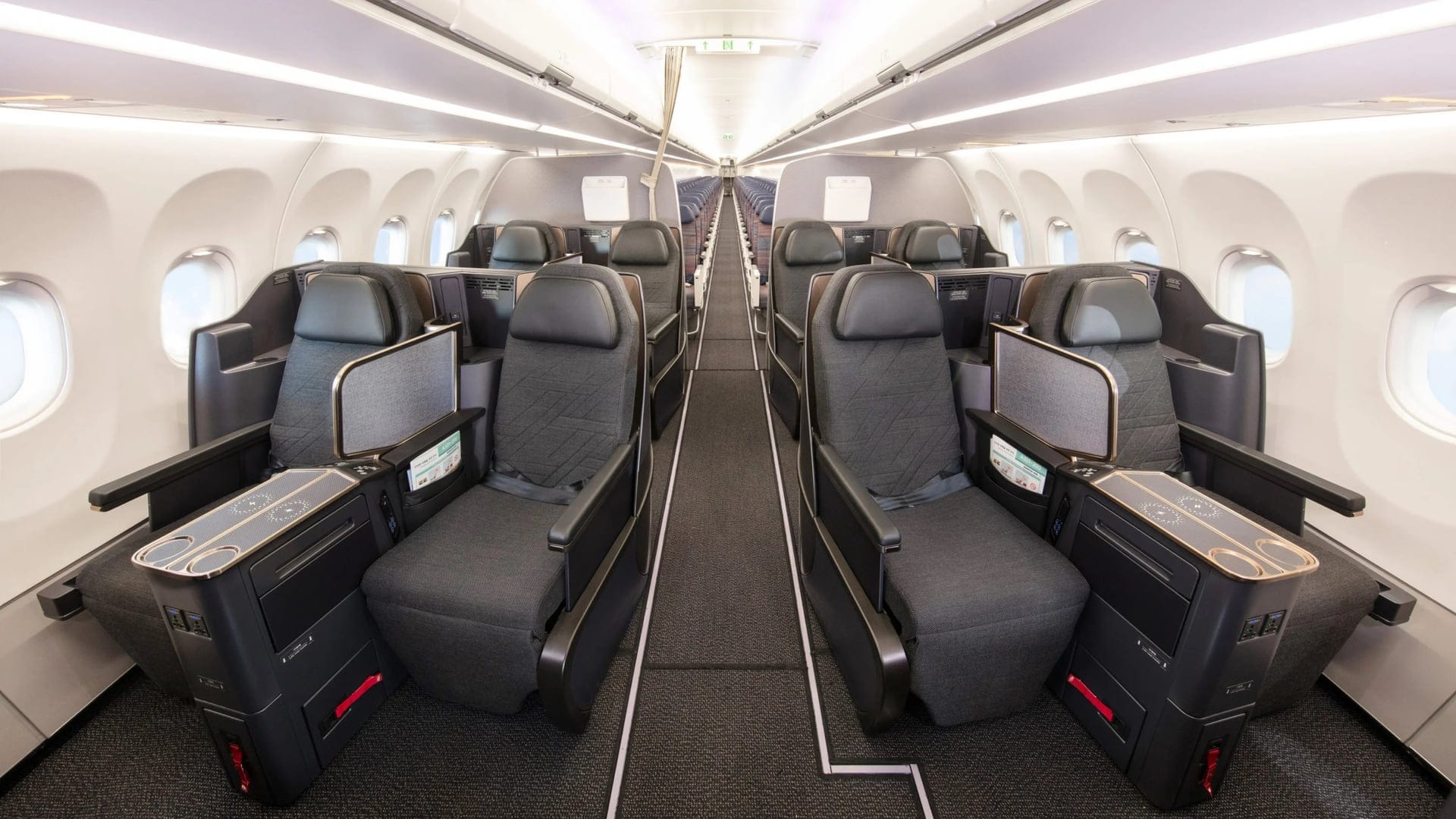
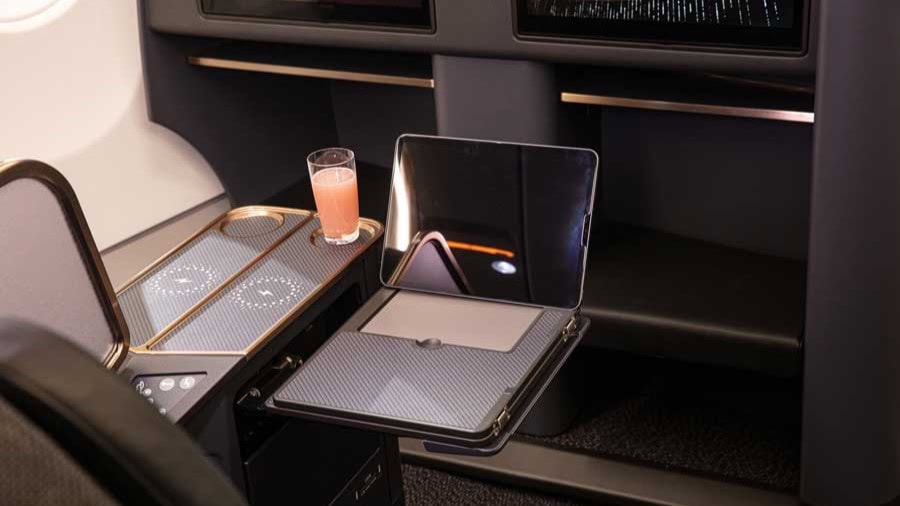
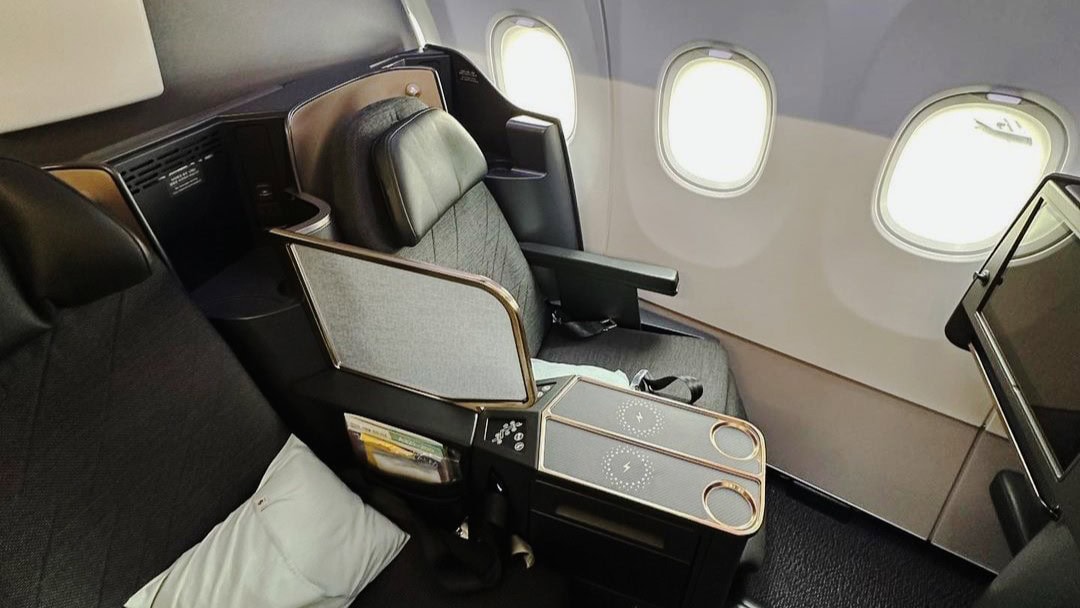
The newer Airbus A321neo fleet features eight Collins Aerospace Diamond lie-flat seats in a 2-2 configuration. These seats include wireless charging, USB ports, updated entertainment systems, and onboard Wi-Fi. While the cabin does not offer the same level of privacy found on some long-haul aircraft, the fully flat seats measuring 78 inches (198 cm) still improve sleep comfort considerably on regional routes.
Korean Air plans to continue expanding the Airbus A321neo fleet, with 30 aircraft expected in service by 2027.
- Boeing 737
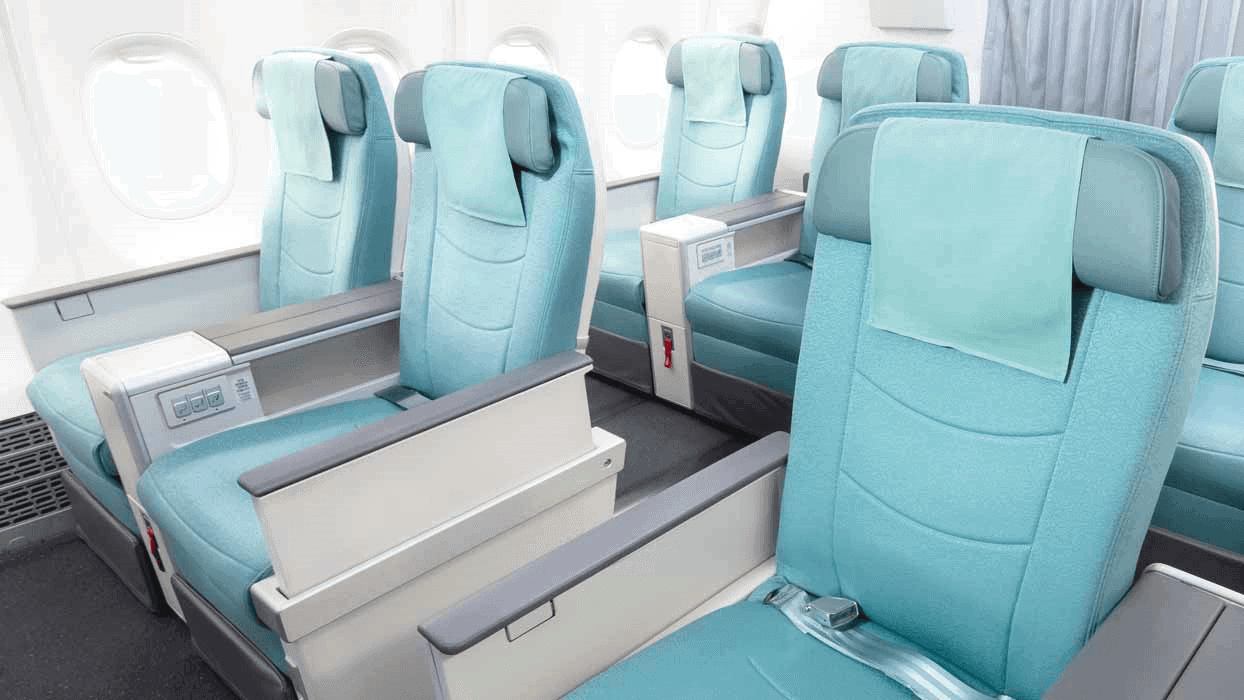
Regional routes operated by Boeing 737-900, Boeing 737-900ER, and Boeing 737-800 aircraft use reclining seats with the pitch ranging from 19 to 50 inches (48 cm–127 cm) in a 2-2 layout. These cabins provide more space than economy seats but differ substantially from the airline’s long-haul business-class cabins in terms of sleep comfort and onboard features.
- Airbus A220
The Airbus A220 fleet currently operates without a dedicated business-class section.
Sustainability
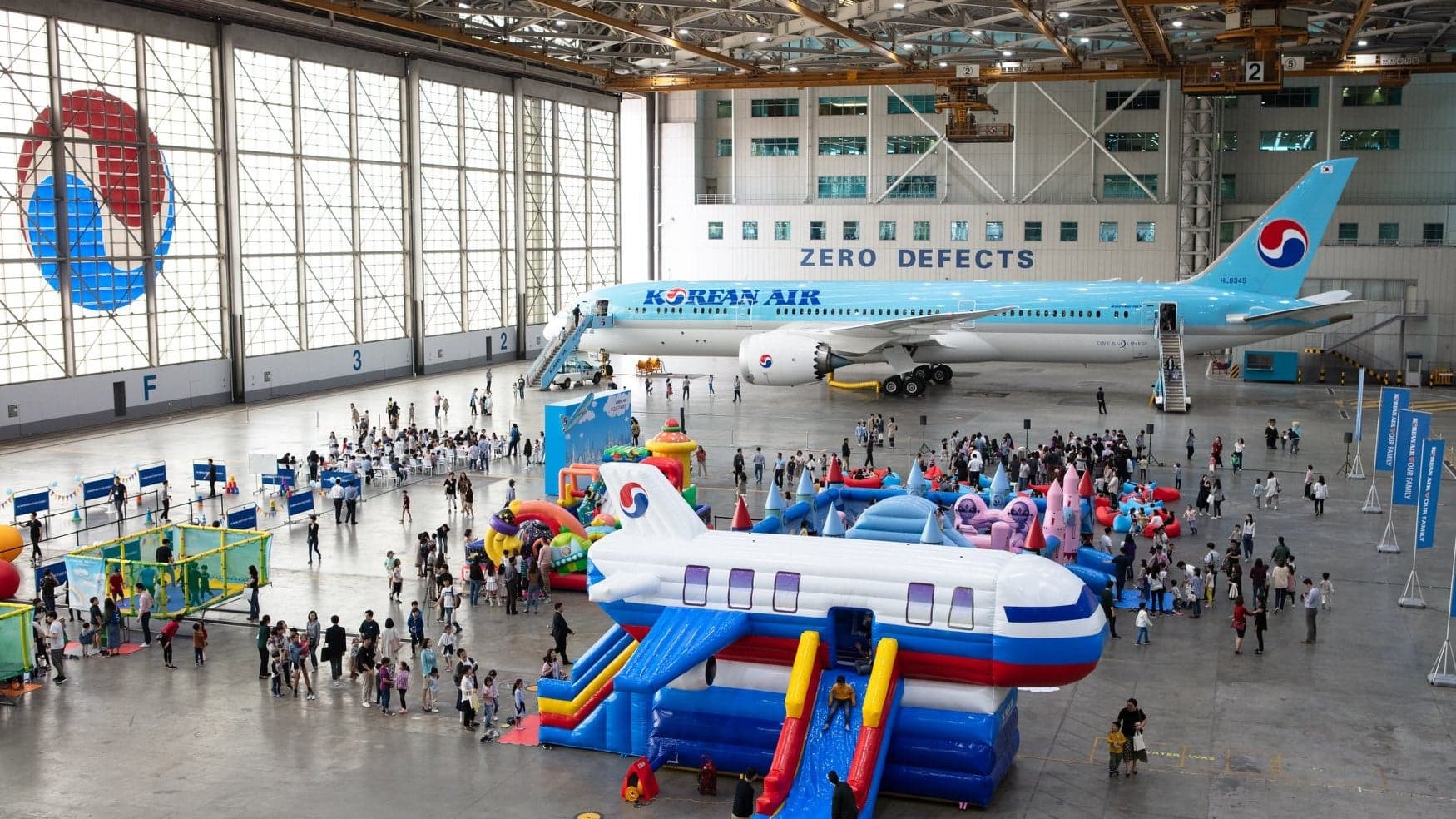
Korean Air continues expanding its sustainability initiatives through fleet modernization and alternative fuel programs. The airline has invested heavily in newer aircraft such as Boeing 787-9 and Airbus A321neo, both of which reduce fuel consumption compared to older aircraft. Korean Air also became one of the first airlines in Korean aviation to introduce Sustainable Aviation Fuel (SAF) operations through a partnership with SK Energy. Across parts of the onboard operation, the airline has also reduced the use of single-use plastics and shifted toward reusable and lower-waste materials.
The airline continues supporting environmental projects outside aviation as well, including long-running reforestation programs in Mongolia and China’s Kubuqi Desert. On the operational side, Korean Air uses coordinated drone systems to inspect aircraft, reducing inspection times and improving maintenance precision by identifying defects as small as 0.04 inches (1 mm).
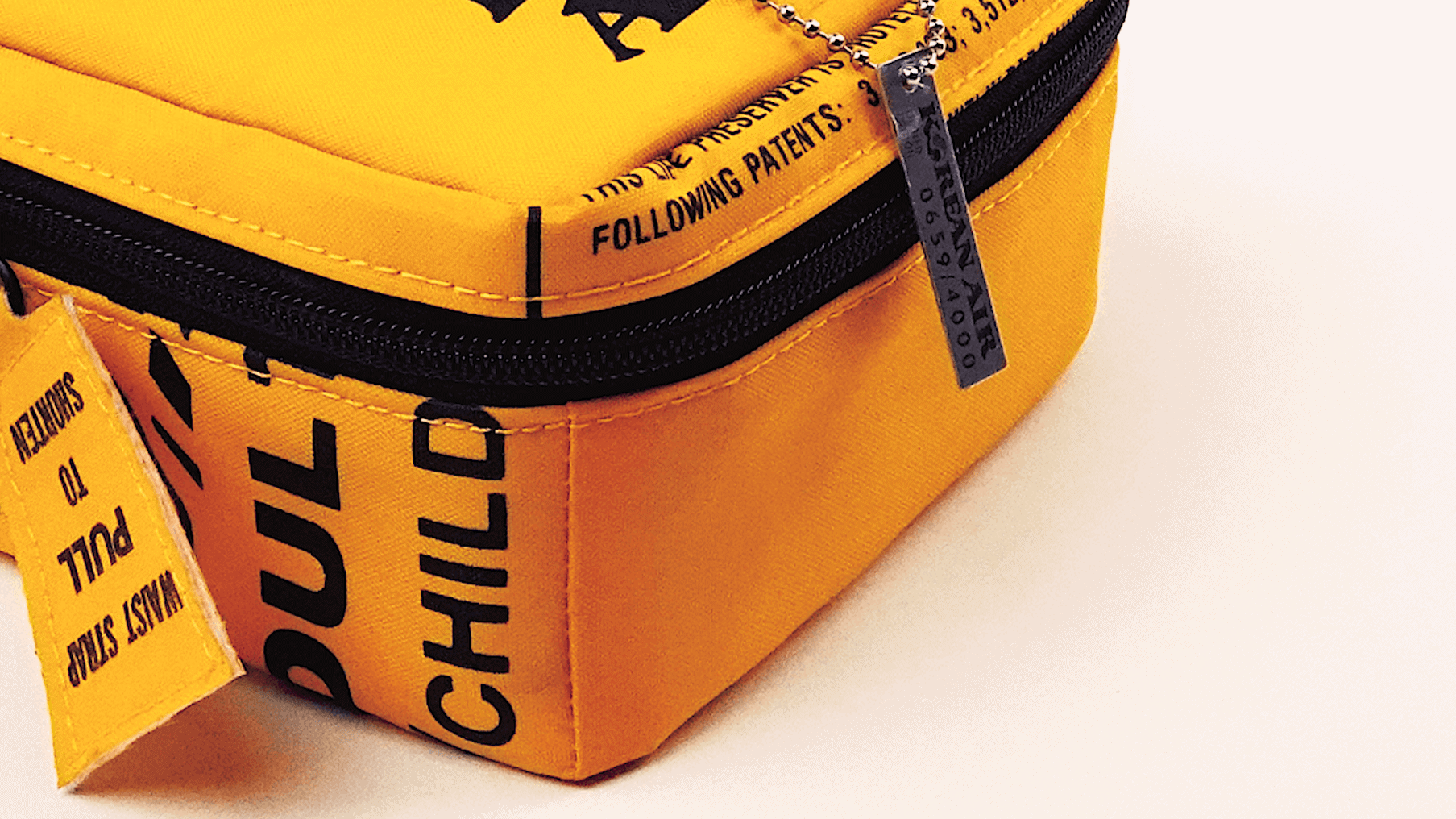
Korean Air’s upcycling program repurposes retired aircraft components and old uniforms into consumer products. Since 2021, the airline has transformed decommissioned Boeing 777 materials and cabin items into products such as cosmetic pouches and collectible merchandise sold through the airline’s e-Skyshop platform.


Core Considerations
Several factors define the experience in Korean Air business class, particularly on long-haul flights, where seat layout, sleep comfort, and cabin consistency become more important over time.
Seat design and privacy: Prestige Suite cabins use a staggered layout that gives all passengers direct aisle access, even in some 2-2-2 configurations. On overnight routes, the fully flat bed and relatively open cabin layouts improve comfort during longer periods in the air.
Dining structure and Korean cuisine: The onboard food program combines Korean dishes with international menu options, including vegan and Western meal selections available through pre-order services. Multi-course dinner services and the Airbus A380 Celestial Bar are some of the more distinctive parts of the onboard experience.
Onboard service and cabin consistency: The onboard service follows the same approach across much of the airline’s international network, with multilingual cabin crews, regular cabin monitoring, and consistent meal-period support throughout the flight. At the same time, the overall experience still varies noticeably depending on aircraft type, particularly between older Prestige Sleeper cabins and newer Prestige Suite products.
Overall, Korean Air business class works best on routes operated by newer Prestige Suite or Prestige Suites 2.0 aircraft, where the combination of cabin layout, fully flat seats, and Korean dining has the greatest impact on comfort during overnight international routes.
Quick Facts
Prestige Class varies more by aircraft than by route, which makes seat selection especially important when booking Korean Air business class. Boeing 787-9, Boeing 777-300ER, Boeing 747, and Airbus A380 aircraft operate much of the airline’s long-haul network, although cabin layouts differ significantly between configurations.
The onboard experience focuses heavily on overnight comfort during long-haul flights, with fully flat beds, structured overnight service, and multi-course Korean and international dining. Menu highlights include Korean bibimbap, seafood dishes, and pre-ordered specialty meals, while the Airbus A380 Celestial Bar adds a separate lounge space during the flight.
At Seoul Incheon International Airport, Prestige Class passengers receive SkyPriority check-in, expedited security, and access to lounges equipped with shower facilities and dining areas. These features become more relevant on overnight itineraries and long layovers, where airport efficiency and cabin rest directly affect the overall trip.
Seat Type: Prestige Suite, Prestige Sleeper, Prestige Suite 2.0
Aircraft: Boeing 787-9, Boeing 777-300ER, Airbus A380
Dining: Korean cuisine, Celestial Bar
Lounge Access: Prestige Class Lounge ICN
Reviewed: May 2026